Kirjojen hintavertailu. Mukana 11 244 527 kirjaa ja 12 kauppaa.

Kirjahaku

Etsi kirjoja tekijän nimen, kirjan nimen tai ISBN:n perusteella.

1000 tulosta hakusanalla Andy Sumner

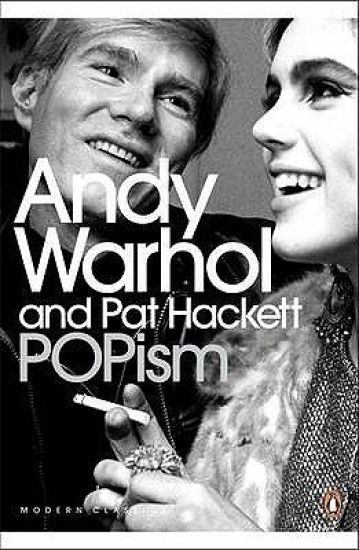
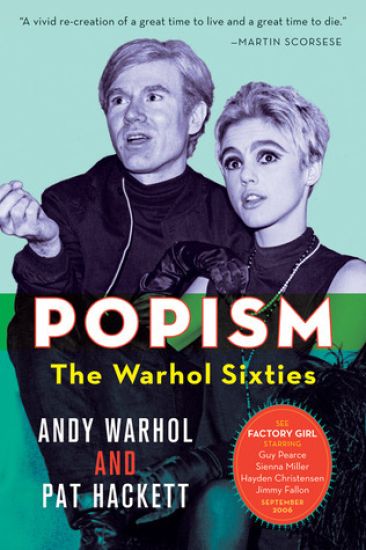
POPism

POPism

Andy Warhol; Pat Hackett

Penguin Classics
2007
pokkari
'POPism reads like a novel... Social history of the rarest kind, set down in ultra-sharp focus by someone who helped shape the events he describes' The New YorkerA cultural storm swept through the 1960s - Pop Art, Bob Dylan, psychedelia, underground movies - and at its centre sat a bemused young artist with silver hair: Andy Warhol. Andy knew everybody (from the cultural commissioner of New York to drug-driven drag queens) and everybody knew Andy. His studio, the Factory, was the place: where he created the large canvases of soup cans and Pop icons that defined Pop Art, where one could listen to the Velvet Underground and rub elbows with Edie Sedgwick and where Warhol himself could observe the comings and goings of the avant-guarde.
Edward I (Penguin Monarchs)

Edward I (Penguin Monarchs)

Andy King

Penguin Books Ltd
2018
nidottu
The acclaimed Penguin Monarchs series: short, fresh, expert accounts of England's rulers - now in paperbackEdward I (1272-1307) is one of the most commanding of all English rulers. He fought in southwest France, in Wales, In Scotland and in northern France, he ruled with ruthlessness and confidence, undoing the chaotic failure of his father, Henry III's reign. He reshaped England's legal system and came close to bringing the whole island of Great Britain under his rule. He promoted the idea of himself as the new King Arthur, his Round Table still hanging in Winchester Castle to this day. His greatest monuments are the extraordinary castles - Caernarfon, Beaumaris, Harlech and Conwy - built to ensure his rule of Wales and some of the largest of all medieval buildings.Andy King's brilliant short biography brings to life a strange, complex man whose triumphs raise all kinds of questions about the nature of kingship - how could someone who established so many key elements in England's unique legal and parliamentary system also have been such a harsh, militarily brutal warrior?
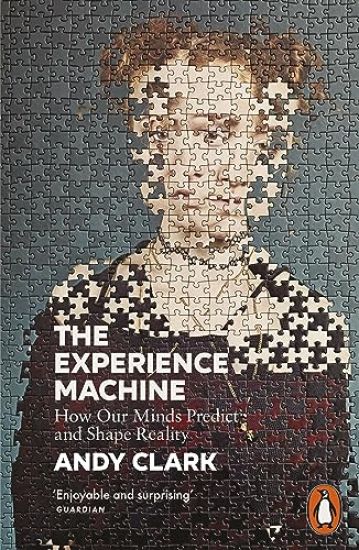
The Experience Machine

The Experience Machine

Andy Clark

PENGUIN BOOKS LTD
2024
pokkari
A grand new vision of cognitive science that explains how our minds build our worlds‘One of the most important books yet published this century’ SpectatorFor as long as we've studied the mind, we've believed that information flowing from our senses determines what our mind perceives. But as our understanding has advanced in the last few decades, a hugely powerful new view has flipped this assumption on its head. The brain is not a passive receiver, but an ever-active predictor.At the forefront of this cognitive revolution is widely acclaimed philosopher and cognitive scientist Andy Clark, who has synthesized his ground-breaking work on the predictive brain to explore its fascinating mechanics and implications. Among the most stunning of these is the realization that experience itself, because it is guided by prior expectation, is a kind of controlled hallucination. We don't passively take in the world around us; instead our mind is constantly making and refining predictions about what we expect to see. This even applies to our bodies, as the way we experience pain and other states is shaped by our expectations, and this has broader implications for the understanding and treatment of conditions from PTSD to schizophrenia to medically unexplained symptoms. From the most mundane experiences to the most sublime, it is our predictions that sculpt our experience.A landmark study of cognitive science, The Experience Machine lays out the extraordinary explanatory power of the predictive brain for our lives, mental health and society.
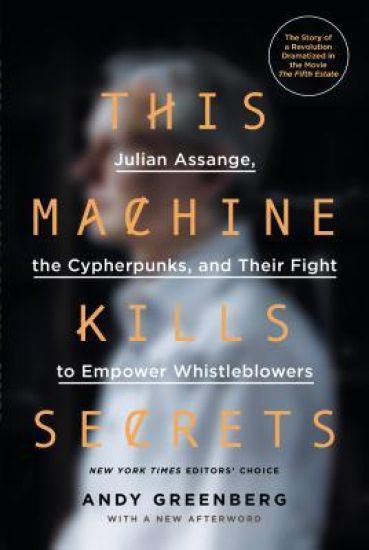
This Machine Kills Secrets: Julian Assange, the Cypherpunks, and Their Fight to Empower Whistleblowers
Who Are The Cypherpunks? This is the unauthorized telling of the revolutionary cryptography story behind the motion picture The Fifth Estate in theatres this October, and We Steal Secrets: The Story of Wikileaks, a documentary out now. WikiLeaks brought to light a new form of whistleblowing, using powerful cryptographic code to hide leakers' identities while they spill the private data of government agencies and corporations. But that technology has been evolving for decades in the hands of hackers and radical activists, from the libertarian enclaves of Northern California to Berlin to the Balkans. And the secret-killing machine continues to evolve beyond WikiLeaks, as a movement of hacktivists aims to obliterate the world's institutional secrecy. Forbes journalist Andy Greenberg has traced its shadowy history from the cryptography revolution of the 1970s to Wikileaks founding hacker Julian Assange, Anonymous, and beyond. This is the story of the code and the characters--idealists, anarchists, extremists--who are transforming the next generation's notion of what activism can be. With unrivaled access to such major players as Julian Assange, Daniel Domscheit-Berg, and WikiLeaks' shadowy engineer known as the Architect, never before interviewed, Greenberg unveils the world of politically-motivated hackers--who they are and how they operate.
The Log of a Cowboy

The Log of a Cowboy

Andy Adams

Penguin Classics
2006
pokkari
Straightforwardly told, rich in detail, and laced with appealing campfire humor, Andy Adams's realistic The Log of a Cowboy is a classic portrayal of the western cattle country. Drawing on his own experiences as a cowboy working in cattle and horse drives, Adams presents a vivid portrait of the challenges of trail life on a cattle drive from Texas to Montana--the daily drudgery of cattle trailing, as well as the dramatic stampedes and other treacherous disruptions. Populated by a wide variety of well-drawn, lively characters, The Log of a Cowboy remains the landmark novel of the American West a century after its first appearance. This is the first edition of this work published as a Penguin Classic. For more than seventy years, Penguin has been the leading publisher of classic literature in the English-speaking world. With more than 1,700 titles, Penguin Classics represents a global bookshelf of the best works throughout history and across genres and disciplines. Readers trust the series to provide authoritative texts enhanced by introductions and notes by distinguished scholars and contemporary authors, as well as up-to-date translations by award-winning translators.
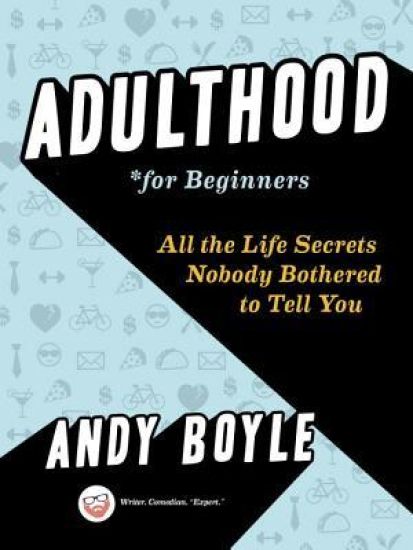
Adulthood for Beginners

Adulthood for Beginners

Andy Boyle

TarcherPerigee
2017
nidottu
"A hilarious guide to help young workers not be idiots....a guide to being an adult in the modern age." --Chicago Tribune Stop saying "adulting" -- and other life advice you didn't know you needed. But you do.It's no secret that being a grown-up can be hard. Most people spend a decade or more figuring out the unwritten rules of life through trial and error (mostly error). Does Andy Boyle have everything figured out? No. But the honest and good-natured advice in this genuinely helpful book will help any newly minted adult get through the hard parts faster, guaranteed. (Note: sorry, not literally guaranteed.) Topics include: * The A**hole Test* "Friend Zone," "Adulting," and Other Things to Stop Saying* Should I Get Back with My Ex? (Spoiler: No)* Networking Like a Not Gross Person* Failing Isn't Failure, and Other Mostly Good Rules to Live By* Don't Be Creepy Perfect for anyone who's ready to graduate into adulthood, or at least out of their mom's basement.
Action Park

Action Park

Andy Mulvihill; Jake Rossen

Plume
2020
nidottu
The outlandish, hilarious, terrifying, and almost impossible-to-believe story of the legendary, dangerous amusement park where millions were entertained and almost as many bruises were sustained, told through the eyes of the founder's son Often called "Accident Park," "Class Action Park," or "Traction Park," Action Park was an American icon. Entertaining more than a million people a year in the 1980s, the New Jersey-based amusement playland placed no limits on danger or fun, a monument to the anything-goes spirit of the era that left guests in control of their own adventures--sometimes with tragic results. Though it closed its doors in 1996 after nearly twenty years, it has remained a subject of constant fascination ever since, an establishment completely anathema to our modern culture of rules and safety. Action Park is the first-ever unvarnished look at the history of this DIY Disneyland, as seen through the eyes of Andy Mulvihill, the son of the park's idiosyncratic founder, Gene Mulvihill. From his early days testing precarious rides to working his way up to chief lifeguard of the infamous Wave Pool to later helping run the whole park, Andy's story is equal parts hilarious and moving, chronicling the life and death of a uniquely American attraction, a wet and wild 1980s adolescence, and a son's struggle to understand his father's quixotic quest to become the Walt Disney of New Jersey. Packing in all of the excitement of a day at Action Park, this is destined to be one of the most unforgettable memoirs of the year.
Popism: The Warhol Sixties

Popism: The Warhol Sixties

Andy Warhol; Pat Hackett

Mariner Books
2006
nidottu
Anecdotal, funny, frank, POPism is Warhol's personal view of the Pop phenomenon in New York in the 1960s.A cultural storm swept through the 1960s -- Pop Art, Bob Dylan, psychedelia, underground movies -- and at its center sat a bemused young artist with silver hair: Andy Warhol. Andy knew everybody (from the cultural commissioner of New York to drug-driven drag queens) and everybody knew Andy. His studio, the Factory, was the place: where he created the large canvases of soup cans and Pop icons that defined Pop Art, where one could listen to the Velvet Underground and rub elbows with Edie Sedgwick and where Warhol himself could observe the comings and goings of the avant-garde.In the detached, back-fence gossip style he was famous for, Warhol tells all in POPism -- the ultimate inside story of a decade of cultural revolution.
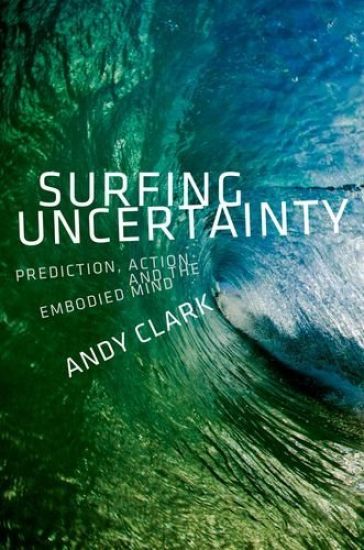
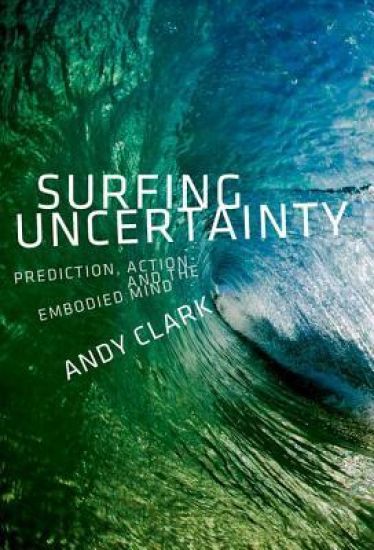
Surfing Uncertainty

Surfing Uncertainty

Andy Clark

Oxford University Press Inc
2016
sidottu
In this ground-breaking work, philosopher and cognitive scientist Andy Clark turns a common view of the human mind upside down. In stark opposition to familiar models of human cognition, Surfing Uncertainty explores exciting new theories in neuroscience, psychology, and artificial intelligence that reveal minds like ours to be prediction machines--devices that have evolved to anticipate the incoming streams of sensory stimulation before they arrive. This keeps minds like ours a few steps ahead of the game, poised to respond rapidly and apparently effortlessly to threats and opportunities as (and sometimes even before) they arise. Creatures thus equipped are more than simple response machines. They are knowing agents deep in the business of understanding their worlds. Such agents cope with changing and uncertain worlds by combining sensory evidence with informed prediction. Remarkably, the learning that makes neural prediction possible can itself be accomplished by the ceaseless effort to make better and better predictions. A single fundamental trick (the trick of trying to predict your own sensory inputs) thus enables learning, empowers moment-by-moment perception, and installs a rich understanding of the surrounding world. Action itself now appears in a new and revealing light. For action is not so much a 'response to an input' as a neat and efficient way of selecting the next 'input'. As mobile embodied agents we are forever intervening, actively bringing about the very streams of sensory information that our brains are simultaneously trying to predict. This binds perception and action in a delicate dance, a virtuous circle in which neural circuits animate, and are animated by, the movements of our own bodies. Some of our actions, in turn, structure the physical, social, and technological worlds around us. This moves the goalposts by altering the very things we need to engage and predict. Surfing Uncertainty brings work on the predictive brain into full and satisfying contact with work on the embodied and culturally situated mind. What emerges is a bold new vision of what brains do that places circular causal flows and the active structuring of the environment, center-stage. In place of cognitive couch potatoes idly awaiting the next sensory inputs, Clark's journey reveals us as proactive predictavores, skilfully surfing the waves of sensory stimulation.
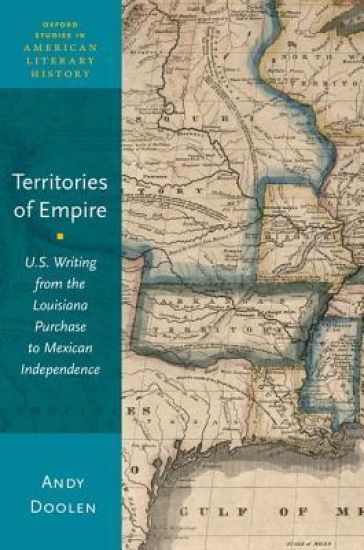
Territories of Empire

Territories of Empire

Andy Doolen

Oxford University Press Inc
2019
nidottu
In contrast to later imperial pursuits in Mexico, Cuba, and the Philippines, the early United States extended its boundaries through less sensational modes of territorialization: land deals, slavery expansion, treaty diplomacy, immigration and settlement, and the addition of new states on the border. Never the exclusive top-down product of any single strategic plan, empire building relied rather on a hazy, ever-shifting boundary between state and non-state action. Territories of Empire examines the border writings of U.S. explorers, politicians, travelers, novelists, merchants, newspapermen, and other eye-witnesses to the rapid expansion of the United States in the aftermath of the Louisiana Purchase. It traces how different authors and texts imagined the relations between nation-state and border and reveals how continental ambitions were achieved through the uneven and unpredictable process of territorialization. Andy Doolen looks to writings as dissimilar as Kentucky newspaper accounts of the Aaron Burr conspiracy, the explorer Zebulon Pike's 1810 account of making peace with the Santee Sioux before becoming terribly lost near the upper Rio Grande, and Timothy Flint's 1826 novel about a young New Englander who fights in the Mexican independence struggle in showing how national sentiments were galvanized in support of greater territorial and commercial growth. To this end, Doolen makes clear how both private citizens and government officials collectively authored the spatial logic of a continental republic. Combining textual analysis with theories of transnationalism and empire, Territories of Empire reconstructs the development of a continental imaginary highly attuned to the objectives of U.S. imperialism, while often betraying an unsettling awareness of resistance and diversity beyond the border.
Surfing Uncertainty

Surfing Uncertainty

Andy Clark

Oxford University Press Inc
2019
nidottu
How is it that thoroughly physical material beings such as ourselves can think, dream, feel, create and understand ideas, theories and concepts? How does mere matter give rise to all these non-material mental states, including consciousness itself? An answer to this central question of our existence is emerging at the busy intersection of neuroscience, psychology, artificial intelligence, and robotics. In this groundbreaking work, philosopher and cognitive scientist Andy Clark explores exciting new theories from these fields that reveal minds like ours to be prediction machines - devices that have evolved to anticipate the incoming streams of sensory stimulation before they arrive. These predictions then initiate actions that structure our worlds and alter the very things we need to engage and predict. Clark takes us on a journey in discovering the circular causal flows and the self-structuring of the environment that define "the predictive brain." What emerges is a bold, new, cutting-edge vision that reveals the brain as our driving force in the daily surf through the waves of sensory stimulation.
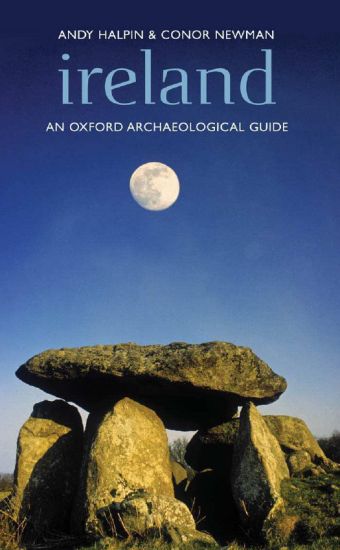
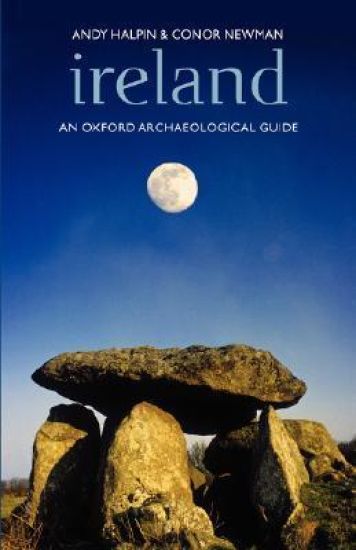
Ireland

Ireland

Andy Halpin; Conor Newman

Oxford University Press
2006
sidottu
Ireland is a country rich in archaeological sites. Ireland: An Oxford Archaeological Guide provides the ultimate handbook to this fascinating heritage. Covering the entire island of Ireland, from Antrim to Wexford, Dublin to Sligo, the book contains over 250 plans and illustrations of Ireland's major archaeological treasures and covers sites dating from the time of the first settlers in prehistoric times right up to the seventeenth century. The book opens with a useful introduction to the history of Ireland, setting the archaeological material in its wider historical context, and then takes the reader on an unparalleled journey through the major sites and places of interest. Each chapter focuses on a particular geographical region and is introduced by a useful survey of the history and geography of the region in question. This is followed by detailed descriptions of the major archaeological sites within each region, arranged alphabetically and including travel directions, historical overview of the site, and details of the site's major features and the latest available archaeological evidence. As the most comprehensive and detailed compact guide to the archaeological sites of Ireland, this new volume will prove invaluable to archaeologists, students of Irish history, and tourists alike.
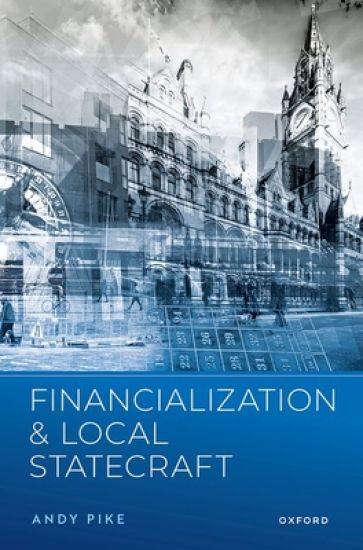
Financialization and Local Statecraft

Financialization and Local Statecraft

Andy Pike

Oxford University Press
2023
sidottu
The UK government reduced expenditure and introduced local financial self-sufficiency in pursuing austerity after the 2008 crash, forcing local governments in England to find savings and new income sources to close funding gaps. As new financial strategies and practices were devised, 'councillors at the casino' were characterized as taking risks with local taxpayers' money and jeopardizing local public service provision. Looking beyond the high-profile cases in an internationally resonant local public sector reform laboratory, Financialization and Local Statecraft examines the wider landscape across local government in England since 2010, which comprises a local tier of over 300 governments managing £100bn of revenue expenditure, employing almost 1.5 million people, and providing services to over 56 million people across the country. Andy Pike draws on a new local statecraft theory to explain how local statecrafters act in realms including financial strategies and risks, external advice, borrowing and debt management, and in and out-of-area activities. The framework reveals and accounts for their vanguard, intermediate, and long tail approaches with differing engagements with financialization. While limited within the overall landscape, such relations and UK government policy are rewiring and rescaling local statecraft and relocating risks and uncertainties onto local government and the wider local state. UK government policy and the extension and intensification of financialization expose the local state's financial sustainability and resilience in the longer term. They raise fundamental questions about what local government is for and how it should be funded. The erosion of local accountability of local statecraft in financialization risks creating a de-politicized and post-democratic local governance.
Ireland

Ireland

Andy O`Halpin; Conor Newman

Oxford University Press
2006
nidottu
Ireland is a country rich in archaeological sites. Ireland: An Oxford Archaeological Guide provides the ultimate handbook to this fascinating heritage. Covering the entire island of Ireland, from Antrim to Wexford, Dublin to Sligo, the book contains over 250 plans and illustrations of Ireland's major archaeological treasures and covers sites dating from the time of the first settlers in prehistoric times right up to the seventeenth century. The book opens with a useful introduction to the history of Ireland, setting the archaeological material in its wider historical context, and then takes the reader on an unparalleled journey through the major sites and places of interest. Each chapter focuses on a particular geographical region and is introduced by a useful survey of the history and geography of the region in question. This is followed by detailed descriptions of the major archaeological sites within each region, arranged alphabetically and including travel directions, historical overview of the site, and details of the site's major features and the latest available archaeological evidence. As the most comprehensive and detailed compact guide to the archaeological sites of Ireland, this new volume will prove invaluable to archaeologists, students of Irish history, and tourists alike.
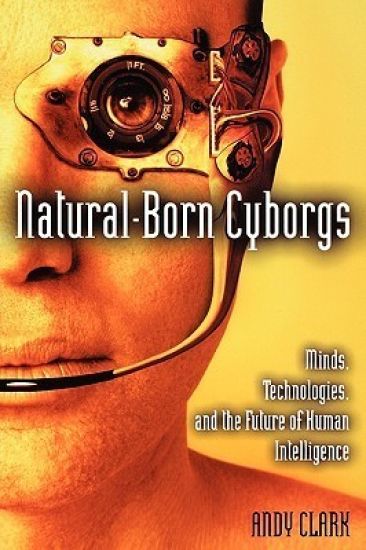
Natural-Born Cyborgs

Natural-Born Cyborgs

Andy Clark

Oxford University Press Inc
2004
nidottu
From Robocop to the Terminator to Eve 8, no image better captures our deepest fears about technology than the cyborg, the person who is both flesh and metal, brain and electronics. But philosopher and cognitive scientist Andy Clark sees it differently. Cyborgs, he writes, are not something to be feared-we already are cyborgs. In Natural-Born Cyborgs, Clark argues that what makes humans so different from other species is our capacity to fully incorporate tools and supporting cultural practices into our existence. Technology as simple as writing on a sketchpad, as familiar as Google or a cellular phone, and as potentially revolutionary as mind-extending neural implants-all exploit our brains' astonishingly plastic nature. Our minds are primed to seek out and incorporate non-biological resources, so that we actually think and feel through our best technologies. Drawing on his expertise in cognitive science, Clark demonstrates that our sense of self and of physical presence can be expanded to a remarkable extent, placing the long-existing telephone and the emerging technology of telepresence on the same continuum. He explores ways in which we have adapted our lives to make use of technology (the measurement of time, for example, has wrought enormous changes in human existence), as well as ways in which increasingly fluid technologies can adapt to individual users during normal use. Bio-technological unions, Clark argues, are evolving with a speed never seen before in history. As we enter an age of wearable computers, sensory augmentation, wireless devices, intelligent environments, thought-controlled prosthetics, and rapid-fire information search and retrieval, the line between the user and her tools grows thinner day by day. "This double whammy of plastic brains and increasingly responsive and well-fitted tools creates an unprecedented opportunity for ever-closer kinds of human-machine merger," he writes, arguing that such a merger is entirely natural. A stunning new look at the human brain and the human self, Natural Born Cyborgs reveals how our technology is indeed inseparable from who we are and how we think.
Supersizing the Mind

Supersizing the Mind

Andy Clark

Oxford University Press Inc
2008
sidottu
Studies of mind, thought and reason have tended to marginalize the role of bodily form, real-world action, and environmental backdrop. In recent years, both in philosophy and cognitive science, this tendency has been identified and, increasingly, resisted. The result is a plethora of work on what has become known as embodied, situated, distributed, and even 'extended' cognition. Work in this new, loosely knit field depicts thought and reason as in some way inextricably tied to the details of our gross bodily form, our habits of action and intervention, and the enabling web of social, cultural, and technological scaffolding in which we live, move, learn, and think. But exactly what kind of link is at issue? And what difference might such a link or links make to our best philosophical, psychological, and computational models of thought and reason? These are among the large unsolved problems in this increasingly popular field. Drawing upon recent work in psychology, linguistics, neuroscience, artificial intelligence, robotics, human-computer systems, and beyond, Supersizing the Mind offers both a tour of the emerging landscape, and a sustained argument in favor of one approach to the key issues. That approach combines the use of representational, computational, and information-theoretic tools with an appreciation of the importance of context, timing, biomechanics, and dynamics. More controversially, it depicts some coalitions of biological and non-biological resources as the extended cognitive circuitry of individual minds. With a substantial foreword by David Chalmers, Supersizing the Mind is essential reading for all those interested in embodied cognition, the extended mind, and the likely shape of twenty-first century cognitive scientific explanation.