Kirjojen hintavertailu. Mukana 12 390 323 kirjaa ja 12 kauppaa.

Kirjahaku

Etsi kirjoja tekijän nimen, kirjan nimen tai ISBN:n perusteella.

1000 tulosta hakusanalla Anil Kumar

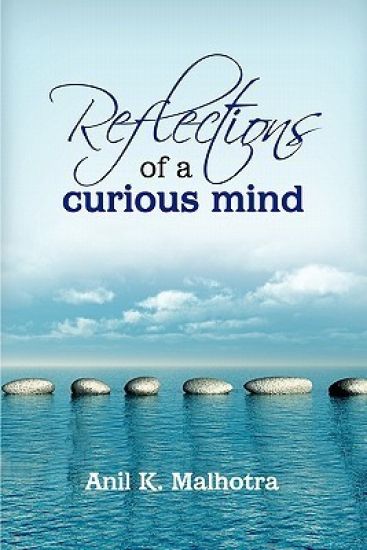
Reflections of a Curious Mind

Reflections of a Curious Mind

Anil Malhotra

Lulu.com
2010
pokkari
On November 26, 2008 the author and his wife were taken hostage by terrorists in a hotel in Mumbai. Over the next few days, they faced the possibility of death by the terrorists%u2019 bullets or by fire. They were rescued a few days later but, as the author put it, "he thought of dying on the morrow helps wonderfully to concentrate your mind on things that you have left undone and the little time that you may have left in the world.After their successful rescue, he was urged by his family and friends to write about their experiences. And that is where this book begins. It ranges over a wide spectrum of personalities and issues- from Obama's meteoric rise to the musings of Mandela, from Pakistan's imminent collapse to new ideas for Afghanistan, from heart disease to caregivers, from relationship with children to sex. In short a delightful read.
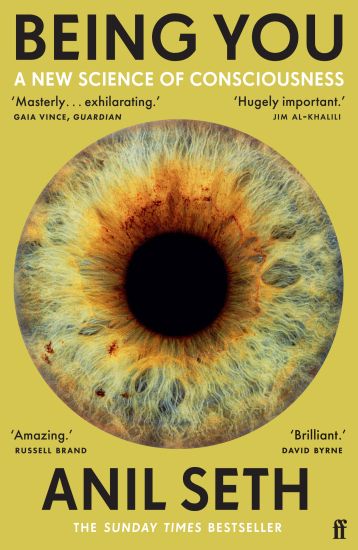
Being You

Being You

Anil Seth

FABER FABER
2022
nidottu
A GUARDIAN, ECONOMIST, NEW STATESMAN, FINANCIAL TIMES AND BLOOMBERG BOOK OF THE YEAR'I loved it.' MICHAEL POLLAN'Fascinating.' FINANCIAL TIMES'Awe-inspring.' NEW STATESMAN'Brilliant.' CLAIRE TOMALIN, NEW YORK TIMES'A brilliant beast of a book.' DAVID BYRNE'Hugely important.' JIM AL-KHALILI'Gripping.' ALEX GARLAND'Masterly . . . Vast-ranging, phenomenal.' GAIA VINCE, GUARDIANAnil Seth's radical new theory of consciousness challenges our understanding of perception and reality, doing for brain science what Dawkins did for evolutionary biology.Being You is not as simple as it sounds. Somehow, within each of our brains, billions of neurons work to create our conscious experience. How does this happen? Why do we experience life in the first person? After over twenty years researching the brain, world-renowned neuroscientist Anil Seth puts forward a radical new theory of consciousness and self. His unique theory of what it means to 'be you' challenges our understanding of perception and reality and it turns what you thought you knew about yourself on its head.'Seth thinks clearly and sharply on one of the hardest problems of science and philosophy, cutting through weeds with a scientist's mind and a storyteller's skill.'ADAM RUTHERFORD'A page-turner and a mind-blower . . . Beautifully written, crystal clear, deeply insightful.' DAVID EAGLEMAN'If you read one book about conciousness, it must be Seth's.JULIAN BAGGINI, WALL STREET JOURNAL
Why Machines Learn: The Elegant Math Behind Modern AI
A rich, narrative explanation of the mathematics that has brought us machine learning and the ongoing explosion of artificial intelligence Machine learning systems are making life-altering decisions for us: approving mortgage loans, determining whether a tumor is cancerous, or deciding if someone gets bail. They now influence developments and discoveries in chemistry, biology, and physics--the study of genomes, extrasolar planets, even the intricacies of quantum systems. And all this before large language models such as ChatGPT came on the scene. We are living through a revolution in machine learning-powered AI that shows no signs of slowing down. This technology is based on relatively simple mathematical ideas, some of which go back centuries, including linear algebra and calculus, the stuff of seventeenth- and eighteenth-century mathematics. It took the birth and advancement of computer science and the kindling of 1990s computer chips designed for video games to ignite the explosion of AI that we see today. In this enlightening book, Anil Ananthaswamy explains the fundamental math behind machine learning, while suggesting intriguing links between artificial and natural intelligence. Might the same math underpin them both? As Ananthaswamy resonantly concludes, to make safe and effective use of artificial intelligence, we need to understand its profound capabilities and limitations, the clues to which lie in the math that makes machine learning possible.
Why Machines Learn: The Elegant Math Behind Modern AI
A rich, narrative explanation of the mathematics that has brought us machine learning and the ongoing explosion of artificial intelligence Machine learning systems are making life-altering decisions for us: approving mortgage loans, determining whether a tumor is cancerous, or deciding if someone gets bail. They now influence developments and discoveries in chemistry, biology, and physics--the study of genomes, extrasolar planets, even the intricacies of quantum systems. And all this before large language models such as ChatGPT came on the scene. We are living through a revolution in machine learning-powered AI that shows no signs of slowing down. This technology is based on relatively simple mathematical ideas, some of which go back centuries, including linear algebra and calculus, the stuff of seventeenth- and eighteenth-century mathematics. It took the birth and advancement of computer science and the kindling of 1990s computer chips designed for video games to ignite the explosion of AI that we see today. In this enlightening book, Anil Ananthaswamy explains the fundamental math behind machine learning, while suggesting intriguing links between artificial and natural intelligence. Might the same math underpin them both? As Ananthaswamy resonantly concludes, to make safe and effective use of artificial intelligence, we need to understand its profound capabilities and limitations, the clues to which lie in the math that makes machine learning possible. In a brand-new afterword exclusively in the paperback edition, Ananthaswamy dives into the Transformer architecture that makes large language models like ChatGPT possible and points to groundbreaking future directions enabled by the technology.
Havells - The Untold Story of Qimat Rai Gupta

Havells - The Untold Story of Qimat Rai Gupta

Anil Rai Gupta

Penguin Putnam Inc
2016
sidottu
From beginning his career as a small trader in Delhi to building Havells, one of India's largest electrical goods company, Qimat Rai Gupta's story makes for an inspiring read. Told rivetingly by his son, Anil Rai Gupta, this is the account of how QRG, as he was fondly known, braved poverty, ill health, competition, corruption and bureaucracy to turn his dreams into reality. Havells faced stiff competition from companies that couldn't tolerate a modest trader challenging them. Despite legal battles, family feuds and severe shortage of funds, QRG never gave up. During his last years, Havells acquired German giant Sylvania which was twice its size. When Sylvania's losses pushed Havells to the brink, QRG fearlessly decided to keep the company nonetheless. It was under his tutelage that Anil Rai Gupta, present chairman of Havells, turned Sylvania around. QRG's life is proof of the adage 'Whatever the mind can conceive and believe, it can achieve'.
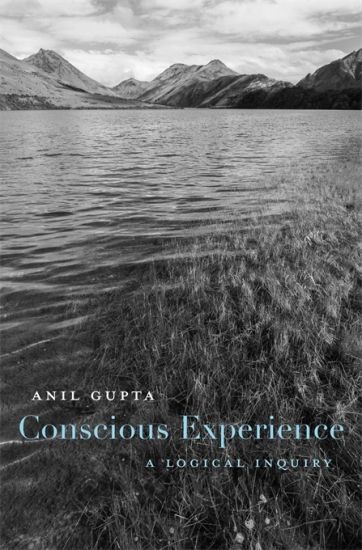
Conscious Experience

Conscious Experience

Anil Gupta

Harvard University Press
2019
sidottu
A distinguished philosopher offers a novel account of experience and reason, and develops our understanding of conscious experience and its relationship to thought: a new reformed empiricism.The role of experience in cognition is a central and ancient philosophical concern. How, theorists ask, can our private experiences guide us to knowledge of a mind-independent reality? Exploring topics in logic, philosophy of mind, and epistemology, Conscious Experience proposes a new answer to this age-old question, explaining how conscious experience contributes to the rationality and content of empirical beliefs.According to Anil Gupta, this contribution cannot be determined independently of an agent’s conceptual scheme and prior beliefs, but that doesn’t mean it is entirely mind-dependent. While the rational contribution of an experience is not propositional—it does not, for example, provide direct knowledge of the world—it does authorize certain transitions from prior views to new views. In short, the rational contribution of an experience yields a rule for revising views. Gupta shows that this account provides theoretical freedom: it allows the observer to radically reconceive the world in light of empirical findings. Simultaneously, it grants empirical reason significant power to constrain, forcing particular conceptions of self and world on the rational inquirer. These seemingly contrary virtues are reconciled through novel treatments of presentation, appearances, and ostensive definitions.Collectively, Gupta’s arguments support an original theory: reformed empiricism. He abandons the idea that experience is a source of knowledge and justification. He also abandons the idea that concepts are derived from experience. But reformed empiricism preserves empiricism’s central insight: experience is the supreme epistemic authority. In the resolution of factual disagreements, experience trumps all.
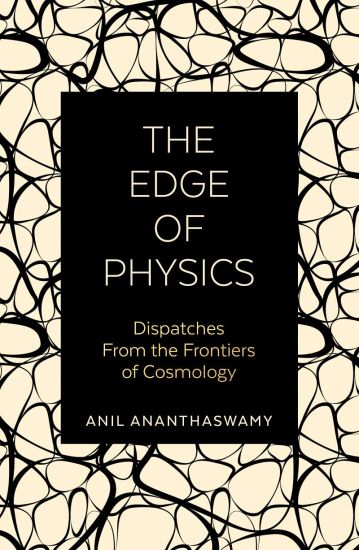
The Edge of Physics

The Edge of Physics

Anil Ananthaswamy

Duckworth
2020
nidottu
A scientific and globetrotting exploration of the physics experiments changing the ways we understand our universe. Why is the universe expanding? What is the nature of dark matter? Do other universes exist? In this timely and original book, science writer Anil Ananthaswamy embarks on a global journey to some of the world’s most inhospitable and dramatic research sites to witness first-hand the audacious physics experiments conducted to answer profound questions about the nature of the universe. From the Atacama Desert in the Chilean Andes to the European Southern Observatory's Very Large Telescope on Mount Paranal to deep inside an abandoned iron mine in Minnesota and to the East Antarctic Ice Sheet, Ananthaswamy weaves together stories about the people and places at the heart of this cosmological research. While explaining the immense questions that scientists are trying to answer, Ananthaswamy provides an accessible and unique portrait of the universe and our quest to understand it. An atmospheric, engaging and illuminating read, The Edge of Physics depicts science as a human process and brings cosmology with all its rarefied concepts down to earth.
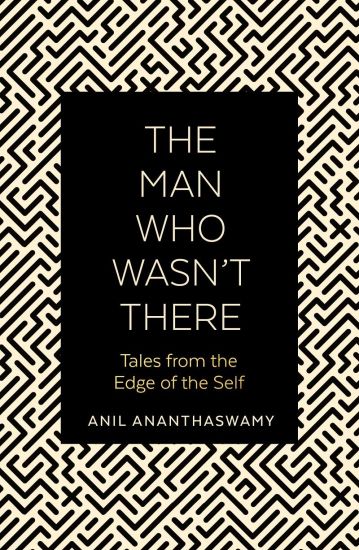
The Man Who Wasn't There

The Man Who Wasn't There

Anil Ananthaswamy

Duckworth
2020
nidottu
Reveals the mind boggling neuroscience connecting brain, body, mind, and society, by examining a range of brain disorders, in the tradition of Oliver Sacks. Identifying what makes up the nature of the human mind has long been neuroscience's greatest challenge - a mystery perhaps never to be fully understood. Award-winning author and master of science journalism Anil Ananthaswamy smartly explores the concept of self by way of several mental conditions that alter patients’ identities, showing how we learn a lot about being human from people with a fragmented or altered sense of self. He travels the world to meet those who suffer from “maladies of the self” interviewing patients, psychiatrists, philosophers and neuroscientists along the way. He charts how the self is affected by Asperger’s, autism, Alzheimer’s, epilepsy, schizophrenia, among many other mental conditions, revealing how the brain constructs our sense of self. Each chapter is anchored with stories of people who experience themselves differently from the norm. The Man Who Wasn’t There is a magical mystery tour of scientific analysis and philosophical pondering, now utterly transformed by recent advances in cutting-edge neuroscience.
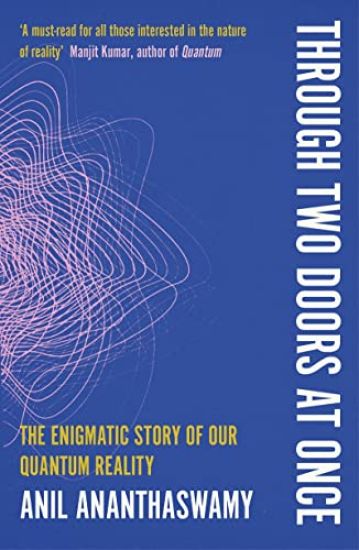
Through Two Doors at Once

Through Two Doors at Once

Anil Ananthaswamy

Duckworth Books
2023
nidottu
The clearest, most accessible explanation yet of the amazing world of quantum mechanics. How can matter behave both like a particle and a wave? Does a particle exist before we look at it or does the very act of looking bring it into reality? Is there a place where the quantum world ends and our perceivable world begins? Many of science's greatest minds - including Thomas Young, Albert Einstein and Richard Feynman - have grappled with the questions embodied in the simple yet elusive 'double-slit' experiment in order to understand the fabric of our universe. With his extraordinary gift for making the complicated comprehensible, Anil Ananthaswamy travels around the world and through history, down to the smallest scales of physical reality we have yet fathomed, to reveal the answers.
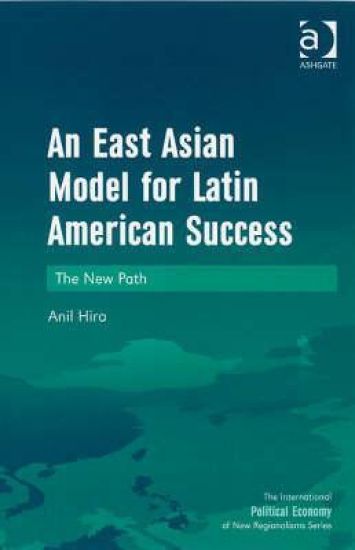
An East Asian Model for Latin American Success

An East Asian Model for Latin American Success

Anil Hira

Ashgate Publishing Limited
2007
sidottu
Latin America is at a uniquely important juncture in its history and the history of development more generally. Neoliberal market-orientated policies are being called into question, growth has been volatile and equity has stayed the same or worsened. In Latin America there is no clear direction for change. This book presents an alternative development path for Latin America based on an East Asian model. East Asia remains the only developing region so far with high stable and equitable economic development. Based on in depth analysis and the presentation of new and unique material, this study provides a new perspective on the lessons of China's rapid development and examines relations between states and companies that have led to greater success by East Asian companies entering new international markets. More importantly, it highlights how Latin American politics can and must be transformed.
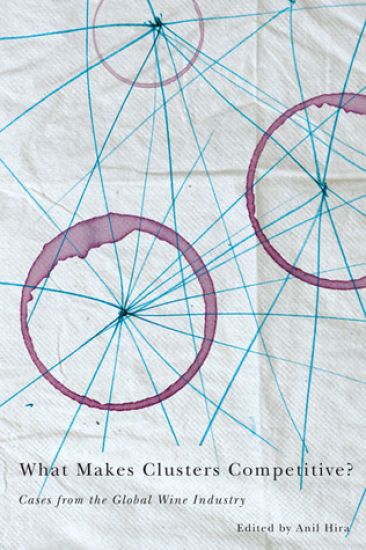
What Makes Clusters Competitive?

What Makes Clusters Competitive?

Anil Hira

McGill-Queen's University Press
2013
sidottu
While global competitiveness is increasingly invoked as necessary for economic success stories, there are few answers available about how it can be achieved or maintained. The idea of stimulating industries to spur on economies is often proposed, but industrial policy can be seen as a boondoggle of government spending, and theorists of globalization are doubtful that such efforts can succeed in a world of fragmented supply chains. What Makes Clusters Competitive? tests fundamental theoretical hypotheses about what makes industries competitive in a globalized world by using the wine industries of several countries as case studies: Extremadura (Spain), Tuscany (Italy), South Australia, Chile, and British Columbia (Canada), Taking into account historical and location-specific characteristics, and drawing out policy lessons for other regions that would like to promote their industries, this volume demonstrates the value of applying cluster theory to understand market forces, while also describing the forces underlying the development of the wine industry in a range of different settings. An excellent resource for those interested in what makes industries succeed or struggle, What Makes Clusters Competitive? offers guidance for policymakers and the private sector on how to promote local industries. Contributors include David Aylward, Alexis Bwenge, Sara Daniele, F.J. Mesias Diaz, Christian Felzenstein, Husam Gabreldar, F. Pulido Garcia, Sarah Giest, Elisa Giuliani, Andy Hira, Mike Howlett, A.F. Pulido Moreno, and Oriana Perrone.
What Makes Clusters Competitive?

What Makes Clusters Competitive?

Anil Hira

McGill-Queen's University Press
2013
nidottu
While global competitiveness is increasingly invoked as necessary for economic success stories, there are few answers available about how it can be achieved or maintained. The idea of stimulating industries to spur on economies is often proposed, but industrial policy can be seen as a boondoggle of government spending, and theorists of globalization are doubtful that such efforts can succeed in a world of fragmented supply chains. What Makes Clusters Competitive? tests fundamental theoretical hypotheses about what makes industries competitive in a globalized world by using the wine industries of several countries as case studies: Extremadura (Spain), Tuscany (Italy), South Australia, Chile, and British Columbia (Canada), Taking into account historical and location-specific characteristics, and drawing out policy lessons for other regions that would like to promote their industries, this volume demonstrates the value of applying cluster theory to understand market forces, while also describing the forces underlying the development of the wine industry in a range of different settings. An excellent resource for those interested in what makes industries succeed or struggle, What Makes Clusters Competitive? offers guidance for policymakers and the private sector on how to promote local industries. Contributors include David Aylward, Alexis Bwenge, Sara Daniele, F.J. Mesias Diaz, Christian Felzenstein, Husam Gabreldar, F. Pulido Garcia, Sarah Giest, Elisa Giuliani, Andy Hira, Mike Howlett, A.F. Pulido Moreno, and Oriana Perrone.
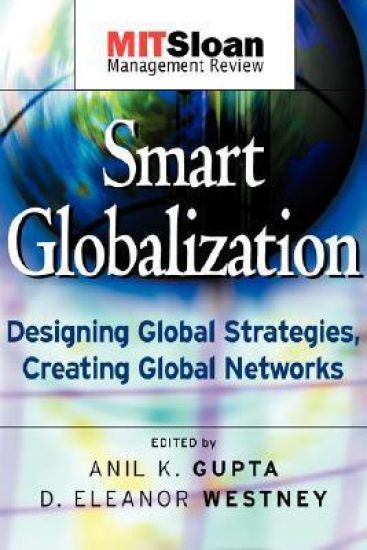
Smart Globalization

Smart Globalization

Anil K. Gupta

Jossey-Bass Inc.,U.S.
2003
nidottu
Smart Globalization i s a compendium of leading-edge thinking on global strategy first published in the acclaimed MIT Sloan Management Review . The central premise underlying this book is that globalization can be a double-edged sword. The global or globalizing firm has the potential to reap several types of benefits such as the vast potential of a much larger market arena, opportunities to capture scale- and location-based cost efficiencies, and exposure to a multiplicity of new product and process ideas. However, globalization also exposes the firm to numerous strategic and organizational challenges emanating from a dramatic increase in diversity, complexity, and uncertainty - external as well as internal to the firm. How managers address these challenges determines whether globalization yields competitive advantage or disadvantage and makes the company stronger or weaker. "Smart" globalization is the ability to capture the benefits and minimize the costs and risks. Smart Globalization s expert contributors>leaders in the design of winning global strategies and in the creation of effective global networks>include: David J. Arnold, Christopher A. Bartlett, Julian M. Birkeinshaw, J. Stewart Black, Joseph N. Fry, Sumantra Ghoshal, Vijay Govindarajan, Hal B. Gregersen, Anil K. Gupta, Stuart L. Hart, W. Chan Kim, Bruce Kogut, David L. Levy, Renie A. Mauborgne, Allen J. Morrison, Mark B. Milstein, Das Narayandas, John A. Quelch, Gordon Swartz, Stephen E. Weiss, and George S. Yip.
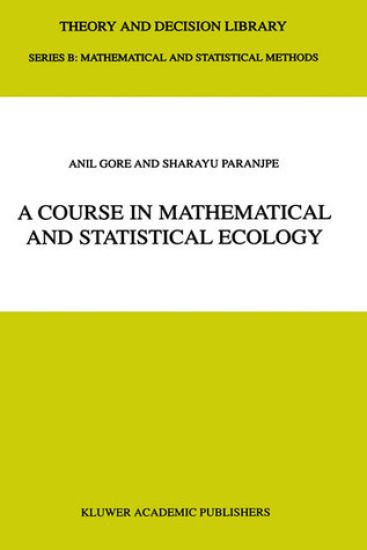
A Course in Mathematical and Statistical Ecology

A Course in Mathematical and Statistical Ecology

Anil Gore; S.A. Paranjpe

Springer
2000
sidottu
As the world enters the new millennium, mankind faces a series ofnew prob­ lems, many of them created by man himself. These include overpopulation, air and water pollution, global warming, accumulation of greenhouse gases, darnage to the ozone layer and loss of biodiversity. Perhaps these problems were around even earlier in an incipient stage, but they have now assumed global proportions and are uppermost in the minds of all. A natural con­ sequence is enhanced interest in sciences connected with these problems. Ecology is a field that is immensely useful in understanding many of them. In the seventies, nature conservation became a concern of wide sections of society, well beyond the small group of expert ecologists. Species extinc­ tion and depletion of biological resources were seen as major threats to human welfare. It was therefore natural for scientists from different disci­ plines to seek reasons behind these developments. We were no exceptions and when opportunity to interact with ecologists as statistreal consultants came, we found ourselves reading more and more of ecology and evolution­ ary biology. Several years ago we proposed starting of an elective one semester course on statistical ecology for graduate students of statistics of Pune University.