The Hermetic Kabbalah of Anna Kingsford, The Credo of Christendom & other addresses and essays on Esoteric Christianity, by Anna Kingsford and Edward Maitland represented for the 21st century enquirer. In 1883 Anna Kingsford was made President of the Theosophical Society, promoted a Western, Christian and Hermetic Esotericism. She claimed to recieve mystical insights in trance states and sleep, she was an advocate of women's rights anti-vivisection & vegetarianism. Mahatma Gandhi is said to have sold her books.
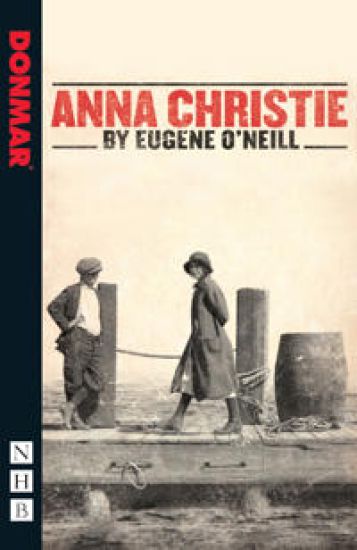
Eugene O’Neill’s epic Pulitzer Prize-winning play about love and forgiveness charts one woman’s longing to forget the dark secrets of her past and hope for salvation. Exiled from her home by the Old Devil Sea to the inland plains, Anna Christie’s life changed for ever at just five years of age. Fifteen years later, she is reunited with the father who sent her away, and sets sail in search of a new beginning. Anna Christie was first staged at the Vanderbilt Theater, New York, in November 1921. Its first London production was at the Strand Theatre in April 1923. This edition of Anna Christie was published alongside the 2011 revival at the Donmar Warehouse, London.
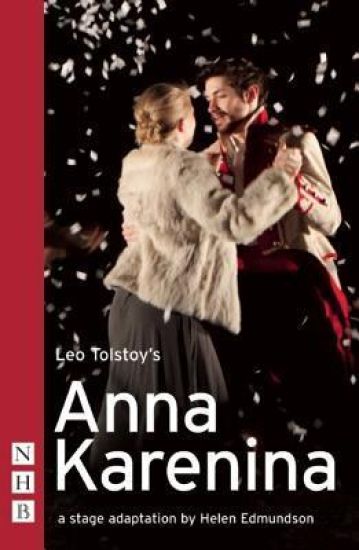
Helen Edmundson's celebrated and 'exemplary' (The Times) adaptation of Leo Tolstoy's enduring classic is a vibrant and deeply moving meditation on the nature of love. Anna is beautiful and admired but empty – until a chance meeting throws her into emotional turmoil and a scandalous affair. Contrasting with this tale of destructive love is the story of Levin, an idealistic man striving to find meaning in life – and a self-portrait of Tolstoy himself. Helen Edmundson's stage adaptation of Anna Karenina was first performed by Shared Experience at the Theatre Royal, Winchester, in January 1992 at the start of a nationwide tour. The production went on to win the Time Out Award for Outstanding Theatrical Event of 1992. This edition of the play was published alongside a revival at the Arcola Theatre, London, in 2011.
Anna is a lonely ghost. She wants someone to move into her house, but she keeps scaring them away by sneezing, as she's allergic to dust! Will anyone move in? Includes short chapters to introduce children to this new format.
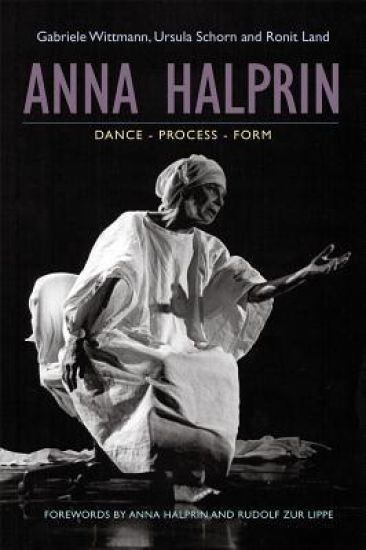
Anna Halprin is a world-famous theatre artist and early pioneer in the expressive arts healing movement. This book explores her personal growth as a dancer and choreographer and the development of her therapeutic and pedagogical approach. The authors, who each trained with Halprin, introduce her creative work and the 'Life/Art Process®' she developed, an approach that takes life experiences as a source for artistic expression. They also examine the wider impact of Halprin's work on the fields of art, education, therapy and political action and discuss how she crossed the conventionally defined boundaries between them.Exploring Halprin's belief that dance can be a powerful force for transformation, healing, education, and making our lives whole, this book is a tribute to an exceptional body of artistic and therapeutic work and will be of interest to expressive arts therapists, dance movement psychotherapists, dancers, performance and community artists, and anyone with an interest in contemporary dance.
Anna Comnena is described as the first female historian, the author of her father's celebratory biography. She was an educated princess in eleventh-century Constantinople, the daughter of the Emperor Alexius. She was expected to succeed him, and raised as heir, but her hopes were dashed by the birth of a younger brother. In what is over-modestly described as a biography, Naomi Mitchison combines her story with that of her father, and the whole civilisation of the Eastern Empire, indeed the whole known world of the time. The Eastern Empire is seen as a necessary bulwark between a young and promising Europe and the perils of Islam and wild tribes in Asia. Mitchison also warns her readership of the perils of a dead civilisation, and writing in 1928 she poses a challenge to the direction of Europe in these perilous postwar years. Thwarted ambition at last drove Anna to attempt to kill her brother, who, says Mitchison, went on to be one of the best of Emperors. Isobel Murray is Emeritus Professor of Modern Scottish Literature at the University of Aberdeen.
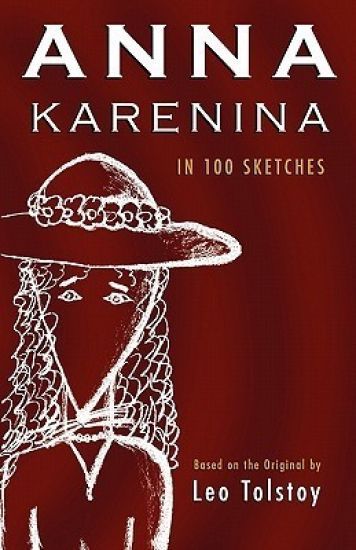
Translated by Louise and Aylmer Maude. Introduction and Notes by E.B. Greenwood, University of Kent. Anna Karenina is one of the most loved and memorable heroines of literature. Her overwhelming charm dominates a novel of unparalleled richness and density. Tolstoy considered this book to be his first real attempt at a novel form, and it addresses the very nature of society at all levels,- of destiny, death, human relationships and the irreconcilable contradictions of existence. It ends tragically, and there is much that evokes despair, yet set beside this is an abounding joy in life's many ephemeral pleasures, and a profusion of comic relief.
Two compelling and thought-provoking plays from one of the twentieth century's most significant writers. Anna Christie Eugene O’Neill’s epic Pulitzer Prize-winning play about love and forgiveness charts one woman’s longing to forget the dark secrets of her past and hope for salvation. Exiled from her home by the Old Devil Sea to the inland plains, Anna Christie’s life changed for ever at just five years of age. Fifteen years later, she is reunited with the father who sent her away, and sets sail in search of a new beginning. Anna Christie was first staged at the Vanderbilt Theater, New York, in November 1921. Its first London production was at the Strand Theatre in April 1923. The Emperor Jones An expressionistic chronicle of a black dictator's flight from his oppressed subjects. Brutus Jones rules his island's citizens from his opulent palace with tyrannical ease – until the day that they all disappear. They have retreated to the hills, following their former native leader Lem, and plan to revolt. It is time for the Emperor to make good his escape. The Emperor Jones was first performed at the Playwrights' Theater, New York, in November 1920. Its UK premiere was at the Ambassadors' Theatre, London, in September 1925. This edition includes a full introduction, biographical sketch and chronology.
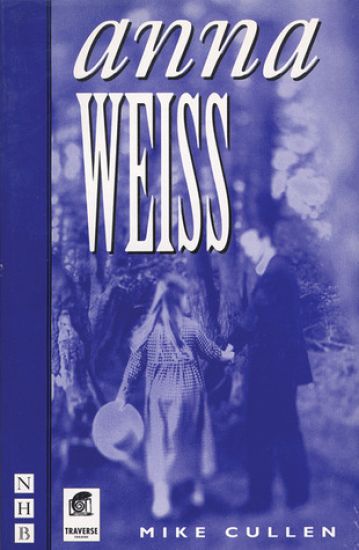
An explosive, gripping and disturbing play about the phenomenon of False Memory Syndrome. Anna Weiss is a hypnotherapist, specialising in revealing 'lost' memories. Under her care, twenty-year-old Lynn has begun to 'remember' a long history of sexual abuse by her father. When Lynn confronts her father, David, he protests his innocence vehemently – so are Lynn's memories real or are they dark auto-suggestions? Mike Cullen's play Anna Weiss was first performed at the Traverse Theatre, Edinburgh, in 1997, winning the Edinburgh Festival Critics' Award. It was revived at the Whitehall Theatre in the West End in 1999.
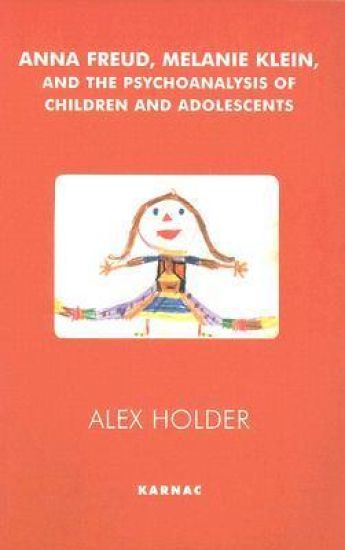
The central theme of this book is concerned with the controversies on technique between Anna Freud and Melanie Klein in the 1920s and 1930s, and with a clear differentiation between child analysis proper and analytical child psychotherapy. Alex Holder takes into account the historic background in which child psychoanalysis developed, especially World War II and the Nazi regime in Germany. The author also looks at the way child psychoanalysis developed in specific institutions, such as the Hampstead Child Therapy Course in London, and in specific areas, such as the spread of child analysis in the US. The concluding chapter is on the importance of knowledge of child analysis among psychoanalysts working with adults. The differences in the theories of the two "greats" in child analysis, Anna Freud and Melanie Klein, are examined one by one, including such concepts as the role of transference, the Oedipus complex and the superego.
Anna Karenina is the story of a woman who ab andons her empty existence as a society wife and embarks on a doomed love affair with the passionate but emotionally ban krupt Vronsky. It is widely acknowledged as the greatest nov el in any language '
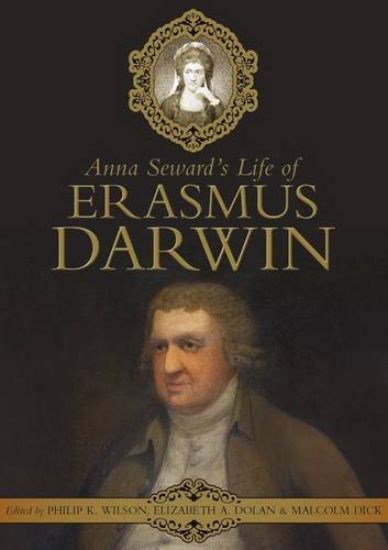
A biography that reveals the author's complex relationship with Darwin, her love of poetry and the natural landscape, and the personality, challenges and aspirations of an intelligent, passionate and independent woman writer of the early Romantic period.
Anna Brownwell Jameson (1794-1869) was a central figure in the London world of letters and art in the early Victorian period, and an important feminist writer. Her friends included such figures as Harriet Martineau, Lady Byron, Robert Browning and Elizabeth Barrett Browning. This study considers her life and works, using a different Jameson work as the central focus of each chapter. The author considers the particular non-fiction discourse in which the work is written, as well as such issues as gender and colonialism. Arranged chronologically, the book also charts the growth and development of a determined feminism in the vital years of the early Victorian period, and compares Jameson to her contemporaries.
This superb introduction to the work of the famous Russian poet Anna Akhmatova (1886-1966) begins with an account of her life in pre-revolutionary St. Petersburg and Stalinist Russia, and focuses principally on her poetry. Incorporating all recent scholarship, the author traces the way in which Akhmatova's work reflects the tumultuous times in which she lived, and her emergence as the spokeswoman of her generation, to provide a long overdue account of her entire career.
This superb introduction to the work of the famous Russian poet Anna Akhmatova (1886-1966) begins with an account of her life in pre-revolutionary St. Petersburg and Stalinist Russia, and focuses principally on her poetry. Incorporating all recent scholarship, the author traces the way in which Akhmatova's work reflects the tumultuous times in which she lived, and her emergence as the spokeswoman of her generation, to provide a long overdue account of her entire career.
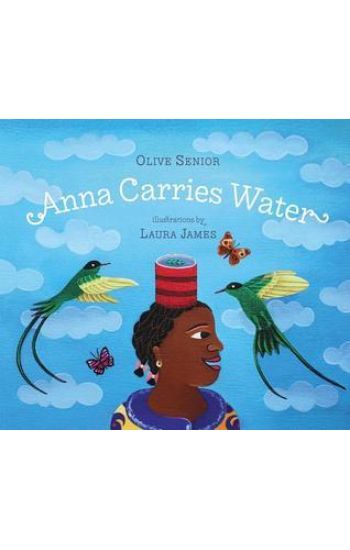
Anna fetches water from the spring every day, but she can't carry it on her head like her older brothers and sisters can. In this charming and poetic family story set in Jamaica, Commonwealth Prize-winning author Olive Senior shows young readers the power of determination, as Anna achieves her goal and overcomes her fear.
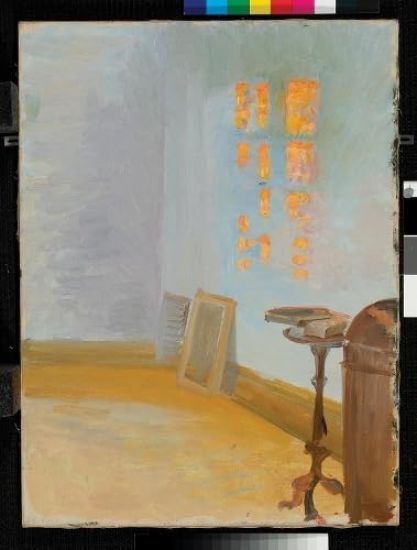
This catalogue accompanies the first major exhibition in the UK dedicated to Anna Ancher (1859 – 1935), considered to be one the most innovative artists in Danish art history. Bringing together recently discovered paintings from Anna Ancher’s home, alongside an extensive body of work made throughout the artist’s long career, the exhibition will feature more than 40 of her paintings, including the artist’s most famous masterpieces on special loan from Art Museums of Skagen. A central figure of the Skagen artist colony, based at the northernmost point of Jutland, Ancher is widely considered to be the most significant female painter in Danish art history. She is widely celebrated in her homeland yet remains relatively unknown to British audiences. Ancher was an influential figure of the Scandinavian ‘Modern Breakthrough’ movement that sought to capture real life, demonstrated in her intimate, observational works, which documented everyday experiences in the fishing town of Skagen. Influenced by her travels to Paris, as well as French Impressionism, the artist produced vivid interiors and evocative landscape scenes in which light becomes the central figure. The exhibition will demonstrate Ancher’s bold approach to colour and radical interpretation of everyday scenes as a truly pioneering modern painter.