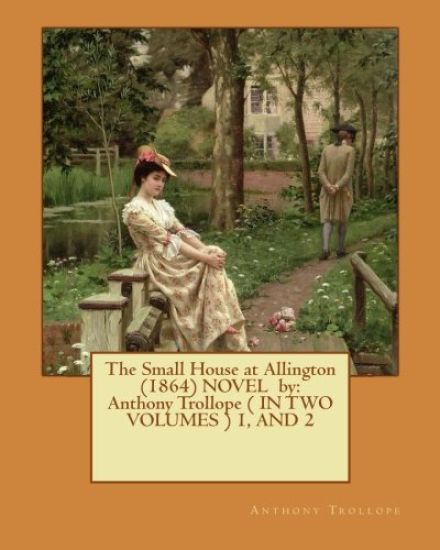
The Small House at Allington is the fifth novel in Anthony Trollope's series known as the "Chronicles of Barsetshire", first published in 1864. It enjoyed a revival in popularity in the early 1990s when the British prime minister, John Major, declared it as his favourite book.The Small House at Allington concerns the Dale family, who live in the "Small House", a dower house intended for the widowed mother (Dowager) of the owner of the estate. The landowner, in this instance, is the bachelor Squire of Allington, Christopher Dale. Dale's mother having died, he has allocated the Small House, rent free, to his widowed sister-in-law and her daughters Isabella ("Bell") and Lilian ("Lily"). When the novel begins Bernard, the squire's nephew and heir, brings his friend Adolphus Crosbie to Allington and introduces him to the family. Crosbie is handsome and well-regarded in London society. Bell and Lily are impressed by Crosbie's charm and worldliness and Lily, the younger and wittier sister, labels him an Apollo. She and Crosbie grow increasingly intimate during his stay at Allington and before leaving he proposes to her. Mrs. Dale has no money for a dowry, but Crosbie thinks the squire might provide Lily with some fortune given that, in many ways, he treats her and Bell as if they were his daughters. When asked, the squire informs him this is not the case, leading Crosbie to reflect on how his salary as a clerk at the General Committee Office allows him to live comfortably as a bachelor but if he were to marry and support a family on his current income they would need to live very humbly. The engagement is made public and celebrated in Allington, but when Lily learns about his misunderstanding regarding her possible fortune she offers to break off the engagement with no hard feelings. Crosbie refuses, however, because he is impressed by this noble gesture and genuinely fond of Lily.
The Three Clerks (1857) is a novel by Anthony Trollope, set in the lower reaches of the Civil Service. It draws on Trollope's own experiences as a junior clerk in the General Post Office, and has been called the most autobiographical of Trollope's novels. In 1883 Trollope gave it as his opinion that The Three Clerks was a better novel than any of his earlier ones, which included The Warden and Barchester Towers.
The Kellys and the O'Kellys is a novel by Anthony Trollope. It was written in Ireland and published in 1848. Anthony Trollope ( 24 April 1815 - 6 December 1882) was an English novelist of the Victorian era. Among his best-known works is a series of novels collectively known as the Chronicles of Barsetshire, which revolves around the imaginary county of Barsetshire. He also wrote novels on political, social, and gender issues, and other topical matters. Trollope's literary reputation dipped somewhat during the last years of his life, but he had regained the esteem of critics by the mid-20th century.Thomas Anthony Trollope, Anthony's father, was a barrister. Though a clever and well-educated man and a Fellow of New College, Oxford, he failed at the bar due to his bad temper. In addition, his ventures into farming proved unprofitable, and he lost an expected inheritance when an elderly childless uncle remarried and had children. As a son of landed gentry, he wanted his sons to be raised as gentlemen and to attend Oxford or Cambridge. Anthony Trollope suffered much misery in his boyhood owing to the disparity between the privileged background of his parents and their comparatively small means.Born in London, Anthony attended Harrow School as a free day pupil for three years from the age of seven because his father's farm, acquired for that reason, lay in that neighbourhood. After a spell at a private school at Sunbury, he followed his father and two older brothers to Winchester College, where he remained for three years. He returned to Harrow as a day-boy to reduce the cost of his education. Trollope had some very miserable experiences at these two public schools. They ranked as two of the most lite schools in England, but Trollope had no money and no friends, and was bullied a great deal. At the age of twelve, he fantasised about suicide. However, he also daydreamed, constructing elaborate imaginary worlds. In 1827, his mother Frances Trollope moved to America with Trollope's three younger siblings, to Nashoba Commune. After that failed, she opened a bazaar in Cincinnati, which proved unsuccessful. Thomas Trollope joined them for a short time before returning to the farm at Harrow, but Anthony stayed in England throughout. His mother returned in 1831 and rapidly made a name for herself as a writer, soon earning a good income. His father's affairs, however, went from bad to worse. He gave up his legal practice entirely and failed to make enough income from farming to pay rents to his landlord, Lord Northwick. In 1834, he fled to Belgium to avoid arrest for debt. The whole family moved to a house near Bruges, where they lived entirely on Frances's earnings. In Belgium, Anthony was offered a commission in an Austrian cavalry regiment. To accept it, he needed to learn French and German; he had a year in which to acquire these languages. To learn them without expense to himself and his family, he took a position as an usher (assistant master) in a school in Brussels, which position made him the tutor of thirty boys. After six weeks of this, however, he received an offer of a clerkship in the General Post Office, obtained through a family friend. He returned to London in the autumn of 1834 to take up this post. Thomas Trollope died the following year.
What, Santerre said Marie, shuddering. "Oh he is a most horrid monster It was he that led out our dear sainted King to be murdered; it was he that urged on the furious mob to spill so much blood. They say that in all Paris there is not a greater wretch than this Santerre." Anthony Trollope ( 24 April 1815 - 6 December 1882) was an English novelist of the Victorian era. Among his best-known works is a series of novels collectively known as the Chronicles of Barsetshire, which revolves around the imaginary county of Barsetshire. He also wrote novels on political, social, and gender issues, and other topical matters. 1] Trollope's literary reputation dipped somewhat during the last years of his life, but he had regained the esteem of critics by the mid-20th century.Thomas Anthony Trollope, Anthony's father, was a barrister. Though a clever and well-educated man and a Fellow of New College, Oxford, he failed at the bar due to his bad temper. In addition, his ventures into farming proved unprofitable, and he lost an expected inheritance when an elderly childless uncle remarried and had children. As a son of landed gentry, he wanted his sons to be raised as gentlemen and to attend Oxford or Cambridge. Anthony Trollope suffered much misery in his boyhood owing to the disparity between the privileged background of his parents and their comparatively small means.Born in London, Anthony attended Harrow School as a free day pupil for three years from the age of seven because his father's farm, b] acquired for that reason, lay in that neighbourhood. After a spell at a private school at Sunbury, he followed his father and two older brothers to Winchester College, where he remained for three years. He returned to Harrow as a day-boy to reduce the cost of his education. Trollope had some very miserable experiences at these two public schools. They ranked as two of the most lite schools in England, but Trollope had no money and no friends, and was bullied a great deal. At the age of twelve, he fantasised about suicide. However, he also daydreamed, constructing elaborate imaginary worlds. In 1827, his mother Frances Trollope moved to America with Trollope's three younger siblings, to Nashoba Commune. After that failed, she opened a bazaar in Cincinnati, which proved unsuccessful. Thomas Trollope joined them for a short time before returning to the farm at Harrow, but Anthony stayed in England throughout. His mother returned in 1831 and rapidly made a name for herself as a writer, soon earning a good income. His father's affairs, however, went from bad to worse. He gave up his legal practice entirely and failed to make enough income from farming to pay rents to his landlord, Lord Northwick. In 1834, he fled to Belgium to avoid arrest for debt. The whole family moved to a house near Bruges, where they lived entirely on Frances's earnings. In Belgium, Anthony was offered a commission in an Austrian cavalry regiment. To accept it, he needed to learn French and German; he had a year in which to acquire these languages. To learn them without expense to himself and his family, he took a position as an usher (assistant master) in a school in Brussels, which position made him the tutor of thirty boys. After six weeks of this, however, he received an offer of a clerkship in the General Post Office, obtained through a family friend. He returned to London in the autumn of 1834 to take up this post. Thomas Trollope died the following year.
The Three Clerks (1857) is a novel by Anthony Trollope, set in the lower reaches of the Civil Service. It draws on Trollope's own experiences as a junior clerk in the General Post Office, and has been called the most autobiographical of Trollope's novels. In 1883 Trollope gave it as his opinion that The Three Clerks was a better novel than any of his earlier ones, which included The Warden and Barchester Towers.he story deals with the two friends Harry Norman and Alaric Tudor, who work at the Weights and Measures Office, and with Alaric's cousin Charley, who works in Internal Navigation. Harry falls in love with Gertrude Woodward, the eldest of the three beautiful daughters of a clergyman's widow, while Alaric pursues Linda, the second daughter. Gertrude rejects Harry's marriage proposal, and Alaric, rising in the ranks of the civil service, pursues and gains Gertrude's hand. Harry is unable to forgive Alaric, but eventually he marries the second daughter, Linda, and later becomes a country squire. Alaric meanwhile, becomes a Commissioner, but he falls under the influence of an unscrupulous member of Parliament, Undy Scott, who talks him into various schemes of dubious legality and morality, which eventually lead to his downfall. Charley Tudor is considered a rake, who spends his time at London's public houses and gin palaces. However, he dreams of a cleaner life, and loves Katie, the youngest sister, who falls in love with Charley after he rescues her from drowning in the Thames. Charley is also engaged to an Irish barmaid, and Katie's mother considers Charley an unsuitable husband, and forces him to swear never to speak to her.Trollope wrote The Three Clerks between 15 February 1857 and 18 August 1857, largely while commuting to and from work by train. It was published in three volumes by Richard Bentley in December 1857, though the title-page of the first edition bears the date 1858. Anthony Trollope ( 24 April 1815 - 6 December 1882) was an English novelist of the Victorian era. Among his best-known works is a series of novels collectively known as the Chronicles of Barsetshire, which revolves around the imaginary county of Barsetshire. He also wrote novels on political, social, and gender issues, and other topical matters. 1] Trollope's literary reputation dipped somewhat during the last years of his life, but he had regained the esteem of critics by the mid-20th century.Thomas Anthony Trollope, Anthony's father, was a barrister. Though a clever and well-educated man and a Fellow of New College, Oxford, he failed at the bar due to his bad temper. In addition, his ventures into farming proved unprofitable, and he lost an expected inheritance when an elderly childless uncle remarried and had children. As a son of landed gentry, he wanted his sons to be raised as gentlemen and to attend Oxford or Cambridge. Anthony Trollope suffered much misery in his boyhood owing to the disparity between the privileged background of his parents and their comparatively small means.Born in London, Anthony attended Harrow School as a free day pupil for three years from the age of seven because his father's farm, b] acquired for that reason, lay in that neighbourhood. After a spell at a private school at Sunbury, he followed his father and two older brothers to Winchester College, where he remained for three years. He returned to Harrow as a day-boy to reduce the cost of his education. Trollope had some very miserable experiences at these two public schools. They ranked as two of the most lite schools in England, but Trollope had no money and no friends, and was bullied a great deal. At the age of twelve, he fantasised about suicide. However, he also daydreamed, constructing elaborate imaginary worlds.....
THE BERTRAMS (1859) by Anthony Trollope is an unusual novel of world travel, in addition to the typical subjects of matrimony and money, social strata, couples and relationships, by the author whose best-known work (such as the Barsetshire novels) is normally set in England. This one has the flavor of a Middle Eastern travelogue with lively Victorian commentary and satire, and as such it is a fascinating glimpse into the international mindset of the time. Anthony Trollope ( 24 April 1815 - 6 December 1882) was an English novelist of the Victorian era. Among his best-known works is a series of novels collectively known as the Chronicles of Barsetshire, which revolves around the imaginary county of Barsetshire. He also wrote novels on political, social, and gender issues, and other topical matters. 1] Trollope's literary reputation dipped somewhat during the last years of his life, but he had regained the esteem of critics by the mid-20th century.Thomas Anthony Trollope, Anthony's father, was a barrister. Though a clever and well-educated man and a Fellow of New College, Oxford, he failed at the bar due to his bad temper. In addition, his ventures into farming proved unprofitable, and he lost an expected inheritance when an elderly childless uncle remarried and had children. As a son of landed gentry, he wanted his sons to be raised as gentlemen and to attend Oxford or Cambridge. Anthony Trollope suffered much misery in his boyhood owing to the disparity between the privileged background of his parents and their comparatively small means.Born in London, Anthony attended Harrow School as a free day pupil for three years from the age of seven because his father's farm, b] acquired for that reason, lay in that neighbourhood. After a spell at a private school at Sunbury, he followed his father and two older brothers to Winchester College, where he remained for three years. He returned to Harrow as a day-boy to reduce the cost of his education. Trollope had some very miserable experiences at these two public schools. They ranked as two of the most lite schools in England, but Trollope had no money and no friends, and was bullied a great deal. At the age of twelve, he fantasised about suicide. However, he also daydreamed, constructing elaborate imaginary worlds. In 1827, his mother Frances Trollope moved to America with Trollope's three younger siblings, to Nashoba Commune. After that failed, she opened a bazaar in Cincinnati, which proved unsuccessful. Thomas Trollope joined them for a short time before returning to the farm at Harrow, but Anthony stayed in England throughout. His mother returned in 1831 and rapidly made a name for herself as a writer, soon earning a good income. His father's affairs, however, went from bad to worse. He gave up his legal practice entirely and failed to make enough income from farming to pay rents to his landlord, Lord Northwick. In 1834, he fled to Belgium to avoid arrest for debt. The whole family moved to a house near Bruges, where they lived entirely on Frances's earnings. In Belgium, Anthony was offered a commission in an Austrian cavalry regiment. To accept it, he needed to learn French and German; he had a year in which to acquire these languages. To learn them without expense to himself and his family, he took a position as an usher (assistant master) in a school in Brussels, which position made him the tutor of thirty boys. After six weeks of this, however, he received an offer of a clerkship in the General Post Office, obtained through a family friend. He returned to London in the autumn of 1834 to take up this post. Thomas Trollope died the following year.
THE BERTRAMS (1859) by Anthony Trollope is an unusual novel of world travel, in addition to the typical subjects of matrimony and money, social strata, couples and relationships, by the author whose best-known work (such as the Barsetshire novels) is normally set in England. This one has the flavor of a Middle Eastern travelogue with lively Victorian commentary and satire, and as such it is a fascinating glimpse into the international mindset of the time. Anthony Trollope ( 24 April 1815 - 6 December 1882) was an English novelist of the Victorian era. Among his best-known works is a series of novels collectively known as the Chronicles of Barsetshire, which revolves around the imaginary county of Barsetshire. He also wrote novels on political, social, and gender issues, and other topical matters. 1] Trollope's literary reputation dipped somewhat during the last years of his life, but he had regained the esteem of critics by the mid-20th century.Thomas Anthony Trollope, Anthony's father, was a barrister. Though a clever and well-educated man and a Fellow of New College, Oxford, he failed at the bar due to his bad temper. In addition, his ventures into farming proved unprofitable, and he lost an expected inheritance when an elderly childless uncle remarried and had children. As a son of landed gentry, he wanted his sons to be raised as gentlemen and to attend Oxford or Cambridge. Anthony Trollope suffered much misery in his boyhood owing to the disparity between the privileged background of his parents and their comparatively small means.Born in London, Anthony attended Harrow School as a free day pupil for three years from the age of seven because his father's farm, b] acquired for that reason, lay in that neighbourhood. After a spell at a private school at Sunbury, he followed his father and two older brothers to Winchester College, where he remained for three years. He returned to Harrow as a day-boy to reduce the cost of his education. Trollope had some very miserable experiences at these two public schools. They ranked as two of the most lite schools in England, but Trollope had no money and no friends, and was bullied a great deal. At the age of twelve, he fantasised about suicide. However, he also daydreamed, constructing elaborate imaginary worlds. In 1827, his mother Frances Trollope moved to America with Trollope's three younger siblings, to Nashoba Commune. After that failed, she opened a bazaar in Cincinnati, which proved unsuccessful. Thomas Trollope joined them for a short time before returning to the farm at Harrow, but Anthony stayed in England throughout. His mother returned in 1831 and rapidly made a name for herself as a writer, soon earning a good income. His father's affairs, however, went from bad to worse. He gave up his legal practice entirely and failed to make enough income from farming to pay rents to his landlord, Lord Northwick. In 1834, he fled to Belgium to avoid arrest for debt. The whole family moved to a house near Bruges, where they lived entirely on Frances's earnings. In Belgium, Anthony was offered a commission in an Austrian cavalry regiment. To accept it, he needed to learn French and German; he had a year in which to acquire these languages. To learn them without expense to himself and his family, he took a position as an usher (assistant master) in a school in Brussels, which position made him the tutor of thirty boys. After six weeks of this, however, he received an offer of a clerkship in the General Post Office, obtained through a family friend. He returned to London in the autumn of 1834 to take up this post. Thomas Trollope died the following year.
THE BERTRAMS (1859) by Anthony Trollope is an unusual novel of world travel, in addition to the typical subjects of matrimony and money, social strata, couples and relationships, by the author whose best-known work (such as the Barsetshire novels) is normally set in England. This one has the flavor of a Middle Eastern travelogue with lively Victorian commentary and satire... Anthony Trollope ( 24 April 1815 - 6 December 1882) was an English novelist of the Victorian era. Among his best-known works is a series of novels collectively known as the Chronicles of Barsetshire, which revolves around the imaginary county of Barsetshire. He also wrote novels on political, social, and gender issues, and other topical matters. 1] Trollope's literary reputation dipped somewhat during the last years of his life, but he had regained the esteem of critics by the mid-20th century.Thomas Anthony Trollope, Anthony's father, was a barrister. Though a clever and well-educated man and a Fellow of New College, Oxford, he failed at the bar due to his bad temper. In addition, his ventures into farming proved unprofitable, and he lost an expected inheritance when an elderly childless uncle remarried and had children. As a son of landed gentry, he wanted his sons to be raised as gentlemen and to attend Oxford or Cambridge. Anthony Trollope suffered much misery in his boyhood owing to the disparity between the privileged background of his parents and their comparatively small means.Born in London, Anthony attended Harrow School as a free day pupil for three years from the age of seven because his father's farm, b] acquired for that reason, lay in that neighbourhood. After a spell at a private school at Sunbury, he followed his father and two older brothers to Winchester College, where he remained for three years. He returned to Harrow as a day-boy to reduce the cost of his education. Trollope had some very miserable experiences at these two public schools. They ranked as two of the most lite schools in England, but Trollope had no money and no friends, and was bullied a great deal. At the age of twelve, he fantasised about suicide. However, he also daydreamed, constructing elaborate imaginary worlds. In 1827, his mother Frances Trollope moved to America with Trollope's three younger siblings, to Nashoba Commune. After that failed, she opened a bazaar in Cincinnati, which proved unsuccessful. Thomas Trollope joined them for a short time before returning to the farm at Harrow, but Anthony stayed in England throughout. His mother returned in 1831 and rapidly made a name for herself as a writer, soon earning a good income. His father's affairs, however, went from bad to worse. He gave up his legal practice entirely and failed to make enough income from farming to pay rents to his landlord, Lord Northwick. In 1834, he fled to Belgium to avoid arrest for debt. The whole family moved to a house near Bruges, where they lived entirely on Frances's earnings. In Belgium, Anthony was offered a commission in an Austrian cavalry regiment. To accept it, he needed to learn French and German; he had a year in which to acquire these languages. To learn them without expense to himself and his family, he took a position as an usher (assistant master) in a school in Brussels, which position made him the tutor of thirty boys. After six weeks of this, however, he received an offer of a clerkship in the General Post Office, obtained through a family friend. He returned to London in the autumn of 1834 to take up this post. Thomas Trollope died the following year.
Miss Mackenzie is an 1865 novel by Anthony Trollope. It was written in 1864 and published by Chapman & Hall in February 1865. In his 1883 autobiography, Trollope stated that Miss Mackenzie "was written with the desire that a novel may be produced without any love; but even in this attempt it breaks down before the conclusion." Plot: After spending most of her adult life nursing first her dying uncle, and then her invalid brother Walter, Margaret Mackenzie inherits a significant fortune from Walter at his death. Seeking a place in society, Miss Mackenzie moves to a town called Littlebath, (modeled after Bath, Somerset), and joins a group of Evangelicals centered around the popular local pastor Mr. Stumfold and his wife. At Littlebath she meets three men who are interested in marrying her. One is Samuel Rubb, the business partner of her surviving brother, Tom Mackenzie; another is Mr. Maguire, Mr. Stumfold's curate; and the third is her cousin, Mr. John Ball. She is soon asked by Mr. Rubb to loan him and her brother 2,500 pounds for business purposes, a deal that turns out badly. Mr. Rubb admits that he has cheated Miss Mackenzie, but his honesty in telling her the truth about his actions allows him to remain a friend and prospective husband. She is invited for a short stay with the Ball family, and while there refuses a marriage proposal from Mr. John Ball. Mr. Maguire asks Miss Mackenzie to marry him when she returns to Littlebath, but she is forced to put him off after finding out that her brother Tom is dying and that she must go to him in London. While in London she refuses Mr. Maguire by letter. After Tom's death, Miss Mackenzie finds out that there is a problem with her brother Walter's will, and that Mr. John Ball may be the rightful inheritor of the money. He asks her to marry him again while the legal issues are being dealt with by their respective lawyers, and she accepts him. Mr. Maguire interferes with Mr. John Ball, libeling him in an Evangelical newspaper, and visiting London to try to get Miss Mackenzie to marry him instead. The courts eventually decide in favor of Mr. John Ball, who soon becomes Sir John Ball after his father's death. Over objections from his mother, Lady Ball, Sir John and Miss Mackenzie are married and Mr. Maguire is forced to give up his own attempts. Mr. Rubb marries a lodger in Tom Mackenzie's old house, Miss Corza, and Mr. Maguire finds a wife and a new position.... Anthony Trollope ( 24 April 1815 - 6 December 1882) was an English novelist of the Victorian era. Among his best-known works is a series of novels collectively known as the Chronicles of Barsetshire, which revolves around the imaginary county of Barsetshire. He also wrote novels on political, social, and gender issues, and other topical matters. Trollope's literary reputation dipped somewhat during the last years of his life, but he had regained the esteem of critics by the mid-20th century.
The Belton Estate is a novel by Anthony Trollope, written in 1865. The novel concerns itself with a young woman who has accepted one of two suitors, then discovered that he was unworthy of her love. It was the first novel published in the Fortnightly Review. Plot: Clara Amedroz is the only surviving child of the elderly squire of Belton Castle in Somersetshire. At twenty-five, she is old for an unmarried woman. Her father's income and savings have been dissipated to pay for the extravagances of her brother, who subsequently committed suicide. Since her father has no living sons, his estate, which is entailed, will pass upon his death to a distant cousin, Will Belton. Despite her poor prospects, she has two eligible suitors. Within four days of making her acquaintance, Will Belton proposes marriage to her. Belton is warm-hearted, kind, and generous, and these qualities make a strong impression on Clara. However, she believes herself in love with Captain Frederic Aylmer, although he has given no clear signs of feeling that way toward her. Aylmer is impeccable in his manners, smooth, urbane, well-read, and a member of Parliament; compared to him, Belton is awkward and unpolished. Clara rejects Belton's offer, urging him to regard her as a sister. Not long thereafter, Aylmer proposes to her, and she eagerly accepts. However, her happiness is short-lived. Her new fianc proves shallow and cold, more concerned with his own comfort than with her happiness. Moreover, he expects her to subject herself to his domineering mother. Mr. Amedroz dies; and although Belton offers to allow Clara to remain at Belton Castle, she goes to live with the Aylmer family in Yorkshire. Lady Aylmer, who wants her son to marry money or a title, exerts herself to make Clara miserable there; and Captain Aylmer offers no support to his betrothed. For Clara, the final straw comes when Lady Aylmer demands that she sever her ties with a friend. Mrs. Askerton, Lady Aylmer has learned, left an abusive drunken husband in India and lived with Colonel Askerton for several years before the death of her husband freed her to marry him. Clara is duly appalled by her friend's past immorality, but cannot bring herself to cast off someone who has come to depend on her friendship. Pressed relentlessly on the subject by Lady Aylmer, she declares an end to her engagement and returns to Somersetshire, where she accepts the hospitality of the Askertons. Will Belton has never ceased to show his love for Clara, and she realises that he is worthy of her love. However, she believes that it would be wrong to transfer her affection from one man to another. Only after Mrs. Askerton and Will's sister Mary Belton persuade her that it would be unjust to withhold her affection from Will can she bring herself to put aside her scruples and accept him. Marital bliss ensues. Anthony Trollope ( 24 April 1815 - 6 December 1882) was an English novelist of the Victorian era. Among his best-known works is a series of novels collectively known as the Chronicles of Barsetshire, which revolves around the imaginary county of Barsetshire. He also wrote novels on political, social, and gender issues, and other topical matters. Trollope's literary reputation dipped somewhat during the last years of his life, but he had regained the esteem of critics by the mid-20th century.
The Belton Estate is a novel by Anthony Trollope, written in 1865. The novel concerns itself with a young woman who has accepted one of two suitors, then discovered that he was unworthy of her love. It was the first novel published in the Fortnightly Review. Plot: Clara Amedroz is the only surviving child of the elderly squire of Belton Castle in Somersetshire. At twenty-five, she is old for an unmarried woman. Her father's income and savings have been dissipated to pay for the extravagances of her brother, who subsequently committed suicide. Since her father has no living sons, his estate, which is entailed, will pass upon his death to a distant cousin, Will Belton. Despite her poor prospects, she has two eligible suitors. Within four days of making her acquaintance, Will Belton proposes marriage to her. Belton is warm-hearted, kind, and generous, and these qualities make a strong impression on Clara. However, she believes herself in love with Captain Frederic Aylmer, although he has given no clear signs of feeling that way toward her. Aylmer is impeccable in his manners, smooth, urbane, well-read, and a member of Parliament; compared to him, Belton is awkward and unpolished. Clara rejects Belton's offer, urging him to regard her as a sister. Not long thereafter, Aylmer proposes to her, and she eagerly accepts. However, her happiness is short-lived. Her new fianc proves shallow and cold, more concerned with his own comfort than with her happiness. Moreover, he expects her to subject herself to his domineering mother. Mr. Amedroz dies; and although Belton offers to allow Clara to remain at Belton Castle, she goes to live with the Aylmer family in Yorkshire. Lady Aylmer, who wants her son to marry money or a title, exerts herself to make Clara miserable there; and Captain Aylmer offers no support to his betrothed. For Clara, the final straw comes when Lady Aylmer demands that she sever her ties with a friend. Mrs. Askerton, Lady Aylmer has learned, left an abusive drunken husband in India and lived with Colonel Askerton for several years before the death of her husband freed her to marry him. Clara is duly appalled by her friend's past immorality, but cannot bring herself to cast off someone who has come to depend on her friendship. Pressed relentlessly on the subject by Lady Aylmer, she declares an end to her engagement and returns to Somersetshire, where she accepts the hospitality of the Askertons. Will Belton has never ceased to show his love for Clara, and she realises that he is worthy of her love. However, she believes that it would be wrong to transfer her affection from one man to another. Only after Mrs. Askerton and Will's sister Mary Belton persuade her that it would be unjust to withhold her affection from Will can she bring herself to put aside her scruples and accept him. Marital bliss ensues. Anthony Trollope ( 24 April 1815 - 6 December 1882) was an English novelist of the Victorian era. Among his best-known works is a series of novels collectively known as the Chronicles of Barsetshire, which revolves around the imaginary county of Barsetshire. He also wrote novels on political, social, and gender issues, and other topical matters. Trollope's literary reputation dipped somewhat during the last years of his life, but he had regained the esteem of critics by the mid-20th century.
The Belton Estate is a novel by Anthony Trollope, written in 1865. The novel concerns itself with a young woman who has accepted one of two suitors, then discovered that he was unworthy of her love. It was the first novel published in the Fortnightly Review. plot: Clara Amedroz is the only surviving child of the elderly squire of Belton Castle in Somersetshire. At twenty-five, she is old for an unmarried woman. Her father's income and savings have been dissipated to pay for the extravagances of her brother, who subsequently committed suicide. Since her father has no living sons, his estate, which is entailed, will pass upon his death to a distant cousin, Will Belton. Despite her poor prospects, she has two eligible suitors. Within four days of making her acquaintance, Will Belton proposes marriage to her. Belton is warm-hearted, kind, and generous, and these qualities make a strong impression on Clara. However, she believes herself in love with Captain Frederic Aylmer, although he has given no clear signs of feeling that way toward her. Aylmer is impeccable in his manners, smooth, urbane, well-read, and a member of Parliament; compared to him, Belton is awkward and unpolished. Clara rejects Belton's offer, urging him to regard her as a sister. Not long thereafter, Aylmer proposes to her, and she eagerly accepts. However, her happiness is short-lived. Her new fianc proves shallow and cold, more concerned with his own comfort than with her happiness. Moreover, he expects her to subject herself to his domineering mother. Mr. Amedroz dies; and although Belton offers to allow Clara to remain at Belton Castle, she goes to live with the Aylmer family in Yorkshire. Lady Aylmer, who wants her son to marry money or a title, exerts herself to make Clara miserable there; and Captain Aylmer offers no support to his betrothed. For Clara, the final straw comes when Lady Aylmer demands that she sever her ties with a friend. Mrs. Askerton, Lady Aylmer has learned, left an abusive drunken husband in India and lived with Colonel Askerton for several years before the death of her husband freed her to marry him. Clara is duly appalled by her friend's past immorality, but cannot bring herself to cast off someone who has come to depend on her friendship. Pressed relentlessly on the subject by Lady Aylmer, she declares an end to her engagement and returns to Somersetshire, where she accepts the hospitality of the Askertons. Will Belton has never ceased to show his love for Clara, and she realises that he is worthy of her love. However, she believes that it would be wrong to transfer her affection from one man to another. Only after Mrs. Askerton and Will's sister Mary Belton persuade her that it would be unjust to withhold her affection from Will can she bring herself to put aside her scruples and accept him. Marital bliss ensues. Anthony Trollope ( 24 April 1815 - 6 December 1882) was an English novelist of the Victorian era. Among his best-known works is a series of novels collectively known as the Chronicles of Barsetshire, which revolves around the imaginary county of Barsetshire. He also wrote novels on political, social, and gender issues, and other topical matters. Trollope's literary reputation dipped somewhat during the last years of his life, but he had regained the esteem of critics by the mid-20th century.
The Belton Estate is a novel by Anthony Trollope, written in 1865. The novel concerns itself with a young woman who has accepted one of two suitors, then discovered that he was unworthy of her love. It was the first novel published in the Fortnightly Review. Plot: Clara Amedroz is the only surviving child of the elderly squire of Belton Castle in Somersetshire. At twenty-five, she is old for an unmarried woman. Her father's income and savings have been dissipated to pay for the extravagances of her brother, who subsequently committed suicide. Since her father has no living sons, his estate, which is entailed, will pass upon his death to a distant cousin, Will Belton. Despite her poor prospects, she has two eligible suitors. Within four days of making her acquaintance, Will Belton proposes marriage to her. Belton is warm-hearted, kind, and generous, and these qualities make a strong impression on Clara. However, she believes herself in love with Captain Frederic Aylmer, although he has given no clear signs of feeling that way toward her. Aylmer is impeccable in his manners, smooth, urbane, well-read, and a member of Parliament; compared to him, Belton is awkward and unpolished. Clara rejects Belton's offer, urging him to regard her as a sister. Not long thereafter, Aylmer proposes to her, and she eagerly accepts. However, her happiness is short-lived. Her new fianc proves shallow and cold, more concerned with his own comfort than with her happiness. Moreover, he expects her to subject herself to his domineering mother. Mr. Amedroz dies; and although Belton offers to allow Clara to remain at Belton Castle, she goes to live with the Aylmer family in Yorkshire. Lady Aylmer, who wants her son to marry money or a title, exerts herself to make Clara miserable there; and Captain Aylmer offers no support to his betrothed. For Clara, the final straw comes when Lady Aylmer demands that she sever her ties with a friend. Mrs. Askerton, Lady Aylmer has learned, left an abusive drunken husband in India and lived with Colonel Askerton for several years before the death of her husband freed her to marry him. Clara is duly appalled by her friend's past immorality, but cannot bring herself to cast off someone who has come to depend on her friendship. Pressed relentlessly on the subject by Lady Aylmer, she declares an end to her engagement and returns to Somersetshire, where she accepts the hospitality of the Askertons. Will Belton has never ceased to show his love for Clara, and she realises that he is worthy of her love. However, she believes that it would be wrong to transfer her affection from one man to another. Only after Mrs. Askerton and Will's sister Mary Belton persuade her that it would be unjust to withhold her affection from Will can she bring herself to put aside her scruples and accept him. Marital bliss ensues. Anthony Trollope ( 24 April 1815 - 6 December 1882) was an English novelist of the Victorian era. Among his best-known works is a series of novels collectively known as the Chronicles of Barsetshire, which revolves around the imaginary county of Barsetshire. He also wrote novels on political, social, and gender issues, and other topical matters. Trollope's literary reputation dipped somewhat during the last years of his life, but he had regained the esteem of critics by the mid-20th century.
The Vicar of Bullhampton is an 1870 novel by Anthony Trollope. It is made up of three intertwining subplots: the courtship of a young woman by two suitors; a feud between the titular Broad church vicar and a Low church nobleman, abetted by a Methodist minister; and the vicar's attempt to rehabilitate a young woman who has gone astray.Trollope expected his depiction of a fallen woman to be controversial, and unusually for him wrote a preface defending it. But the anticipated controversy never materialised, and contemporary reviewers tended to ignore that subplot, focussing instead on the courtship in the novel. Reviews were generally less than positive; many reviewers and readers who had acquired a taste for Trollope from the 1850s-60s Barchester novels were unhappy about the darker tone of later novels such as this one. Trollope's fortunes suffered because of the mode of the novel's publication. Owing to mismanagement by the publishers, it was not serialised in a popular magazine, as originally intended. Instead, it was issued as monthly numbers, a form of serialisation that had become unpopular with the reading public, and Trollope lost readers as a result.The Vicar of Bullhampton is set in a small town in Wiltshire. It develops three subplots, all connected with Frank Fenwick, the eponymous vicar.... Anthony Trollope ( 24 April 1815 - 6 December 1882) was an English novelist of the Victorian era. Among his best-known works is a series of novels collectively known as the Chronicles of Barsetshire, which revolves around the imaginary county of Barsetshire. He also wrote novels on political, social, and gender issues, and other topical matters. Trollope's literary reputation dipped somewhat during the last years of his life, but he had regained the esteem of critics by the mid-20th century. Biography: Thomas Anthony Trollope, Anthony's father, was a barrister. Though a clever and well-educated man and a Fellow of New College, Oxford, he failed at the bar due to his bad temper. In addition, his ventures into farming proved unprofitable, and he lost an expected inheritance when an elderly childless uncle remarried and had children. As a son of landed gentry, he wanted his sons to be raised as gentlemen and to attend Oxford or Cambridge. Anthony Trollope suffered much misery in his boyhood owing to the disparity between the privileged background of his parents and their comparatively small means.Born in London, Anthony attended Harrow School as a free day pupil for three years from the age of seven because his father's farm, acquired for that reason, lay in that neighbourhood. After a spell at a private school at Sunbury, he followed his father and two older brothers to Winchester College, where he remained for three years. He returned to Harrow as a day-boy to reduce the cost of his education. Trollope had some very miserable experiences at these two public schools. They ranked as two of the most lite schools in England, but Trollope had no money and no friends, and was bullied a great deal. At the age of twelve, he fantasised about suicide. However, he also daydreamed, constructing elaborate imaginary worlds....
Sir Harry Hotspur of Humblethwaite, by Anthony Trollope, is a novel originally published in Macmillan's Magazine between May and December, 1870, and in novel form in 1871. The novel offers psychological dissection of the issues of inheritance, filial duty, noblesse oblige, gentlemanly behaviour, repentance and love, all hung upon the story of the wooing and losing of Sir Harry Hotspur's daughter (and heir to his property), Emily, by their "scamp" of a cousin (and heir to Sir Harry's baronetcy), Captain George Hotspur.... Anthony Trollope ( 24 April 1815 - 6 December 1882) was an English novelist of the Victorian era. Among his best-known works is a series of novels collectively known as the Chronicles of Barsetshire, which revolves around the imaginary county of Barsetshire. He also wrote novels on political, social, and gender issues, and other topical matters. Trollope's literary reputation dipped somewhat during the last years of his life, but he had regained the esteem of critics by the mid-20th century. Biography: Thomas Anthony Trollope, Anthony's father, was a barrister. Though a clever and well-educated man and a Fellow of New College, Oxford, he failed at the bar due to his bad temper. In addition, his ventures into farming proved unprofitable, and he lost an expected inheritance when an elderly childless uncle remarried and had children. As a son of landed gentry, he wanted his sons to be raised as gentlemen and to attend Oxford or Cambridge. Anthony Trollope suffered much misery in his boyhood owing to the disparity between the privileged background of his parents and their comparatively small means.Born in London, Anthony attended Harrow School as a free day pupil for three years from the age of seven because his father's farm, acquired for that reason, lay in that neighbourhood. After a spell at a private school at Sunbury, he followed his father and two older brothers to Winchester College, where he remained for three years. He returned to Harrow as a day-boy to reduce the cost of his education. Trollope had some very miserable experiences at these two public schools. They ranked as two of the most lite schools in England, but Trollope had no money and no friends, and was bullied a great deal. At the age of twelve, he fantasised about suicide. However, he also daydreamed, constructing elaborate imaginary worlds. In 1827, his mother Frances Trollope moved to America with Trollope's three younger siblings, to Nashoba Commune. After that failed, she opened a bazaar in Cincinnati, which proved unsuccessful. Thomas Trollope joined them for a short time before returning to the farm at Harrow, but Anthony stayed in England throughout. His mother returned in 1831 and rapidly made a name for herself as a writer, soon earning a good income. His father's affairs, however, went from bad to worse. He gave up his legal practice entirely and failed to make enough income from farming to pay rents to his landlord, Lord Northwick. In 1834, he fled to Belgium to avoid arrest for debt. The whole family moved to a house near Bruges, where they lived entirely on Frances's earnings. In Belgium, Anthony was offered a commission in an Austrian cavalry regiment. To accept it, he needed to learn French and German; he had a year in which to acquire these languages. To learn them without expense to himself and his family, he took a position as an usher (assistant master) in a school in Brussels, which position made him the tutor of thirty boys. After six weeks of this, however, he received an offer of a clerkship in the General Post Office, obtained through a family friend. He returned to London in the autumn of 1834 to take up this post.Thomas Trollope died the following year...