Kirjojen hintavertailu. Mukana 11 627 624 kirjaa ja 12 kauppaa.

Kirjahaku

Etsi kirjoja tekijän nimen, kirjan nimen tai ISBN:n perusteella.

1000 tulosta hakusanalla Arnab Ghostwami

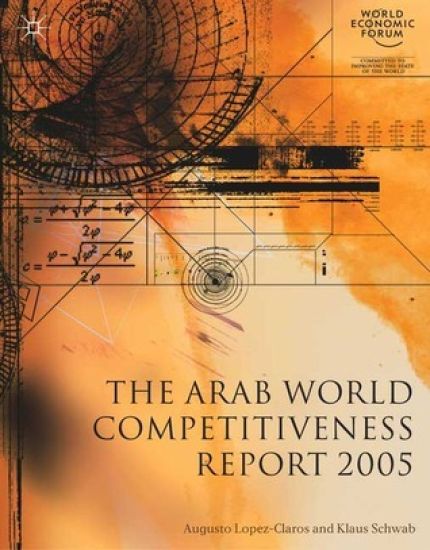
The Arab World Competitiveness Report 2005
Through in-depth analysis of regional trends and detailed country profiles, The Arab World Competitiveness Report 2005 assesses the comparative strengths and weaknesses of Arab countries. The report highlights the prospects for growth in the region and, more importantly, the obstacles to improving competitiveness in the region. It contains essays from prominent academics and development experts on a variety of issues relevant to the Arab world's development agenda. The report is an indispensable tool for business leaders and investment decision-makers; it is also extensively used as a benchmarking instrument for policy-makers to improve the framework conditions for policy formulation, with a view to improving a country's growth performance.
Economics (Arab World Editions) with MyEconLab

Economics (Arab World Editions) with MyEconLab

R. Glenn Hubbard; Anthony O'Brien

PEARSON EDUCATION LIMITED
2012
muu
This textbook utilizes the ideas and concepts that made the international edition a valued companion to economics students and lecturers the world over, but tailors its language and illustrations to better suit its Arab readers. Regional case studies, photographs and examples bring the principles and concepts of economics to life for Arab learners, who are encouraged to apply the information and data contained in Economics to their own environment and experiences.
The Arab Spring and Arab Thaw

The Arab Spring and Arab Thaw

John Davis

Ashgate Publishing Limited
2013
sidottu
What were the unifying principles or strategies that governed the protest movements that swept the Middle East and North Africa in the spring of 2011? Who were the protestors and how did the different authoritarian regimes respond to them? How did regional and international institutions react to a region in turmoil? The Arab Spring and Arab Thaw; Unfinished Revolutions and the Quest for Democracy addresses these questions by examining a range of successful and unsuccessful protest strategies and counter revolutionary tactics employed by protestors and autocratic regimes. Contributors explore the reactions of the USA, EU and Arab League to events in the region and provide insight as to the gendered dimensions of the struggle along with the ethnic and tribal divisions that continue to impact the post-revolt period. By addressing these critical queries the book demonstrate how the Arab Spring has evolved into a protracted Arab Thaw that continues to profoundly affect regional and international politics.
Rural Arab Demography and Early Jewish Settlement in Palestine
This volume explores the distribution of the rural population in Palestine from the late Ottoman period (1870-1917) to the British Mandate period (1917-1948). The book focuses on demography, specifically migrations, population size, density, growth, and the pattern of distribution in rural Palestine before the inception of Jewish settlement (1882). Grossman traces little-known Muslim ethnic groups who settled in Palestine's rural areas, primarily Egyptians, but also Algerians, Bosnians, and Circassians.The author argues that the Arab population in the zones occupied by Jews after 1882 was about one-third that of the Arab core areas; in the period studied, the decline in per-capita rural Arab farmland was mainly due to overall population growth, not displacement of Arabs; economic development suffered largely because of violent disturbances and natural disasters; the pattern of growth of Egyptian and other Muslim groups was similar to that of the Jews.The main conclusions of this study note that the size of the rural Arab population in the zones occupied by Jews after 1882 was about one-tenth of that which occupied the Arab core zones; most Egyptian settlement areas coincided with those of the Jewish zones; between 1870 and 1945, the decline of Arab farmland was mainly due to Arab population growth rather than Jewish land acquisitions; and most migrants (Jewish and Muslim) settlement zones were leftovers characterized by some form of resource disability.
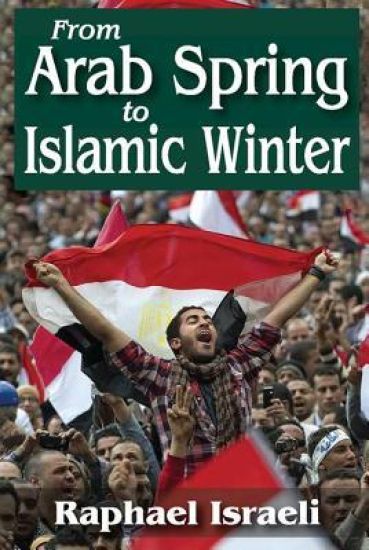
From Arab Spring to Islamic Winter

From Arab Spring to Islamic Winter

Raphael Israeli

AldineTransaction
2013
sidottu
The world is watching with uncertainity as the "Arab Spring" unfolds. Optimistically named by international media sources, the term "Arab Spring" associates the unrest with ideas of renewal, revival, and democratic thought and deed. Many hoped the overthrow of authoritarian leaders signaled a promising new beginning for the Arab world. Raphael Israeli argues that instead of paving a path toward liberal democracy, the Arab Spring in fact launched a power struggle.Judging from the experiences of countries where the dust is settling—including Tunisia, Egypt, Yemen, and perhaps also Syria and Libya—it appears that Islamic governments will fill the vacuum in leadership. The hopes that swept the Islamic world with the Arab Spring have given way to a winter of lost hopes and aspirations, as it becomes increasingly clear that democratic outcomes are not on the horizon. What is worse is that the West seems to have abandoned its hopes for democracy and freedom in the region, instead making peace with the idea that Islamic governments must be accepted as the lesser of evil options.Presenting a clear-eyed picture of the situation, Israeli examines thematic problems that cut across all the Muslim states experiencing unrest. He groups the countries into various blocs according to their shared characteristics, then discusses these groups one by one. For each country, he considers whether the liberal-democratic option is viable and examines what kind of regime could be considered legitimate and stable. This volume offers valuable insights for political scientists, Middle Eastern specialists, and the general informed public eager to comprehend the import of these momentous events.