Kirjojen hintavertailu. Mukana 11 627 373 kirjaa ja 12 kauppaa.

Kirjahaku

Etsi kirjoja tekijän nimen, kirjan nimen tai ISBN:n perusteella.

1000 tulosta hakusanalla Arthur C. Danto

Arthur Schopenhauer: The World as Will and Presentation

Arthur Schopenhauer: The World as Will and Presentation

Schopenhauer Arthur

Routledge Member of the Taylor and Francis Group
2010
nidottu
This second volume of Schopenhauer's World as Will and Presentation is framed by a pedagogical structure designed to make this important work of philosophy more accessible and meaningful for undergraduates. With in-depth, user-friendly introductions, copious notes to clarify difficult or important passages, and a rich index, each volume makes the masterworks of philosophy accessible to students and emphasizes their relevance to contemporary issues and debates.
Arthur O'Shaughnessy, A Pre-Raphaelite Poet in the British Museum
Arthur O'Shaughnessy's career as a natural historian in the British Museum, and his consequent preoccupation with the role of work in his life, provides the context with which to reexamine his contributions to Victorian poetry. O'Shaughnessy's engagement with aestheticism, socialism, and Darwinian theory can be traced to his career as a Junior Assistant at the British Museum, and his perception of the burden of having to earn a living outside of art. Making use of extensive archival research, Jordan Kistler demonstrates that far from being merely a minor poet, O'Shaughnessy was at the forefront of later Victorian avant-garde poetry. Her analyses of published and unpublished writings, including correspondence, poetic manuscripts, and scientific notebooks, demonstrate O'Shaughnessy's importance to the cultural milieu of the 1870s, particularly his contributions to English aestheticism, his role in the importation of decadence from France, and his unique position within contemporary debates on science and literature.
Arthur Morrison and the East End

Arthur Morrison and the East End

Eliza Cubitt

Routledge
2019
sidottu
This, the first critical biography of Arthur Morrison (1863-1945), presents his East End writing as the counter-myth to the cultural production of the East End in late-Victorian realism. Morrison’s works, particularly Tales of Mean Streets (1894) and A Child of the Jago (1896), are often discussed as epitomes of slum fictions of the 1890s as well as prime examples of nineteenth-century realism, but their complex contemporary reception reveals the intricate paradoxes involved in representing the turn-of-the-century city. Arthur Morrison and the East End examines how an understanding of the East End in the Victorian cultural imagination operates in Morrison’s own writing. Engaging with the contemporary vogue for slum fiction, Morrison redressed accounts written by outsiders, positioning himself as uniquely knowledgeable about a place considered unknowable. His work provides a vigorous challenge to the fictionalised East End created by his predecessors, whilst also paying homage to Charles Dickens, George Gissing, Walter Besant and Guy de Maupassant. Examining the London sites which Morrison lived in and wrote about, this book is an excursion not into the Victorian East End, but into the fictions constructed around it.
Arthur Sullivan

Arthur Sullivan

Benedict Taylor

Routledge
2019
nidottu
Arthur Sullivan (1842–1900) was Victorian Britain’s most celebrated and popular composer, whose music to this day reaches a wider audience than that of any of his contemporaries. Yet the comic operas on which Sullivan’s reputation is chiefly based have been consistently belittled or ignored by the British musicological establishment, while his serious works have until recently remained virtually unknown. The time is thus long overdue for scholarly re-engagement with Sullivan. The present book offers a new appraisal of the music of this most notable nineteenth-century British composer, combining close analytical attention to his music with critical consideration of the wider aesthetic and social context to his work. Focusing on key pieces in all the major genres in which Sullivan composed, it includes accounts of his most important serious works – the music to The Tempest, the ‘Irish’ Symphony, The Golden Legend, Ivanhoe – alongside detailed examination of the celebrated comic operas created with W.S. Gilbert to present a balanced portrayal of Sullivan’s musical achievement.
Arthur Schopenhauer's English Schooling

Arthur Schopenhauer's English Schooling

Patrick Bridgwater

Routledge
2021
sidottu
Originally published in 1988 Arthur Schopenhauer’s English Schooling examines the famous German philosopher Arthur Schopenhauer, and his image of England and the influences and experiences which formed that image, notably his visit to England in 1803. His philosophy, when he came to formulate it, showed the pervasive influence of his English reading, was riddled with allusions to his three months at Wimbledon School, and was indeed in many ‘English’ style; above all it was a philosophy designed as a refutation of ‘Christianity’ as understood and practised by his English headmaster, who is the invisible bête noire behind it. In the course of the book two major figures who have hitherto been known only by name are identified and their lives related. The book also examines many background figures in Schopenhauer’s English diary and the letters addressed to him in 1803. This book, which is based on a wide variety of hitherto unknown material from many different sources, will permanently modify our view of his philosophy; it also has important implications for educationalists and for all interest in the history of ideas.
Arthur Schopenhauer's English Schooling

Arthur Schopenhauer's English Schooling

Patrick Bridgwater

TAYLOR FRANCIS LTD
2023
nidottu
Originally published in 1988 Arthur Schopenhauer’s English Schooling examines the famous German philosopher Arthur Schopenhauer, and his image of England and the influences and experiences which formed that image, notably his visit to England in 1803. His philosophy, when he came to formulate it, showed the pervasive influence of his English reading, was riddled with allusions to his three months at Wimbledon School, and was indeed in many ‘English’ style; above all it was a philosophy designed as a refutation of ‘Christianity’ as understood and practised by his English headmaster, who is the invisible bête noire behind it. In the course of the book two major figures who have hitherto been known only by name are identified and their lives related. The book also examines many background figures in Schopenhauer’s English diary and the letters addressed to him in 1803. This book, which is based on a wide variety of hitherto unknown material from many different sources, will permanently modify our view of his philosophy; it also has important implications for educationalists and for all interest in the history of ideas.
Arthur Morrison and the East End

Arthur Morrison and the East End

Eliza Cubitt

Routledge
2020
nidottu
This, the first critical biography of Arthur Morrison (1863-1945), presents his East End writing as the counter-myth to the cultural production of the East End in late-Victorian realism. Morrison’s works, particularly Tales of Mean Streets (1894) and A Child of the Jago (1896), are often discussed as epitomes of slum fictions of the 1890s as well as prime examples of nineteenth-century realism, but their complex contemporary reception reveals the intricate paradoxes involved in representing the turn-of-the-century city. Arthur Morrison and the East End examines how an understanding of the East End in the Victorian cultural imagination operates in Morrison’s own writing. Engaging with the contemporary vogue for slum fiction, Morrison redressed accounts written by outsiders, positioning himself as uniquely knowledgeable about a place considered unknowable. His work provides a vigorous challenge to the fictionalised East End created by his predecessors, whilst also paying homage to Charles Dickens, George Gissing, Walter Besant and Guy de Maupassant. Examining the London sites which Morrison lived in and wrote about, this book is an excursion not into the Victorian East End, but into the fictions constructed around it.
Arthur Conan Doyle and the Meaning of Masculinity
A valued icon of British manhood, Sir Arthur Conan Doyle has been the subject of numerous biographies since his death in 1930. All his biographers have drawn heavily on his own autobiography, Memories & Adventures, a collection of stories and anecdotes themed on the subject of masculinity and its representation. Diana Barsham discusses Doyle's career in the context of that nineteenth-century biographical tradition which Dr Watson so successfully appropriated. It explores Doyle's determination to become a great name in the culture of his day and the strains on his identity arising from this project. A Scotsman with an alcoholic, Irish, fairy-painting father, Doyle offered himself and his writings as a model of British manhood during the greatest crisis of British history. Doyle was committed to finding solutions to some of the most difficult cultural problematics of late Victorian masculinity. As novelist, war correspondent, historian, legal campaigner, propagandist and religious leader, he used his fame as the creator of Sherlock Holmes to refigure the spirit of British Imperialism. This original and thought-provoking study offers a revision of the Doyle myth. It presents his career as a series of dialoguic contestations with writers like Thomas Hardy and Winston Churchill to define the masculine presence in British culture. In his spiritualist campaign, Doyle took on the figure of St Paul in an attempt to create a new religious culture for a Socialist age.
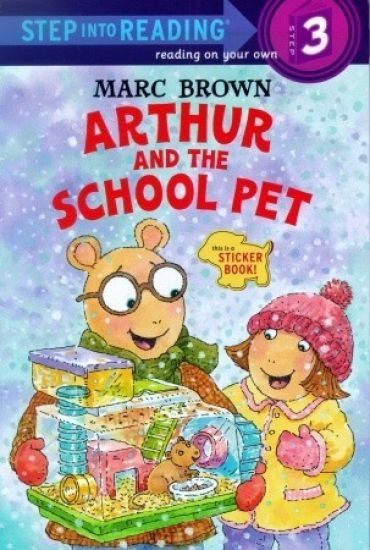
Arthur and the School Pet

Arthur and the School Pet

Marc Brown

Random House Books for Young Readers
2003
nidottu
During Christmas vacation week, D.W. volunteers to take the classroom pet gerbil, Speedy, home for the holidays. D.W. plans to teach him some new tricks to show her class, but soon learns that taking care of a gerbil isn t as easy as she thinks, especially one as quick as Speedy. . . ."
Arthur Lost in the Museum [With Stickers]

Arthur Lost in the Museum [With Stickers]

Marc Brown

Random House Books for Young Readers
2005
nidottu
During a class visit to the museum, Arthur needs to make a quick visit to the boys lavatory. But a wrong turn leads him into a diorama of life-size models of Pilgrims celebrating the first Thanksgiving . . . just as Mr. Ratburn and his class are about to study it. Will Arthur be in big trouble?"
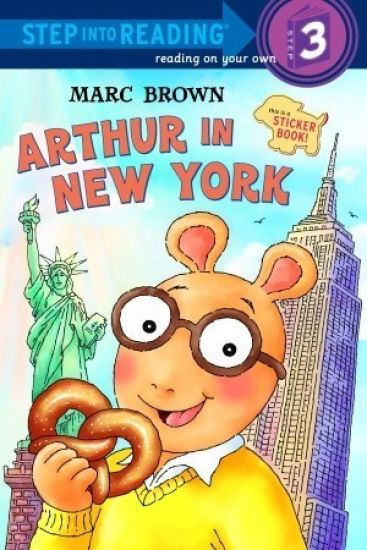
Arthur in New York

Arthur in New York

Marc Brown

Random House Books for Young Readers
2008
nidottu
WHEN ARTHUR AND D.W. travel to New York City with their parents, they visit the Statue of Liberty, a museum, and they even see a Broadway show But D.W. is most excited about visiting Mary Moo-Cow Palace with her Mary Moo-Cow doll. When D.W. doesn't follow her parents' rule and goes off by herself, the family must find her. Luckily, Arthur knows just where to find D.W.--Mary Moo-Cow Palace, of course
Arthur's Reading Trick [With Sticker(s)]

Arthur's Reading Trick [With Sticker(s)]

Marc Brown

Random House Books for Young Readers
2009
nidottu
Will Arthur figure out D.W.'s reading trick? D.W. makes a bet with Arthur that she can teach Baby Kate how to read in a single afternoon. The loser of the bet has to change their little sister's stinky diapers D.W. devises a clever trick to make sure she wins the bet. But will Arthur fall for it--or come up with a trick of his own before the next diaper change is needed?
Arthur Brown Jr.

Arthur Brown Jr.

Jeffrey T. Tilman

WW Norton Co
2006
sidottu
Celebrated by his peers for such masterpieces as the City Hall, War Memorial Opera House, Temple Emanu-El, and Coit Tower in San Francisco; the Pasadena City Hall; and the Labor-ICC block of the Federal Triangle in Washington, DC, Brown epitomized the idea that architecture not only houses society’s daily rituals and defining events but also can itself shape the sociopolitical landscape of America. Arthur Brown Jr.: Progressive Classicist, the first full study of Brown within his architectural and social context, unifies the varied strands of the architect’s life, from the architectural forms and methods of the Ecole des Beaux-Arts in Paris to the reforming spirit and self-reliant confidence of San Francisco after the earthquake and fire of 1906 to the challenging economics and changing aesthetics of machine-age America. It details the development of Brown’s major works and many other civic, commercial, religious, academic, and residential buildings. It chronicles his unflagging commitment to the classical tradition, which he employed in contemporary, forward-looking institutional buildings that emphasized continuity with the past while meeting the needs of the future. To Brown, the classical tradition was not a sacrosanct, unchanging body of knowledge; it was an expanding and evolving set of ideas about architectural design that permitted, and even demanded, change as new conditions and technologies were developed. Arthur Brown Jr. is a fascinating look at the man-captivated by the classical movement and obsessed with the slightest architectural detail-and at his buildings, at once canonical and inventive and singularly American.
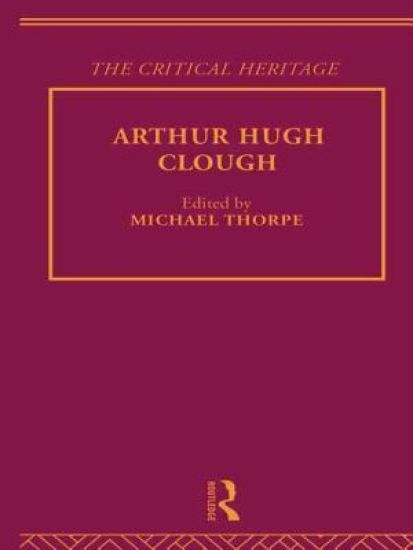
Arthur Hugh Clough
The Critical Heritage gathers together a large body of critical sources on major figures in literature. Each volume presents contemporary responses to a writer's work, enabling students and researchers to read the material themselves.
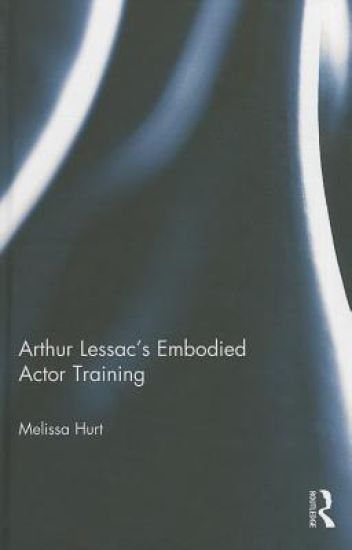
Arthur Lessac's Embodied Actor Training
Arthur Lessac’s Embodied Actor Training situates the work of renowned voice and movement trainer Arthur Lessac in the context of contemporary actor training.Supported by the work of Constantin Stanislavsky and Maurice Merleau-Ponty's theories of embodiment, the book explores Lessac's practice in terms of embodied acting, a key subject in contemporary performance. In doing so, the author explains how the actor can come to experience both skill and expression as a subjective whole through active meditation and spatial attunement.As well as feeding this psychophysical approach into a wider discussion of embodiment, the book provides concrete examples of how the practice can be put into effect. Using insights gleaned from interviews conducted with Lessac and his Master Teachers, the author enlightens our own understanding of Lessac’s practices.Three valuable appendices enhance the reader’s experience. These include:a biographical timeline of Lessac’s life and careersample curricula and a lesson plan for teachers at university levelexplorations for personal discoveryMelissa Hurt is a Lessac Certified Trainer and has taught acting and Lessac’s voice, speech, and movement work at colleges across the United States. She has a PhD from the University of Oregon and an MFA from Virginia Commonwealth University.
Arthur Hugh Clough
The Critical Heritage gathers together a large body of critical sources on major figures in literature. Each volume presents contemporary responses to a writer's work, enabling students and researchers to read the material themselves.
Arthur Hugh Clough: Selected Poems

Arthur Hugh Clough: Selected Poems

Arthur Hugh Clough

ROUTLEDGE
2003
nidottu
This book presents a selection of the full range of Arthur Hugh Clough's poetry, which explores the tensions of a time of radical changes in the religious, political, and literary landscape. It also includes a detailed introduction and annotations by Shirley Chew.Asked what problems most perplexed 'young men at present' Arthur Hugh Clough (1819-1861) replied 'a growing sense of discrepancy'. His wry and wise poetry explores the tensions of a time of radical changes in the religious, political and literary landscape. He has a sharp eye for absurdity. Clough was a writer of wide interests and liberal sympathies, vividly idiomatic and sensuous, delighting in the detail and variety of everyday life. His technical dexterity is a delight: the poems encompass satire and lyric, dialogue, plot and contemporary reference. His narrative poem he Bothie ofTober-Na-Vuolich and the epistolary Amours de Voyage have the momentum and social precision of novels, capturing a precise image of the Victorian world of the 1840s. This volume includes a generous selection of the full range of Clough's poetry, with a detailed introduction and annotations by Shirley Chew.