

Kirjahaku
Etsi kirjoja tekijän nimen, kirjan nimen tai ISBN:n perusteella.
1000 tulosta hakusanalla Austin Current

English Men of Letters; Fanny Burney (Madame d'Arblay)
Austin Dobson
Trieste Publishing
2018
nidottu


English Men of Letters; Fanny Burney (Madame d'Arblay)
Austin Dobson
Trieste Publishing
2018
nidottu



In evolution, most genes survive and spread within populations because they increase the ability of their hosts (or their close relatives) to survive and reproduce. But some genes spread in spite of being harmful to the host organism—by distorting their own transmission to the next generation, or by changing how the host behaves toward relatives. As a consequence, different genes in a single organism can have diametrically opposed interests and adaptations. Covering all species from yeast to humans, Genes in Conflict is the first book to tell the story of selfish genetic elements, those continually appearing stretches of DNA that act narrowly to advance their own replication at the expense of the larger organism. As Austin Burt and Robert Trivers show, these selfish genes are a universal feature of life with pervasive effects, including numerous counter-adaptations. Their spread has created a whole world of socio-genetic interactions within individuals, usually completely hidden from sight. Genes in Conflict introduces the subject of selfish genetic elements in all its aspects, from molecular and genetic to behavioral and evolutionary. Burt and Trivers give us access for the first time to a crucial area of research—now developing at an explosive rate—that is cohering as a unitary whole, with its own logic and interconnected questions, a subject certain to be of enduring importance to our understanding of genetics and evolution.
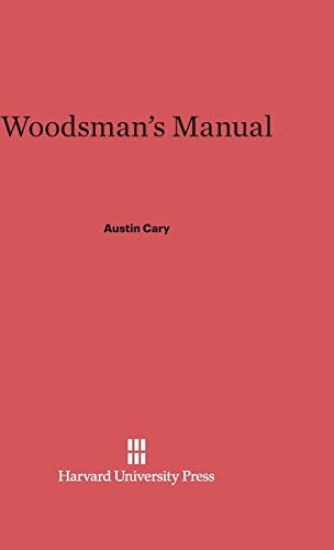
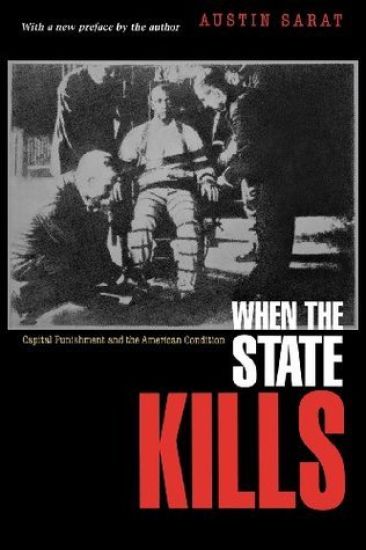
Is capital punishment just? Does it deter people from murder? What is the risk that we will execute innocent people? These are the usual questions at the heart of the increasingly heated debate about capital punishment in America. In this bold and impassioned book, Austin Sarat seeks to change the terms of that debate. Capital punishment must be stopped, Sarat argues, because it undermines our democratic society. Sarat unflinchingly exposes us to the realities of state killing. He examines its foundations in ideas about revenge and retribution. He takes us inside the courtroom of a capital trial, interviews jurors and lawyers who make decisions about life and death, and assesses the arguments swirling around Timothy McVeigh and his trial for the bombing in Oklahoma City. Aided by a series of unsettling color photographs, he traces Americans' evolving quest for new methods of execution, and explores the place of capital punishment in popular culture by examining such films as Dead Man Walking, The Last Dance, and The Green Mile. Sarat argues that state executions, once used by monarchs as symbolic displays of power, gained acceptance among Americans as a sign of the people's sovereignty. Yet today when the state kills, it does so in a bureaucratic procedure hidden from view and for which no one in particular takes responsibility. He uncovers the forces that sustain America's killing culture, including overheated political rhetoric, racial prejudice, and the desire for a world without moral ambiguity. Capital punishment, Sarat shows, ultimately leaves Americans more divided, hostile, indifferent to life's complexities, and much further from solving the nation's ills. In short, it leaves us with an impoverished democracy. The book's powerful and sobering conclusions point to a new abolitionist politics, in which capital punishment should be banned not only on ethical grounds but also for what it does to Americans and what we cherish.
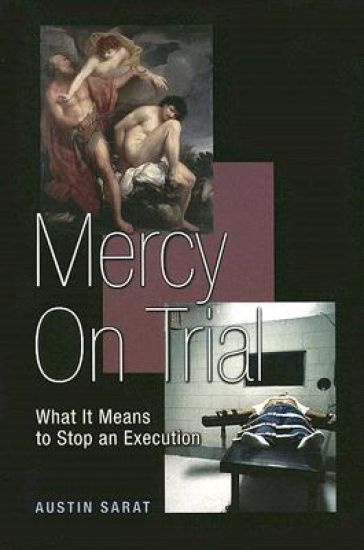
On January 11, 2003, Illinois Governor George Ryan--a Republican on record as saying that "some crimes are so horrendous ...that society has a right to demand the ultimate penalty"--commuted the capital sentences of all 167 prisoners on his state's death row. Critics demonized Ryan. For opponents of capital punishment, however, Ryan became an instant hero whose decision was seen as a signal moment in the "new abolitionist" politics to end killing by the state. In this compelling and timely work, Austin Sarat provides the first book-length work on executive clemency. He turns our focus from questions of guilt and innocence to the very meaning of mercy. Starting from Ryan's controversial decision, Mercy on Trial uses the lens of executive clemency in capital cases to discuss the fraught condition of mercy in American political life. Most pointedly, Sarat argues that mercy itself is on trial. Although it has always had a problematic position as a form of "lawful lawlessness," it has come under much more intense popular pressure and criticism in recent decades. This has yielded a radical decline in the use of the power of chief executives to stop executions. From the history of capital clemency in the twentieth century to surrounding legal controversies and philosophical debates about when (if ever) mercy should be extended, Sarat examines the issue comprehensively. In the end, he acknowledges the risks associated with mercy--but, he argues, those risks are worth taking.

Almanac is a collection of lyrical and narrative poems that celebrate, and mourn the passing of, the world of the small family farm. But while the poems are all involved in some way with the rural Midwest, particularly with the people and land of the northwestern Illinois dairy farm where Austin Smith was born and raised, they are anything but merely regional. As the poems reflect on farm life, they open out to speak about childhood and death, the loss of tradition, the destruction of the natural world, and the severing of connections between people and the land. This collection also reflects on a long poetic apprenticeship. Smith's father is a poet himself, and Almanac is in part a meditation about the responsibility of the poet, especially the young poet, when it falls to him to speak for what is vanishing. To quote another Illinois poet, Thomas James, Smith has attempted in this book to write poems "clear as the glass of wine / on [his] father's table every Christmas Eve." By turns exhilarating and disquieting, this is a remarkable debut from a distinctive new voice in American poetry. ______ From Almanac: THE MUMMY IN THE FREEPORT ART MUSEUM Austin Smith Amongst the masterpieces of the small-town Picassos and Van Goghs and photographs of the rural poor and busts of dead Greeks or the molds of busts donated by the Art Institute of Chicago to this dying town's little museum, there was a mummy, a real mummy, laid out in a dim-lit room by himself. I used to go to the museum just to visit him, a pharaoh who, expecting an afterlife of beautiful virgins and infinite food and all the riches and jewels he'd enjoyed in earthly life, must have wondered how the hell he'd ended up in Freeport, Illinois. And I used to go alone into that room and stand beside his sarcophagus and say, "My friend, I've asked myself the same thing."

Almanac is a collection of lyrical and narrative poems that celebrate, and mourn the passing of, the world of the small family farm. But while the poems are all involved in some way with the rural Midwest, particularly with the people and land of the northwestern Illinois dairy farm where Austin Smith was born and raised, they are anything but merely regional. As the poems reflect on farm life, they open out to speak about childhood and death, the loss of tradition, the destruction of the natural world, and the severing of connections between people and the land. This collection also reflects on a long poetic apprenticeship. Smith's father is a poet himself, and Almanac is in part a meditation about the responsibility of the poet, especially the young poet, when it falls to him to speak for what is vanishing. To quote another Illinois poet, Thomas James, Smith has attempted in this book to write poems "clear as the glass of wine / on [his] father's table every Christmas Eve." By turns exhilarating and disquieting, this is a remarkable debut from a distinctive new voice in American poetry. ______ From Almanac: THE MUMMY IN THE FREEPORT ART MUSEUM Austin Smith Amongst the masterpieces of the small-town Picassos and Van Goghs and photographs of the rural poor and busts of dead Greeks or the molds of busts donated by the Art Institute of Chicago to this dying town's little museum, there was a mummy, a real mummy, laid out in a dim-lit room by himself. I used to go to the museum just to visit him, a pharaoh who, expecting an afterlife of beautiful virgins and infinite food and all the riches and jewels he'd enjoyed in earthly life, must have wondered how the hell he'd ended up in Freeport, Illinois. And I used to go alone into that room and stand beside his sarcophagus and say, "My friend, I've asked myself the same thing."

A new collection about violence and the rural Midwest from a poet whose first book was hailed as “memorable” (Stephanie Burt, Yale Review) and “impressive” (Chicago Tribune)Flyover Country is a powerful collection of poems about violence: the violence we do to the land, to animals, to refugees, to the people of distant countries, and to one another. Drawing on memories of his childhood on a dairy farm in Illinois, Austin Smith explores the beauty and cruelty of rural life, challenging the idea that the American Midwest is mere “flyover country,” a place that deserves passing over. At the same time, the collection suggests that America itself has become a flyover country, carrying out drone strikes and surveillance abroad, locked in a state of perpetual war that Americans seem helpless to stop.In these poems, midwestern barns and farmhouses are linked to other lands and times as if by psychic tunnels. A poem about a barn cat moving her kittens in the night because they have been discovered by a group of boys resonates with a poem about the house in Amsterdam where Anne Frank and her family hid from the Nazis. A poem beginning with a boy on a farmhouse porch idly swatting flies ends with the image of people fleeing before a drone strike. A poem about a barbwire fence suggests, if only metaphorically, the debate over immigration and borders. Though at times a dark book, the collection closes with a poem titled “The Light at the End,” suggesting the possibility of redemption and forgiveness.Building on Smith’s reputation as an accessible and inventive poet with deep insights about rural America, Flyover Country also draws profound connections between the Midwest and the wider world.

A new collection about violence and the rural Midwest from a poet whose first book was hailed as “memorable” (Stephanie Burt, Yale Review) and “impressive” (Chicago Tribune)Flyover Country is a powerful collection of poems about violence: the violence we do to the land, to animals, to refugees, to the people of distant countries, and to one another. Drawing on memories of his childhood on a dairy farm in Illinois, Austin Smith explores the beauty and cruelty of rural life, challenging the idea that the American Midwest is mere “flyover country,” a place that deserves passing over. At the same time, the collection suggests that America itself has become a flyover country, carrying out drone strikes and surveillance abroad, locked in a state of perpetual war that Americans seem helpless to stop.In these poems, midwestern barns and farmhouses are linked to other lands and times as if by psychic tunnels. A poem about a barn cat moving her kittens in the night because they have been discovered by a group of boys resonates with a poem about the house in Amsterdam where Anne Frank and her family hid from the Nazis. A poem beginning with a boy on a farmhouse porch idly swatting flies ends with the image of people fleeing before a drone strike. A poem about a barbwire fence suggests, if only metaphorically, the debate over immigration and borders. Though at times a dark book, the collection closes with a poem titled “The Light at the End,” suggesting the possibility of redemption and forgiveness.Building on Smith’s reputation as an accessible and inventive poet with deep insights about rural America, Flyover Country also draws profound connections between the Midwest and the wider world.

Secret Wars is the first book to systematically analyze the ways powerful states covertly participate in foreign wars, showing a recurring pattern of such behavior stretching from World War I to U.S.-occupied Iraq. Investigating what governments keep secret during wars and why, Austin Carson argues that leaders maintain the secrecy of state involvement as a response to the persistent concern of limiting war. Keeping interventions “backstage” helps control escalation dynamics, insulating leaders from domestic pressures while communicating their interest in keeping a war contained.Carson shows that covert interventions can help control escalation, but they are almost always detected by other major powers. However, the shared value of limiting war can lead adversaries to keep secret the interventions they detect, as when American leaders concealed clashes with Soviet pilots during the Korean War. Escalation concerns can also cause leaders to ignore covert interventions that have become an open secret. From Nazi Germany’s role in the Spanish Civil War to American covert operations during the Vietnam War, Carson presents new insights about some of the most influential conflicts of the twentieth century.Parting the curtain on the secret side of modern war, Secret Wars provides important lessons about how rival state powers collude and compete, and the ways in which they avoid outright military confrontations.

Secret Wars is the first book to systematically analyze the ways powerful states covertly participate in foreign wars, showing a recurring pattern of such behavior stretching from World War I to U.S.-occupied Iraq. Investigating what governments keep secret during wars and why, Austin Carson argues that leaders maintain the secrecy of state involvement as a response to the persistent concern of limiting war. Keeping interventions “backstage” helps control escalation dynamics, insulating leaders from domestic pressures while communicating their interest in keeping a war contained.Carson shows that covert interventions can help control escalation, but they are almost always detected by other major powers. However, the shared value of limiting war can lead adversaries to keep secret the interventions they detect, as when American leaders concealed clashes with Soviet pilots during the Korean War. Escalation concerns can also cause leaders to ignore covert interventions that have become an open secret. From Nazi Germany’s role in the Spanish Civil War to American covert operations during the Vietnam War, Carson presents new insights about some of the most influential conflicts of the twentieth century.Parting the curtain on the secret side of modern war, Secret Wars provides important lessons about how rival state powers collude and compete, and the ways in which they avoid outright military confrontations.
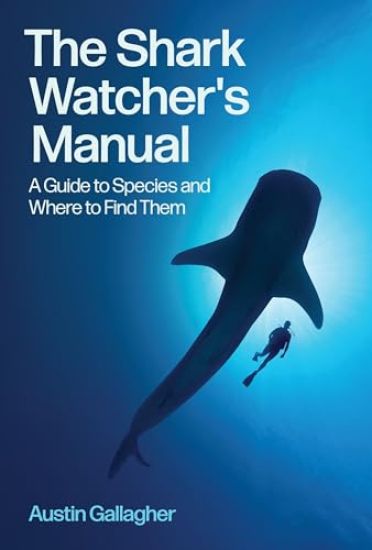
The ultimate illustrated handbook to seeing sharks in the wild An ocean encounter with a shark is one of nature’s most awesome experiences. There is no better way to understand sharks than to get up close and personal with great whites, hammerheads, and tiger sharks. The Shark Watcher’s Manual provides a complete handbook for encountering and studying these magnificent creatures in the wild. It covers everything the shark enthusiast needs to know about diving, conservation, safety, and photography. Written by a world-renowned authority, this is the essential companion for newcomers to shark watching and seasoned divers, offering an authoritative, fact-filled guide to finding and identifying sharks of all kinds. Gives readers a foundation in the natural history of sharks while debunking common myths Shares invaluable tips from an experienced shark diver and photographer Provides an essential illustrated guide to identifying and encountering 24 of the most sought-after species Features a detailed directory of more than 170 of the world’s very best shark watching sites, with information on species hot spots, times to travel, and regional conservation efforts Includes a wealth of photos, infographics, and maps A must for divers, ecotourists, and armchair travelers

In spite of steady growth in popularity, Pinter's plays have continued to elude adequate critical appraisal. Considering the last decade's scholarship, Austin E. Quigley attributes the impasse in Pinter criticism to the failure of Pinter's readers to appreciate the diversity of ways in which language can transmit information. This explanation places recent commentaries in a new light and enables the author to take a fresh approach to the plays themselves. Originally published in 1975. The Princeton Legacy Library uses the latest print-on-demand technology to again make available previously out-of-print books from the distinguished backlist of Princeton University Press. These editions preserve the original texts of these important books while presenting them in durable paperback and hardcover editions. The goal of the Princeton Legacy Library is to vastly increase access to the rich scholarly heritage found in the thousands of books published by Princeton University Press since its founding in 1905.