Kirjahaku
Etsi kirjoja tekijän nimen, kirjan nimen tai ISBN:n perusteella.
1000 tulosta hakusanalla B. J. Pascal
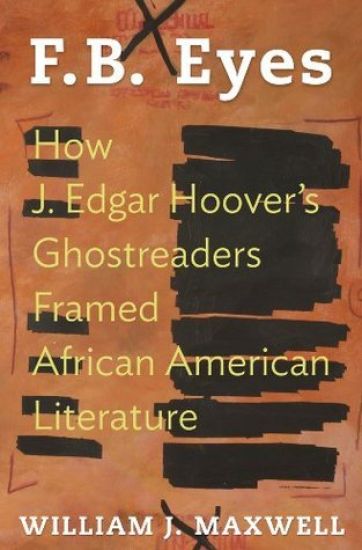
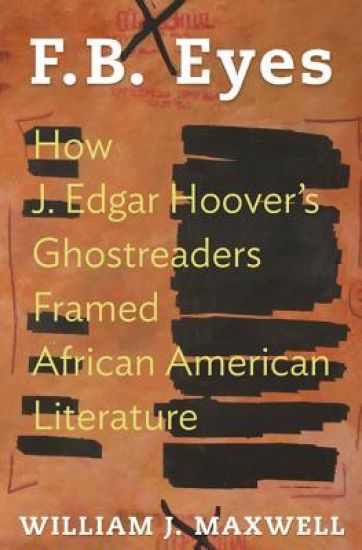
Few institutions seem more opposed than African American literature and J. Edgar Hoover's white-bread Federal Bureau of Investigation. But behind the scenes the FBI's hostility to black protest was energized by fear of and respect for black writing. Drawing on nearly 14,000 pages of newly released FBI files, F.B. Eyes exposes the Bureau's intimate policing of five decades of African American poems, plays, essays, and novels. Starting in 1919, year one of Harlem's renaissance and Hoover's career at the Bureau, secretive FBI "ghostreaders" monitored the latest developments in African American letters. By the time of Hoover's death in 1972, these ghostreaders knew enough to simulate a sinister black literature of their own. The official aim behind the Bureau's close reading was to anticipate political unrest. Yet, as William J. Maxwell reveals, FBI surveillance came to influence the creation and public reception of African American literature in the heart of the twentieth century. Taking his title from Richard Wright's poem "The FB Eye Blues," Maxwell details how the FBI threatened the international travels of African American writers and prepared to jail dozens of them in times of national emergency. All the same, he shows that the Bureau's paranoid style could prompt insightful criticism from Hoover's ghostreaders and creative replies from their literary targets. For authors such as Claude McKay, James Baldwin, and Sonia Sanchez, the suspicion that government spy-critics tracked their every word inspired rewarding stylistic experiments as well as disabling self-censorship. Illuminating both the serious harms of state surveillance and the ways in which imaginative writing can withstand and exploit it, F.B. Eyes is a groundbreaking account of a long-hidden dimension of African American literature.
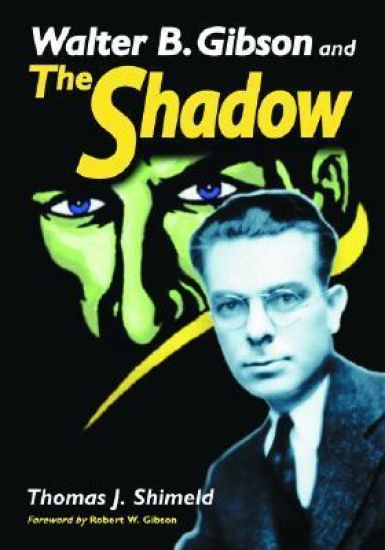
"Who knows what evil lurks in the hearts of men? . . . The Shadow knows!" And who knew The Shadow better than his creator, Walter B. Gibson. Relatively few people have heard of Gibson, but many more are familiar with The Shadow having heard the program on the Blue Coal Radio Program in the 1930s and read the Street & Smith Shadow novels. Walter B. Gibson's life and career come out from behind The Shadow in this biography. It covers his youth in Philadelphia, his development as a writer and magician, his wives, including the third, (Litzka, who was a harpist and magician in her own right), his time living in Maine and upstate New York, and his later years and death. In addition to being credited with creating The Shadow (he used the pseudonym Maxwell Grant), Gibson wrote 187 books, contributed 668 articles to periodicals, created 283 stories for The Shadow Magazine, wrote 48 separate syndicated feature columns, reported the adventures of The Shadow and Blackstone the magician in 394 comic books and newspaper strips, and helped develop 147 radio scripts and many other works under numerous pseudonyms. Gibson has invented many widely used magic tricks and traveled with and befriended Harry Houdini, Howard Thurston, Harry Blackstone, Sr., and Joseph Dunninger.
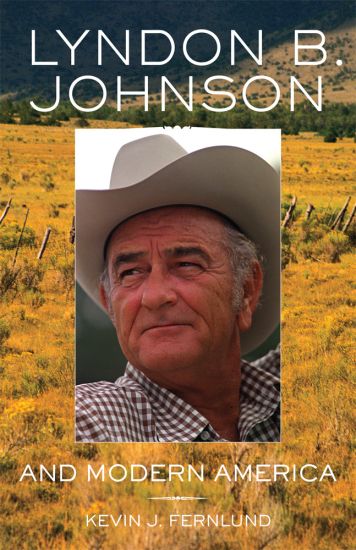
Born in a farmhouse in the Texas Hill Country, Lyndon Baines Johnson brought a western sensibility to the White House. Building on recent studies that have delved into Johnson's Texas roots, Kevin J. Fernlund has written a brief, lively biography of the thirty-sixth president that better shows how his home state molded his early years - and how the one-time Houston schoolteacher eventually became a Texas tornado twisting across the state's and soon the nation's political landscape.Lyndon B. Johnson and Modern America offers a concise look at LBJ that shows how his career coincided with the ascendancy of American liberalism within a Cold War context. In particular, Fernlund extends recent observations regarding Johnson's important role in regional transformation at a time when the South and West became full partners in the American economy. In examining LBJ's promotion of the space program and his disastrous decision to escalate the war in Vietnam, Fernlund shows how these and other Johnson administration policies affected the American West. He describes how Johnson's liberal agenda for the West became subverted by illiberal wars with enemies foreign and domestic, exposing the limits of liberalism and fostering the region's nascent conservatism. He also compares Johnson's commitment to social justice with that of his arch nemesis Ho Chi Minh, providing new insight for readers and an intriguing springboard for classroom discussion.Although subsequent presidents also hailed from the West, Fernlund argues that Johnson was our last truly western chief executive. This new approach to LBJ offers a novel reading of an important Texan, his huge circles of influence, and his lasting impact on the American scene.
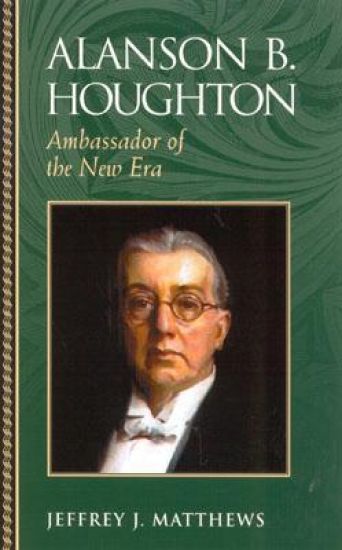
Alanson B. Houghton—American industrialist, politician, and diplomat—was the world's most influential diplomat during the "New Era" of the 1920s. Houghton, who served as ambassador to both Germany (1922–1925) and Great Britain (1925–1929), offers a unique window into the formation and implementation of American foreign policy. This fascinating new text by Jeffrey J. Matthews provides a clear and concise account of Houghton's diplomatic experience and consequently a fresh assessment of U.S. foreign policy during a pivotal decade in world history. As the leading ambassador in Europe, Houghton played a key role in the major diplomatic achievements of the era, including the Dawes Plan for reparations, the Locarno security treaties, and the Kellogg-Briand peace pact. While Hougton's significant contributions to these international accords is fully explored, the major theme of this book is his emergence as chief critic of U.S. foreign policy within the Harding and Coolidge administrations. Alanson B. Houhgton: Ambassador of the New Era offers students a concise historical narrative and a substantive reevaluation of 1920s American foreign policy. This text will help students understand why the United States failed to establish a stable world order during the New Era and additionally sheds light on the key historiographical themes of isolationism, new-imperialism, and corporations. For students taking courses on the Gilded Age, the interwar years, and U.S. foreign policy, this new volume will be an invaluable resource.
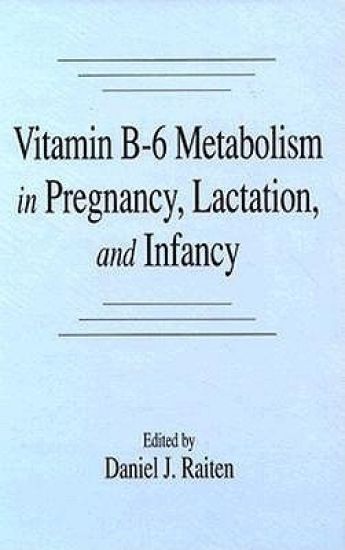
Vitamin B-6 Metabolism in Pregnancy, Lactation, and Infancy
Daniel J. Raiten
CRC Press Inc
1995
sidottu
This book provides a comprehensive review of our knowledge of vitamin B-6 requirements and metabolism throughout pregnancy and lactation. It concentrates on two primary points: adequacy of available methodologies and a presentation of the extant knowledge on vitamin B-6 metabolism and requirements in pregnancy, infancy, lactation, and in women of childbearing age. Many of the chapters offer new perspectives on how decisions have been and are being made with regard to the establishment of dietary recommendations about vitamin B-6 and the adequacy of research to support these decisions.
W.E.B. Du Bois and Race
Sarah Gardner; Chester J. Fontenot; Mary Alice Morgan
Mercer University Press
2001
sidottu
This collection of essays emerged from a symposium held at Mercer University which examined the ways in which W. E. B. DuBois's theories of race have shaped racial discussion and public policy in the twentieth-century. The essays also examine the application of Du Bois's theories to the new millennium, as well as his contributions to the study of the humanities.
George B. McClellan and Civil War History
Thomas J. Rowland
Kent State University Press
2008
nidottu
A History Book Club SelectionPerhaps no other Union commander's reputation has been the subject of as much controversy as George B. McClellan's.Thomas J. Rowland presents a framework in which early Civil War command can be viewed without direct comparison to that of the final two years. Such comparisons, in his opinion, are both unfair and contextually inaccurate. Only by understanding how very different was the context and nature of the war facing McClellan, as opposed to Grant and Sherman, can one discard the traditional "good general-bad general" approach to command performance. In such a light, McClellan's career, both his shortcomings and accomplishments, can be viewed with clearer perspective.
A-B-C, is a fast-paced political thriller that chronicles the story of Billy Johnstone, an independently wealthy third-party presidential candidate. He longs to correct mankind's problems and break the curse of social ills, poverty, religion, and politics that divides our world into the "haves" and "have-nots." A self-made multi-billionaire, Billy reasons that if he becomes President of the United States, with the great power of that office, his dream will become a reality. Realizing the enormity of the task, he acquires an inner circle of loyal men; a brain trust. Billy convinces them that accomplishing his ambitious plan will be as easy as A-B-C. Plan A: Get Elected. Plan B: Eliminate Non-productive Elements. Plan C: Ensure Control. At break-neck speed, Billy Johnstone not only becomes President, he manages to influence the political, economic and social balance of the world. Billy's tactics, though not pleasant, are well-researched and historically proved effective. He succeeds in transforming a world once confounded by poverty, hunger, diminishing natural resources, political strife, religious wars and indiscriminate terrorism into a seemingly productive, peaceful global society working together without conflict. Billy's mantra to the world: "Everything's gonna be all right " Or is it?
Alex J. Groesbeck; Portrait of a Public Man
Frank B. (Frank Bury) 1903 Woodford
Hassell Street Press
2021
sidottu
This work has been selected by scholars as being culturally important and is part of the knowledge base of civilization as we know it.This work is in the public domain in the United States of America, and possibly other nations. Within the United States, you may freely copy and distribute this work, as no entity (individual or corporate) has a copyright on the body of the work.Scholars believe, and we concur, that this work is important enough to be preserved, reproduced, and made generally available to the public. To ensure a quality reading experience, this work has been proofread and republished using a format that seamlessly blends the original graphical elements with text in an easy-to-read typeface.We appreciate your support of the preservation process, and thank you for being an important part of keeping this knowledge alive and relevant.
Alex J. Groesbeck; Portrait of a Public Man
Frank B. (Frank Bury) 1903 Woodford
Hassell Street Press
2021
nidottu
This work has been selected by scholars as being culturally important and is part of the knowledge base of civilization as we know it.This work is in the public domain in the United States of America, and possibly other nations. Within the United States, you may freely copy and distribute this work, as no entity (individual or corporate) has a copyright on the body of the work.Scholars believe, and we concur, that this work is important enough to be preserved, reproduced, and made generally available to the public. To ensure a quality reading experience, this work has been proofread and republished using a format that seamlessly blends the original graphical elements with text in an easy-to-read typeface.We appreciate your support of the preservation process, and thank you for being an important part of keeping this knowledge alive and relevant.
Speech of J. J. Coombs, esq., Delivered at the Union League Reading Room, Washington, D. C., Tuesday Evening, September 1, 1863
J J B 1810 Coombs
Hutson Street Press
2025
sidottu
Speech of J. J. Coombs, esq., Delivered at the Union League Reading Room, Washington, D. C., Tuesday Evening, September 1, 1863
J J B 1810 Coombs
Hutson Street Press
2025
pokkari
Report to the Hon. J.H. Pope, Acting Minister, Department of Railways and Canals, on the Necessity of Deepening the Welland Canal
Robert C B Douglas
Hutson Street Press
2025
sidottu
Report to the Hon. J.H. Pope, Acting Minister, Department of Railways and Canals, on the Necessity of Deepening the Welland Canal
Robert C B Douglas
Hutson Street Press
2025
pokkari