Kirjojen hintavertailu. Mukana 12 390 323 kirjaa ja 12 kauppaa.

Kirjahaku

Etsi kirjoja tekijän nimen, kirjan nimen tai ISBN:n perusteella.

1000 tulosta hakusanalla Baris Mete

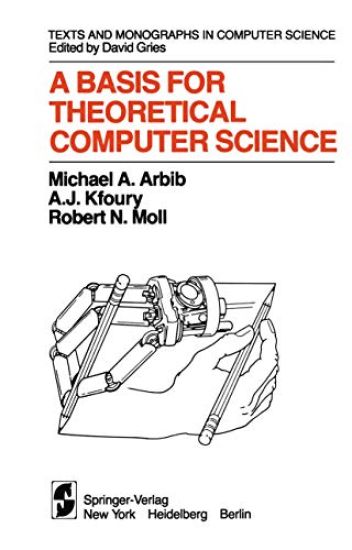
A Basis for Theoretical Computer Science

A Basis for Theoretical Computer Science

M.A. Arbib; A.J. Kfoury; R.N. Moll

Springer-Verlag New York Inc.
2011
nidottu
Computer science seeks to provide a scientific basis for the study of inform a­ tion processing, the solution of problems by algorithms, and the design and programming of computers. The last forty years have seen increasing sophistication in the science, in the microelectronics which has made machines of staggering complexity economically feasible, in the advances in programming methodology which allow immense programs to be designed with increasing speed and reduced error, and in the development of mathematical techniques to allow the rigorous specification of program, process, and machine. The present volume is one of a series, The AKM Series in Theoretical Computer Science, designed to make key mathe­ matical developments in computer science readily accessible to under­ graduate and beginning graduate students. Specifically, this volume takes readers with little or no mathematical background beyond high school algebra, and gives them a taste of a number of topics in theoretical computer science while laying the mathematical foundation for the later, more detailed, study of such topics as formal language theory, computability theory, programming language semantics, and the study of program verification and correctness. Chapter 1 introduces the basic concepts of set theory, with special emphasis on functions and relations, using a simple algorithm to provide motivation. Chapter 2 presents the notion of inductive proof and gives the reader a good grasp on one of the most important notions of computer science: the recursive definition of functions and data structures.

Biological Basis of Geriatric Oncology

Biological Basis of Geriatric Oncology

Springer-Verlag New York Inc.
2014
nidottu
Biological Basis of Geriatric Oncology highlights research issues that are specific to geriatric oncology in the field of carcinogenesis and cancer prevention and treatment, based on the biologic interactions of cancer and age. It illustrates the benefit of the principles of geriatrics in the management of cancer in the older individual. This volume provides a frame of reference for practicioners of any specialties involved in the management of older patients and for oncologists involved in the management of cancer of older individuals. It is a source for basic and clinical scientists exploring the interactions and emerging information of cancer and aging.
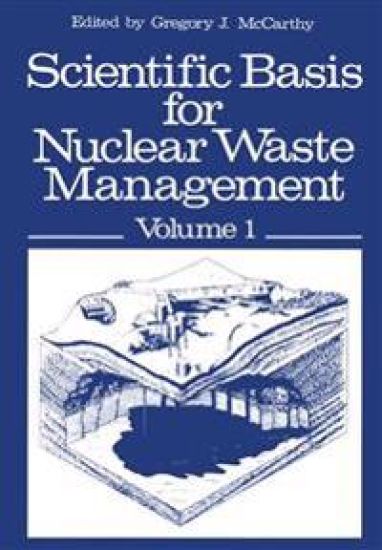
Scientific Basis for Nuclear Waste Management
During late 1978, a symposium entitled "Science Underlying Radioactive Waste Management" was one component of the Annual Meet­ ing of the Materials Research Society held in Boston, Massachusetts. The purpose of this Symposium was to bring together for the first time the entire range of sciences that form the basis for the treatment, solidification and isolation of radioactive wastes. Some 79 papers were presented to an international audience of over 300. The Symposium was such an impressive success that another will be held at the 1979 Annual Meeting of the Materials Research Society. The proceedings of the forthcoming symposium will also be published and it is for this reason that the present volume has been desig­ nated Volume 1. The scope of the Symposium was defined by the following steer­ ing committee: Rustum Roy, The Pennsylvania State University (Chairman) Richard S. Claassen, Sandia Laboratories Don Ferguson, Oak Ridge National Laboratory Victor I. Spitsyn, U.S.S.R. Academy of Sciences, Moscow David B. Stewart, United States Geological Survey Torbjorn Westermark, Royal Institute of Technology, Stockholm. The program was organized by the following committee: Gregory J. McCarthy, The Pennsylvania State University (Cha- man) Harry C. Burkholder, Battelle Memorial Institute Arnold M. Friedman~ Argonne National Laboratory Werner Lutze, Hahn-Meitner Institut, Berlin John G. Moore, Oak Ridge National Laboratory Robert W. Potter, II, United States Geological Survey Richard L. Schwoebe1, Sandia Laboratories Roger W. Staehle, Ohio State University.
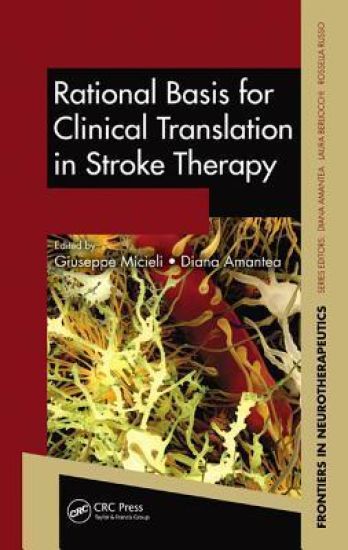
Rational Basis for Clinical Translation in Stroke Therapy
Stroke remains one of the major causes of death and long-term disability worldwide. Currently, the only approved therapy for the acute treatment of this disease is thrombolysis, a strategy that can only be applied to a small percentage of patients due to its narrow therapeutic window. Unfortunately, during the last years numerous promising drugs that showed neuroprotection in the experimental setting failed to translate into the clinic because of their toxicity or lack of efficacy.Researchers in the field now face the crucial need to develop effective stroke therapies and successfully translate novel strategies into the clinical setting. Rational Basis for Clinical Translation in Stroke Therapy presents the most recent promising preclinical approaches and the most updated clinical evidence for treating stroke patients. By bringing together the experience of accomplished stroke researchers and clinicians, the book is a useful tool for improving the treatment and management of stroke patients.The book describes current approaches for the management of stroke patients including thrombolysis and mechanical recanalization procedures as well as other clinically relevant topics such as diagnosis, imaging, risk factors, and prevention. Also described are emerging interventions based on the use of stem cells, botulinum toxin, and antidepressants which complement emergency stroke treatment and conventional rehabilitation procedures. Clinical approaches are integrated with the most promising therapeutic opportunities based on targeting the immune system, hypothermia, and postconditioning. The book also covers issues related to the improvement of R&D strategies in stroke therapeutics, aimed at the implementation of preclinical approaches with stroke model guidelines and at the optimization of clinical trial design. This volume is a reference for all those interested in the rational development of novel stroke therapeutics.
Scientific Basis for Nuclear Waste Management
The Symposium on the Scientific Basis for Nuclear Waste Manage­ ment was held in the fall of 1979 in Boston, Massachusetts and was one of a number of symposia included in the Annual Meeting of the Materials Research Society. The thrust of this annual Symposium is unique in the area of waste management. Recognizing that this is an area of great complexity which requires contributions from scien­ tists with many different backgrounds some of which are not normally associated with nuclear energy, the Materials Research Society pro­ vides a forum for discussions of a wide range of materials behavior and transport phenomena. As can be seen from the list of references in each paper, the authors draw heavily on contributions associated with professional societies in addition to the Materials Research Society, and this annual meeting encourages the cross-fertilization between disciplines that are essential to an adequate treatment of the problems associated with nuclear waste management. The proceed­ ings of the first Symposium that was held in 1978 was designated as Volume 1 in this series. The third Symposium is scheduled for 1980. The scope of the 1979 Symposium was guided by the Steering Committee: R. L. Schwoebel, Sandia Laboratories, USA (Chairman) W. Carbiener, Battelle Memorial Institute, Columbus, USA D. Ferguson, Oak Ridge National Laboratory, USA W. Heimerl, DWK, Mol, Belgium W. Lutze, Hahn Meitner Institut, Berlin, W. Germany J. D. Mather, Institute of Geological Sciences, Harwell, UK G. Oertel, Department of Energy, USA R.
Scientific Basis for Nuclear Waste Management
The third International Symposium on the Scientific Basis for Nuclear Waste Management was held in Boston, Massachusetts, on November 17-20, 1980, as part of the Annual Meeting of the Materials Research Society. The purpose of this Symposium was to provide an interdisciplinary forum for the discussion of scientific research dealing with all levels and types of radioactive wastes and their management. Since its inception in 1978, this annual Symposium has provided a unique opportunity for scientists of widely differing backgrounds to share in such discussions. The proceedings of the first two meetings were published as Volumes 1 and 2 in this series. The fourth Symposium is scheduled to be held in the autumn of 1981. The efforts of many people went into making this meeting a success. The scope of the 1980 Symposium was guided by the follow­ ing Steering Committee: K. J. Notz (Chairman), Oak Ridge National Laboratory, USA G. H. Daly, Department of Energy, USA D. E. Ferguson, Oak Ridge National Laboratory, USA R. H. Flowers, Atomic Energy Research Establishment, UK F. Girardi, Ispra Establishment, Italy T. Ishihara, Radioactive Waste Management Center, Japan R. W. Lynch, Sandia Laboratories, USA S. A. Mayman, Atomic Energy of Canada Ltd. , Canada G. J. McCarthy, North Dakota State University, USA E. Merz, Kernforschunganlage Jillich, FRG L. Nilsson, KBS Project, Sweden D. M. Rohrer, Nuclear Regulatory Commission, USA R. Roy, Pennsylvania State University, USA T. "E. Scott, Ames Laboratory, USA C.
Molecular Basis of Insulin Action

Molecular Basis of Insulin Action

Michael P. Czech

Springer-Verlag New York Inc.
2012
nidottu
One day, in a moment of weakness, I fell prey to the temptation to organize and edit this volume on the mechanism of insulin action. The major reason for attempting to resist, of course, is the amazing speed at which advances are being made in this field. The usefulness of books such as this is often quickly compromised by new findings obtained during and just after publication. Happily for the contributors to this volume and myself, this unfortunate fate does not appear to be in store for us. New and important findings will undoubtedly continue to flow in this field during the next few years, but I believe this will increase rather than decrease the usefulness of this volume. As a matter of fact, as we go to press, I am delighted both that I was tempted and that I failed to resist. There are two basic reasons for my enthusiasm about this book, and they both relate to this issue of timeliness. First, each of the contributors has had an opportunity to update the scientific content of the various chapters only a few months before actual publication of this volume. The material presented in this volume is, at publication, contemporary with the current original literature. This volume thus provides an ex­ cellent framework for assessing new discoveries in this field for some time to come.
American Bards

American Bards

Whitley Edward

The University of North Carolina Press
2014
nidottu
Walt Whitman has long been regarded as the quintessential American bard, the poet who best represents all that is distinctive about life in the United States. Whitman himself encouraged this view, but he was also quick to remind his readers that he was an unlikely candidate for the office of national poet, and that his working-class upbringing and radical take on human sexuality often put him at odds with American culture. While American literary history has tended to credit Whitman with having invented the persona of the national outsider as the national bard, Edward Whitley recovers three of Whitman's contemporaries who adopted similar personae: James M. Whitfield, an African American separatist and abolitionist; Eliza R. Snow, a Mormon pioneer and women's leader; and John Rollin Ridge, a Cherokee journalist and Native-rights advocate. These three poets not only provide a counterpoint to the Whitmanian persona of the outsider bard, but they also reframe the criteria by which generations of scholars have characterized Whitman as America's poet. This effort to resituate Whitman's place in American literary history provides an innovative perspective on the most familiar poet of the United States and the culture from which he emerged.
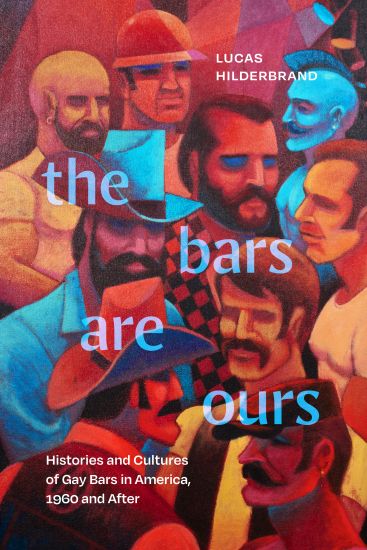
The Bars Are Ours

The Bars Are Ours

Lucas Hilderbrand

DUKE UNIVERSITY PRESS
2023
sidottu
Gay bars have operated as the most visible institutions of the LGBTQ+ community in the United States for the better part of a century, from before gay liberation until after their assumed obsolescence. In The Bars Are Ours Lucas Hilderbrand offers a panoramic history of gay bars, showing how they served as the medium for queer communities, politics, and cultures. Hilderbrand cruises from leather in Chicago and drag in Kansas City to activism against gentrification in Boston and racial discrimination in Atlanta; from New York City’s bathhouses, sex clubs, and discos and Houston’s legendary bar Mary’s to the alternative scenes that reimagined queer nightlife in San Francisco and Latinx venues in Los Angeles. The Bars Are Ours explores these local sites (with additional stops in Denver, Detroit, Seattle, Philadelphia, Minneapolis, and Orlando as well as Wisconsin, Pennsylvania, and Texas) to demonstrate the intoxicating---even world-making---roles that bars have played in queer public life across the country.
The Bars Are Ours

The Bars Are Ours

Lucas Hilderbrand

DUKE UNIVERSITY PRESS
2023
pokkari
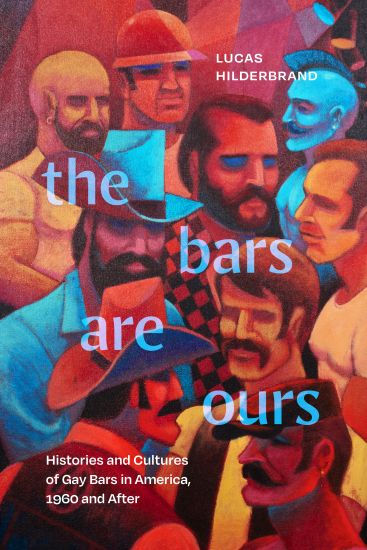
Gay bars have operated as the most visible institutions of the LGBTQ+ community in the United States for the better part of a century, from before gay liberation until after their assumed obsolescence. In The Bars Are Ours Lucas Hilderbrand offers a panoramic history of gay bars, showing how they served as the medium for queer communities, politics, and cultures. Hilderbrand cruises from leather in Chicago and drag in Kansas City to activism against gentrification in Boston and racial discrimination in Atlanta; from New York City’s bathhouses, sex clubs, and discos and Houston’s legendary bar Mary’s to the alternative scenes that reimagined queer nightlife in San Francisco and Latinx venues in Los Angeles. The Bars Are Ours explores these local sites (with additional stops in Denver, Detroit, Seattle, Philadelphia, Minneapolis, and Orlando as well as Wisconsin, Pennsylvania, and Texas) to demonstrate the intoxicating---even world-making---roles that bars have played in queer public life across the country.
Random Bars

Random Bars

Blake Wilder

Outskirts Press
2017
pokkari
This eclectic anthology of poems are the brainchild of an authentic B-Boy, inspired by thirty five years of revolutionary's in spoken words such as The Last Poets, Rakim, KRS-1, Tupac, Nas, and Saul Williams. In Random Bars there is a militancy of Pro-Black thought that still maintains a reflection of inclusion without compromise. The author is a descendant of a German-Irish mother, and an African-American father who was born a sharecropper in Mississippi. Through these lenses the author, Blake Wilder, gives a passionate display of word play narrating an unorthodox perspective of multiculturalism. Random Bars is an amazing mix of poetic verse with the dynamic influence of the generation X hip-hop culture. It is an intelligent collection that discusses many facets of societal causes and effects, while giving its reader a glimpse into the author's conscientious depths. Throughout Random Bars there are numerous historical references that expose the hypocrisy of the everyday world we exist in, many of which are composed from a first person observation. The impact of each piece is singular, but part of a whole, that shares the experiences of those that have succeeded, but still exist on the margins.