Kirjojen hintavertailu. Mukana 11 699 587 kirjaa ja 12 kauppaa.

Kirjahaku

Etsi kirjoja tekijän nimen, kirjan nimen tai ISBN:n perusteella.

1000 tulosta hakusanalla Bill C. Lector

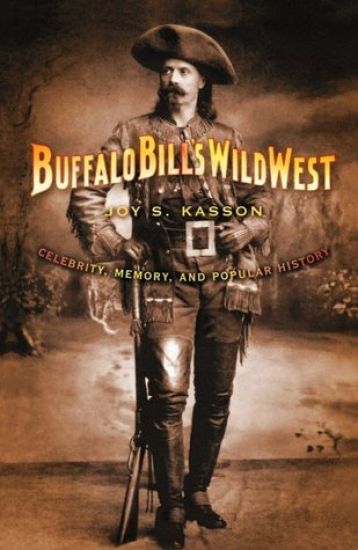
Buffalo Bill's Wild West

Buffalo Bill's Wild West

Farrar, Strauss Giroux-3pl
2001
pokkari
A fascinating analysis of the first famous American to erase the boundary between real history and entertainmentCanada, and Europe. Crowds cheered as cowboys and Indians--and Annie Oakley --galloped past on spirited horses, sharpshooters exploded glass balls tossed high in the air, and cavalry troops arrived just in time to save a stagecoach from Indian attack. Vivid posters on billboards everywhere made William Cody, the show's originator and star, a world-renowned figure.Joy S. Kasson's important new book traces Cody's rise from scout to international celebrity, and shows how his image was shaped. Publicity stressed his show's "authenticity" yet audiences thrilled to its melodrama; fact and fiction converged in a performance that instantly became part of the American tradition.But how, precisely, did that come about? How, for example, did Cody use his audience's memories of the Civil War and the Indian wars? He boasted that his show included participants in the recent conflicts it presented theatrically, yet he also claimed it evoked "memories" of America's bygone greatness. Kasson's shrewd, engaging study--richly illustrated--in exploring the disappearing boundary between entertainment and public events in American culture, shows us just how we came to imagine our memories.
Big Bill of Chicago

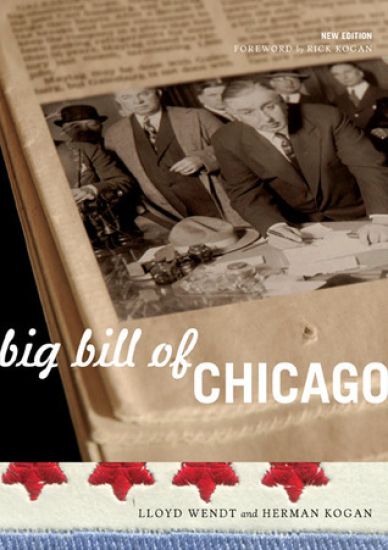
Big Bill of Chicago

Lloyd Wendt; Herman Kogan

Northwestern University Press
2005
nidottu
To some he was a humanitarian and builder. Others scorned him as a fake and friend of gangsters with ""the carcass of a rhinoceros and the brain of a baboon."" This rollicking history traces the rise of William Hale ""Big Bill"" Thompson, Chicago's famous reform mayor, from his upper class roots to his years as a teenaged cowboy, from his fame as a star athlete to the years as a master politician in a world where the ward boss ruled and whiskey for the voters cost a quarter a shot. Big Bill of Chicago profiles the whole brawling arena of city politics from the turn of the century to the Prohibition Era. It is a primer in the way American politics worked-and works-and a map along the countless winding ways even the dirtiest deal can lead to something great.
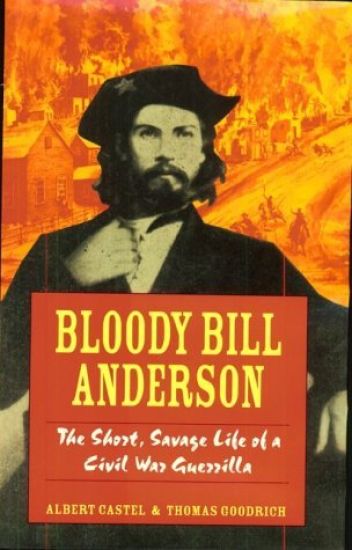
Bloody Bill Anderson

Bloody Bill Anderson

Castel Albert; Goodrich Thomas

Stackpole Books
2011
sidottu
This is the first-ever biography of the perpetrator of the Centralia and Baxter Springs Massacres, as well as innumerable atrocities during the Civil War in the West. The story is one in which the anger and bitterness of war contorts souls to a savage state. It is the unforgettable story of a man driven by personal demons and the circumstances of war to commit ever greater atrocities in an already bloodstained land.
The Bill of Rights

The Bill of Rights

University of Virginia Press
1991
nidottu
This collection of essays offers a comprehensive amendment-by-amendment, clause-by-clause account of the Bill of Rights' recent transmutation. The essays are based on the assumption that to understand the Bill of Rights today, one must both understand the original meaning of the amendments and explore the history, theory and practice behind those amendments. The book suggests that the provisions of the Bill of Rights have been subjected to greater interpretative revision by the Supreme Court than other parts of the Constitution. It should be of interest not only to lawyers and law and political science students, but to anyone with an interest in the ongoing interpretation of the Bill of Rights.
The Bill of Rights

The Bill of Rights

Ronald Hoffman; Peter J. Albert

University of Virginia Press
1998
sidottu
The essays in this collection set the Bill of Rights in context by tracing its historical lineages and establishing the political context for its adoption by the states. They point out the differences between Federalist fears of anarchy and Antifederalist fears of tyranny, as eventually reconcilable, and examine how particular functional dimensions of the various rights were popularly conceived. The volume concludes with a comparative examination of the American and French experiences with the bill of rights that supports those scholars who argue for the critical role played by the Constitution's first amendments in matters of constitutional jurisprudence.
The Bill of Lading

The Bill of Lading

Frank Stevens

CRC Press Inc
2017
sidottu
The carriage of goods by sea starts off with a contract of carriage, an essentially simple and straightforward contract between two parties, the shipper and the carrier. Very often, however, a bill of lading is issued and a third party appears on the scene: the holder of the bill of lading. The holder was not involved in the making of the contract of carriage, but does have rights, and possibly obligations, against the carrier at destination. The question then is how the third-party holder of the bill acquires those rights and obligations.Analysing the different theories that have been proposed to explain the position of the third party holder, this book makes a distinction between contractual theories and non-contractual theories to explain the holder's position. Contractual theories build on the initial contract of carriage and apply contract law mechanisms while non-contractual theories construe the position of the third-party holder independently. Following the analysis and appraisal of the different theories, this book makes the case that the position of the third-party holder of the bill of lading is not obvious or self-evident; and submits that a statutory approach to the position of the holder of the bill of lading has advantages and would be preferable.
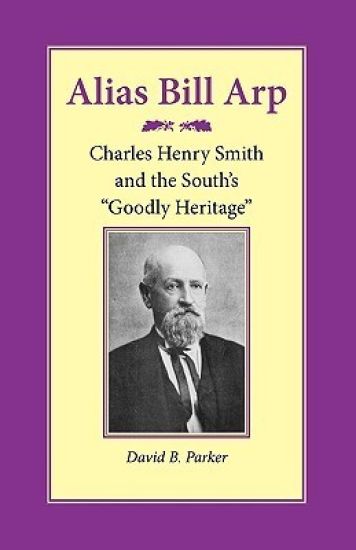
Alias Bill Arp

Alias Bill Arp

David B. Parker

University of Georgia Press
2009
pokkari
From 1861 to 1903 humorist Charles Henry Smith, writing as Bill Arp, a sly Georgia back-woodsman, was the South’s most widely read newspaper columnist. Knowing the immense popularity of Smith’s writings historian have suggested that southerners saw him as a voice for their concerns. While the idea that Bill Arp spoke for his region is sound, the intent of the writings has been misconstrued over time, argues David Parker. In Alias Bill Arp, Parker shows that Smith was not a contented observer of the post-Reconstruction New South as is widely inferred from his most widely read work—his syndicated weekly column in the Atlanta Constitution that he began writing in 1878. Considering the full range of Smith’s work, Parker says, shows him to be one of the South’s harshest critics. After a brief survey of Smith’s life, Parker surveys the Bull Arp writings, highlighting their major topics, and explaining what they meant to readers of that era.
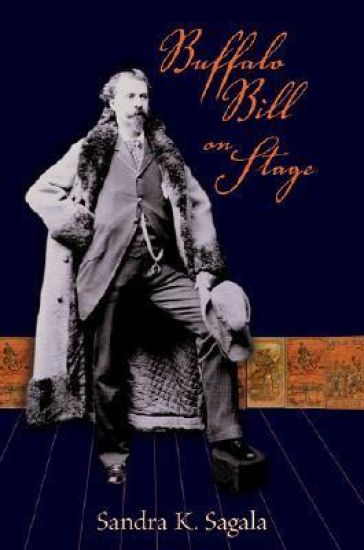
Buffalo Bill on Stage

Buffalo Bill on Stage

Sandra K. Sagala

University of New Mexico Press
2008
sidottu
Between 1872 and 1886, before he achieved acclaim for his Wild West show, ""Buffalo Bill"" led a troupe of traveling actors known as a Combination across the country performing in frontier melodramas. Biographies of William Frederick Cody rarely address these fourteen rather obscure years when Cody honed the skills that would make him the world-renowned entertainer as he is now remembered.In this revision of her earlier book, ""Buffalo Bill"", Actor, Sandra Sagala chronicles the decade and a half of Cody's life as he crisscrossed the country entertaining millions. She analyzes how the lessons he learned during those theatrical years helped shape his Wild West program, as well as Cody, the performer.
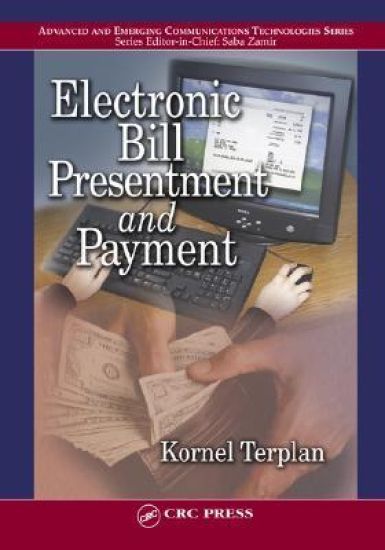
Electronic Bill Presentment and Payment

Electronic Bill Presentment and Payment

Kornel Terplan

CRC Press Inc
2003
sidottu
Electronic bill presentment and payment (EBPP) is revolutionizing the billing process by offering online and real time presentment of bill content and payment choices. EBPP is the easy way of viewing billing status, remittance items, and presenting balances using a universal browser from any location. In contrast to paper-based bills, electronic billing enables service providers to combine billing with advanced customer care and improved customer relationship management. Electronic Bill Presentment and Payment presents the essentials about this new way of viewing and paying bills. The author defines basic business models, such as biller direct and various consolidator model options, allocates the right tools to each of the models, and differentiates between the needs of principal industries. The text describes how to build and implement value added capabilities such as personalization, up-selling, online dispute management, and better control of the accounts payable and receivable process can significantly improve customer care and customer relationship management on behalf of service providers. About the Author: Kornel Terplan is a telecommunication expert with more than 30 years of highly successful multi-national consulting experience. He has provided consulting, training, and product development services to over 75 national and international corporations on four continents. He has served on the editorial board for over 140 articles, 22 books, and 115 papers. Dr. Terplan has designed five network management related courses and conducted over 80 seminar presentations in 15 countries.
Wild Bill Sullivan

Wild Bill Sullivan

Ann R. Hammons

University Press of Mississippi
1980
nidottu
The rollicking history of a dreaded real-life figure in the folklore of the Mississippi backwoods Thanks to the subject of this fascinating book, Sullivan's Hollow, a seemingly idyllic valley in south Mississippi, gained its rightful position among the notorious place names in American folklore. To the citizenry in the hamlets of Sullivan's Hollow Wild Bill Sullivan was the fearsome local rascal whose bent for pranks, jokes, and chicanery quite often verged on the murderous. To travelers his name inspired a deadly dread of a chance meeting with him on a lonely trail. Wild Bill's love of liquor and his bounding in and out of trouble embellished his darkly checkered reputation. For the annals of folklore he is prime material. Here for the first time in paperback is the story of this nineteenth-century Mississippi maverick, as told by his great-granddaughter. She recounts stories of his best-known "pranks"-such as stripping a Bible peddler naked and hitching him all day to a plow, and she puts a believable face on the legend of Wild Bill's having killed fifty men (or more, as the story proliferates). What reader of this book could fail to believe that no traveler wanted to be passing through Sullivan's Hollow after sundown?
Pawnee Bill's Historic Wild West

Pawnee Bill's Historic Wild West

Allen Farnum

Schiffer Publishing Ltd
1997
nidottu
Occasionally, some notably historic piece of Americana--artifacts, photographs, or written materia--turns up from forgotten storage. Such is the case with the 155 pristine negatives printed in Pawnee Bill's Historic Wild West. They were taken while the show was on tour between 1900 and 1905 by cowboy/amateur photographer Harry Bock. This is truly a photo documentary without parallel and offers western, historical, and tent show buffs a visual look back in time with exceptional detail and clarity. These images of the hand-carved wagons, tents, midway crowds, Indians, cowboys, cowgirls, equipment, and buffalo are accompanied by the carefully researched story of the adventure-filled life of Major Gordon W. Lillie/Pawnee Bill--buffalo hunter, plains scout, White Chief of the Pawnees, Wild West showman, land boomer, oilman, banker, conservationist. The photographer, "Buckskin Harry" Bock, another frontier pioneer and cowboy/carpenter, worked many years for Pawnee Bill until becoming a Baptist missionary to the Pawnee Indians. Together their lives provide a fascinating background to accompany this visual close-up look at a period in life that is gone forever--the Wild West show of the early 1900s--the forerunner of our modern rodeo. Pawnee Bill's Historic Wild West belongs in all museum and collectors' libraries.
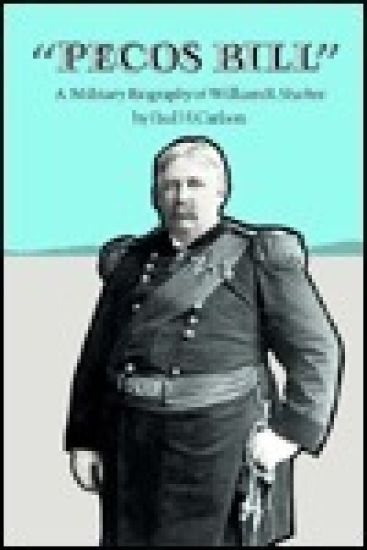
Pecos Bill

Pecos Bill

P. Carlson

Texas A M University Press
1989
sidottu
General William R. Shafter was no gallant hero. He drank, gambled, swore, got into fights with his men. They nicknamed him for the river that was one of his targets: "Pecos Bill." He was accused of trying to start a war with Mexico and became involved in an embezzlement case. Associated with military blunders during the Spanish-American War, he has often been pictured as a fat, incompetent buffoon. But Shafter, if coarse and abrasive, was a man who got results. A winner of the Congressional Medal of Honor, he served in the Army for forty years, from the Civil War to the Spanish-American War, in which he commanded all Army operations. In Texas, he commanded one of the army's first all-black regiments. He helped restore peace at Pine Ridge after the Wounded Knee massacre, and he carried out in Cuba one of the swiftest and most successful campaigns in the history of American warfare. In this carefully researched and very readable study, Paul Carlson gives insight into the career and life of one of history's enduring enigmas.
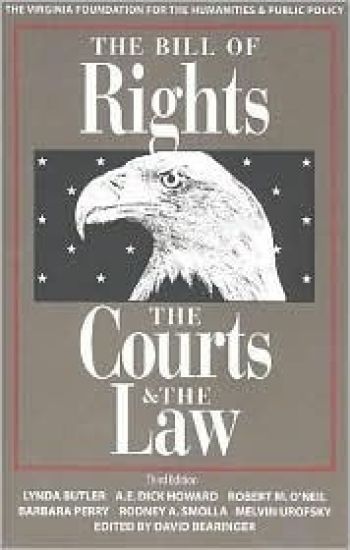
The Bill of Rights, the Courts and the Law

The Bill of Rights, the Courts and the Law

David Bearinger

University of Virginia Press
2003
nidottu
The Bill of Rights, perhaps the single most important document in American history, has provided a strong and remarkably durable framework in which the limits of government, the scope of individual liberty, and the nature of our democratic system have been defined for more than two hundred years. In the past several decades in particular, the American Bill of Rights has been subject to virtually continual reinterpretation by the U.S. Supreme Court through a series of landmark cases, while its provisions also have exerted a powerful influence over the movement toward democracy and freedom worldwide. This third edition of The Bill of Rights, the Courts, and the Law serves to increase public understanding of the Bill of Rights and the American judicial process by presenting select cases and their underlying issues fairly. It allows readers to examine the various legal arguments with the help of expert commentary, offering the best, most accessible introduction to the Bill of Rights available to a nonscholarly audience.
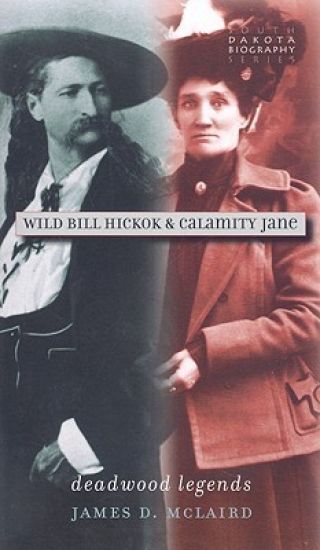
Wild Bill Hickok and Calamity Jane

Wild Bill Hickok and Calamity Jane

James D. McLaird

South Dakota State Historical Society
2008
nidottu
Although Wild Bill Hickok and Calamity Jane spent only a few weeks in Deadwood at the same time, their fame and fate have become intertwined and their relationship legendary. James D. McLaird examines the contemporary accounts that turned these two Wild West wanderers into dime-novel and motion-picture stars. Contemporary novelists and journalists created an astonishingly strong legacy for both Calamity Jane and Wild Bill, accounting for much of their notoriety. Gun fights, scouting missions, and daring escapes from enemies filled stories about the dashing pair; even their day-to-day existence seems to have been fraught with danger and excitement, teetering on the brink between lawful and unlawful. McLaird traces the role that writers and the city of Deadwood itself played in the creation of the legacies of the infamous couple. Fact and fiction have become so woven together that a definitive picture of Calamity Jane and Wild Bill is almost impossible. Their brief friendship and subsequent burial next to each other in Mount Moriah Cemetery simply added to their legendary status and made them stalwards of Wild West pop culture and Deadwood mythology.