Kirjojen hintavertailu. Mukana 12 595 353 kirjaa ja 12 kauppaa.

Kirjahaku

Etsi kirjoja tekijän nimen, kirjan nimen tai ISBN:n perusteella.

1000 tulosta hakusanalla Bl

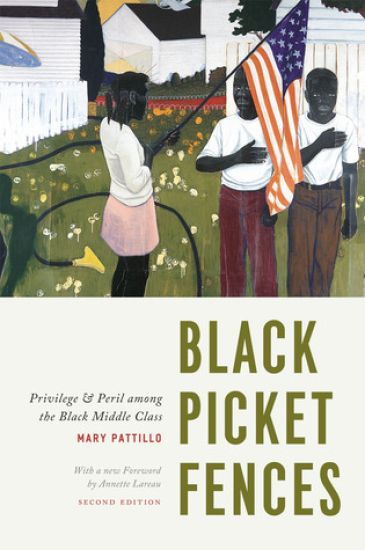
Black Picket Fences

Black Picket Fences

Mary Pattillo; Annette Lareau

University of Chicago Press
2013
nidottu
First published in 1999, Mary Pattillo's "Black Picket Fences" explores an American demographic group too often ignored by both scholars and the media: the black middle class. Nearly fifteen years later, this book remains a groundbreaking study of a group still under represented in the academic and public spheres. The result of living for three years in "Groveland," a black middle-class neighborhood on Chicago's South Side, "Black Picket Fences" explored both the advantages the black middle class has and the challenges they still face. Despite arguments that race no longer matters, Pattillo showed a different reality, one where black and white middle classes remain separate and unequal. Stark, moving, and still timely, the book is updated for this edition with a new epilogue by the author that details how the neighborhood and its residents fared in the recession of 2008, as well as new interviews with many of the same neighborhood residents featured in the original. Also included is a new foreword by acclaimed University of Pennsylvania sociologist Annette Lareau.
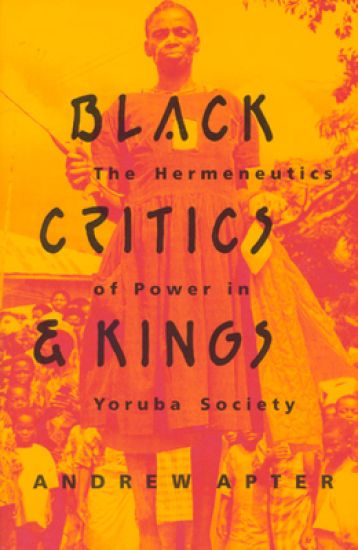
Black Critics and Kings

Black Critics and Kings

Andrew Apter

University of Chicago Press
1992
sidottu
How can we account for the power of ritual? This is the guiding question of Black Critics and Kings, which examines how Yoruba forms of ritual and knowledge shape politics, history, and resistance against the state. Focusing on "deep" knowledge in Yoruba cosmology as an interpretive space for configuring difference, Andrew Apter analyzes ritual empowerment as an essentially critical practice, one that revises authoritative discourses of space, time, gender, and sovereignty to promote political—-and even violent—-change.Documenting the development of a Yoruba kingdom from its nineteenth-century genesis to Nigeria's 1983 elections and subsequent military coup, Apter identifies the central role of ritual in reconfiguring power relations both internally and in relation to wider political arenas. What emerges is an ethnography of an interpretive vision that has broadened the horizons of local knowledge to embrace Christianity, colonialism, class formation, and the contemporary Nigerian state. In this capacity, Yoruba òrìsà worship remains a critical site of response to hegemonic interventions.With sustained theoretical argument and empirical rigor, Apter answers critical anthropologists who interrogate the possibility of ethnography. He reveals how an indigenous hermeneutics of power is put into ritual practice—-with multiple voices, self-reflexive awareness, and concrete political results. Black Critics and Kings eloquently illustrates the ethnographic value of listening to the voice of the other, with implications extending beyond anthropology to engage leading debates in black critical theory.
Black Critics and Kings

Black Critics and Kings

Andrew Apter

University of Chicago Press
1992
nidottu
How can we account for the power of ritual? This is the guiding question of Black Critics and Kings, which examines how Yoruba forms of ritual and knowledge shape politics, history, and resistance against the state. Focusing on "deep" knowledge in Yoruba cosmology as an interpretive space for configuring difference, Andrew Apter analyzes ritual empowerment as an essentially critical practice, one that revises authoritative discourses of space, time, gender, and sovereignty to promote political—-and even violent—-change.Documenting the development of a Yoruba kingdom from its nineteenth-century genesis to Nigeria's 1983 elections and subsequent military coup, Apter identifies the central role of ritual in reconfiguring power relations both internally and in relation to wider political arenas. What emerges is an ethnography of an interpretive vision that has broadened the horizons of local knowledge to embrace Christianity, colonialism, class formation, and the contemporary Nigerian state. In this capacity, Yoruba òrìsà worship remains a critical site of response to hegemonic interventions.With sustained theoretical argument and empirical rigor, Apter answers critical anthropologists who interrogate the possibility of ethnography. He reveals how an indigenous hermeneutics of power is put into ritual practice—-with multiple voices, self-reflexive awareness, and concrete political results. Black Critics and Kings eloquently illustrates the ethnographic value of listening to the voice of the other, with implications extending beyond anthropology to engage leading debates in black critical theory.
Blind to Sameness

Blind to Sameness

Asia Friedman

University of Chicago Press
2013
sidottu
What is the role of the senses in how we understand the world? Cognitive sociology has long addressed the way we perceive or imagine boundaries in our ordinary lives, but Asia Friedman pushes this question further still. How, she asks, did we come to blind ourselves to sex sameness? Drawing on more than sixty interviews with two decidedly different populations - the blind and the transgendered - "Blind to Sameness" answers provocative questions about the relationships between sex differences, biology, and visual perception. Both groups speak from unique perspectives that magnify the social construction of dominant visual conceptions of sex, allowing Friedman to examine the visual construction of the sexed body and highlighting the processes of social perception underlying our everyday experience of male and female bodies. The result is a notable contribution to the sociologies of gender, culture, and cognition that will revolutionize the way we think about sex.
Blind to Sameness

Blind to Sameness

Asia Friedman

University of Chicago Press
2013
nidottu
What is the role of the senses in how we understand the world? Cognitive sociology has long addressed the way we perceive or imagine boundaries in our ordinary lives, but Asia Friedman pushes this question further still. How, she asks, did we come to blind ourselves to sex sameness? Drawing on more than sixty interviews with two decidedly different populations - the blind and the transgendered - "Blind to Sameness" answers provocative questions about the relationships between sex differences, biology, and visual perception. Both groups speak from unique perspectives that magnify the social construction of dominant visual conceptions of sex, allowing Friedman to examine the visual construction of the sexed body and highlighting the processes of social perception underlying our everyday experience of male and female bodies. The result is a notable contribution to the sociologies of gender, culture, and cognition that will revolutionize the way we think about sex.
Black Studies, Rap, and the Academy

Black Studies, Rap, and the Academy

Houston A. Baker

University of Chicago Press
1993
sidottu
In this explosive book, Houston Baker takes stock of the current state of Black Studies in the university and outlines its responsibilities to the newest form of black urban expression--rap. A frank, polemical essay, Black Studies, Rap, and the Academy is an uninhibited defense of Black Studies and an extended commentary on the importance of rap. Written in the midst of the political correctness wars and in the aftermath of the Los Angeles riots, Baker's meditation on the academy and black urban expression has generated much controversy and comment from both ends of the political spectrum.
Black Studies, Rap, and the Academy

Black Studies, Rap, and the Academy

Houston A. Baker

University of Chicago Press
1995
nidottu
In this explosive book, Houston Baker takes stock of the current state of Black Studies in the university and outlines its responsibilities to the newest form of black urban expression—rap. A frank, polemical essay, Black Studies, Rap, and the Academy is an uninhibited defense of Black Studies and an extended commentary on the importance of rap. Written in the midst of the political correctness wars and in the aftermath of the Los Angeles riots, Baker's meditation on the academy and black urban expression has generated much controversy and comment from both ends of the political spectrum.
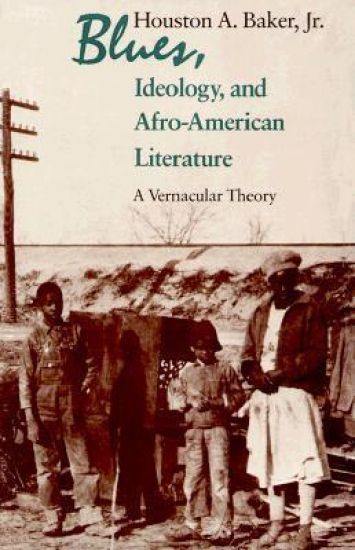
Blues, Ideology, and Afro-American Literature

Blues, Ideology, and Afro-American Literature

Houston A. Baker

University of Chicago Press
1987
nidottu
Relating the blues to American social and literary history and to Afro-American expressive culture, Houston A. Baker, Jr., offers the basis for a broader study of American culture at its "vernacular" level. He shows how the "blues voice" and its economic undertones are both central to the American narrative and characteristic of the Afro-American way of telling it.
Black New Orleans, 1860-1880

Black New Orleans, 1860-1880

John W. Blassingame

University of Chicago Press
2007
nidottu
Reissued for the first time in over thirty years, Black New Orleans explores the twenty-year period in which the city’s black population more than doubled. Meticulously researched and replete with archival illustrations from newspapers and rare periodicals, John W. Blassingame’s groundbreaking history offers a unique look at the economic and social life of black people in New Orleans during Reconstruction. Not a conventional political treatment, Blassingame’s history instead emphasizes the educational, religious, cultural, and economic activities of African Americans during the late nineteenth century.“Blending historical and sociological perspectives, and drawing with skill and imagination upon a variety of sources, [Blassingame] offers fresh insights into an oft-studied period of Southern history. . . . In both time and place the author has chosen an extraordinarily revealing vantage point from which to view his subject. ”—Neil R. McMillen, American Historical Review
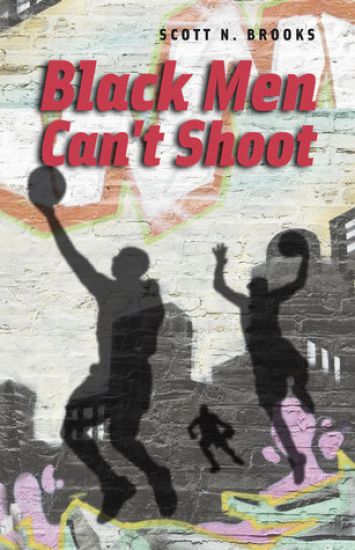
Black Men Can't Shoot

Black Men Can't Shoot

Scott N. Brooks

University of Chicago Press
2009
sidottu
The myth of the natural black athlete is widespread, though it's usually only talked about when a sports commentator or celebrity embarrasses himself by bringing it up in public. Those gaffes are swiftly decried as racist, but apart from their link to the long history of ugly racial stereotypes about black people - especially men - they are also harmful because they obscure very real, hard-fought accomplishments. As "Black Men Can't Shoot" demonstrates, such successes on the basketball court don't just happen because of natural gifts - instead, they grow out of the long, tough, and unpredictable process of becoming a known player. Scott N. Brooks spent four years coaching summer league basketball in Philadelphia. And what he saw, heard, and felt working with the young black men on his team tells us much about how some kids are able to make the extraordinary journey from the ghetto to the NCAA. To show how good players make the transition to greatness, Brooks tells the story of two young men, Jermaine and Ray, following them through their high school years and chronicling their breakthroughs and frustrations on the court as well as their troubles at home. We witness them negotiating the pitfalls of forging a career and a path out of poverty, we see their triumphs and setbacks, and we hear from the network of people - their families, the neighborhood elders, and Coach Brooks himself - invested in their fates. "Black Men Can't Shoot" has all the hallmarks of a classic sports book, with a climactic championship game and a suspenseful ending as we wait to find out if Jermaine and Ray will be recruited. Brooks' moving coming-of-age story counters the belief that basketball only exploits kids and lures them into following empty dreams - and shows us that by playing ball, some of these young black men have already begun their education even before they get to college.
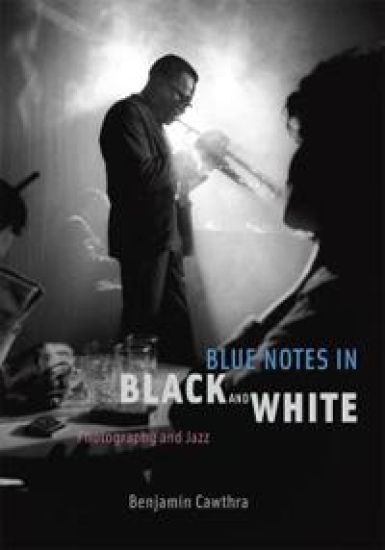
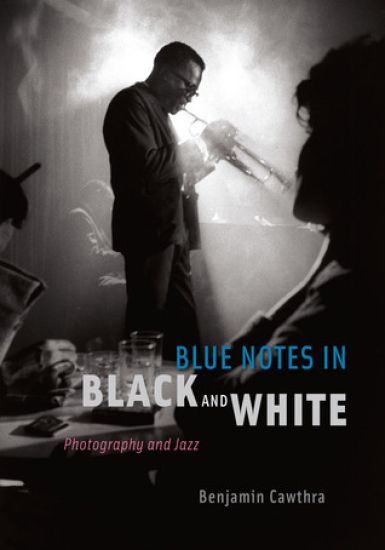
Blue Notes in Black and White

Blue Notes in Black and White

Benjamin Cawthra

University of Chicago Press
2011
sidottu
Miles Davis, supremely cool behind his shades. Billie Holiday, eyes closed and head tilted back in full cry. John Coltrane, one hand behind his neck and a finger held pensively to his lips. These iconic images have captivated jazz fans nearly as much as the music has. Jazz photographs are visual landmarks in American history, acting as both a reflection and a vital part of African American culture in a time of immense upheaval, conflict, and celebration. Charting the development of jazz photography from the swing era of the 1930s to the rise of black nationalism in the '60s, "Blue Notes in Black and White" is the first of its kind: a fascinating account of the partnership between two of the twentieth century's most innovative art forms. Benjamin Cawthra introduces us to the great jazz photographers - including Gjon Mili, William Gottlieb, Herman Leonard, Francis Wolff, Roy DeCarava, and William Claxton - and their struggles, hustles, styles, and creative visions. We also meet their legendary subjects, such as Duke Ellington, sweating through a late-night jam session for the troops during World War II, and Dizzy Gillespie, stylish in beret, glasses, and goatee. Cawthra shows us the connections among the photographers, art directors, editors, and record producers who crafted a look for jazz that would sell magazines and albums. And on the other side of the lens, he explores how the musicians shaped their public images to further their own financial and political goals. This mixture of art, commerce, and racial politics resulted in a rich visual legacy that is vividly on display in "Blue Notes in Black and White". Beyond illuminating the aesthetic power of these images, Cawthra ultimately shows how jazz and its imagery served a crucial function in the struggle for civil rights, making African Americans proudly, powerfully visible.
Blue Notes in Black and White

Blue Notes in Black and White

Benjamin Cawthra

University of Chicago Press
2013
nidottu
Miles Davis, supremely cool behind his shades. Billie Holiday, eyes closed and head tilted back in full cry. Blue Notes in Black and White charts the development of jazz photography from the swing era of the 1930s to the rise of black nationalism in the '60s. Through text and photographs, Benjamin Cawthra provides a fascinating account of the partnership between two of the twentieth century's most innovative art forms.
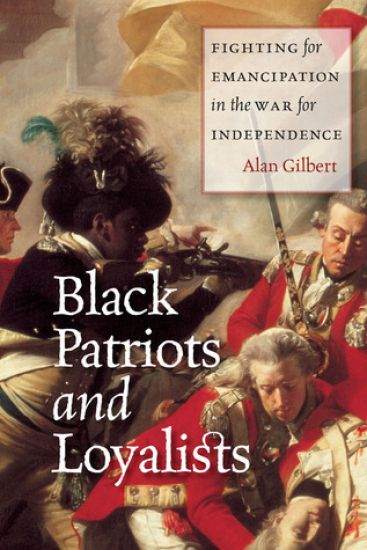
Black Patriots and Loyalists

Black Patriots and Loyalists

Alan Gilbert

University of Chicago Press
2013
nidottu
We commonly think of the American Revolution as simply the war for independence from British colonial rule. But, of course, that independence actually applied to only a portion of the American population - African Americans would still be bound in slavery for nearly another century. Alan Gilbert asks us to rethink what we know about the Revolutionary War, to realize that while white Americans were fighting for their freedom, many black Americans were joining the British imperial forces to gain theirs. Further, a movement led by sailors - both black and white - pushed strongly for emancipation on the American side. There were actually two wars being waged at once: a political revolution for independence from Britain and a social revolution for emancipation and equality. Gilbert presents persuasive evidence that slavery could have been abolished during the Revolution itself if either side had fully pursued the military advantage of freeing slaves and pressing them into combat, and his extensive research also reveals that free blacks on both sides played a crucial and under appreciated role in the actual fighting. Black Patriots and Loyalists contends that the struggle for emancipation was not only basic to the Revolution itself, but was a rousing force that would inspire freedom movements like the abolition societies of the North and the black loyalist pilgrimages for freedom in Nova Scotia and Sierra Leone.
Blessing Same-Sex Unions

Blessing Same-Sex Unions

Mark D. Jordan

University of Chicago Press
2013
nidottu
Why are so many churches vehemently opposed to blessing same-sex unions? In this incisive work, Mark D. Jordan shows how carefully selected ideals of Christian marriage have come to dominate recent debates over same-sex unions. Opponents of gay marriage, he reveals, too often confuse simplified ideals of matrimony with historical facts, purporting that there has been a stable Christian tradition of marriage across millennia, when the reality has been anything but. Raising trenchant questions about social obligations, impulses, intentions, and determination, Blessing Same-Sex Unions is a must-read for both sides of the ongoing American debate over gay marriage.
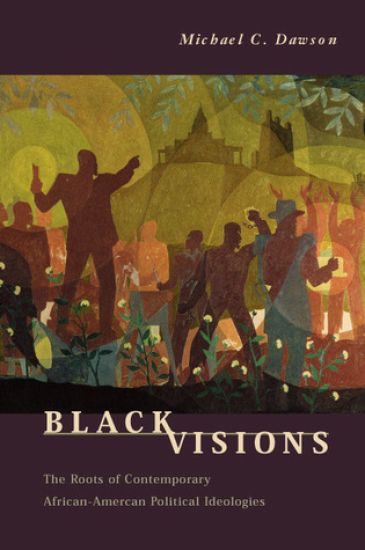
Black Visions

Black Visions

Michael C. Dawson

University of Chicago Press
2002
sidottu
In this work, Michael C. Dawson brings us the most comprehensive analysis to date of the complex relationship of black political thought to black political identity and behaviour. Combining an historical perspective with conceptual sophistication and empirical evidence, Dawson identifies which political ideologies are supported by blacks, then traces their historical roots and examines their effects on black public opinion, not only among intellectuals and activists, but also at the grassroots level. Although many (mostly white) commentators have argued that black political thought falls within the realms of American liberalism, many black commentators regard black political thought as a rejection of American liberalism. Here, Dawson argues that black visions are more varied and complex. Black ideologies, such as radical egalitarianism, disillusioned liberalism, and black conservatism do criticize American liberalism while still accepting its basic tenets. But other ideologies - black nationalism, black feminism, and black Marxism - all challenge one or more of the premises of American liberalism. Ultimately, Dawson provocatively argues that the rise of a black counterpublic in the 19th century has made the development of distinctive currents of black political thought possible. Based on the most extensive study of black public opinion to date, Dawson shows how each ideology still affects blacks' views on issues like their position in American society, the nature of whites, and separatism. Ranging from Frederick Douglass to rap artist Ice Cube, Dawson brilliantly illuminates the history and current role of black political thought in shaping political debate in America.
Black Visions

Black Visions

Michael C. Dawson

University of Chicago Press
2003
nidottu
This book represents the most comprehensive analysis to date of the complex relationships between black political thought and black political identity and behaviour. Ranging from Frederick Douglass to rap artist Ice Cube, Michael C. Dawson illuminates the history and current role of black political thought in shaping political debate in America.
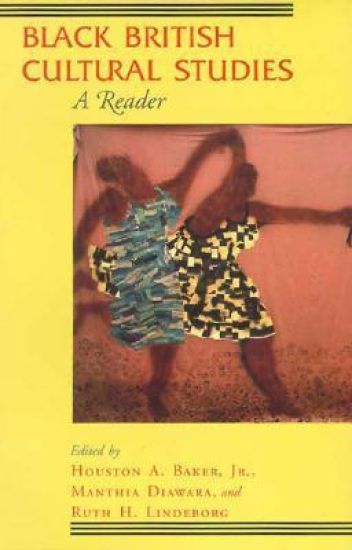
Black British Cultural Studies

Black British Cultural Studies

University of Chicago Press
1996
nidottu
From Stuart Hall's classic study of racially-structured societies to an interview by Manthia Diawara with Sonia Boyce, a leading figure in the black British arts movement, the papers included here have transformed cultural studies through their sustained focus on the issue of race. Much of the book centres on black British arts, especially film, ranging from an historical overview of black British cinema to an evaluation of the costly burden on black artists of representing their communities. Other essays consider such topics as race and representation, and colonial and post-colonial discourse. This anthology should be of use as a resource for those interested in cultural studies. It also has much to offer students of anthropology, sociology, media and film studies, and literary criticism.
Black Men Can't Shoot

Black Men Can't Shoot

Scott N. Brooks

University of Chicago Press
2014
nidottu
The myth of the natural black athlete is widespread, though it's usually talked about only when a sports commentator or celebrity embarrasses himself by bringing it up in public. Those gaffes are swiftly decried as racist, but apart from their link to the long history of ugly racial stereotypes about black people - especially men - they are also harmful because they obscure very real, hard-fought accomplishments. As Black Men Can't Shoot demonstrates, such successes on the basketball court don't happen just because of natural gifts - instead, they grow out of the long, tough, and unpredictable process of becoming a known player. Scott N. Brooks spent four years coaching summer league basketball in Philadelphia. And what he saw, heard, and felt working with the young black men on his team tells us much about how some kids are able to make the extraordinary journey from the ghetto to the NCAA. He tells the story of two young men, Jermaine and Ray, following them through their high school years and chronicling their breakthroughs and frustrations on the court as well as their troubles at home. Black Men Can't Shoot is a moving coming-of-age story that counters the belief that basketball only exploits kids and lures them into following empty dreams-and shows us that by playing ball, some of these young black men have already begun their education even before they get to college.
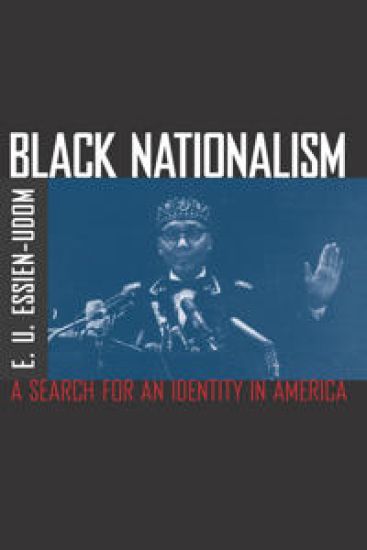
Black Nationalism

Black Nationalism

E. U. Essien-Udom

University of Chicago Press
1995
nidottu
One of the first studies of the organization, life and meaning of the "Nation of Islam" and, by extension, all Black Nationalist movements, this classic work dispels the still common conception that the movement functioned primarily for political purposes. By observing the daily life of its members, Essien-Udom demonstrates that the "Nation of Islam" served primarily as a means for poor urban blacks to attain a national identity, a sense of ethnic consciousness, and empowerment in a society that denied them these privileges. Black Nationalism continues to hold profound implications for our understanding of the appeal of Black Nationalism as an ideology and a political force. "An excellent standard treatment of black nationalist belief and practice in the 50's." --Michael Eric Dyson, New York Times Book Review "This is an absorbing exercise in first class reporting...In the light of his scrupulous fairness, the book is another illustration of how the press prejudges a story. And most provocatively, Essien-Udom has emphasized that even after the current campaigns for wide-scale integration are won, there will be an even wider chasm between the 'liberated' Negro middle class and the rootless Negro poor." --Nat Hentoff,Commonweal
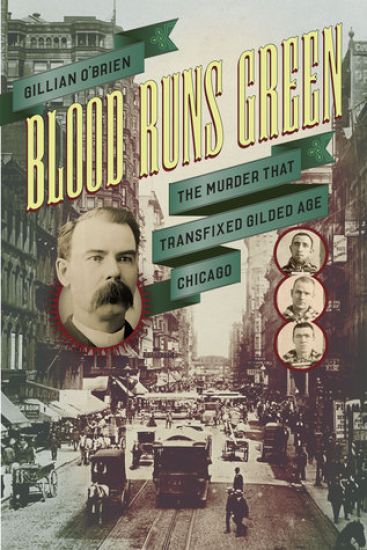
Blood Runs Green

Blood Runs Green

Gillian O'Brien

University of Chicago Press
2015
sidottu
It was the biggest funeral Chicago had seen since Lincoln's. On May 26, 1889, four thousand mourners proceeded down Michigan Avenue, followed by a crowd forty thousand strong, in a howl of protest at what commentators called one of the ghastliest and most curious crimes in civilized history. The dead man, Dr P H Cronin, was a respected Irish physician, but his brutal murder uncovered a web of intrigue, secrecy, and corruption that stretched across the United States and far beyond. Blood Runs Green tells the story of Cronin's murder from the police investigation to the trial. It is a story of hotheaded journalists in pursuit of sensational crimes, of a bungling police force riddled with informers and spies, and of a secret revolutionary society determined to free Ireland yet succeeding only in tearing itself apart. It is also the story of a booming immigrant population clamoring for power at a time of unprecedented change. From backrooms to courtrooms, historian Gillian O'Brien deftly navigates the complexities of Irish Chicago, bringing to life a rich cast of characters and tracing the spectacular rise and fall of the secret Irish American society Clan na Gael. She draws on real-life accounts and sources from the United States, Ireland, and Britain to cast new light on Clan na Gael and reveal how Irish republicanism swept across the United States. Destined to be a true crime classic, Blood Runs Green is an enthralling tale of a murder that captivated the world and rever-berated through society long after the coffin closed.