Kirjojen hintavertailu. Mukana 11 627 463 kirjaa ja 12 kauppaa.

Kirjahaku

Etsi kirjoja tekijän nimen, kirjan nimen tai ISBN:n perusteella.

1000 tulosta hakusanalla Booker T. Washington

Film and the American Left

Film and the American Left

M. Keith Booker

Greenwood Press
1999
sidottu
The American Left has produced a rich and varied cultural tradition that was largely suppressed during the Cold War but whose influence on the larger society has always been significant. Much of this tradition found its expression in film and despite the suppression of overtly leftist content in most Hollywood films, there is still a substantial amount of leftist material in American movies. Booker's study gives the attention to the films of the American Left that they have long deserved by examining the full range of their history. Such well known directors as Charlie Chaplin, Orson Welles, William Wellman, Fritz Lang, John Huston, Stanley Kubrick, Oliver Stone, and John Sayles often showed leftist inclinations in their work. Other films associated with the American Left have been produced in a number of modes and subgenres, including war films, historical films, detective films, and science fiction. Some of these directors have offered overt criticisms of capitalism in films dealing with labor and business. This reference book thoroughly explores leftist elements in American films.The book begins with a brief historical survey of the development of this important cultural phenomenon. It then provides detailed entries for more than 260 films associated with the American Left. The entries are arranged chronologically, so that the reader may trace the cinematic representation of the American Left across time. The entries include not only plot summaries, but also critical examinations of the political content and implications of the films. Included are discussions of such classic works as Citizen Kane and The Grapes of Wrath, along with considerations of more recent films, such as Apocalypse Now, Taxi Driver, and Men with Guns. Two appendixes and index provide alphabetical access to the entries. The individual entries provide brief bibliographical citations, while the volume closes with a bibliography.
Ulysses, Capitalism, and Colonialism

Ulysses, Capitalism, and Colonialism

M. Keith Booker

Praeger Publishers Inc
2000
sidottu
The work of James Joyce, especially Ulysses, can be fully understood only when the colonial and postcolonial context of Joyce's Ireland is taken into account. Reading Joyce as a postcolonial writer produces valuable new insights into his work, though comparisons of Joyce's work with that of African and Caribbean postcolonial writers provides reminders that Joyce, regardless of his postcolonial status, remains a fundamentally European writer whose perspective differs substantially from that of most other postcolonial writers. In addition to exploring Joyce's writings in light of recent developments in postcolonial theory, Booker employs a Marxist critical approach to assess the political implications of Joyce's work and examines the influence of Cold War anticommunism on previous readings of Joyce in the West. Focusing on Karl Radek's criticisms of Joyce, the volume begins with a detailed discussion of the rejection of Joyce's writings by many leftist critics. It then examines those aspects of Ulysses that can be taken as a diagnosis and criticism of the social ills brought to Ireland by British capitalism. The following chapters explore Joyce's language as part of his critique of capitalism, the role of history in his works, the failure of Joyce to represent the lower classes of colonial Dublin, and the political implications of Joyce's writings.
Monsters, Mushroom Clouds, and the Cold War

Monsters, Mushroom Clouds, and the Cold War

M. Keith Booker

Praeger Publishers Inc
2001
sidottu
The 1950s are widely regarded as the golden age of American science fiction. This book surveys a wide range of major science fiction novels and films from the long 1950s--the period from 1946 to 1964--when the tensions of the Cold War were at their peak. The American science fiction novels and films of this period clearly reflect Cold War anxieties and tensions through their focus on such themes as alien invasion and nuclear holocaust. In this sense, they resemble the observations of social and cultural critics during the same period.Meanwhile, American science fiction of the long 1950s also engages its historical and political contexts through an interrogation of phenomena, such as alienation and routinization, that can be seen as consequences of the development of American capitalism during this period. This economic trend is part of the rise of the global phenomenon that Marxist theorists have called late capitalism. Thus, American science fiction during this period reflects the rise of late capitalism and participates in the beginnings of postmodernism, described by Frederic Jameson as the cultural logic of late capitalism.
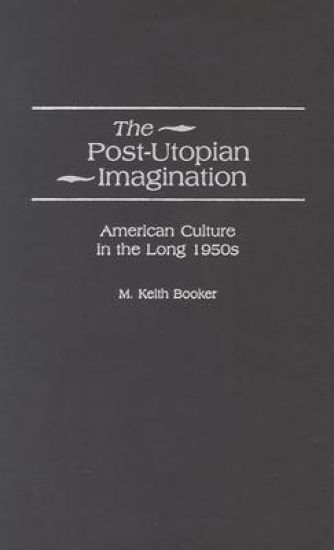
The Post-Utopian Imagination

The Post-Utopian Imagination

M. Keith Booker

Praeger Publishers Inc
2002
sidottu
In America, the long 1950s were marked by an intense skepticism toward utopian alternatives to the existing capitalist order. This skepticism was closely related to the climate of the Cold War, in which the demonization of socialism contributed to a dismissal of all alternatives to capitalism. This book studies how American novels and films of the long 1950s reflect the loss of the utopian imagination and mirror the growing concern that capitalism brought routinization, alienation, and other dehumanizing consequences. The volume relates the decline of the utopian vision to the rise of late capitalism, with its expanding globalization and consumerism, and to the beginnings of postmodernism.In addition to well-known literary novels, such as Nabokov's Lolita, Booker explores a large body of leftist fiction, popular novels, and the films of Alfred Hitchcock and Walt Disney. The book argues that while the canonical novels of the period employ a utopian aesthetic, that aesthetic tends to be very weak and is not reinforced by content. The leftist novels, on the other hand, employ a realist aesthetic but are utopian in their exploration of alternatives to capitalism. The study concludes that the utopian energies in cultural productions of the long 1950s are very weak, and that these works tend to dismiss utopian thinking as na^Dive or even sinister. The weak utopianism in these works tends to be reflected in characteristics associated with postmodernism.
Strange TV

Strange TV

M. Keith Booker

Praeger Publishers Inc
2002
sidottu
In the years since World War II, commercial television has become the most powerful force in American culture. It is also the quintessential example of postmodernist culture. This book studies how The Twilight Zone, The Prisoner, Twin Peaks, and The X-Files display many of the central characteristics that critics and theorists have associated with postmodernism, including fragmentation of narratives and characters, multiplicity in style and genre, and the collapse of traditional categorical boundaries of all kinds. The author labels these series strange TV since they challenge the conventions of television programming, thus producing a form of cognitive estrangement that potentially encourages audiences to question received ideas.Despite their challenges to the conventions of commercial television, however, these series pose no real threat to the capitalist order. In fact, the very characteristics that identify these series as postmodern are also central characteristics of capitalism itself, especially in its late consumerist phase. An examination of these series within the context of postmodernism thus confirms Fredric Jameson's thesis that postmodernism is a reflection of the cultural logic of late capitalism. At the same time, these series do point toward the potential of television as a genuinely innovative medium that promises to produce genuinely new forms of cultural expression in the future.
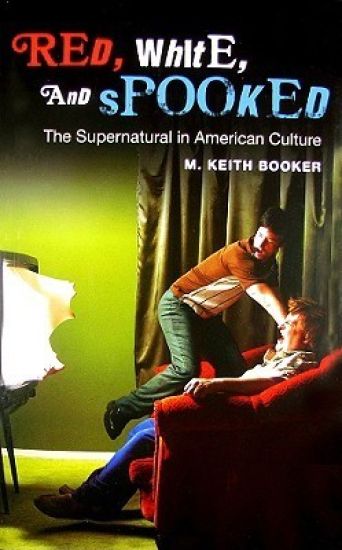
Red, White, and Spooked

Red, White, and Spooked

M. Keith Booker

Praeger Publishers Inc
2008
sidottu
America has always attempted to define itself through a network of invented myths and national narratives. Historically, this national mythmaking has focused on the building of the nation itself as a sort of grand adventure, as in the notion of manifest destiny, or the taming of the western frontier. This project has also naturally led to a focus on individual heroes, often playing the role of savior and redeemer in ways with clear religious resonances: Christ and Shane and Superman, for instance, all share key characteristics. At the same time, these superheroes have often been adolescents, designed to appeal to younger audiences as well. Other hero myths have been more down-to-earth, focusing on heroes who fight against evil, but in a more modest way, as in the case of the hardboiled detective. Red, White, and Spooked details the development of our national myths in an effort to try and see what these fantasies can reveal about what it means to be American today, and what we want it to mean.Beginning with John Winthrop's city upon a hill sermon in 1630, American culture has been informed by a sense of its own exceptional nature. The notion of the Western hemisphere as a new world, a place filled with possibility and even magic, goes back to the initial voyages of Columbus, while the American Revolution gave even more impetus to the idea that the United States was a special place with a unique mission. As a result, America has always attempted to define itself through a network of invented myths and national narratives. Red, White, and Spooked details the development of our national myths which can be seen underlying the genres of country and film noir, the characters of Superman, Batman, and Spiderman, television hits like Deadwood and NYPD Blue, and the Pirates of the Caribbean and Lord of the Rings franchises as well.This culture-spanning investigation begins with a historical survey of supernatural and superhuman themes in American culture, concluding with the recent upsurge that began in the 1990s. It then turns to a number of thematic chapters that discuss various works of recent popular culture with supernatural and superhuman themes - such as The X-Files, Smallville, The 4400, Medium, Heroes, Lost, and The Dead Zone - organized according to the desires to which these works commonly respond. The object here is to try and see what these fantasies can reveal about what it means to be American today, and what we still want it to mean.
Disney, Pixar, and the Hidden Messages of Children's Films
This work is a wide-ranging survey of American children's film that provides detailed analysis of the political implications of these films, as well as a discussion of how movies intended for children have come to be so persistently charged with meaning. Disney, Pixar, and the Hidden Messages of Children's Films provides wide-ranging scrutiny of one of the most lucrative American entertainment genres. Beyond entertaining children—and parents—and ringing up merchandise sales, are these films attempting to shape the political views of young viewers? M. Keith Booker examines this question with a close reading of dozens of films from Disney, Pixar, Dreamworks, and other studios, debunking some out-there claims—The Ant Bully communist propaganda?—while seriously considering the political content of each film. Disney, Pixar, and the Hidden Messages of Children's Films recaps the entire history of movies for young viewers—from Snow White and the Seven Dwarfs to this year's Up—then focuses on the extraordinary output of children's films in the last two decades. What Booker finds is that by and large, their lessons are decidedly, comfortably mainstream and any political subtext more often than not is inadvertent. Booker also offers some advice to parents for helping children read films in a more sophisticated way.
Quest to be Blessed

Quest to be Blessed

Rev. Gary "Samuel J." Booker

Lulu.com
2019
nidottu
Society is becoming increasingly complex and competitive. So much so that now, more than ever a education with advanced learning is required to establish a decent living wage. So the "rat race" begins younger and it is more intense. As a result there are so many distractions, justifications and manipulations in society which causes us to lose sight of what our priorities should be as Christians. Our time is imposed upon now more than ever before. The moral guideline is continually blurred and the principles which govern "capitalism" are becoming drastically different from the principles which govern Christianity. This book is written to help the reader re-calibrate their priorities and understand their Christian objectives in a way that empowers, refreshes and renews them. For where there is great confusion those who have great clarity rise to positions of influence.
Barrier Systems for Waste Disposal Facilities

Barrier Systems for Waste Disposal Facilities

J.R. Booker; Richard Brachman; R.M. Quigley; R. Kerry Rowe

CRC Press
2019
nidottu
The protection of groundwater and surface water from contamination by the escape of contaminant from waste disposal is now an important consideration in many countries of the world.This book deals with the design of 'barrier systems' which separate waste from the surrounding environment and which are intended to prevent contamination of both groundwater and surface waters. The authors discuss all key aspects of the design of barrier systems, including leachate collection, natural barriers such as clayey aquitards, clay liners, geomembrane and composite liners, providing a state-of-the-art work of reference of great value to engineers and environmentalists alike. This retitled second edition of Clayey Barrier Systems for Waste Disposal has been fully revised and updated, with new chapters on geomembranes and geosynthetic clay liners as well as a number of new chapters.Engineers involved with waste management, geotechnics and landfill design will use this book in order to understand the concepts, find out about the latest developments and subsequently apply them to practical applications relevant to the design of barrier systems.
Barrier Systems for Waste Disposal Facilities

Barrier Systems for Waste Disposal Facilities

J.R. Booker; Richard Brachman; R.M. Quigley; R. Kerry Rowe

Spon Press
2004
sidottu
The protection of groundwater and surface water from contamination by the escape of contaminant from waste disposal is now an important consideration in many countries of the world.This book deals with the design of 'barrier systems' which separate waste from the surrounding environment and which are intended to prevent contamination of both groundwater and surface waters. The authors discuss all key aspects of the design of barrier systems, including leachate collection, natural barriers such as clayey aquitards, clay liners, geomembrane and composite liners, providing a state-of-the-art work of reference of great value to engineers and environmentalists alike. This retitled second edition of Clayey Barrier Systems for Waste Disposal has been fully revised and updated, with new chapters on geomembranes and geosynthetic clay liners as well as a number of new chapters.Engineers involved with waste management, geotechnics and landfill design will use this book in order to understand the concepts, find out about the latest developments and subsequently apply them to practical applications relevant to the design of barrier systems.
Consumerist Orientalism

Consumerist Orientalism

M. Keith Booker; Isra Daraiseh

I.B. Tauris
2021
nidottu
In a postmodern world of globalised capital, how does the concept of Orientalism inform understandings of cultural exchange? In this detailed and wide-ranging examination, Arab popular culture is explored in its relation to American culture and capitalism. Offering new insights on Edward Said’s longstanding theoretical lens, Consumerist Orientalism presents an updated conceptual framework through which to understand the intercultural relationship between East and West, exploring a wide range of cultural production; from an Oscar-nominated Jordanian film to Turkish-Arab soap operas and Arab-diaspora rap. Drawing on key contemporary critical thinkers and in-depth cultural analysis, the relationship between capitalism, postmodernism and Orientalism is explored with fresh insights, making this essential reading for students of Middle Eastern culture, globalisation and postcolonial studies.
African Americans in the United States Army in World War II
The political, economic and social landscapes of the United States in the early 1940s were split by one overriding factor--race. This book explores the ways this separation extended to the military forces and the impact segregation had on World War II. Beginning with an overview of African Americans and the military from the inception of the United States and a brief history of the African American role in World War I, the focus moves to between-the-wars movements such as the Protective Mobilization Plan promoting racial integration of the military. The main focus is the African American role in World War II and the stigma that remained despite their valor. Groups discussed include the Women's Army Corps; tank destroyers; separate infantry regiments such as the 24th, 65th, 364th, 366th and 372nd; and the 2nd cavalry. Also included is a list of African American World War II veterans belatedly (and mostly posthumously) awarded medals of honor on January 13, 1997.
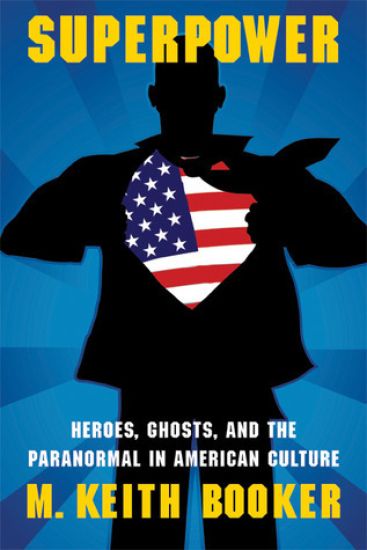
Superpower

Superpower

M. Keith Booker

Bison Books
2010
pokkari
Supernatural and superhuman elements have been prominent in American culture from the time of the New England Puritans' intense emphasis on religion. Superpower surveys the appearance of supernatural and superhuman elements in American culture, focusing on the American fascination with narratives involving supernatural adventure, superhuman heroes, and vast conspiracies driven by supernatural evil. In particular, M. Keith Booker suggests that the popularity of such themes indicates a deep-seated dissatisfaction with the rationalized world of contemporary American society. Booker details the development of the national myths underlying the characters of Superman, Batman, and Spiderman; television hits from Star Trek to Lost; and the franchises of Pirates of the Caribbean and The Lord of the Rings. This culture-spanning investigation begins with a historical survey of supernatural and superhuman themes in American culture and concludes with the recent upsurge that began in the 1990s. It then turns to various works of recent popular culture with supernatural and superhuman themes such as Twin Peaks, The X-Files, and Buffy the Vampire Slayer, organized according to the desires to which these works respond. What do these fantasies reveal about what it means to be American today—and what we want it to mean?
Historical Dictionary of American Cinema

Historical Dictionary of American Cinema

Keith M. Booker

Scarecrow Press
2011
sidottu
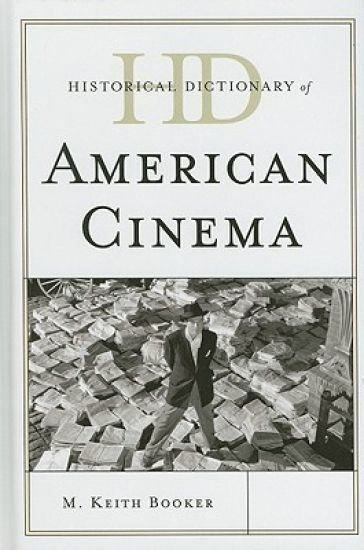
One of the most powerful forces in world culture, American cinema has a long and complex history that stretches through more than a century. This history not only includes a legacy of hundreds of important films but also the evolution of the film industry itself, which is in many ways a microcosm of the history of American society as a whole. The Historical Dictionary of American Cinema provides broad coverage of the people, films, companies, techniques, themes, and genres that have made American cinema such a vital part of world cinema. This is done through a chronology, an introductory essay, a bibliography, and over 500 cross-referenced dictionary entries. This book is an excellent access point for students, researchers, and anyone wanting to know more about the history of American Cinema.
Historical Dictionary of Science Fiction in Literature

Historical Dictionary of Science Fiction in Literature

M. Keith Booker

Rowman Littlefield Publishers
2014
sidottu
The Historical Dictionary of Science Fiction in Literature is a useful reference to the broad and burgeoning field of science fiction literature. Science fiction literature has gained immensely in critical respect and attention, while maintaining a broad readership. However, despite the fact that it is a rapidly changing field, contemporary science fiction literature also maintains a strong sense of its connections to science fiction of the past, which makes a historical reference of this sort particularly valuable as a tool for understanding science fiction literature as it now exists and as it has evolved over the years. The Historical Dictionary of Science Fiction in Literature covers the history of science fiction in literature through a chronology, an introductory essay, and an extensive bibliography. The dictionary section has over 300 cross-referenced entries including ·significant people; ·themes; ·critical issues; and ·the most significant genres that have formed science fiction literature. This book is an excellent access point for students, researchers, and anyone wanting to know more about this subject.
Past Convictions

Past Convictions

Courtney M. Booker

University of Pennsylvania Press
2009
sidottu
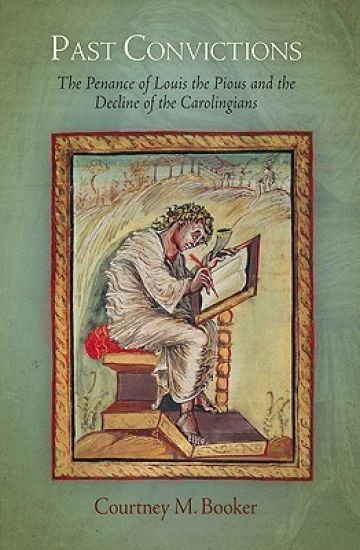
How do people, in both the past and the present, think about moments of social and political crisis, and how do they respond to them? What are the interpretive codes by which troubling events are read and given meaning, and what part do these codes play in suggesting specific strategies for coping with the world? In Past Convictions Courtney Booker attempts to answer these questions by examining the controversial divestiture and public penance of Charlemagne's son, the Emperor Louis the Pious, in 833. Historians have customarily viewed the event as marking the beginning of the end of the Carolingian dynasty. Exploring how both contemporaries and subsequent generations thought about Louis's forfeiture of the throne, Booker contends that certain vivid ninth-century narratives reveal a close but ephemeral connection between historiography and the generic conventions of comedy and tragedy. In tracing how writers of later centuries built upon these dramatic Carolingian accounts to tell a larger story of faith, betrayal, political expediency, and decline, he explicates the ways historiography shapes our vision of the past and what we think we know about it, and the ways its interpretive models may fall short.