
Kirjahaku
Etsi kirjoja tekijän nimen, kirjan nimen tai ISBN:n perusteella.
1000 tulosta hakusanalla Brenna Darling



The Next Illogical Step In Love Poetry "The next illogical step in love poetryThe most inscrutable beautiful names in this worldalways do sound like diseases.It is because they are engorged. G., I am a fool.What we feel in the solar plexus wrecks us.Halfway squatting on a crate where feeling happened. Caresses."--from "Dear Gonglya," At once hyper-contemporary and archaic, erotic, indecorous, and extravagant like nobody else, Brenda Shaughnessy seeks outrageous avenues of access to the heart, "This strumpet muscle under your breast describing / you minutely, Volupt, volupt."

Heiress to the magnificent Bragg empire, lovely, headstrong socialite Lucy Bragg lives a life that flies in the face of convention. Dark and rugged Shozkay Savage lives an outlaw's life on the edge. These two people inhabit different worlds - hers, opulent and privileged; his, dangerous and wild. But on the vast and sweeping plains of Texas, their worlds collide...Abducted and held for ransom, Lucy despises Shoz for his arrogance...yet is drawn to the strapping fugitive by a bold, unquenching desire. Sworn to escape him but betrayed by her own reckless passion, she will follow Shoz from unforgiving wasteland to tropical heat - braving scandal and heartbreak, risking life itself for an untamed and blistering love as perilous as it is forbidden.

This is a beautifully repackaged classic by "New York Times" and "USA Today" bestselling author Brenda Joyce, connecting her "Bragg and Delanza series".
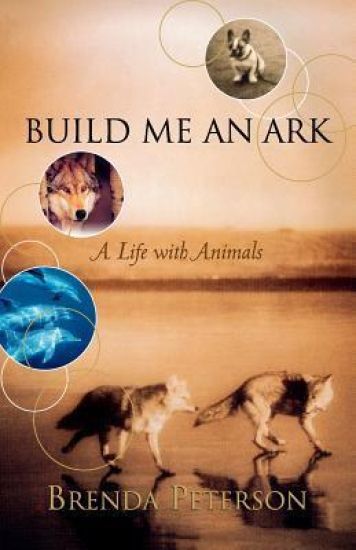
This is the story of a life and spirit guided by animals. Brenda Peterson was raised in the High Sierras on a national forest lookout station, and wildlife had a daily, defining influence on her life. Peterson explores her deep connection with animals, from watching grizzlies in Montana's Rockies, to keeping Siberian huskies as pets in New York City, to her work for the restoration of wild wolves. Her lively storytelling bridges the worlds of human and animal, as she fascinates us with intimate stories of her studies of wild dolphins, whales, and orcas. Peterson reveals how animal bonds have enriched her life and led her toward a wider epiphany: As a species we cannot live without other animals. "[A] wealth of fascinating anecdotes and insights...[an] engaging memoir."—Publishers Weekly
That the topic ofdesign review is somehow trou My biases are clearfrom the start: I am among blesome is probably one thing all readers can those who believe that, despite all signals to the contrary, the physical structure of our environ agree on. Beyond this, however, I suspect pros pects of consensus are dim. Differing opinions ment can be managed, and that controlling it is on the subject likely range from those desiring the key to the ameliorationofnumerous problems control tothosedesiringfreedom. Saysonecamp: confronting society today. I believe that design our physical and natural environments are going can solve a host ofproblems, and that the design to hell in a hand basket. Says the other: design of the physical environment does influence be review boards are only as good as their members; havior. more often than not their interventions produce Clearly, this is a perspective that encompasses mediocre architecture. more than one building at a time and demands As a town planner and architect, I am sympa that each building understand its place in a larger thetic to the full range of sentiment. Perhaps a context-the city. Indeed, anyone proposing discussion of these two concepts-control and physical solutions to urban problems is designing freedom-and their differences would now be or, as may seem more often the case, destroying useful. But let me instead suggest that both posi the city.
That the topic ofdesign review is somehow trou My biases are clearfrom the start: I am among blesome is probably one thing all readers can those who believe that, despite all signals to the contrary, the physical structure of our environ agree on. Beyond this, however, I suspect pros pects of consensus are dim. Differing opinions ment can be managed, and that controlling it is on the subject likely range from those desiring the key to the ameliorationofnumerous problems control tothosedesiringfreedom. Saysonecamp: confronting society today. I believe that design our physical and natural environments are going can solve a host ofproblems, and that the design to hell in a hand basket. Says the other: design of the physical environment does influence be review boards are only as good as their members; havior. more often than not their interventions produce Clearly, this is a perspective that encompasses mediocre architecture. more than one building at a time and demands As a town planner and architect, I am sympa that each building understand its place in a larger thetic to the full range of sentiment. Perhaps a context-the city. Indeed, anyone proposing discussion of these two concepts-control and physical solutions to urban problems is designing freedom-and their differences would now be or, as may seem more often the case, destroying useful. But let me instead suggest that both posi the city.
This study contextualizes magical realism within current debates and theories of postcoloniality and examines the fiction of three of its West African pioneers: Syl Cheney-Coker of Sierra Leone, Ben Okri of Nigeria and Kojo Laing of Ghana. Brenda Cooper explores the distinct elements of the genre in a West African context, and in relation to: * a range of global expressions of magical realism, from the work of Gabriel Garcia Marquez to that of Salman Rushdie * wider contemporary trends in African writing, with particular attention to how the realism of authors such as Chinua Achebe and Wole Soyinka has been connected with nationalist agendas. This is a fascinating and important work for all those working on African literature, magical realism, or postcoloniality.

This study contextualizes magical realism within current debates and theories of postcoloniality and examines the fiction of three of its West African pioneers: Syl Cheney-Coker of Sierra Leone, Ben Okri of Nigeria and Kojo Laing of Ghana. Brenda Cooper explores the distinct elements of the genre in a West African context, and in relation to: * a range of global expressions of magical realism, from the work of Gabriel Garcia Marquez to that of Salman Rushdie * wider contemporary trends in African writing, with particular attention to how the realism of authors such as Chinua Achebe and Wole Soyinka has been connected with nationalist agendas. This is a fascinating and important work for all those working on African literature, magical realism, or postcoloniality.
This study explores the major patterns of change in the evolution of financial crises as enduring phenomena and analyzes the paradoxical position that crises are at once similar to and different from each other. Brenda Spotton-Visano examines economic, psychological and social elements intrinsic to the process of capitalist accumulation and innovation to explain the enduring similarities of crises across historical episodes. She also assesses the impact that changing financial and economic structures have on determining the specific nature of crises and the differential effect these have in focal point, manner and extent of transmission to other, otherwise unrelated, parts of the economy. Financial Crises offers a consistent method for interpreting variations in financial crises through time and allows for a better overall appreciation for both the transitory fragility and enduring flexibility of financial capitalism and the potential vulnerability created by on-going financial development. Topical and informative, this key book is of keen interest to all those studying and researching international economics and political economy.
The Concepts and Practices of Lifelong Learning
Brenda Morgan-Klein; Michael Osborne
Routledge
2007
sidottu
This textbook gives a wide-ranging, research-informed introduction to issues in lifelong learning across a variety of educational settings and practices. Its very accessible approach is multi-disciplinary drawing on sociology and psychology in particular. In addition, issues are discussed within an international context. While there has been a proliferation of texts focussing on particular areas of practice such as higher education, there is little in the way of a broad overview. Chapters one to four introduce various conceptions of lifelong learning, the factors that impinge on learning through the life course, and the social and the economic rationale for lifelong learning. Chapters five-ten consider the varied sites of lifelong learning, from the micro to macro (from the home to the region to the virtual). Chapter eleven draws the strands together in the context of turbulence and continuing transition in personal and work roles, and against the background of future technological development. This timely overview will be relevant to education and training professionals, education studies students and the general reader.
The Concepts and Practices of Lifelong Learning
Brenda Morgan-Klein; Michael Osborne
Routledge
2007
nidottu
This textbook gives a wide-ranging, research-informed introduction to issues in lifelong learning across a variety of educational settings and practices. Its very accessible approach is multi-disciplinary drawing on sociology and psychology in particular. In addition, issues are discussed within an international context. While there has been a proliferation of texts focussing on particular areas of practice such as higher education, there is little in the way of a broad overview. Chapters one to four introduce various conceptions of lifelong learning, the factors that impinge on learning through the life course, and the social and the economic rationale for lifelong learning. Chapters five-ten consider the varied sites of lifelong learning, from the micro to macro (from the home to the region to the virtual). Chapter eleven draws the strands together in the context of turbulence and continuing transition in personal and work roles, and against the background of future technological development. This timely overview will be relevant to education and training professionals, education studies students and the general reader.
Originally published in 1973, this reprints the fourth, updated edition of 1983. This book defines playgroups, examines their needs and problems and traces the growth of the association to meet the demands of a lively and demanding movement.
This study explores the major patterns of change in the evolution of financial crises as enduring phenomena and analyzes the paradoxical position that crises are at once similar to and different from each other. Brenda Spotton-Visano examines economic, psychological and social elements intrinsic to the process of capitalist accumulation and innovation to explain the enduring similarities of crises across historical episodes. She also assesses the impact that changing financial and economic structures have on determining the specific nature of crises and the differential effect these have in focal point, manner and extent of transmission to other, otherwise unrelated, parts of the economy. Financial Crises offers a consistent method for interpreting variations in financial crises through time and allows for a better overall appreciation for both the transitory fragility and enduring flexibility of financial capitalism and the potential vulnerability created by on-going financial development. Topical and informative, this key book is of keen interest to all those studying and researching international economics and political economy.
Originally published in 1973, this reprints the fourth, updated edition of 1983. This book defines playgroups, examines their needs and problems and traces the growth of the association to meet the demands of a lively and demanding movement.

This book presents a series of ontological investigations into an adequate theory of embodiment for the social sciences. Informed by a new realist philosophy of causal powers, it seeks to articulate a concept of dynamic embodiment, one that positions human body movement, and not just ‘the body’ at the heart of theories of social action. It draws together several lines of thinking in contemporary social science: about the human body and its movements; adequate meta-theoretical explanations of agency and causality in human action; relations between moving and talking; skill and the formation of knowledge; metaphor, perception and the senses; movement literacy; the constitution of space and place, and narrative performance. This is an ontological inquiry that is richly grounded in, and supported by anthropological ethnographic evidence. Using the work of Rom Harré, Roy Bhaskar, Charles Varela and Drid Williams this book applies causal powers theory to a revised ontology of personhood, and discusses why the adequate location of human agency is crucial for the social sciences. The breakthrough lies in fact that new realism affords us an account of embodied human agency as a generative causal power that is grounded in our corporeal materiality, thereby connecting natural/physical and cultural worlds.Dynamic Embodiment for Social Theory is compelling reading for students and academics of the social sciences, especially anthropologists and sociologists of ‘the body’, and those interested in new developments in critical realism.
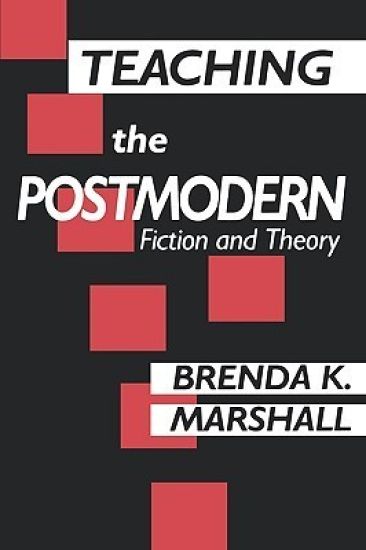
Brenda Marshall engages with both literary texts and theory, providing an accessible and rigorous introduction to everything you wanted to know about postmodernism.