

Kirjahaku
Etsi kirjoja tekijän nimen, kirjan nimen tai ISBN:n perusteella.
1000 tulosta hakusanalla Brian D. Meeks

Souvenirs d'Extrême-Orient. I. Une Mission En Chine. II. Étude Comparative Sur Le Commerce Des Ports
J Brien
Hachette Livre - BNF
2014
pokkari
Souvenirs d'Extreme-Orient. I. Une mission en Chine. II. Etude comparative sur le commerce des ports de la ChineDate de l'edition originale: 1916Ce livre est la reproduction fidele d'une oeuvre publiee avant 1920 et fait partie d'une collection de livres reimprimes a la demande editee par Hachette Livre, dans le cadre d'un partenariat avec la Bibliotheque nationale de France, offrant l'opportunite d'acceder a des ouvrages anciens et souvent rares issus des fonds patrimoniaux de la BnF.Les oeuvres faisant partie de cette collection ont ete numerisees par la BnF et sont presentes sur Gallica, sa bibliotheque numerique.En entreprenant de redonner vie a ces ouvrages au travers d'une collection de livres reimprimes a la demande, nous leur donnons la possibilite de rencontrer un public elargi et participons a la transmission de connaissances et de savoirs parfois difficilement accessibles.Nous avons cherche a concilier la reproduction fidele d'un livre ancien a partir de sa version numerisee avec le souci d'un confort de lecture optimal. Nous esperons que les ouvrages de cette nouvelle collection vous apporteront entiere satisfaction.Pour plus d'informations, rendez-vous sur www.hachettebnf.fr

Tableaux Synoptiques d'Histoire Contemporaine de 1789 À Nos Jours. 16e Édition
Briand-H
Hachette Livre - BNF
2018
pokkari


The Brain Waste of Foreign-Educated Professionals in the United States
Fraternel D. Amuri Misako
ÉDITIONS UNIVERSITAIRES EUROPÉENNES
2018
nidottu

Technologies d'adaptation intelligente au climat dans l'agriculture
Mukamuri Brain Tawedzerwa
Editions Notre Savoir
2024
pokkari
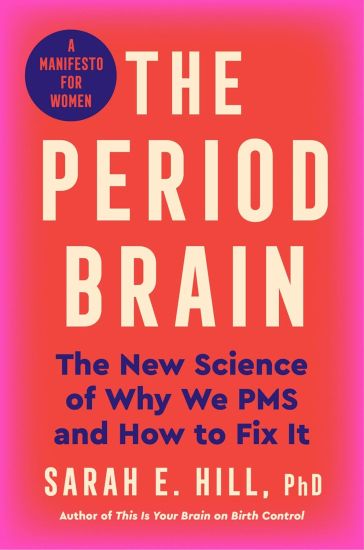
Do you feel like you’re riding a premenstrual roller coaster every month that leaves you feeling hungry, tired, angry, sad, and unsexy?Leading researcher and women’s hormone expert Dr. Sarah E. Hill explains why we feel so universally icky before our periods— and what to do about it. The problem isn’t that women are hormonal; the problem is that the second half of the menstrual cycle—the luteal phase, when the hormone progesterone rises and estrogen decreases—has been systematically ignored by science and medicine.Progesterone is at the heart of every feeling we associate with PMS: it affects our daily sleep and calorie needs (hello, cravings!); whom we’re attracted to; our sex drive; and—as every woman can attest—our mood. Because the luteal phase is understudied, every bit of health, diet, and relationship advice you’ve followed is based on that first, estrogen-glow half of the month or, worse, was designed for men.The rules that work for us in the first two weeks of the cycle don’t always fit in the second, causing most of us to spend half the month following advice that is completely at odds with the way our bodies work at this time. It’s no wonder we feel awful! Dr. Hill demystifies how our bodies work, so you can work with your hormones to:· Sidestep PMS “cravings” by eating more –you burn up to 11% extra calories in the luteal phase!· Exercise in a way that’s invigorating instead of draining.· Understand your sex drive, and why sex has different meaning across the month.· Quit bad habits more easily thanks to progesterone’s addiction-busting properties.· Navigate motivational and energy dips without added stress.· Incorporate anti-inflammatory foods and habits to naturally ease PMS.The Period Brain is a science-tested roadmap to understanding PMS and PMDD. It’s time we demand a better month, every month – and usher in a new era in women’s health. Period.
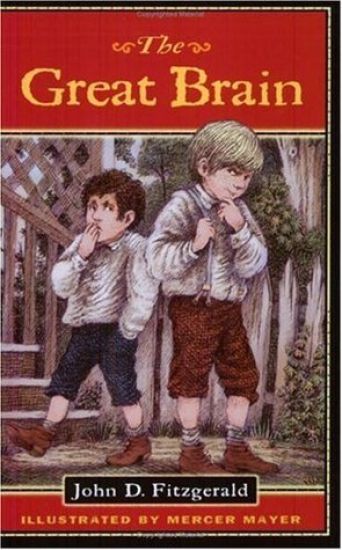
This first book in the series is a great combination of The Adventures of Tom Sawyer and The Terrible Two series, and is perfect for fans of Roald Dahl. The best con man in the Midwest is only ten years old. Tom, a.k.a., the Great Brain, is a silver-tongued genius with a knack for turning a profit. When the Jenkins boys get lost in Skeleton Cave, the Great Brain saves the day. Whether it's saving the kids at school, or helping out Peg-leg Andy, or Basil, the new kid at school, the Great Brain always manages to come out on top-and line his pockets in the process.

This third book in the series is a great combination of The Adventures of Tom Sawyer and The Terrible Two series, and is perfect for fans of Roald Dahl. Tom a.k.a. the Great Brain, is off to boarding school. Now his little brother, J.D., is free to follow in Tom's ingenious, conniving, and profitable footsteps. All of J.D.'s attempts at turning a profit fail miserably, and he soon realizes that he just doesn't have that crafty Great Brain knack. But when his younger brother is kidnapped, J.D. finds that his little brain may not be so ordinary after all . . .
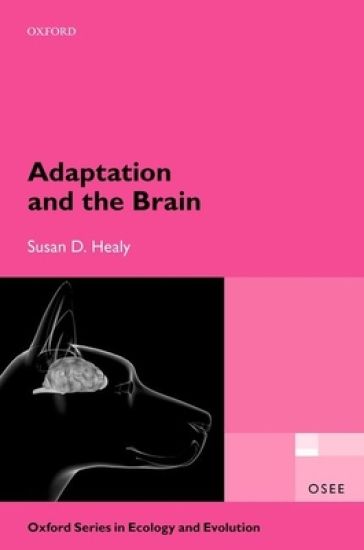
Why does brain size vary so widely among vertebrate animal species? What role has natural selection played in shaping the structure and function of the vertebrate brain? This accessible book unravels the myriad adaptive explanations that have built up over decades, providing both a review and a critique of the work that has sought to explain which natural selection pressures have led to changes in brain size. Debate over the causes of variation in brain size, especially within extant humans and during the course of hominid evolution, has persisted for at least a couple of centuries. However, it was not until relatively recently that there has been sufficient data to allow a coherent (and taxonomically widespread) evolutionary perspective to emerge. The comparative approach employed by evolutionary biologists and behavioural ecologists has been particularly enlightening with regard to addressing variation in brain size. However, the extent to which correlational data - currently generated in some profusion - can provide a suitable explanation is not yet clear, and a constructively critical analysis of the relevant data is now timely. Five classes of selection pressure have formed the majority of explanations: ecology, technology, innovation, sex, and sociality. The book starts with a brief description of the difficulties of measuring both brain size and intelligence (cognition), before addressing the evidence for each of these five factors in turn. It argues that although ecology currently provides the most convincing explanation for variation in the size of brain regions, none of the factors yet offers a robust and compelling explanation for variation in whole brain size. The book concludes by looking forwards, suggesting the future steps necessary to reach such an explanation; steps that are challenging but now within reach. Adaptation and the Brain is suitable for graduate level students taking courses in animal behaviour and cognition, behavioural ecology, evolutionary ecology, psychology, and neuroscience as well as academics and professional researchers in these fields. The reader will not require a specific understanding of neuroscience, nor of the function of any particular brain region.
Why does brain size vary so widely among vertebrate animal species? What role has natural selection played in shaping the structure and function of the vertebrate brain? This accessible book unravels the myriad adaptive explanations that have built up over decades, providing both a review and a critique of the work that has sought to explain which natural selection pressures have led to changes in brain size. Debate over the causes of variation in brain size, especially within extant humans and during the course of hominid evolution, has persisted for at least a couple of centuries. However, it was not until relatively recently that there has been sufficient data to allow a coherent (and taxonomically widespread) evolutionary perspective to emerge. The comparative approach employed by evolutionary biologists and behavioural ecologists has been particularly enlightening with regard to addressing variation in brain size. However, the extent to which correlational data - currently generated in some profusion - can provide a suitable explanation is not yet clear, and a constructively critical analysis of the relevant data is now timely. Five classes of selection pressure have formed the majority of explanations: ecology, technology, innovation, sex, and sociality. The book starts with a brief description of the difficulties of measuring both brain size and intelligence (cognition), before addressing the evidence for each of these five factors in turn. It argues that although ecology currently provides the most convincing explanation for variation in the size of brain regions, none of the factors yet offers a robust and compelling explanation for variation in whole brain size. The book concludes by looking forwards, suggesting the future steps necessary to reach such an explanation; steps that are challenging but now within reach. Adaptation and the Brain is suitable for graduate level students taking courses in animal behaviour and cognition, behavioural ecology, evolutionary ecology, psychology, and neuroscience as well as academics and professional researchers in these fields. The reader will not require a specific understanding of neuroscience, nor of the function of any particular brain region.

A comprehensive account of the neurobiological basis of language, arguing that species-specific brain differences may be at the root of the human capacity for language.Language makes us human. It is an intrinsic part of us, although we seldom think about it. Language is also an extremely complex entity with subcomponents responsible for its phonological, syntactic, and semantic aspects. In this landmark work, Angela Friederici offers a comprehensive account of these subcomponents and how they are integrated. Tracing the neurobiological basis of language across brain regions in humans and other primate species, she argues that species-specific brain differences may be at the root of the human capacity for language.Friederici shows which brain regions support the different language processes and, more important, how these brain regions are connected structurally and functionally to make language processes that take place in milliseconds possible. She finds that one particular brain structure (a white matter dorsal tract), connecting syntax-relevant brain regions, is present only in the mature human brain and only weakly present in other primate brains. Is this the "missing link" that explains humans' capacity for language?Friederici describes the basic language functions and their brain basis; the language networks connecting different language-related brain regions; the brain basis of language acquisition during early childhood and when learning a second language, proposing a neurocognitive model of the ontogeny of language; and the evolution of language and underlying neural constraints. She finds that it is the information exchange between the relevant brain regions, supported by the white matter tract, that is the crucial factor in both language development and evolution.
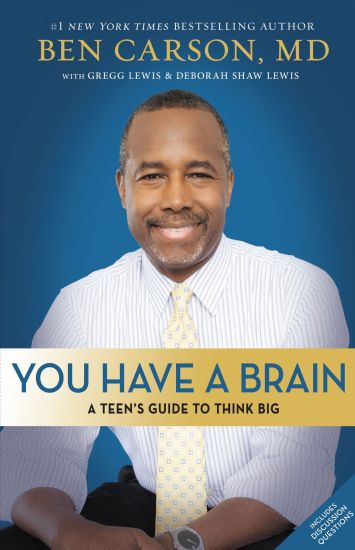
Eight proven principles to help you overcome your self-doubt, conquer your fear of the future, reverse negative thoughts about yourself, and hurdle any other obstacles standing between you and your dreams.But instead of letting his circumstances control him, Dr. Carson took control of his attitude and actions, leading to his discovery of eight straightforward but revolutionary principles that helped shape his future.In You Have a Brain, Dr. Carson unpacks the eight important parts of T.H.I.N.K. B.I.G.—Talent, Honesty, Insight, Being Nice, Knowledge, Books, In-Depth Learning, and God—and presents the stories of people who demonstrated those things in his life.Through the advice and real-world examples laid out in these pages, you will learn how to incorporate these T.H.I.N.K. B.I.G. principles into your own life so that you, like Dr. Carson, can embrace an amazing future filled with incredible success.You Have a Brain:Includes discussion questions at the back of the bookUnpacks the eight essential parts of Thinking Big: Talent, Honesty, Insight, Strong People Skills, Knowledge, Books, In-Depth Learning, and GodIs written by Dr. Ben Carson, a world-renowned neurosurgeon, former presidential candidate, and current Secretary of Housing and Urban Development (HUD)Teaches great life lessons for young men and womenIs the perfect gift for high school and college graduations, birthdays, and confirmations, and a great addition to YA book clubs and YA study groups
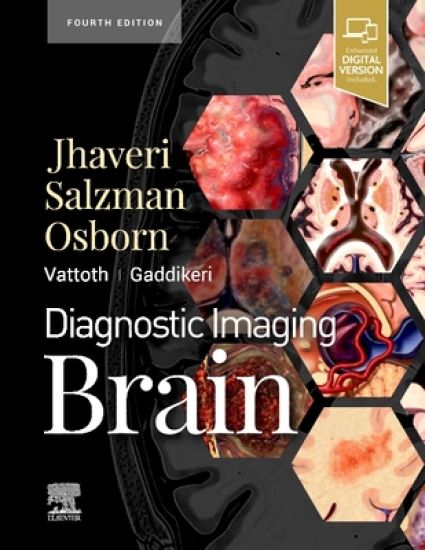
Covering the entire spectrum of this fast-changing field, Diagnostic Imaging: Brain, fourth edition, is an invaluable resource for neuroradiologists, general radiologists, and trainees-anyone who requires an easily accessible, highly visual reference on today's neuroimaging of both common and rare conditions. World-renowned authorities provide updated information on more than 300 diagnoses, all lavishly illustrated, delineated, and referenced, making this edition a useful learning tool as well as a handy reference for daily practice. Provides authoritative, comprehensive guidance on both pathology-based and anatomy-based diagnoses to help you diagnose the full range of brain and CNS conditions Features thousands of extensively annotated images, including a large number of full-color illustrations-greatly expanded since the previous edition Details 31 new diagnoses, covering key topics such as critical illness-associated microbleeds, autoimmune encephalitis, multinodular and vacuolating tumor of cerebrum, calcifying pseudoneoplasm of neuraxis (CAPNON), uremic encephalopathy, gadolinium deposition and associated controversies, ataxia-telangiectasia, and Zika virus infection Reflects updates from the most recent WHO Classification of Tumors of the CNS, which presents major restructuring of brain tumor categories and incorporates new entities that are defined by both histology and molecular features Includes updates to the 2016 WHO Classification of Tumors of the CNS by cIMPACT-NOW based on recent and ongoing advances in molecular pathogenesis Covers recent neuroimaging advances, such as 7T MRI scanners and dual-energy/dual-source CT imaging Uses bulleted, succinct text and highly templated chapters for quick comprehension of essential information at the point of care Enhanced eBook version included with purchase. Your enhanced eBook allows you to access all of the text, figures, and references from the book on a variety of devices

In 1946, a powerful freight train storms across West Virginia. Half a century later, police learn the terrible truth about that night. The railway mystery sets off a bizarre series of present-day crimes that threaten to derail State Police detective Josh Draper and his alluring assistant, Annie McBride. The two race to unravel the past while an environmental disaster looms and dangerous criminals from New York prepare to clash with the inhabitants of a tranquil valley called Briar Fork. Enjoy this tour-de-force Henry D. Smith classic, complete with his trademark humor, flamboyant characters, striking West Virginia settings...and the engineering marvels he is renowned for bringing to life.
Much of our knowledge of the cerebral circulation has been derived from studies of species other than human. There is increas ing recognition of species differences and concern that studies in animals may be misleading if unquestioningly applied to the human. A dramatic example of this occurred in the early his tory of the study of the circulation of the brain. Galen of Pergamo (131-201 AD) described a rete mirabile or "marvelous network" of blood vessels at the base of the human skull that he must have derived from observations of certain animals. This vascular structure was supplied by the carotid arteries which, after penetrating the cranium,"are divided into a large number of very small and thin branches in the region between the cranium and the dura matter. Then . . . intersecting one another they give the impression of having forgotten their way in the brain. But this is not the case. In fact, these numerous arteries rejoin and unite like the roots of a tree trunk. . . . " The authority of Galen's writings dominated scientific thought for about 1500 years. His description of a rete was unques tioned by Leonardo de Vinci, who included it in his anatomical sketches. William Harvey's remarkable observations led to his definitive account of the circulation of blood.

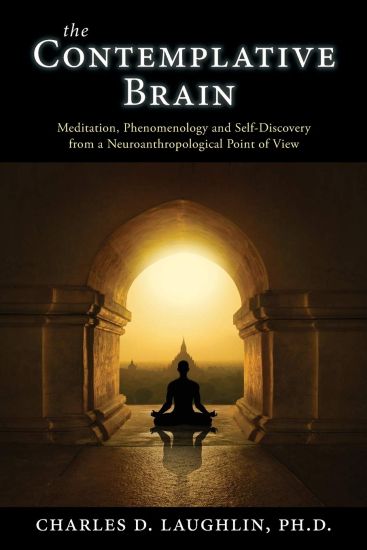
The Contemplative Brain offers a comprehensive exploration of the cultural neurophenomenology of contemplation. The book is written by a neuroanthropologist who spent years as a Tibetan Tantric Buddhist monk and who has practiced many different traditions of contemplation, including Buddhist vipassana, Tantric arising yoga, Zen Buddhist zazen, Husserlian transcendental phenomenology, Western Mysteries esoteric Tarot, dream meditation, shamanic journeys, and other approaches to self-discovery. Over the course of half a century of contemplative experience, the author has learned to separate the practices and experiences of meditation traditions from their cultural, ideological, and religious trappings. He discovered that the brain-mind that seeks truth about the external world can be redirected to an exploration of the vast world of the inner Self-the truth-seeking brain in its contemplative mode. The book explains how the brain works to penetrate, understand, and eventually realize its own internal processes. This includes a detailed account of how the brain's sensorium portrays the world and the Self to itself in various alternative states of consciousness. A cross-cultural examination of methods and institutions used by contemplatives in the past and present to achieve self-awareness shows that humans have been interested in phenomenology for thousands of years. Methods for calming, centering, focusing and realization may or may not involve the use of entheogens (psychoactive drugs), ordeals, quests, ascetic lifestyles, hyper-awareness in dream states, and pursuit of mystical episodes, but all involve inherent capacity of the contemplative brain to discover its own nature.