One way for the Navy to operate its ships more cost-effectively might be for it to alter the deployment schedules of Navy surface vessels to get the greatest benefit in terms of operating efficiency and crew effectiveness. This report assesses the potential challenges and benefits associated with moving the deployment schedule of one class of ships the DDG-51 Arleigh Burke class of destroyers to a 72-month operational cycle."
Local governments play a central role in American democracy, providing essential services such as policing, water, and sanitation. Moreover, Americans express great confidence in their municipal governments. But is this confidence warranted? Using big data and a representative sample of American communities, this book provides the first systematic examination of racial and class inequalities in local politics. We find that non-whites and less-affluent residents are consistent losers in local democracy. Residents of color and those with lower incomes receive less representation from local elected officials than do whites and the affluent. Additionally, they are much less likely than privileged community members to have their preferences reflected in local government policy. Contrary to the popular assumption that governments that are “closest” govern best, we find that inequalities in representation are most severe in suburbs and small towns. Typical reforms do not seem to improve the situation, and we recommend new approaches.
Local governments play a central role in American democracy, providing essential services such as policing, water, and sanitation. Moreover, Americans express great confidence in their municipal governments. But is this confidence warranted? Using big data and a representative sample of American communities, this book provides the first systematic examination of racial and class inequalities in local politics. We find that non-whites and less-affluent residents are consistent losers in local democracy. Residents of color and those with lower incomes receive less representation from local elected officials than do whites and the affluent. Additionally, they are much less likely than privileged community members to have their preferences reflected in local government policy. Contrary to the popular assumption that governments that are “closest” govern best, we find that inequalities in representation are most severe in suburbs and small towns. Typical reforms do not seem to improve the situation, and we recommend new approaches.
This book is the first, single-source guide to successful experiments using the local electrode atom probe (LEAP®) microscope. Coverage is both comprehensive and user friendly, including the fundamentals of preparing specimens for the microscope from a variety of materials, the details of the instrumentation used in data collection, the parameters under which optimal data are collected, the current methods of data reconstruction, and selected methods of data analysis. Tricks of the trade are described that are often learned only through trial and error, allowing users to succeed much more quickly in the challenging areas of specimen preparation and data collection. A closing chapter on applications presents selected, state-of-the-art results using the LEAP microscope.
The practice of universal design-of making a product or environment accessible to all individuals-has been around for a long time. But, until now, that practice has never been explored in depth in the field of physical education. This groundbreaking text provides a much-needed link between universal design and physical education, extending boundaries as it offers physical educators a systematic guide to create, administer, manage, assess, and apply universal design for learning (UDL).Universal Design for Learning in Physical Education is for all physical educators-those who are or are preparing to become general PE teachers as well as those who are in the field of adapted physical education. This resource offers the following: Ready-to-use curricular units for grades K-12, with 31 universally designed lessons that demonstrate how teachers can apply UDL in specific content areas (teachers can also use those examples to build their own units and lessons)Rubrics for the 28 items on the Lieberman–Brian Inclusion Rating Scale for Physical Education (LIRSPE) to help teachers follow best practices in inclusionTables, timelines, and paraeducator training checklists to ensure that UDL is effectively delivered from the beginning of the school year In her earlier text, Strategies for Inclusion, Third Edition, coauthor Lauren Lieberman included a valuable chapter about UDL that focused on detailed, practical steps for making classes inclusive. Universal Design for Learning in Physical Education approaches inclusion from the macro level, providing a comprehensive conceptual model of UDL and how to incorporate it into curriculum planning and teaching methods for K-12 physical education. Outcomes for Universal Design for Learning in Physical Education are aligned with SHAPE America’s physical education standards and grade-level outcomes. Given that 94 percent of students with disabilities are taught in physical education settings, this text offers highly valuable guidance to general physical educators in providing equal access to, and engagement in, high-quality physical education for all students. Part I of Universal Design for Learning in Physical Education defines universal design and explains how it relates to physical education. It identifies barriers that teachers may face in adapting UDL to their programs and how to overcome these barriers. It also addresses critical assessment issues and guides teachers in supporting students with severe or multiple disabilities. Part I also covers advocacy issues such as how to teach students to speak up for their own needs and choices. Readers will gain insight into where their programs excel and where barriers might still exist when they employ the Lieberman–Brian Inclusion Rating Scale, a self-assessment tool that helps measure physical, programmatical, and social inclusion. Finally, part I reinforces several UDL principles by sharing many examples of how physical educators have applied UDL in their programs. Part II offers a trove of universally designed units and lesson plans for use across grades K-12, with separate chapters on lessons for elementary, sports, fitness, recreation, and aquatics.Universal Design for Learning in Physical Education is the first text to delve deeply into the concept of universal design in physical education. As such, it is a valuable resource for all PE teachers-both those leading general classes and adapted classes-to learn how to successfully implement universally designed units and lesson plans that enrich all their students’ lives. The accompanying web resource provides 40 forms, tables, checklists, and a sample lesson plan from the book, as well as a list of websites, books, and laws. These resources are provided as reproducible PDFs for practical use.
This book is the first, single-source guide to successful experiments using the local electrode atom probe (LEAP®) microscope. Coverage is both comprehensive and user friendly, including the fundamentals of preparing specimens for the microscope from a variety of materials, the details of the instrumentation used in data collection, the parameters under which optimal data are collected, the current methods of data reconstruction, and selected methods of data analysis. Tricks of the trade are described that are often learned only through trial and error, allowing users to succeed much more quickly in the challenging areas of specimen preparation and data collection. A closing chapter on applications presents selected, state-of-the-art results using the LEAP microscope.
This report documents the actions taken by transportation agencies in response to the earthquake in Northridge, California on January 17, 1994, and is part of a larger effort to examine the impacts of catastrophic events on transportation system facilities and services. The findings documented in this report are a result of a detailed literature search on Northridge lessons learned. As part of a larger effort, four case studies will be produced: - New York City, September 11, 2001 - Washington, D.C., September 11, 2001 - Baltimore, Maryland, rail tunnel fire, July 18, 2001 - Northridge, California, earthquake, January 17, 1994.
This report documents the actions taken by transportation agencies in response to the earthquake in Northridge, California on January 17, 1994, and is part of a larger effort to examine the impacts of catastrophic events on transportation system facilities and services. The findings documented in this report are a result of a detailed literature search on Northridge lessons learned. As part of a larger effort, four case studies will be produced: - New York City, September 11, 2001 - Washington, D.C., September 11, 2001 - Baltimore, Maryland, rail tunnel fire, July 18, 2001 - Northridge, California, earthquake, January 17, 1994.
There has never been a more important time for those involved in criminal justice policy, operations and civil service to know their history. The Historical Dictionary of American Criminal Justice provides a comprehensive overview of the development of criminal justice in the United States. Criminal justice is a multidisciplinary endeavor, emerging across time and place through the fields of philosophy, law, biology, anthropology, and sociology. Developments occur quickly and regularly, the meanings of which are deeply embedded, not only in an historical context, but in complicated social, economic, and political circumstances as well. The field is particularly vulnerable to the exploitations of power being as closely aligned with the forces of social control as it is. The Historical Dictionary of American Criminal Justice contains a chronology, an introduction, appendixes, and an extensive bibliography. The dictionary section has over 1,200 cross-referenced entries on the most relevant concepts, cases, people, and terms. This book is an excellent resource for students, researchers, and anyone wanting to know more about American criminal justice.
Creative Problem Solving is a process that allows people to apply both creative and critical thinking to find solutions to everyday problems. Creative Problem Solving eliminates the tendency to approach problems in a haphazard manner and, consequently, prevents surprises and/or disappointment with the solution.Used by thousands of group leaders seeking a friendly introduction to using Creative Problem Solving, this book is a time-honored classic. Creative Problem Solving: An Introduction is based on more than five decades of extensive research, development, and field experience in educational settings, businesses, and many other organizations.Written for both group leaders and individuals seeking a systematic way to build innovative and effective solutions, Creative Problem Solving is perfect for any type of setting.This definitive guide shows you how to find successful solutions to important challenges. Creative Problem Solving (CPS) can help your students to approach problems and deal with change in a deliberate and constructive way, building their confidence and success in working with complex issues.This revised and updated fourth edition includes:easy-to-follow instructions for using Creative Problem Solving; practical tools for understanding the challenge, generating ideas, and preparing for action; expanded guidelines for planning your approach to Creative Problem Solving; strategies that ensure successful group dynamics; the latest trends in creative thinking and group problem solving; and practical suggestions for those new to Creative Problem Solving.Educational Resource
Healthcare systems around the world are grappling with several major challenges such as the growing prevalence of chronic diseases, rising healthcare costs, and a shortage of healthcare workers. Without action, the Organisation for Economic Co-operation and Development has estimated that the average public spending on healthcare costs will increase to 10% of GDP. The shortage of healthcare workers has been a long-standing issue in Europe, even before the COVID-19 pandemic. According to a 2018 report by the European Commission's Joint Research Centre, there was a shortage of over 1 million healthcare workers across the European Union. Such shortages have resulted in longer waiting times for patients, increased workload and stress for healthcare workers, and lower quality of care for patients. The pandemic has further underscored the importance of addressing this issue and ensuring that healthcare systems have adequate capacity to meet the needs of patients, both now and in the future. It is clear that the healthcare sector needs to undergo radical changes to ensure that future generations have easy access to quality care that is also affordable. One way to achieve this is by leveraging the increasing use of digitisation in the sector. According to a 2019 report by the European Commission, the volume of healthcare data in the EU could reach 2.8 zettabytes by 2020, with an annual growth rate of 36%. The question then is, how can we leverage the insights that lie within this vast amount of data to transform the healthcare sector and address its most pressing issues, namely cost, quality, and accessibility of care. This book captures the learnings from the BigMedilytics project, funded by the EC from 2018 to 2021. The project aimed to transform Europe’s healthcare sector by using state-of-the-art Big Data technologies to achieve breakthrough productivity in the sector by reducing cost, improving patient outcomes, and delivering better access to healthcare facilities, covering the entire Healthcare Continuum. The project executed 12 real-life, in-hospital, big data pilots across three different themes: (i) Population health and chronic disease management, (ii) Oncology, and (iii) Industrialisation of healthcare. The pilots spanned 8 European countries, the health data of 11 million patients, involved 35 consortium partners, and incorporated diverse data sets originating from the public health sector, insurance companies, IoT devices, pharmaceutical industry, and public data sets.
The seductive thrill of uncharted worlds, of distant galaxies… and the unknown threats that lurk in the vastness of the cosmos. From Foundation to Lensman, Star Wars to Guardians of the Galaxy, space opera continues to exert its magnetic pull on us all. INFINITE STARS This is the definitive collection of original short stories by many of today’s finest authors, writing brand new adventures set in their most famous series. Herein lie canonical tales of the Honorverse, the Lost Fleet, Dune, Vatta’s War, Ender Wiggin, the Legion of the Damned, the Imperium, and more. Also included are past masterpieces by authors whose works defined the genre, including a Miles Vorkosigan adventure, a story from the author of the Dragonriders of Pern, and a rare tale co-authored by the screenwriter for The Empire Strikes Back. Nebula and Hugo Award winners, New York Times bestsellers, and Science Fiction Grand Masters—these authors take us to the farthest regions of space.
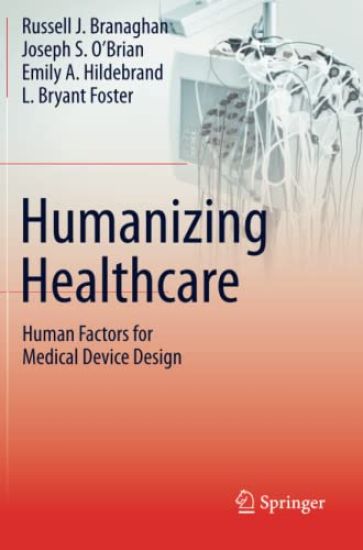
This book introduces human factors engineering (HFE) principles, guidelines, and design methods for medical device design. It starts with an overview of physical, perceptual, and cognitive abilities and limitations, and their implications for design. This analysis produces a set of human factors principles that can be applied across many design challenges, which are then applied to guidelines for designing input controls, visual displays, auditory displays (alerts, alarms, warnings), and human-computer interaction. Specific challenges and solutions for various medical device domains, such as robotic surgery, laparoscopic surgery, artificial organs, wearables, continuous glucose monitors and insulin pumps, and reprocessing, are discussed. Human factors research and design methods are provided and integrated into a human factors design lifecycle, and a discussion of regulatory requirements and procedures is provided, including guidance on what human factors activities should be conductedwhen and how they should be documented.This hands-on professional reference is an essential introduction and resource for students and practitioners in HFE, biomedical engineering, industrial design, graphic design, user-experience design, quality engineering, product management, and regulatory affairs.Teaches readers to design medical devices that are safer, more effective, and less error prone;Explains the role and responsibilities of regulatory agencies in medical device design;Introduces analysis and research methods such as UFMEA, task analysis, heuristic evaluation, and usability testing.
This book introduces human factors engineering (HFE) principles, guidelines, and design methods for medical device design. It starts with an overview of physical, perceptual, and cognitive abilities and limitations, and their implications for design. This analysis produces a set of human factors principles that can be applied across many design challenges, which are then applied to guidelines for designing input controls, visual displays, auditory displays (alerts, alarms, warnings), and human-computer interaction. Specific challenges and solutions for various medical device domains, such as robotic surgery, laparoscopic surgery, artificial organs, wearables, continuous glucose monitors and insulin pumps, and reprocessing, are discussed. Human factors research and design methods are provided and integrated into a human factors design lifecycle, and a discussion of regulatory requirements and procedures is provided, including guidance on what human factors activities should be conductedwhen and how they should be documented.This hands-on professional reference is an essential introduction and resource for students and practitioners in HFE, biomedical engineering, industrial design, graphic design, user-experience design, quality engineering, product management, and regulatory affairs.Teaches readers to design medical devices that are safer, more effective, and less error prone;Explains the role and responsibilities of regulatory agencies in medical device design;Introduces analysis and research methods such as UFMEA, task analysis, heuristic evaluation, and usability testing.
Sich all die Formeln, Funktionen und Regeln der Chemie zu merken ist schon schwierig genug - und dann soll man sie auch noch richtig anwenden. Da hilft nur üben, üben, üben! Das "Übungsbuch Chemie für Dummies" enthält über 250 Übungen zu Einheitenumrechnung, Periodensystem, Stöchiometrie, Säuren und Basen, Thermodynamik, Redoxreaktionen, funktionelllen Gruppen und vielen anderen grundlegenden Fragestellungen der Chemie. Zudem finden Sie zu Beginn eines jeden Themas eine kurze Widerholung der Theorie, bevor es dann an die Praxis geht. Natürlich gibt es auch ausführliche Lösungen zu allen Aufgaben, so gewinnen Sie Sicherheit und können sich zielgerichtet auf die nächste Prüfung vorbereiten.
The second edition of this book represents a re-editing and in some cases signi- cant rewriting of the original book published in 2001. Substantial editing occurred and new material has been included in the introductory chapter and in Chap. 10, the concluding chapter. The reason for this was to bring forward to 2006 the ori- nal thesis of the book about the need for regions to be prepared to experience - creasingly greater shocks and to have increasingly less time to respond in adju- ing their economic development to achieve sustainability. Events that have occurred over the past five years - such as the 9/11 terrorist attacks, continuing the rapid advances in technology, the rise of sustained economic growth in China and beginning to unfold in India, the Indonesian Tsunami, Hurricane Katrina devas- tion in New Orleans, the invasion of Iraq and continued unrest in the Middle East represents on-going and unforeseen risks and new challenges which continue to confront and impact nations around the globe and the regions and localities within them. Regions need to be fast and flexible and agile in order to be not only expe- tiously adaptive to change, but also to be proactive in developing strategies to - dress and shape their futures. In addition, some significant new material has been added to the other chapters to reflect recent advances in thinking and approaches to regional economic dev- opment analysis and planning strategy.
It is impossible to predict the exact behavior of all biological systems and how these same systems are exemplified by patterns of complexity and regularity. Decades of research in ecology have documented how these sorts of patterns are the consequences of deceptively simple rules that determine the nature of the patterns created. Chaos in Ecology will explain how simple beginnings result in complicated results. Chaos in Ecology is the inaugural volume of Theoretical Ecology Series. The authors of this volume have employed data from a proven model system in population dynamics. As a result, this book will be of interest to anyone interested in the ecology of populations.