Kirjojen hintavertailu. Mukana 11 699 587 kirjaa ja 12 kauppaa.

Kirjahaku

Etsi kirjoja tekijän nimen, kirjan nimen tai ISBN:n perusteella.

1000 tulosta hakusanalla Brian O'Doherty

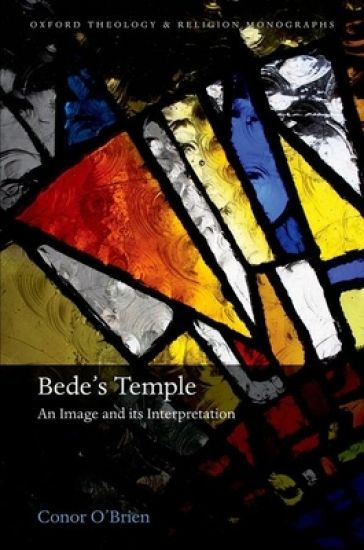
Bede's Temple

Bede's Temple

Conor O'Brien

Oxford University Press
2015
sidottu
This volume examines the use of the image of the Jewish temple in the writings of the Anglo-Saxon theologian and historian, Bede (d. 735). The various Jewish holy sites described in the Bible possessed multiple different meanings for Bede and therefore this imagery provides an excellent window into his thought. Bede's Temple: An Image and its Interpretation examines Bede's use of the temple to reveal his ideas of history, the universe, Christ, the Church, and the individual Christian. Across his wide body of writings Bede presented an image of unity, whether that be the unity of Jew and gentile in the universal Church, or the unity of human and divine in the incarnate Christ, and the temple-image provided a means of understanding and celebrating that unity. Conor O'Brien argues that Bede's understanding of the temple was part of the shared spirituality and communal discourse of his monastery at Wearmouth-Jarrow, in particular as revealed in the great illuminated Bible made there: the Codex Amiatinus. Studying the temple in Bede's works reveals not just an individual genius, but a monastic community engaged actively in scriptural interpretation and religious reflection. O'Brien makes an important contribution to our understanding of early Anglo-Saxon England's most important author, the world in which he lived, and the processes that inspired his work.
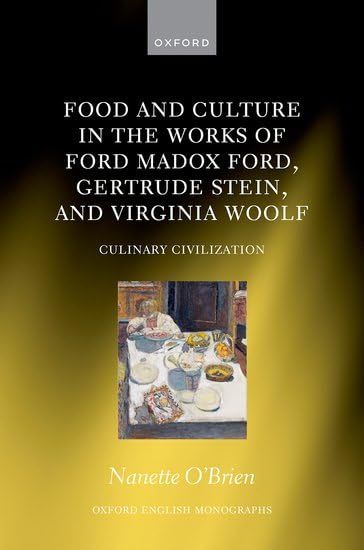
Food and Culture in the Works of Ford Madox Ford, Gertrude Stein, and Virginia Woolf
Writing about food has long been a part of autobiographical expression that combines culinary record-keeping and histories, drawing on the personal and the cultural. Concentrating on the transatlantic work of Ford Madox Ford, Gertrude Stein, and Virginia Woolf, this book illuminates modernist uses of the terms 'civilization' and 'barbarism', showing how these concepts are shaped by the rules of preparing and eating food in literature and in public. Nanette O'Brien introduces the concept of 'culinary Impressionism' as an extension and repositioning of current scholarly thinking about Ford's literary Impressionism and his synesthetic writing about cookery and small farming. She also presents a new reading of Stein's crafting of her modernist authority as interlinked with her cooks, and shows Stein's and Toklas's jointly authored unpublished cookbook draft as evidence of their direct authorial collaboration and of Stein adapting domestic culinary techniques into her other writing. O'Brien goes on to present new archival research demonstrating that Virginia Woolf's representation of the financial and culinary difference between men's and women's dining in colleges at the University of Cambridge is justified and the material inequality was in fact worse than previously understood. This disparity in institutional food intensifies Woolf's later reimagining of the term 'civilization'. While drawing on themes of modernism and life-writing, the everyday, domestic life and gender, the book argues that food is a vehicle for positive modernist re-conceptions of civilization.
Self-Knowing Agents

Self-Knowing Agents

Lucy O'Brien

Clarendon Press
2007
sidottu
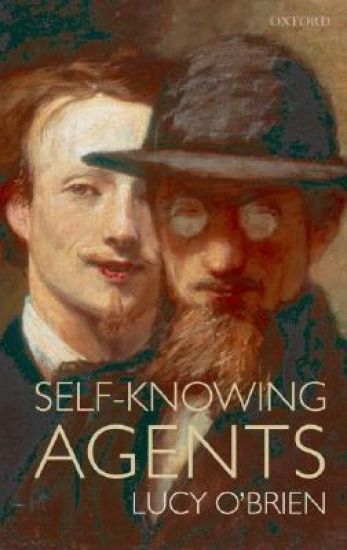
Lucy OBrien argues that a satisfactory account of first-person reference and self-knowledge needs to concentrate on our nature as agents. She considers two main questions. First, what account of first-person reference can we give that respects the guaranteed nature of such reference? Second, what account can we give of our knowledge of our mental and physical actions? Clearly written, with rigorous discussion of rival views, this book will be of interest to anyone working in the philosophy of mind and action.
Self-Knowing Agents

Self-Knowing Agents

Lucy O'Brien

Oxford University Press
2010
nidottu
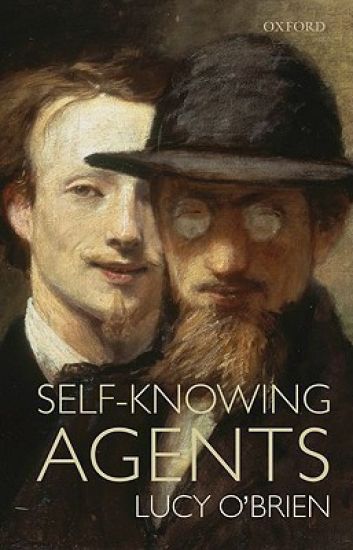
Lucy O'Brien argues that a satisfactory account of first-person reference and self-knowledge needs to concentrate on our nature as agents. She considers two main questions. First, what account of first-person reference can we give that respects the guaranteed nature of such reference? Second, what account can we give of our knowledge of our mental and physical actions? Clearly written, with rigorous discussion of rival views, this book will be of interest to anyone working in the philosophy of mind and action.
Prehistoric Copper Mining in Europe

Prehistoric Copper Mining in Europe

William O'Brien

Oxford University Press
2014
sidottu
This volume examines prehistoric copper mining in Europe, from the first use of the metal eight thousand years ago in the Balkans to its widespread adoption during the Bronze Age. The history of research is examined, as is the survival of this mining archaeology in different geological settings. There is information on the technological processes of mineral prospecting, ore extraction, and metal production, as well as the logistics and organization of this activity and its environmental impact. The analysis is broadened to consider the economic and societal context of prehistoric copper mining and the nature of the distinctive communities involved. The study is based on a review of field data and research produced over many decades by the collaboration of archaeologists and geologists in a number of different countries, and covers such famous mining centres as the Mitterberg in Austria, Kargaly in Russia, the Great Orme in Wales, and those in Cyprus, from where the name of this metal derives. These regional studies are brought together for the first time to present a remarkable story of human endeavour and innovation, which marks a new stage in the mastery of our natural resources.
The Scientific Sherlock Holmes

The Scientific Sherlock Holmes

James O'Brien

Oxford University Press Inc
2013
sidottu
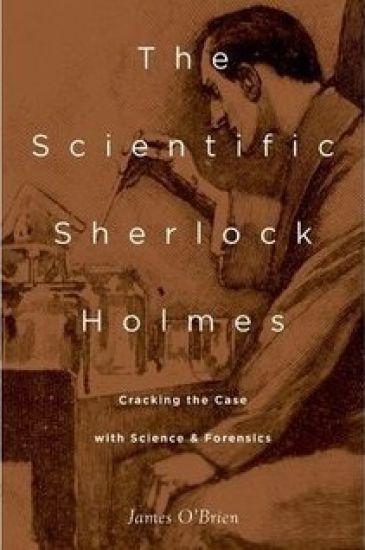
Arthur Conan Doyle's enduringly popular Sherlock Holmes has his own undeniable place in the public eye. Holmes is often seen applying concepts of some branch of science in his work, discussing scientific matters with Watson, or is involved in situations where the applicability of the formal sciences is apparent. The Scientific Sherlock Holmes connects Holmes' vegetable poisons with concepts in botany, his use of fingerprinting with forensic science, and carbon monoxide poisoning and hemoglobin tests with concepts in chemistry, thus integrating the Holmes stories with all branches of science.
Application Service Providers (ASPs)

Application Service Providers (ASPs)

Mary O'Brien; John Harney

Addison Wesley
2001
nidottu
The benefits of working with Application Service Providers (ASPs) can be compelling -- faster rollouts, lower costs, less time spent on implementation and maintenance, and a greater opportunity to focus on your organization's core competencies. Unfortunately, the risks of ASP relationships are far from insignificant. In this book, the President of ASPWatch shows IT managers exactly how to navigate the risks, and use ASPs for maximum competitive advantage. John Harney presents a complete roadmap for any IT decision-maker considering outsourcing to ASPs. He offers expert guidance for answering questions like: What costs are involved? How secure and viable is your ASP? How do you choose the right ASP? You'll learn practical criteria for identifying possible ASP partners; choosing amongst ostensibly similar ASPs; evaluating services, performance, and ROI; and negotiating service level agreements that meet your business requirements. For everyone considering or using Application Service Providers, including IT executives and managers, line-of-business managers, Web and e-business professionals, and consultants.
Out of Many, One

Out of Many, One

Ruth O'Brien; Thomas Byrne Edsall

University of Chicago Press
2013
sidottu
Feared by conservatives and embraced by liberals when he entered the White House, Barack Obama has since been battered by criticism from both sides. In "Out of Many, One", Ruth O'Brien explains why. We are accustomed to seeing politicians supporting either a minimalist state characterized by unfettered capitalism and individual rights or a relatively strong welfare state and regulatory capitalism. Obama, O'Brien argues, represents the values of a lesser-known third tradition in American political thought that defies the usual left-right categorization. Bearing traces of Baruch Spinoza, John Dewey, and Saul Alinsky, Obama's progressivism embraces the ideas of mutual reliance and collective responsibility and adopts an interconnected view of the individual and the state. So, while Obama might emphasize difference, he rejects identity politics, which can create permanent minorities and diminish individual agency. Analyzing Obama's major legislative victories - financial regulation, health care, and the stimulus package - O'Brien shows how they reflect a stakeholder society that neither regulates in the manner of the New Deal nor deregulates. Instead, Obama focuses on negotiated rule making and allows executive branch agencies to fill in the details when dealing with a deadlocked Congress. Similarly, his commitment to difference and his resistance to universal mandates underlies his reluctance to advocate for human rights as much as many on the Democratic left had hoped. By establishing Obama within the context of a much longer and broader political tradition, this book sheds critical light on both the political and philosophical underpinnings of his presidency and a fundamental shift in American political thought.
Out of Many, One

Out of Many, One

Ruth O'Brien; Thomas Byrne Edsall

University of Chicago Press
2013
nidottu
Feared by conservatives and embraced by liberals when he entered the White House, Barack Obama has since been battered by criticism from both sides. In "Out of Many, One", Ruth O'Brien explains why. We are accustomed to seeing politicians supporting either a minimalist state characterized by unfettered capitalism and individual rights or a relatively strong welfare state and regulatory capitalism. Obama, O'Brien argues, represents the values of a lesser-known third tradition in American political thought that defies the usual left-right categorization. Bearing traces of Baruch Spinoza, John Dewey, and Saul Alinsky, Obama's progressivism embraces the ideas of mutual reliance and collective responsibility and adopts an interconnected view of the individual and the state. So, while Obama might emphasize difference, he rejects identity politics, which can create permanent minorities and diminish individual agency. Analyzing Obama's major legislative victories - financial regulation, health care, and the stimulus package - O'Brien shows how they reflect a stakeholder society that neither regulates in the manner of the New Deal nor deregulates. Instead, Obama focuses on negotiated rule making and allows executive branch agencies to fill in the details when dealing with a deadlocked Congress. Similarly, his commitment to difference and his resistance to universal mandates underlies his reluctance to advocate for human rights as much as many on the Democratic left had hoped. By establishing Obama within the context of a much longer and broader political tradition, this book sheds critical light on both the political and philosophical underpinnings of his presidency and a fundamental shift in American political thought.
Blood Runs Green

Blood Runs Green

Gillian O'Brien

University of Chicago Press
2015
sidottu
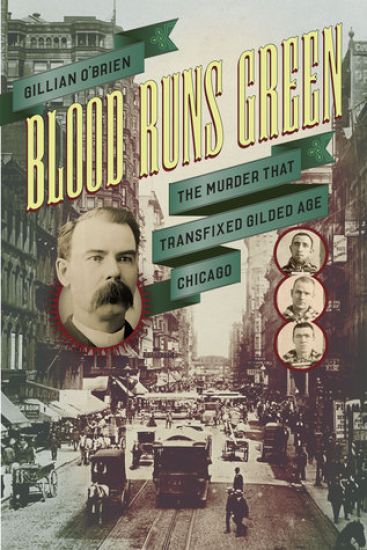
It was the biggest funeral Chicago had seen since Lincoln's. On May 26, 1889, four thousand mourners proceeded down Michigan Avenue, followed by a crowd forty thousand strong, in a howl of protest at what commentators called one of the ghastliest and most curious crimes in civilized history. The dead man, Dr P H Cronin, was a respected Irish physician, but his brutal murder uncovered a web of intrigue, secrecy, and corruption that stretched across the United States and far beyond. Blood Runs Green tells the story of Cronin's murder from the police investigation to the trial. It is a story of hotheaded journalists in pursuit of sensational crimes, of a bungling police force riddled with informers and spies, and of a secret revolutionary society determined to free Ireland yet succeeding only in tearing itself apart. It is also the story of a booming immigrant population clamoring for power at a time of unprecedented change. From backrooms to courtrooms, historian Gillian O'Brien deftly navigates the complexities of Irish Chicago, bringing to life a rich cast of characters and tracing the spectacular rise and fall of the secret Irish American society Clan na Gael. She draws on real-life accounts and sources from the United States, Ireland, and Britain to cast new light on Clan na Gael and reveal how Irish republicanism swept across the United States. Destined to be a true crime classic, Blood Runs Green is an enthralling tale of a murder that captivated the world and rever-berated through society long after the coffin closed.
Literature Incorporated

Literature Incorporated

John O'Brien

University of Chicago Press
2015
sidottu
Long before Citizens United and modern debates over corporations as people, such organizations already stood between the public and private as both vehicles for commerce and imaginative constructs based on groups of individuals. In this book, John O'Brien explores how this relationship played out in economics and literature, two fields that gained prominence in the same era. Examining British and American essays, poems, novels, and stories from the seventeenth through the nineteenth centuries, O'Brien pursues the idea of incorporation as a trope discernible in a wide range of texts. Key authors include John Locke, Eliza Haywood, Harriet Martineau, and Edgar Allan Poe, and each chapter is oriented around a type of corporation reflected in their works, such as insurance companies or banks. In exploring issues such as whether sentimental interest is the same as economic interest, these works bear witness to capitalism's effect on history and human labor, desire, and memory. This period's imaginative writing, O'Brien argues, is where the unconscious of that process left its mark. By revealing the intricate ties between literary models and economic concepts, Literature Incorporated shows us how the business corporation has shaped our understanding of our social world and ourselves.
Blood Runs Green

Blood Runs Green

Gillian O'Brien

University of Chicago Press
2016
nidottu
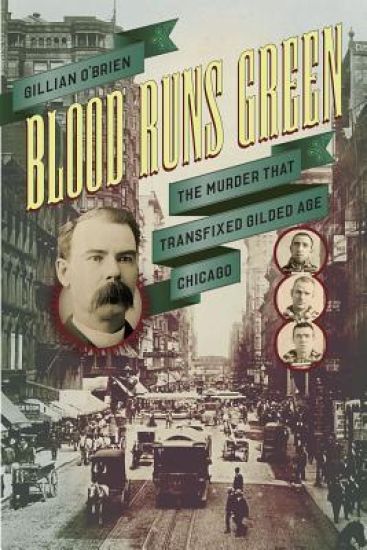
It was the biggest funeral Chicago had seen since Lincoln’s. On May 26, 1889, four thousand mourners proceeded down Michigan Avenue, followed by a crowd forty thousand strong, in a howl of protest at what commentators called one of the ghastliest and most curious crimes in civilized history. The dead man, Dr. P. H. Cronin, was a respected Irish physician, but his brutal murder uncovered a web of intrigue, secrecy, and corruption that stretched across the United States and far beyond.Blood Runs Green tells the story of Cronin’s murder from the police investigation to the trial. It is a story of hotheaded journalists in pursuit of sensational crimes, of a bungling police force riddled with informers and spies, and of a secret revolutionary society determined to free Ireland but succeeding only in tearing itself apart. It is also the story of a booming immigrant population clamoring for power at a time of unprecedented change. From backrooms to courtrooms, historian Gillian O’Brien deftly navigates the complexities of Irish Chicago, bringing to life a rich cast of characters and tracing the spectacular rise and fall of the secret Irish American society Clan na Gael. She draws on real-life accounts and sources from the United States, Ireland, and Britain to cast new light on Clan na Gael and reveal how Irish republicanism swept across the United States. Destined to be a true crime classic, Blood Runs Green is an enthralling tale of a murder that captivated the world and reverberated through society long after the coffin closed.
Crippled Justice

Crippled Justice

Ruth O'Brien

University of Chicago Press
2001
sidottu
This intellectual history of disability policy in the workplace from World War II to the 21st century, explains why American employers and judges, despite the Americans with Disabilities Act, have been so resistant to accommodating the disabled in the workplace. Ruth O'Brien traces the origins of this resistance to the postwar disability policies inspired by physicians and psychotherapists that were based on the notion that disabled people should accommodate society rather than having society accommodate them. O'Brien shows how the remnants of postwar cultural values bogged the rights-orientated policy in the 1970s and how they continue to permeate judicial interpretations of provisions under the Americans with Disabilities Act. In effect, O'Brien argues, these decisions have created a lose/lose situation for the very people the act was meant to protect.
Crippled Justice

Crippled Justice

Ruth O'Brien

University of Chicago Press
2001
nidottu
This intellectual history of disability policy in the workplace from World War II to the 21st century, explains why American employers and judges, despite the Americans with Disabilities Act, have been so resistant to accommodating the disabled in the workplace. Ruth O'Brien traces the origins of this resistance to the postwar disability policies inspired by physicians and pschotherapists that were based on the notion that disabled people should accommodate society rather than having society accommodate them. O'Brien shows how the remnants of postwar cultural values bogged the rights-orientated policy in the 1970s and how they continue to permeate judicial interpretations of provisions under the Americans with Disabilities Act. In effect, O'Brien argues, these decisions have created a lose/lose situation for the very people the act was meant to protect.
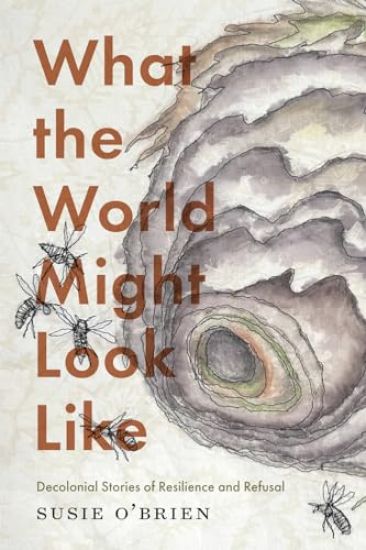
What the World Might Look Like

What the World Might Look Like

Susie O’Brien

MCGILL-QUEEN'S UNIVERSITY PRESS
2024
sidottu
The idea of resilience is everywhere these days, offering a framework for thriving in volatile times. Dominant resilience stories share an attachment to a mythologized past thought to hold clues for navigating a future that is understood to be full of danger. These stories also uphold values of settler colonialism and white supremacy.What the World Might Look Like examines the way resilience thinking has come to dominate the settler-colonial imagination and explores alternative approaches to resilience writing that instead offer decolonial models of thought. The book traces settler-colonial resilience stories to the rise of resilience science in the 1970s and 1980s, illustrating how the discipline supports the projects of white supremacy and colonialism. Working to unravel the blanket of common sense that shrouds the idea of resilience, the book is equally cautious of settler-colonial antiresilience stories that invoke the idea of death as an antidote to unbearable life. Susie O’Brien argues that, although the dominant narratives of resilience are problematic, resilience itself is neither inherently good nor inherently bad. Appreciating the significance of resilience stories requires asking what worlds and what communities they are meant to preserve. Looking at the fiction of Alexis Wright, David Chariandy, and Leanne Betasamosake Simpson, O’Brien points to the potential of Black and Indigenous thinking around resilience to figure decolonial possibilities for planetary flourishing.Exposing the complexities and limits of resilience, What the World Might Look Like questions the concept of resilience, highlighting how Black and Indigenous novelists can offer different decolonial ways of thinking about and with resilience to imagine things “otherwise.”
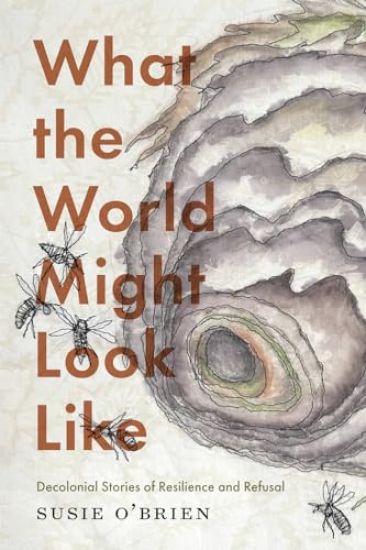
What the World Might Look Like

What the World Might Look Like

Susie O’Brien

MCGILL-QUEEN'S UNIVERSITY PRESS
2024
nidottu
The idea of resilience is everywhere these days, offering a framework for thriving in volatile times. Dominant resilience stories share an attachment to a mythologized past thought to hold clues for navigating a future that is understood to be full of danger. These stories also uphold values of settler colonialism and white supremacy.What the World Might Look Like examines the way resilience thinking has come to dominate the settler-colonial imagination and explores alternative approaches to resilience writing that instead offer decolonial models of thought. The book traces settler-colonial resilience stories to the rise of resilience science in the 1970s and 1980s, illustrating how the discipline supports the projects of white supremacy and colonialism. Working to unravel the blanket of common sense that shrouds the idea of resilience, the book is equally cautious of settler-colonial antiresilience stories that invoke the idea of death as an antidote to unbearable life. Susie O’Brien argues that, although the dominant narratives of resilience are problematic, resilience itself is neither inherently good nor inherently bad. Appreciating the significance of resilience stories requires asking what worlds and what communities they are meant to preserve. Looking at the fiction of Alexis Wright, David Chariandy, and Leanne Betasamosake Simpson, O’Brien points to the potential of Black and Indigenous thinking around resilience to figure decolonial possibilities for planetary flourishing.Exposing the complexities and limits of resilience, What the World Might Look Like questions the concept of resilience, highlighting how Black and Indigenous novelists can offer different decolonial ways of thinking about and with resilience to imagine things “otherwise.”
Twice

Twice

Ellie O'Brien

Tellwell Talent
2020
pokkari
Ellie's eldest son Jack has the honour of joining the ranks of being a childhood cancer survivor. When Jack was eight years old, he was playing street hockey with his younger brother, Noah, who poked him in the side with a hockey stick. This hit ruptured a Wilms tumour they didn't know Jack had. Although Jack's illness was an incredibly difficult time for their family, many hidden blessings and life lessons were revealed. The first part of Ellie's story is about a little boy who bravely fought cancer. It will provide a parent's perspective on the challenges they experienced, and how they picked up the pieces and moved forward. Two years later, Ellie received a breast cancer diagnosis, Invasive Ductal Carcinoma, which interrupted their lives once again. Twice they navigated their way through the storms of cancer. As one friend remarked, "O'Briens aren't sissies when it comes to fighting cancer." Ellie's response? "Damn straight."
Twice

Twice

Ellie O'Brien

Tellwell Talent
2020
sidottu
Ellie's eldest son Jack has the honour of joining the ranks of being a childhood cancer survivor. When Jack was eight years old, he was playing street hockey with his younger brother, Noah, who poked him in the side with a hockey stick. This hit ruptured a Wilms tumour they didn't know Jack had. Although Jack's illness was an incredibly difficult time for their family, many hidden blessings and life lessons were revealed. The first part of Ellie's story is about a little boy who bravely fought cancer. It will provide a parent's perspective on the challenges they experienced, and how they picked up the pieces and moved forward. Two years later, Ellie received a breast cancer diagnosis, Invasive Ductal Carcinoma, which interrupted their lives once again. Twice they navigated their way through the storms of cancer. As one friend remarked, "O'Briens aren't sissies when it comes to fighting cancer." Ellie's response? "Damn straight."
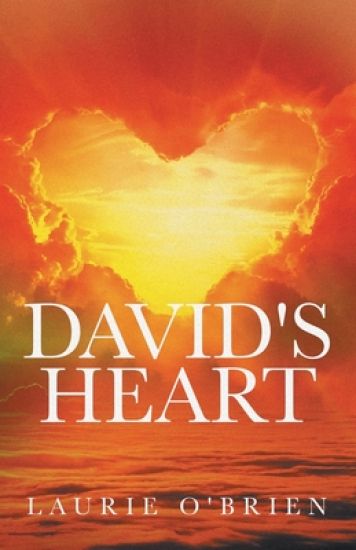
David's Heart

David's Heart

Laurie O'Brien

Tellwell Talent
2022
pokkari
Our David was always an optimistic, endlessly determined person, and while he navigated through his challenges of having two rare disorders, it was never more evident Share in his journey to make his little corner of the world a better place. His quick wit and remarkable compassion and understanding for those less fortunate somehow enriched his own life. His loving and caring nature and ability to see past stigmas and perceptions is shown in his encounters with everyone he met, because that is what he wanted for himself. He has been teased, shunned and underestimated, but his chutzpah and drive helped him to come out the other side to become an extraordinary human being.Learn how his love for his family, his fuzzes, his friends and his fellow man translates into how he conducts himself in his daily life. Behold how his circumstances shaped how he saw himself and the people he met along the way. Marvel at his fight for respect and recognition, then contemplate the tragic circumstances in which we lost our beloved young man, and the impact that is still felt today Let me take you with me on my ongoing quest for justice, change -no, establishment of rules and guidelines for agencies entrusted with the care of the disabled and the elderly. Our family's unimaginable pain and the rocky road to acceptance of something that goes against nature Keeping hope alive while never forgetting how we got here. What does moving past or through and going forward and healing look like?
David's Heart

David's Heart

Laurie O'Brien

Tellwell Talent
2022
sidottu
Our David was always an optimistic, endlessly determined person, and while he navigated through his challenges of having two rare disorders, it was never more evident Share in his journey to make his little corner of the world a better place. His quick wit and remarkable compassion and understanding for those less fortunate somehow enriched his own life. His loving and caring nature and ability to see past stigmas and perceptions is shown in his encounters with everyone he met, because that is what he wanted for himself. He has been teased, shunned and underestimated, but his chutzpah and drive helped him to come out the other side to become an extraordinary human being.Learn how his love for his family, his fuzzes, his friends and his fellow man translates into how he conducts himself in his daily life. Behold how his circumstances shaped how he saw himself and the people he met along the way. Marvel at his fight for respect and recognition, then contemplate the tragic circumstances in which we lost our beloved young man, and the impact that is still felt today Let me take you with me on my ongoing quest for justice, change -no, establishment of rules and guidelines for agencies entrusted with the care of the disabled and the elderly. Our family's unimaginable pain and the rocky road to acceptance of something that goes against nature Keeping hope alive while never forgetting how we got here. What does moving past or through and going forward and healing look like?