Kirjojen hintavertailu. Mukana 11 244 527 kirjaa ja 12 kauppaa.

Kirjahaku

Etsi kirjoja tekijän nimen, kirjan nimen tai ISBN:n perusteella.

1000 tulosta hakusanalla Brooke Neal Freeman

Passing

Passing

Brooke Kroeger

PublicAffairs,U.S.
2004
pokkari
Despite the many social changes of the last half-century, many Americans still "pass": black for white, gay for straight, and now in many new ways as well. We tend to think of passing in negative terms- as deceitful, cowardly, a betrayal of one's self. But this compassionate book reveals that many passers today are people of good heart and purpose whose decision to pass is an attempt to bypass injustice, and to be more truly themselves. Passing tells the poignant, complicated life stories of a black man who passed as a white Jew a white woman who passed for black a working class Puerto Rican who passes for privileged a gay, Conservative Jewish seminarian and a lesbian naval officer who passed for straight and a respected poet who radically shifts persona to write about rock'n'roll. The stories, interwoven with others from history, literature, and contemporary life, explore the many forms passing still takes in our culture the social realities which make it an option and its logistical, emotional, and moral consequences. We learn that there are still too many institutions, environments, and social situations that force honorable people to twist their lives into painful, deceit-ridden contortions for reasons that do not hold. Passing is an intellectually absorbing exploration of a phenomenon that has long intrigued scholars, inspired novelists, and made hits of movies like The Crying Game and Boys Don't Cry.
Other Side of the Mirror

Other Side of the Mirror

Brooke Allen

Paul Dry Books, Inc
2011
nidottu
Brooke Allen first travelled to Syria in 2009, expecting it to be much as American news media routinely depicted it -- an ultra-conservative Muslim society, a rogue nation committed to an anti-American stance. She found, instead, a welcoming and captivating country where she and her family were treated with courtesy and gentleness. She soon returned for a more leisurely trip through Syria's rich historical and archaeological treasures: the ancient cities of Aleppo and Damascus, the great Crusader castles, the Bronze Age ruins of Ebla and Mari, the Greco-Roman cities of Palmyra and Apamea. With her keen and appreciative eye (and ear) Allen introduces us to Syria's people, culture, and history. This book illustrates one traveller's enlightenment, while reflecting on our American ways. For, as she writes, "To visit Syria is to confront the unhappy truth about our media, which is that much of the international news we read or see serves not as a window looking out at the world but as a mirror: a mirror that reflects our own fears and obsessions and shines them right back at us".
Interpersonal Skills, Theory, and Practice

Interpersonal Skills, Theory, and Practice

Brooke E. Sheldon

Libraries Unlimited Inc
2010
nidottu
Although the book focuses on one aspect of leadership, interpersonal communication, its purpose is to provide a practical guide to becoming a leader, addressing other aspects of leadership. The author, having worked with students and librarians on local, national, and international levels, has come to believe that interpersonal competence is by far the most important skill for leadership success.While there are many books on leadership, there are none extant that focus on the key attributes of interpersonal communication and/or emotional intelligence for librarians. This book, through explanation of theory and application to practice of librarianship will outline concrete steps to improving interpersonal skills/communication. All in the context of other attributes of leaders, it will show how interpersonal skills are not only achievable, but paramount in achieving career success.
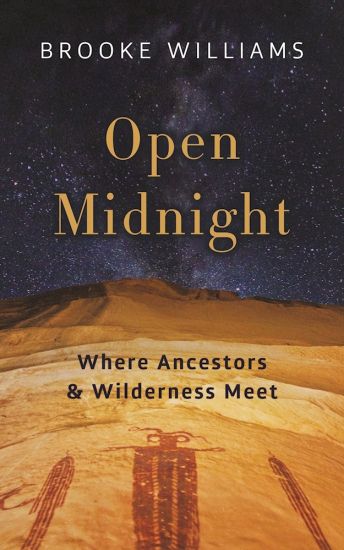
Open Midnight

Open Midnight

Brooke Williams

Trinity University Press,U.S.
2017
pokkari
Open Midnight weaves two parallel stories about the great wilderness--Brooke Williams's year alone with his dog ground truthing wilderness maps of southern Utah, and that of his great-great-great-grandfather, who in 1863 made his way with a group of Mormons from England across the wilderness almost to Utah, dying a week short. The book is also about two levels of history--personal, as represented by William Williams, and collective, as represented by Charles Darwin, who lived in Shrewsbury, England, at about the same time as Williams. As Brooke Williams begins researching the story of his oldest known ancestor, he realizes that he has few facts. He wonders if a handful of dates can tell the story of a life, writing, "If those points were stars in the sky, we would connect them to make a constellation, which is what I've made with his life by creating the parts missing from his story." Thus William Williams becomes a kind of spiritual guide, a shamanlike consciousness that accompanies the author on his wilderness and life journeys, and that appears at pivotal points when the author is required to choose a certain course. The mysterious presence of his ancestor inspires the author to create imagined scenes in which Williams meets Darwin in Shrewsbury, sowing something central in the DNA that eventually passes to Brooke Williams, whose life has been devoted to nature and wilderness. Brooke Williams's inventive and vivid prose pushes boundaries and investigates new ways toward knowledge and experience, inviting readers to think unconventionally about how we experience reality, spirituality, and the wild. The author draws on Jungian psychology to relate how our consciousness of the wild is culturally embedded in our psyche, and how a deep connection to the wild can promote emotional and psychological well-being. Williams's narrative goes beyond a call for conservation, but in the vein of writers like Joanna Macy, Bill Plotkin, David Abram, the author argues passionately for the importance of wildness is to the human soul. Reading Williams's inspired prose provides a measure of hope for protecting the beautiful places that we all need to thrive. Open Midnight is grounded in the present by Williams's descriptions of the Utah lands he explores. He beautifully evokes the feeling of being solitary in the wild, at home in the deepest sense, in the presence of the sublime. In doing so, he conveys what Gary Snyder calls "a practice of the wild" more completely than any other work. Williams also relates an insider's view of negotiations about wilderness protection. As an advocate working for the Southern Utah Wilderness Alliance, he represents a minority in meetings designed to open wilderness lands to roads and hunting. He portrays the mindset of the majority of Utah's citizens, who argue passionately for their rights to use their lands however they wish. The phrase "open midnight," as Williams sees it, evokes the time between dusk and dawn, between where we've been and where we're going, and the unconscious where all possibilities are hidden.
MORNING GLORIES & OTHER POEMS

MORNING GLORIES & OTHER POEMS

Brooke Bognanni

Red Hen Press
2008
nidottu
The poems in Morning Glories possess a gracefulness, like the flower itself, taking on their own life Seeds, Planters, Growing, Blossoms. For Brooke Bognanni, the process of writing becomes spiritual, a meditation for which the purpose varies; often it is about the natural cycle of the things of this earth, and about saying good-bye. The book, in turn, becomes a marker of epiphanal self-discovery.
Aphasia and Other Acquired Neurogenic Language Disorders: A Guide for Clinical Excellence
Covering an array of evidence-based content, including aphasia, traumatic brain injury, dementia, and language in aging, "Aphasia and Other Acquired Neurogenic Language Disorders: A Guide for Clinical Excellence" is a must-have textbook for clinicians and students studying to be speech-language pathologists. This clinical guide strategically addresses scientific foundations, service delivery, international and multicultural perspectives, assessment, and treatment.Key features include:*A rigorous approach to the art and science of clinical practice, integrating diverse theoretical perspectives for a global readership*Guidance on advocacy, ethics, reimbursement, legal aspects, and counseling*An emphasis on person-centered, empowering approaches to maximize life participation*Extensive assessment resources and a process analysis approach for analyzing communicative performance and interpreting assessment results*How-to content on over 50 intervention approaches*Diagrams, charts, illustrations, summary tables, a substantial glossary, a detailed index, and rich up-to-date references*Complementary online materials with links to videos and other teaching/learning resources*Systematic queries that enliven clear learning objectivesOrganized to maximize adult learning, the book is adaptable for multiple pedagogic methods for classroom-based courses, independent study, and online learning. "Aphasia and Other Acquired Neurogenic Language Disorders: A Guide for Clinical Excellence" provides clinicians and students a clear pathway for quality and effectiveness in clinical practice.
World in the Balance

World in the Balance

Brooke C. Stoddard

Potomac Books Inc
2011
sidottu
In mid-1940, the British Expeditionary Force desperately attempted to flee the small French port of Dunkirk and reach British shores. France was falling, and the men were well aware that the German army had already conquered Poland, Denmark, Norway, Holland, and Belgium. Only Britain remained. Churchill then proclaimed to the House of Commons, “Hitler will have to break us in this island or lose the war.” There were, perhaps, no more telling words spoken in World War II. For the following five months, Great Britain waged a heroic, and clandestine, struggle with Nazi Germany-one both psychological and diplomatic-over the fate of the world. World in the Balance recounts these pivotal months. Rallying after Churchill’s speeches, destroying the French fleet so it would not fall to the Germans, fending off Nazi agents from former King Edward VIII, weakening England’s defenses to build up those of Egypt, establishing a dedication to secret radar, and engaging in deft diplomacy-notably saving Gibraltar by keeping Spain neutral and successfully courting favor in the United States-set all the pieces in place for eventual victory over Axis fascism.
Biotechnology and Infectious Diseases

Biotechnology and Infectious Diseases

Brooke A. Jude

Momentum Press
2017
nidottu
World populations are increasing, as are pathogens capable of causing human disease. These infectious diseases contribute to global "wicked problems". As infection numbers rise, and dangerous pathogens evolve, the complexity of these problems increase.Current biotechnological advances can be used to design more effective methods of combatting infectious diseases, and this book documents a core set of infectious agents, as a method of describing ways to update diagnostic and therapeutic tools.The book begins with an introduction to the pathogenic mechanisms displayed by various diseases. Pathogen descriptions of are followed up by such topics as use assays for low-level detection, application of nanosized agents for drug delivery, and design of vaccines for emerging infections, including Ebola and Zika.New technologies are being developed as fast as infectious evolve. The key to taming these wicked pathogens will be in finding commonalities between organisms and applying biotechnological advances.
Vaquita

Vaquita

Brooke Bessesen

Island Press
2018
sidottu
In 2006, vaquita, a diminutive porpoise making its home in the Upper Gulf of California, inherited the dubious title of world’s most endangered marine mammal. Nicknamed “panda of the sea” for its small size and beguiling facial markings, vaquita have been in decline for decades, dying by the hundreds in gillnets intended for the commercially valuable fish, totoaba. When international crime cartels discovered a lucrative trade in the swim bladders of totoaba, illegal gillnetting went rampant, and now the lives of the few remaining vaquita hang in the balance. Author Brooke Bessesen takes us on a journey to Mexico’s Upper Gulf region to uncover the story. She interviewed townspeople, fishermen, politicians, scientists, and activists, teasing apart a complex story filled with villains and heroes, a story whose outcome is unclear. When diplomatic and political efforts to save the little porpoise failed, Bessesen traveled with a team of veterinary experts in a binational effort to capture the remaining ten vaquita and breed them in captivity—the only hope for their survival. In this fast-paced, soul-searing tale, she learned that there are no easy answers when extinction is profitable. Whether the rescue attempt succeeds or fails, the world must ask itself hard questions. When vaquita and the totoaba are gone, the black market will turn to the next vulnerable species. What will we do then?
Living Theravada

Living Theravada

Brooke Schedneck

SHAMBHALA PUBLICATIONS INC
2023
nidottu
An illuminating introduction to the contemporary world of Theravada Buddhism and its rich culture and practices in modern mainland Southeast Asia. Theravada translates as "the way of the Elders," indicating that this Buddhist tradition considers itself to be the most authoritative and pure. Tracing all the way back to the time of the Buddha, Theravada Buddhism is distinguished by canonical literature preserved in the Pali language, beliefs, and practices--and this literature is often specialized and academic in tone. By contrast, this book will serve as a foundational and accessible resource on Theravada Buddhism and the contemporary, lived world of its enduring tradition. Brooke Schedneck has done extensive research on topics such as religions of Southeast Asia, contemporary Buddhism, gender in Asian religions, and religious tourism. Narrowing in on topics such as temples, monastic lives, lay Buddhists, meditation, and Buddhist objects, Schedneck highlights the thriving diversity of Theravada Buddhists today. Exploring Theravada as a lived religion reveals how people apply various expressions in everyday life. She presents to readers the most important practices and beliefs of Theravada Buddhists, illustrated through contemporary debates about what represents proper Theravada practice within Cambodia, Myanmar, Laos, and Thailand in the twenty-first century. Additionally, practical information is provided in appendices about what temples and practice centers readers can visit as well as a temple etiquette guide offering tips for being a respectful visitor. While academics will benefit from and appreciate this overview, the writing offers a refreshing introduction to a complex tradition for readers new to the subject.