
Kirjahaku
Etsi kirjoja tekijän nimen, kirjan nimen tai ISBN:n perusteella.
1000 tulosta hakusanalla Bryan D. Lowe
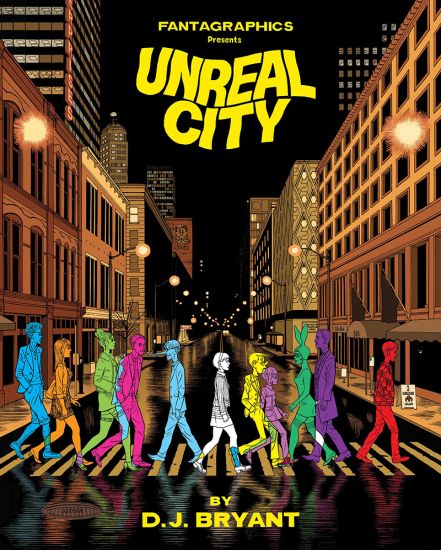
Unreal City contains five highly charged stories about relationships: "Echoes into Eternity," "Evelyn Dalton-Hoyt," "Emordana," "The Yellowknife Retrospective," and "Objet d'Art." The stories address gender, narcissism, marriage, subjectivity, objectification, and the thin line that divides love from hate. Bryant's characters sometimes feel like they are navigating their way through the darkness in an attempt to make sense of love, sex, art, and life. Existential and elliptical, the stories play beautifully against Bryant's precise and fully-realized artwork, which echoes such masters as Jaime Hernandez and Daniel Clowes. In Unreal City, characters cannot walk into a room without their world turning inside out. Readers will be similarly upended by the discovery of this major new talent.

The Fundamentals of Trade Finance, 3rd Edition
Ph D Joseph F Greco; Brian Murray
Bublish, Inc.
2020
pokkari
With the existence of the World Trade Organization, North American Free Trade Agreement and the European Union, trade continues to play a crucial role in an ever-globalizing economy.Technology and economic integration will only continue to foster the growth of trade. Exporting and importing used to be limited to large corporations, but now even small businesses can explore opportunities in international markets. Methods of organizing, financing and managing risk in trade are explored in the pages of this text. The authors also examine critical topics such as logistics and insurance, international commercial banking, and exchange rates. This book takes a practical approach, making it a worthwhile read to experienced traders and learners alike. Gain a competitive advantage and navigate business challenges with the lessons in The Fundamentals of Trade Finance.




Basic Manufacturing
Saunders K.D.; Mike Brian; Peter Birt; Terry Cunnew
Butterworth-Heinemann Ltd
1997
nidottu
Complete coverage of the four mandatory units of this course. The text also provides an introduction to the technical and business aspects of the manufacturing industry for students on other courses, such as City and Guilds Certificates 2010 and 2280, and as a starting point for an advanced GNVQ.

A detailed and profusely illustrated analysis of material recovered from this Early Paleo-Indian Parkhill site.

Environmental forensics is the application of scientific techniques for the purpose of identifying the source and age of a contaminant. Over the past several years, this study has been expanding as a course of study in academia, government and commercial markets. The US Environmental Protection Agency (EPA), Federal Bureau of Investigation (FBI), and Federal Emergency Management Agency (FEMA) are among the governmental agencies that utilize the study of environmental forensics to ensure national security and to ensure that companies are complying with standards. Even the International Network for Environmental Compliance and Enforcement (INECE), a group supported by the European Commission and the World Bank, utilizes the study of environmental forensics as it applies to terror threats.This title is a hands-on guide for environmental scientists, engineers, consultants and industrial scientists to identify the origin and age of a contaminant in the environment and the issues involved in the process. An expansion of the authors’ first title with Academic Press, Introduction to Environmental Forensics, this is a state-of-the-art reference for those exploring the scientific techniques available.
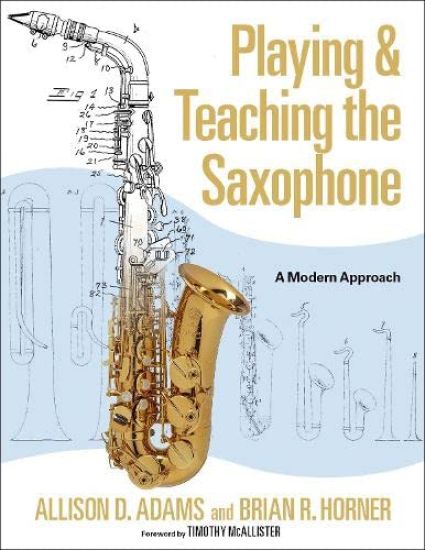
Playing & Teaching the Saxophone
Allison D. Adams; Brian R. Horner
OXFORD UNIVERSITY PRESS INC
2023
sidottu
Playing & Teaching the Saxophone: A Modern Approach provides a method for teaching the saxophone that is specific enough to use as a textbook in a collegiate saxophone methods class, simple enough for a band director to use in guiding their saxophone sections, clear enough for adult beginners to teach themselves the instrument, and deep enough for professionals to use as a resource in teaching private lessons at any level. The first sections of this book, Getting Started and Learning the Notes, take a student in a collegiate methods class or other adult beginner through the fundamental concepts of playing the saxophone. The In-Depth section then lays out critical concepts that are essential to the further development of any saxophonist. As a contemporary guide for teaching the musicians and music educators of the 21st century, this method addresses the pedagogy of not only the instrument, but of the whole student. It includes a diverse array of musical examples that celebrate communities and cultures around the globe, and a "Wellness for the Young Musician" chapter offers an overview of practices that will help students navigate performance anxiety and avoid injury while playing. Designed to be a lifelong reference for band directors and private instructors, the book includes "Hand-It-Over" sections that can be used as student instructional sheets. These materials, along with video performances and teaching demonstrations, are also available in the book's companion website.
Playing & Teaching the Saxophone
Allison D. Adams; Brian R. Horner
OXFORD UNIVERSITY PRESS INC
2023
nidottu
Playing & Teaching the Saxophone: A Modern Approach provides a method for teaching the saxophone that is specific enough to use as a textbook in a collegiate saxophone methods class, simple enough for a band director to use in guiding their saxophone sections, clear enough for adult beginners to teach themselves the instrument, and deep enough for professionals to use as a resource in teaching private lessons at any level. The first sections of this book, Getting Started and Learning the Notes, take a student in a collegiate methods class or other adult beginner through the fundamental concepts of playing the saxophone. The In-Depth section then lays out critical concepts that are essential to the further development of any saxophonist. As a contemporary guide for teaching the musicians and music educators of the 21st century, this method addresses the pedagogy of not only the instrument, but of the whole student. It includes a diverse array of musical examples that celebrate communities and cultures around the globe, and a "Wellness for the Young Musician" chapter offers an overview of practices that will help students navigate performance anxiety and avoid injury while playing. Designed to be a lifelong reference for band directors and private instructors, the book includes "Hand-It-Over" sections that can be used as student instructional sheets. These materials, along with video performances and teaching demonstrations, are also available in the book's companion website.
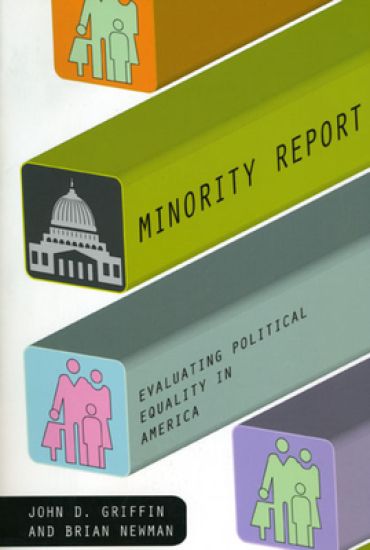
Are the views of Latinos and African Americans under represented in our federal government? For that matter, what does it mean to be represented equitably? Rather than taking for granted a single answer to these complex questions, John D. Griffin and Brian Newman use different measures of political equality to reveal which groups get what they want from government and what factors lead to their successes.One of the first books to compare the representation of both African Americans and Latinos to that of whites, "Minority Report" shows that congressional decisions and federal policy tend to mirror the preferences of whites as a group and as individuals better than the preferences of either minority group, even after accounting for income disparities. This is far from the whole story, though, and the authors' multifaceted approach illustrates the surprising degree to which group population size, an issue's level of importance, the race or ethnicity of an office holder, and electoral turnout can affect how well government action reflects the views of each person or group. Sure to be controversial, "Minority Report" ultimately goes beyond statistical analyses to address the root question of what equal representation really means.
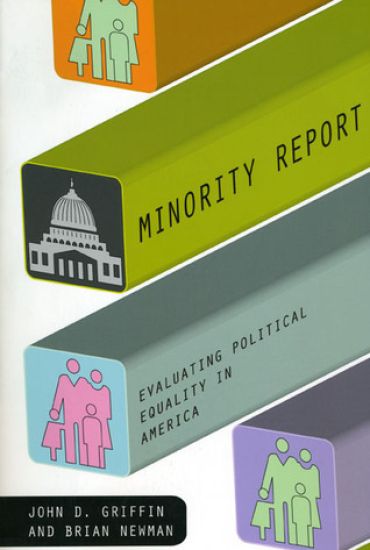
Are the views of Latinos and African Americans underrepresented in our federal government? For that matter, what does it mean to be represented equitably? Rather than taking for granted a single answer to these complex questions, John D. Griffin and Brian Newman use different measures of political equality to reveal which groups get what they want from government and what factors lead to their successes.One of the first books to compare the representation of both African Americans and Latinos to that of whites, "Minority Report" shows that congressional decisions and federal policy tend to mirror the preferences of whites as a group and as individuals better than the preferences of either minority group, even after accounting for income disparities. This is far from the whole story, though, and the authors' multifaceted approach illustrates the surprising degree to which group population size, an issue's level of importance, the race or ethnicity of an office holder, and electoral turnout can affect how well government action reflects the views of each person or group. Sure to be controversial, "Minority Report" ultimately goes beyond statistical analyses to address the root question of what equal representation really means.

This affirming, positive, and practical book will better prepare retirees and their families for the changes and challenges of retirement in an uncertain economic, social, and political climate.A Simple Guide to Retirement: How to Make Retirement Work for You is a book for older Americans planning for retirement. It is also for people who have left work before they were ready and are now experiencing anxiety, depression, and/or financial weakness in their new role as retirees. Written to be at once affirming, positive, and practical, the book covers all of the many topics that will help retirees better prepare themselves for a positive, fulfilling, and satisfying retirement—beginning with financial security. These topics include saving for retirement, working part time, staying healthy and fit, dealing with the emotional and financial burden of health care, cultivating optimism, and much more. Case examples and vignettes will help readers apply the principles to their own lives.10 illustrations
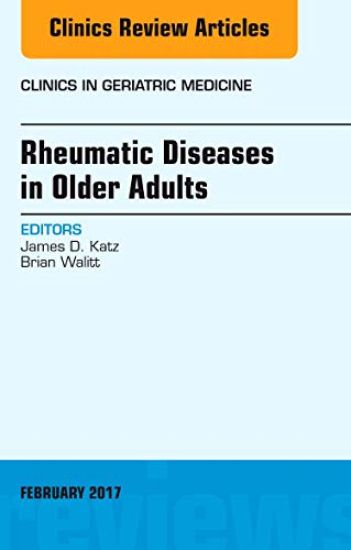
Rheumatic Diseases in Older Adults, An Issue of Clinics in Geriatric Medicine
James D. Katz; Brian Walitt
Elsevier - Health Sciences Division
2017
sidottu
This issue of Clinics in Geriatric Medicine, guest edited by Drs. James D. Katz and Brian Walitt of the NIH, is devoted to Rheumatic Diseases in Older Adults. Articles in this outstanding issue include Rheumatology Pharmacotherapy Pearls for the General Practitioner; Sarcopenia - Pathogenesis and Management; Osteoporosis and Metabolic Bone Diseases; Osteoarthritis; Regional Rheumatic Disorders and Rehabilitation in Older Adults; Rheumatological Manifestations of Malignancy; Sjögren's Syndrome; Cardiovascular Disease Risk in Patients with Rheumatic Diseases; Gaps in Aging Research as it Applies to Rheumatological Clinical Care; and Update on Crystal-induced Arthritides.
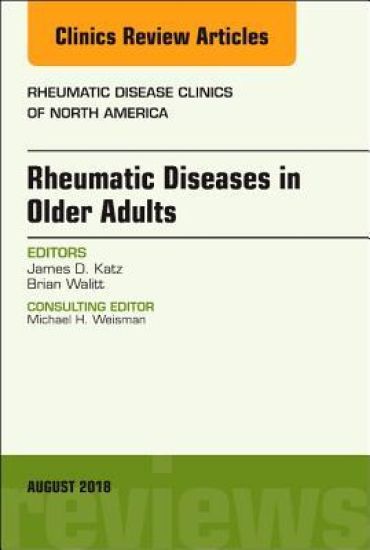
Rheumatic Diseases in Older Adults, An Issue of Rheumatic Disease Clinics of North America
James D. Katz; Brian Walitt
Elsevier - Health Sciences Division
2018
sidottu
This issue of Rheumatic Disease Clinics, guest edited by Drs. James Katz and Brian Walitt with the NIH, will cover several key aspects of diagnosing and treating Rheumatic Diseases in Older Adults. The Consulting Editor for the series is Dr. Michael Weisman. The topics discussed in the issue will include: Pharmacotherapy Pearls for the Geriatrician, Pathogenesis and Management of Sarcopenia, A Review of Osteoporosis in the Older Adult, Regional Rheumatic Disorders and Rehabilitation in Older Adults, Rheumatologic Manifestations of Malignancy, Sjögren Syndrome and Other Causes of Sicca in Older Adults, Cardiovascular Disease Risk in Patients with Rheumatic Diseases, Update on Crystal-Induced Arthritides, Immune dysregulation in aging with a focus on B cells and their potential clinical consequence, and Spinal Stenosis, among others.

Design and Analysis of Non-Inferiority Trials
Mark D. Rothmann; Brian L. Wiens; Ivan S.F. Chan
CRC Press
2020
nidottu
The increased use of non-inferiority analysis has been accompanied by a proliferation of research on the design and analysis of non-inferiority studies. Using examples from real clinical trials, Design and Analysis of Non-Inferiority Trials brings together this body of research and confronts the issues involved in the design of a non-inferiority trial. Each chapter begins with a non-technical introduction, making the text easily understood by those without prior knowledge of this type of trial. Topics covered include: A variety of issues of non-inferiority trials, including multiple comparisons, missing data, analysis population, the use of safety margins, the internal consistency of non-inferiority inference, the use of surrogate endpoints, trial monitoring, and equivalence trialsSpecific issues and analysis methods when the data are binary, continuous, and time-to-eventThe history of non-inferiority trials and the design and conduct considerations for a non-inferiority trialThe strength of evidence of an efficacy finding and how to evaluate the effect size of an active control therapy A comprehensive discussion on the purpose and issues involved with non-inferiority trials, Design and Analysis of Non-inferiority Trials will assist current and future scientists and statisticians on the optimal design of non-inferiority trials and in assessing the quality of non-inferiority comparisons done in practice.
Permutation Groups form one of the oldest parts of group theory. Through the ubiquity of group actions and the concrete representations which they afford, both finite and infinite permutation groups arise in many parts of mathematics and continue to be a lively topic of research in their own right. The book begins with the basic ideas, standard constructions and important examples in the theory of permutation groups.It then develops the combinatorial and group theoretic structure of primitive groups leading to the proof of the pivotal O'Nan-Scott Theorem which links finite primitive groups with finite simple groups. Special topics covered include the Mathieu groups, multiply transitive groups, and recent work on the subgroups of the infinite symmetric groups. This text can serve as an introduction to permutation groups in a course at the graduate or advanced undergraduate level, or for self- study. It includes many exercises and detailed references to the current literature.

Only Love Is Real: A Story of Soulmates Reunited
Brian Weiss; M. D. Brian Weiss
Grand Central Publishing
1996
sidottu
A psychiatrist and the author of the best-selling Many Lives, Many Masters describes how he helped two of his patients discover that they have been lovers over the centuries. National ad/promo. Tour.
The criminal justice system has devised several procedural safeguards to protect defendants from erroneous conviction resulting from mistaken eyewitness identification. Mistaken Identification: The Eyewitness, Psychology and the Law reviews the empirical research bearing on the adequacy of those safeguards. This body of literature converges on the conclusion that traditional safeguards such as presence of counsel at line-ups, cross-examination, and judges’ instructions, are ineffective safeguards against mistaken eyewitness identification. Expert psychological testimony on eyewitness memory, designed to educate the jury about how memory processes work and how eyewitness testimony should be evaluated, shows much greater promise as a safeguard against mistaken identifications and erroneous convictions. Mistaken Identification is an invaluable text for advanced psychology students, law students and researchers of memory.