Kirjojen hintavertailu. Mukana 11 244 527 kirjaa ja 12 kauppaa.

Kirjahaku

Etsi kirjoja tekijän nimen, kirjan nimen tai ISBN:n perusteella.

1000 tulosta hakusanalla Bryan Davis

Chris Crutcher

Chris Crutcher

Bryan Gillis; Pam B. Cole

Scarecrow Press
2012
sidottu
Chris Crutcher is a literary icon in the field of young adult literature. With his first book, Running Loose published in 1983, Crutcher established a reputation for giving young adults a voice in realistic fiction. Since then, Crutcher has written a number of books with spot-on depictions of young adults growing through hard times, including Ironman, Whale Talk, Staying Fat for Sarah Byrnes, and Stotan! In Chris Crutcher: A Stotan for Young Adults, Bryan Gillis and Pam B. Cole examine the life, career, and works of this young adult advocate. This volume opens with a never-before-published comprehensive portrait of the author’s life, gleaned from numerous conversations with Crutcher. The authors explore Crutcher’s childhood, his adolescent years, his life as an adult, and his career as a family counselor and examine how those experiences became fodder for his stories. The authors also discuss Crutcher's encounters with censorship and his philosophical stance. Gillis and Cole also analyze Crutcher’s novels, short stories, and novellas, examining his literary craft and such social themes as bigotry, identity, sexuality, relationships, and loss—themes almost always positioned within a sports story. The most comprehensive study of Crutcher’s life and work to date, this book benefits tremendously from the cooperation of Crutcher himself. Generally reserved about private matters, Crutcher talks candidly about his life and how his experiences helped shape his character and his stories. His cooperative spirit gives voice to a book that will appeal not only to teachers and librarians but to students who have been enthralled by the works of this generous writer.
Just Mercy: A Story of Justice and Redemption
#1 NEW YORK TIMES BESTSELLER - NOW A MAJOR MOTION PICTURE STARRING MICHAEL B. JORDAN AND JAMIE FOXX - A powerful true story about the potential for mercy to redeem us, and a clarion call to fix our broken system of justice--from one of the most brilliant and influential lawyers of our time. " Bryan Stevenson's] dedication to fighting for justice and equality has inspired me and many others and made a lasting impact on our country."--John Legend NAMED ONE OF THE MOST INFLUENTIAL BOOKS OF THE DECADE BY CNN - A KIRKUS REVIEWS BEST NONFICTION BOOK OF THE CENTURY A Best Book of the Year: The New York Times, The Washington Post, The Boston Globe, The Seattle Times, Esquire, TimeBryan Stevenson was a young lawyer when he founded the Equal Justice Initiative, a legal practice dedicated to defending those most desperate and in need: the poor, the wrongly condemned, and women and children trapped in the farthest reaches of our criminal justice system. One of his first cases was that of Walter McMillian, a young man who was sentenced to die for a notorious murder he insisted he didn't commit. The case drew Bryan into a tangle of conspiracy, political machination, and legal brinksmanship--and transformed his understanding of mercy and justice forever. Just Mercy is at once an unforgettable account of an idealistic, gifted young lawyer's coming of age, a moving window into the lives of those he has defended, and an inspiring argument for compassion in the pursuit of true justice. Winner of the Carnegie Medal for Excellence in Nonfiction - Winner of the NAACP Image Award for Nonfiction - Winner of a Books for a Better Life Award - Finalist for the Los Angeles Times Book Prize - Finalist for the Kirkus Reviews Prize - An American Library Association Notable Book "Every bit as moving as To Kill a Mockingbird, and in some ways more so . . . a searing indictment of American criminal justice and a stirring testament to the salvation that fighting for the vulnerable sometimes yields."--David Cole, The New York Review of Books "Searing, moving . . . Bryan Stevenson may, indeed, be America's Mandela."--Nicholas Kristof, The New York Times "Inspiring . . . a work of style, substance and clarity . . . Stevenson is not only a great lawyer, he's also a gifted writer and storyteller."--The Washington Post "As deeply moving, poignant and powerful a book as has been, and maybe ever can be, written about the death penalty."--The Financial Times "Brilliant."--The Philadelphia Inquirer
Conservative Bias

Conservative Bias

Bryan H. Thrift

University Press of Florida
2016
nidottu
Before Bill O’Reilly and Glenn Beck, there was Jesse Helms. From in front of a camera at WRAL-TV, Helms forged a new brand of southern conservatism long before he was a senator from North Carolina. As executive vice president of the station, Helms delivered commentaries on the evening news and directed the news and entertainment programming. He pioneered the attack on the liberal media, and his editorials were some of the first shots fired in the culture wars, criticizing the influence of “immoral entertainment.” Through the emerging power of the household television Helms established a blueprint and laid the foundation for the modern conservative movement.Bryan Thrift mines over 2,700 WRAL-TV “Viewpoint” editorials broadcast between 1960 and 1972 to offer not only a portrait of a skilled rhetorician and wordsmith but also a lens on the way the various, and at times competing, elements of modern American conservatism cohered into an ideology couched in the language of anti-elitism and “traditional values.” Decades prior to the invention of the blog, Helms corresponded with his viewers to select, refine, and sharpen his political message until he had reworked southern traditionalism into a national conservative movement. The realignment of southern Democrats into the Republican Party was not easy or inevitable, and by examining Helms’s oft-forgotten journalism career, Thrift shows how delicately and deliberately this transition had to be cultivated.
The Little Book of Whiskey Cocktails

The Little Book of Whiskey Cocktails

Bryan Paiement

THE UNIVERSITY PRESS OF KENTUCKY
2022
sidottu
The Little Book of Whiskey Cocktails sets out to share the stories of the wide whiskey-making world and recipes suitable for whiskey drinkers of all expertise levels. Bryan Paiement takes a practical approach to exploring the various ways in which the spirit can be mixed and enjoyed. Beginning with a brief history of whiskey, Paiement answers many questions that even aficionados can’t help but stumble over: What is the difference between "whiskey" and "whisky?" Does bourbon have to come from Kentucky? How many times does Irish whiskey need to be distilled? Twenty classic whiskey cocktail recipes and twenty original recipes follow in this pocket-sized gift book. Each carefully curated recipe is introduced with details on the cocktail’s origins and concluded with bartenders' tips for shaking (or stirring) the perfect concoction. Time-tested classics like the Old Fashioned and the Rusty Nail are featured, providing whiskey novices with the necessary foundations. For seasoned whiskey drinkers, Paiement includes recipes from award-winners like the Paper Plane to handcrafted originals like the Scotch Smash. Adorned with custom line-art illustrations, a key of whiskey ware and bar tools, and an extensive repertoire of bar jokes, Paiement brings whiskey’s terminology and mixology to any home bar.
The New American Politics

The New American Politics

Bryan D Jones

Westview Press Inc
1995
nidottu
Was 1992 a realigning election? Did the midterm elections of 1994 realign the realignment? Will 1996 carry the United States forward on yet another changed trajectory? In this volume of original essays, leading political scientists examine key components of the American agenda and assess the current administration's position in light of historical precedents and future trends. Each conclusion is unique, born of a combination of the empirical record and its interpretation, but essays by Bryan Jones and Larry Dodd help to put the wide-ranging views represented here in long-term perspective.
Reclaiming Indigenous Research in Higher Education

Reclaiming Indigenous Research in Higher Education

Bryan McKinley Jones Brayboy

Rutgers University Press
2018
nidottu
Indigenous students remain one of the least represented populations in higher education. They continue to account for only one percent of the total post-secondary student population, and this lack of representation is felt in multiple ways beyond enrollment. Less research money is spent studying Indigenous students, and their interests are often left out of projects that otherwise purport to address diversity in higher education. Recently, Native scholars have started to reclaim research through the development of their own research methodologies and paradigms that are based in tribal knowledge systems and values, and that allow inherent Indigenous knowledge and lived experiences to strengthen the research. Reclaiming Indigenous Research in Higher Education highlights the current scholarship emerging from these scholars of higher education. From understanding how Native American students make their way through school, to tracking tribal college and university transfer students, this book allows Native scholars to take center stage, and shines the light squarely on those least represented among us.
Reclaiming Indigenous Research in Higher Education

Reclaiming Indigenous Research in Higher Education

Bryan McKinley Jones Brayboy

Rutgers University Press
2018
sidottu
Indigenous students remain one of the least represented populations in higher education. They continue to account for only one percent of the total post-secondary student population, and this lack of representation is felt in multiple ways beyond enrollment. Less research money is spent studying Indigenous students, and their interests are often left out of projects that otherwise purport to address diversity in higher education. Recently, Native scholars have started to reclaim research through the development of their own research methodologies and paradigms that are based in tribal knowledge systems and values, and that allow inherent Indigenous knowledge and lived experiences to strengthen the research. Reclaiming Indigenous Research in Higher Education highlights the current scholarship emerging from these scholars of higher education. From understanding how Native American students make their way through school, to tracking tribal college and university transfer students, this book allows Native scholars to take center stage, and shines the light squarely on those least represented among us.
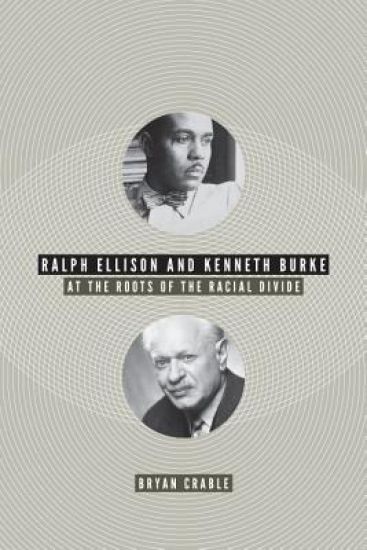
Ralph Ellison and Kenneth Burke

Ralph Ellison and Kenneth Burke

Bryan Crable

University of Virginia Press
2011
sidottu
Ralph Ellison and Kenneth Burke focuses on the little-known but important friendship between two canonical American writers. The story of this fifty-year friendship, however, is more than literary biography; Bryan Crable argues that the Burke-Ellison relationship can be interpreted as a microcosm of the American ""racial divide."" Through examination of published writings and unpublished correspondence, he reconstructs the dialogue between Burke and Ellison about race that shaped some of their most important works, including Burke's A Rhetoric of Motives and Ellison's Invisible Man. In addition, the book connects this dialogue to changes in American discourse about race. Crable shows that these two men were deeply connected, intellectually and personally, but the social division between white and black Americans produced hesitation, embarrassment, mystery, and estrangement where Ellison and Burke might otherwise have found unity. By using Ellison's non fiction and Burke's rhetorical theory to articulate a new vocabulary of race, the author concludes not with a simplistic ""healing"" of the divide but with a challenge to embrace the responsibility inherent to our social order.
Ralph Ellison and Kenneth Burke

Ralph Ellison and Kenneth Burke

Bryan Crable

University of Virginia Press
2011
nidottu
Ralph Ellison and Kenneth Burke focuses on the little-known but important friendship between two canonical American writers. The story of this fifty-year friendship, however, is more than literary biography; Bryan Crable argues that the Burke-Ellison relationship can be interpreted as a microcosm of the American ""racial divide."" Through examination of published writings and unpublished correspondence, he reconstructs the dialogue between Burke and Ellison about race that shaped some of their most important works, including Burke's A Rhetoric of Motives and Ellison's Invisible Man. In addition, the book connects this dialogue to changes in American discourse about race. Crable shows that these two men were deeply connected, intellectually and personally, but the social division between white and black Americans produced hesitation, embarrassment, mystery, and estrangement where Ellison and Burke might otherwise have found unity. By using Ellison's non fiction and Burke's rhetorical theory to articulate a new vocabulary of race, the author concludes not with a simplistic ""healing"" of the divide but with a challenge to embrace the responsibility inherent to our social order.
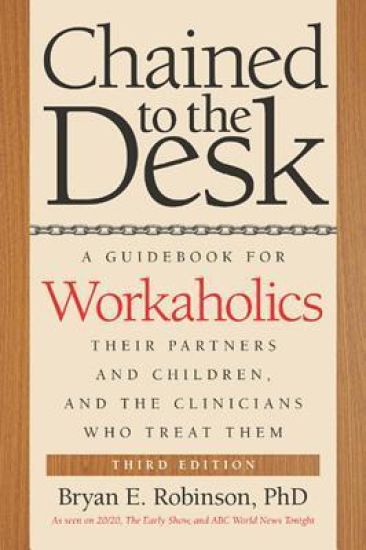
Chained to the Desk (Third Edition)

Chained to the Desk (Third Edition)

Bryan E. Robinson

New York University Press
2014
sidottu
Draws on hundreds of case studies to provide a step by step guide to spot workaholism, understand it, and recover Americans love a hard worker. The worker who toils eighteen-hour days and eats meals on the run between appointments is usually viewed with a combination of respect and awe. But for many, this lifestyle leads to family problems, a decline in work productivity, and ultimately to physical and mental collapse. Intended for anyone touched by what Robinson calls "the best-dressed problem of the twenty-first century," Chained to the Desk provides an inside look at workaholism's impact on those who live and work with work addicts—partners, spouses, children, and colleagues—as well as the appropriate techniques for clinicians who treat them. Originally published in 1998, this groundbreaking book from best-selling author and widely respected family therapist Bryan E. Robinson was the first comprehensive portrait of the workaholic. In this new and fully updated third edition, Robinson draws on hundreds of case reports from his own original research and years of clinical practice. The agonies of workaholism have grown all the more challenging in a world where the computer, cell phone, and iPhone allow twenty-four-hour access to the office, even on weekends and from vacation spots. Adult children of workaholics describe their childhood pain and the lifelong legacies they still carry, and the spouses or partners of workaholics reveal the isolation and loneliness of their vacant relationships. Employers and business colleagues discuss the cost to the company when workaholism dominates the workplace. Chained to the Desk both counsels and consoles. It provides a step-by-step guide to help readers spot workaholism, understand it, and recover.
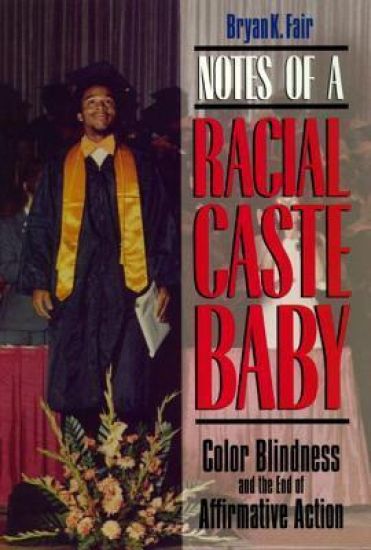
Notes of a Racial Caste Baby

Notes of a Racial Caste Baby

Bryan K. Fair

New York University Press
1997
sidottu
The Constitution of the United States, writes Bryan Fair, was a series of compromises between white male propertyholders: Southern planters and Northern merchants. At the heart of their deals was a clear race-conscious intent to place the interests of whites above those of blacks. In this provocative and important book, Fair, the eighth of ten children born to a single mother on public assistance in an Ohio ghetto, combines two histories--America's and his own- -to offer a compelling defense of affirmative action. How can it be, Fair asks, that, after hundreds of years of racial apartheid during which whites were granted 100% quotas to almost all professions, we have now convinced ourselves that, after a few decades of remedial affirmative action, the playing field is now level? Centuries of racial caste, he argues, cannot be swept aside in a few short years. Fair ambitiously surveys the most common arguments for and against affirmative action. He argues that we must distinguish between America in the pre-Civil Rights Movement era--when the law of the land was explicitly anti-black--and today's affirmative action policies--which are decidedly not anti- white. He concludes that the only just and effective way in which to account for America's racial past and to negotiate current racial quagmires is to embrace a remedial affirmative action that relies neither on quotas nor fiery rhetoric, but one which takes race into account alongside other pertinent factors. Championing the model of diversity on which the United States was purportedly founded, Fair serves up a personal and persuasive account of why race-conscious policies are the most effective way to end de facto segregation and eliminate racial caste. Table of Contents A Note to the Reader Acknowledgments Preface: Telling Stories Recasting Remedies as Diseases Color-Blind Justice The Design of This Book Pt. 1. A Personal Narrative Not White Enough Dee Black Columbus Racial Poverty Man-Child Colored Matters Coded Schools Busing Going Home Equal Opportunity The Character of Color Diversity as One Factor The Deception of Color Blindness Pt. 2. White Privilege and Black Despair: The Origins of Racial Caste in America The Declaration of Inferiority Marginal Americans Inventing American Slavery The Road to Constitutional Caste Losing Second-Class Citizenship Reconstruction and Sacrifice Separate and Unequal The Color Line Critiquing Color Blindness Pt. 3. The Constitutionality of Remedial Affirmative Action The Origins of Remedial Affirmative Action The Court of Last Resort The Invention of Reverse Discrimination The Politics of Affirmative Action: Myth or Reality? Racial Realism Eliminating Caste Afterword Notes Index
Notes of a Racial Caste Baby

Notes of a Racial Caste Baby

Bryan K. Fair

New York University Press
1999
pokkari
The Constitution of the United States, writes Bryan Fair, was a series of compromises between white male propertyholders: Southern planters and Northern merchants. At the heart of their deals was a clear race-conscious intent to place the interests of whites above those of blacks. In this provocative and important book, Fair, the eighth of ten children born to a single mother on public assistance in an Ohio ghetto, combines two histories--America's and his own- -to offer a compelling defense of affirmative action. How can it be, Fair asks, that, after hundreds of years of racial apartheid during which whites were granted 100% quotas to almost all professions, we have now convinced ourselves that, after a few decades of remedial affirmative action, the playing field is now level? Centuries of racial caste, he argues, cannot be swept aside in a few short years. Fair ambitiously surveys the most common arguments for and against affirmative action. He argues that we must distinguish between America in the pre-Civil Rights Movement era--when the law of the land was explicitly anti-black--and today's affirmative action policies--which are decidedly not anti- white. He concludes that the only just and effective way in which to account for America's racial past and to negotiate current racial quagmires is to embrace a remedial affirmative action that relies neither on quotas nor fiery rhetoric, but one which takes race into account alongside other pertinent factors. Championing the model of diversity on which the United States was purportedly founded, Fair serves up a personal and persuasive account of why race-conscious policies are the most effective way to end de facto segregation and eliminate racial caste. Table of Contents A Note to the Reader Acknowledgments Preface: Telling Stories Recasting Remedies as Diseases Color-Blind Justice The Design of This Book Pt. 1. A Personal Narrative Not White Enough Dee Black Columbus Racial Poverty Man-Child Colored Matters Coded Schools Busing Going Home Equal Opportunity The Character of Color Diversity as One Factor The Deception of Color Blindness Pt. 2. White Privilege and Black Despair: The Origins of Racial Caste in America The Declaration of Inferiority Marginal Americans Inventing American Slavery The Road to Constitutional Caste Losing Second-Class Citizenship Reconstruction and Sacrifice Separate and Unequal The Color Line Critiquing Color Blindness Pt. 3. The Constitutionality of Remedial Affirmative Action The Origins of Remedial Affirmative Action The Court of Last Resort The Invention of Reverse Discrimination The Politics of Affirmative Action: Myth or Reality? Racial Realism Eliminating Caste Afterword Notes Index
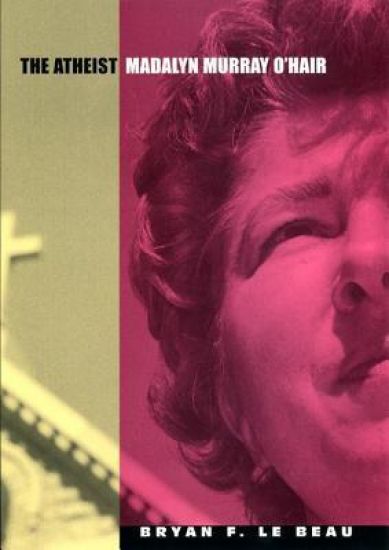
The Atheist

The Atheist

Bryan F. Le Beau

New York University Press
2003
sidottu
The first biography of the colorful life Madalyn Murray O'Hair—America's most famous (and despised) atheist In 1964, Life magazine called Madalyn Murray O’Hair “the most hated woman in America.” Another critic described her as “rude, impertinent, blasphemous, a destroyer not only of beliefs but of esteemed values.” In this first full-length biography, Bryan F. Le Beau offers a penetrating assessment of O’Hair’s beliefs and actions and a probing discussion of how she came to represent both what Americans hated in their enemies and feared in themselves. Born in 1919, O’Hair was a divorced mother of two children born out of wedlock. She launched a crusade against God, often using foul language as she became adept at shocking people and making effective use of the media in delivering her message. She first gained notoriety as one of the primary litigants in the 1963 case Murray v. Curlett which led the Supreme Court to ban school prayer. The decision stunned a nation engaged in fighting “godless Communism” and made O’Hair America’s most famous—and most despised—atheist. O’Hair led a colorful life, facing assault charges and extradition from Mexico, as well as the defection of her son William, who as an adult denounced her. She later served as Hustler publisher Larry Flynt’s chief speech writer in his bid for President of the United States. Drawing on original research, O’Hair’s diaries, and interviews, Le Beau traces her development from a child of the Depression to the dictatorial, abrasive woman who founded the American Atheists, wrote books denouncing religion, and challenged the words “Under God” in the Pledge of Allegiance, “In God We Trust” on American currency, the tax exempt status of religious organizations, and other activities she saw as violating the separation of church and state. O’Hair remained a spokesperson for atheism until 1995, when she and her son and granddaughter vanished. It was later discovered that they were murdered by O’Hair’s former office manager and an accomplice. Fast-paced, engagingly written, and sharply relevant to ongoing debates about school prayer and other religious issues, The Atheist tells the colorful life-story of a woman who challenged America’s most deeply held beliefs.
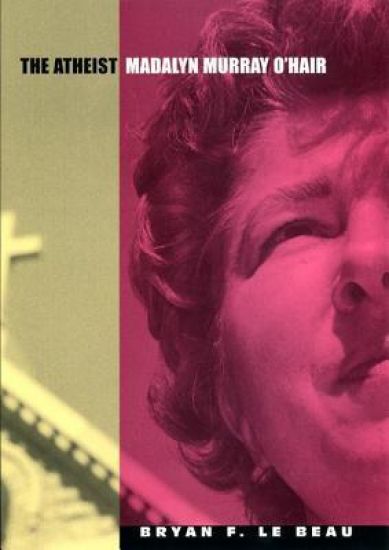
The Atheist

The Atheist

Bryan F. Le Beau

New York University Press
2005
pokkari
The first biography of the colorful life Madalyn Murray O'Hair—America's most famous (and despised) atheist In 1964, Life magazine called Madalyn Murray O'Hair "the most hated woman in America." Another critic described her as "rude, impertinent, blasphemous, a destroyer not only of beliefs but of esteemed values." In this first full-length biography, Bryan F. Le Beau offers a penetrating assessment of O'Hair's beliefs and actions and a probing discussion of how she came to represent both what Americans hated in their enemies and feared in themselves. Born in 1919, O'Hair was a divorced mother of two children born out of wedlock. She launched a crusade against God, often using foul language as she became adept at shocking people and making effective use of the media in delivering her message. She first gained notoriety as one of the primary litigants in the 1963 case Murray v. Curlett which led the Supreme Court to ban school prayer. The decision stunned a nation engaged in fighting "godless Communism" and made O'Hair America's most famous—and most despised—atheist. O'Hair led a colorful life, facing assault charges and extradition from Mexico, as well as the defection of her son William, who as an adult denounced her. She later served as Hustler publisher Larry Flynt's chief speech writer in his bid for President of the United States. Drawing on original research, O'Hair's diaries, and interviews, Le Beau traces her development from a child of the Depression to the dictatorial, abrasive woman who founded the American Atheists, wrote books denouncing religion, and challenged the words "Under God" in the Pledge of Allegiance, "In God We Trust" on American currency, the tax exempt status of religious organizations, and other activities she saw as violating the separation of church and state. O'Hair remained a spokesperson for atheism until 1995, when she and her son and granddaughter vanished. It was later discovered that they were murdered by O'Hair's former office manager and an accomplice. Fast-paced, engagingly written, and sharply relevant to ongoing debates about school prayer and other religious issues, The Atheist tells the colorful life-story of a woman who challenged America's most deeply held beliefs.
Chained to the Desk (Third Edition)

Chained to the Desk (Third Edition)

Bryan E. Robinson

New York University Press
2014
pokkari
Draws on hundreds of case studies to provide a step by step guide to spot workaholism, understand it, and recover Americans love a hard worker. The worker who toils eighteen-hour days and eats meals on the run between appointments is usually viewed with a combination of respect and awe. But for many, this lifestyle leads to family problems, a decline in work productivity, and ultimately to physical and mental collapse. Intended for anyone touched by what Robinson calls “the best-dressed problem of the twenty-first century,” Chained to the Desk provides an inside look at workaholism’s impact on those who live and work with work addicts—partners, spouses, children, and colleagues—as well as the appropriate techniques for clinicians who treat them. Originally published in 1998, this groundbreaking book from best-selling author and widely respected family therapist Bryan E. Robinson was the first comprehensive portrait of the workaholic. In this new and fully updated third edition, Robinson draws on hundreds of case reports from his own original research and years of clinical practice. The agonies of workaholism have grown all the more challenging in a world where the computer, cell phone, and iPhone allow twenty-four-hour access to the office, even on weekends and from vacation spots. Adult children of workaholics describe their childhood pain and the lifelong legacies they still carry, and the spouses or partners of workaholics reveal the isolation and loneliness of their vacant relationships. Employers and business colleagues discuss the cost to the company when workaholism dominates the workplace. Chained to the Desk both counsels and consoles. It provides a step-by-step guide to help readers spot workaholism, understand it, and recover.
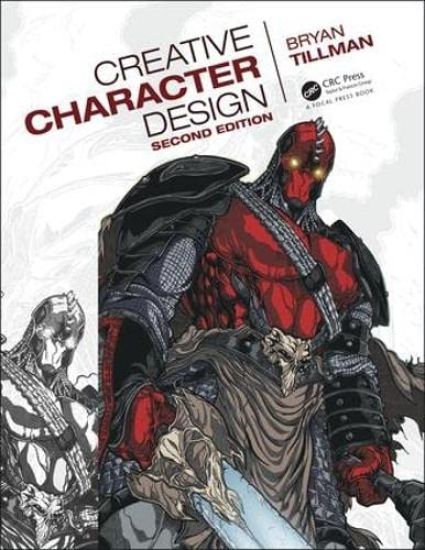
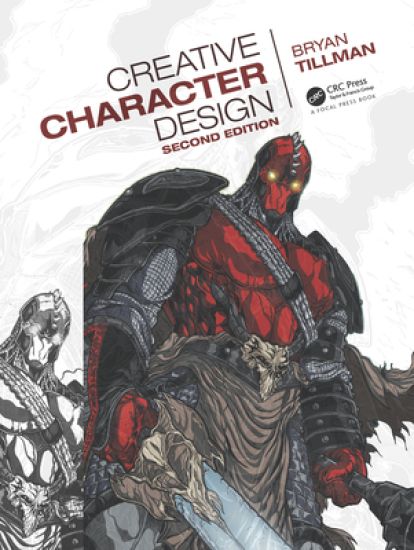
Creative Character Design 2e

Creative Character Design 2e

Bryan Tillman

CRC Press Inc
2019
nidottu
Create compelling, original characters using archetypes and design elements such as shadows and line with the tips and techniques found in this image-packed book. Bryan Tillman bridges the gap between the technique of drawing characters and the theory of good character design by using case studies, examples of professional art, and literary and pop culture references to teach you how to develop a character, not just draw one. The book also features Character Model Sheets that will guide you through the creation of new and unique characters. Finally, Bryan will break down established character archetypes to show you why and how the different aspects of good character design work.Key Features: Learn what makes a character unique and powerful through tools like character model sheets and case studies from established artists. Develop your abolity to use story and archetypes to create compelling new characters. See artwork by professional artists as examples of the techniques shown in the book Bridges the gap between the technique of drawing characters and the theory of good character design in a practical, hands-on way - learn how to use story and archetypes to develop compelling, new characters Based on a standing-room only presentation at Comic-Con 2009 in San Diego.
Creative Character Design 2e

Creative Character Design 2e

Bryan Tillman

CRC Press Inc
2019
sidottu
Create compelling, original characters using archetypes and design elements such as shadows and line with the tips and techniques found in this image-packed book. Bryan Tillman bridges the gap between the technique of drawing characters and the theory of good character design by using case studies, examples of professional art, and literary and pop culture references to teach you how to develop a character, not just draw one. The book also features Character Model Sheets that will guide you through the creation of new and unique characters. Finally, Bryan will break down established character archetypes to show you why and how the different aspects of good character design work.Key Features: Learn what makes a character unique and powerful through tools like character model sheets and case studies from established artists. Develop your abolity to use story and archetypes to create compelling new characters. See artwork by professional artists as examples of the techniques shown in the book Bridges the gap between the technique of drawing characters and the theory of good character design in a practical, hands-on way - learn how to use story and archetypes to develop compelling, new characters Based on a standing-room only presentation at Comic-Con 2009 in San Diego.
Alban Berg

Alban Berg

Bryan R. Simms

CRC Press Inc
2018
sidottu
Alban Berg: A Research and Information Guide, Third Edition is an annotated bibliography highlighting both the nature of primary sources related to the composer and the scope and significance of the secondary sources that deal with Berg, his compositions, and his influence as a composer. It is a reliable, complete, and useful resource and a starting point for anyone—performer, teacher, student, or scholar—wanting to learn about Berg’s life, works, and cultural milieu. The third edition has 162 additional citations since the publication of the second edition, many arising after the expiration of copyright of Berg’s musical and archival works 2005.Many important new, primary sources of information have appeared, most notably the letter exchanges with his wife, recently published in a three-volume critical edition (in German), as well as letter exchanges with Alma Mahler and Erich Kleiber, and later correspondences with Anton Webern. There has also been a notable increase in the availability of commercial video recordings of Berg's operas, Wozzeck and Lulu.
Rules for War

Rules for War

Bryan W. Marshall

CRC Press Inc
2019
sidottu
Originally published in 2005. The Rules Committee in the US House of Representatives is one of the most powerful institutions in Congress. It takes centre stage in determining procedures that will shape the bills enacted by the House. Its central role gives it broad influence over national policy on issues from Social Security and taxes to civil rights and the federal deficit. This study develops a principal-agent theory to analyze how changes in procedures and the role of the House Rules Committee have affected policy making in Congress over the past three decades. The book's main themes relate to a broader literature that explains the strengthening of party leadership organizations within Congress and their significance for understanding congressional politics. The volume is ideally suited for courses on the US Congress and American Politics more generally.
Colour Atlas of Woody Plants and Trees
Trees and plants are important components of the human environment having significant presence beyond agricultural and recreational values. Colour Atlas of Woody Plants and Trees presents a photographic compilation of morphological features of trees and shrubs giving attention to their unique aspects not presented in existing books. By increasing awareness to users through high quality, full-color photographs and informative text, this book demonstrates the enormous diversity of vascular trees and plants living today.Features:Full color atlas offers concise, but highly informative text accompanied by over 200 high-resolution digital tree imagesContains images of the anatomy of tree structures and evolution of the most important features of treesPresents information on the varied structure and morphology exhibited by trees and demonstrates their vital importance in the current struggle for the survival of our human societySurveys the most important morphological features of plants, shrubs and treesPresents aspects of plants and trees both common and rarely seen in natureBryan Geoffrey Bowes is a retired Senior Lecturer in the Botany Department at Glasgow University and was a Research Fellow in ETH Zurich, Harvard University, and University of New England, Australia. His research interests encompass plant anatomy and ultrastructure, plant regeneration, and morphogenesis in vitro.