
Kirjahaku
Etsi kirjoja tekijän nimen, kirjan nimen tai ISBN:n perusteella.
1000 tulosta hakusanalla Byron L Edwards

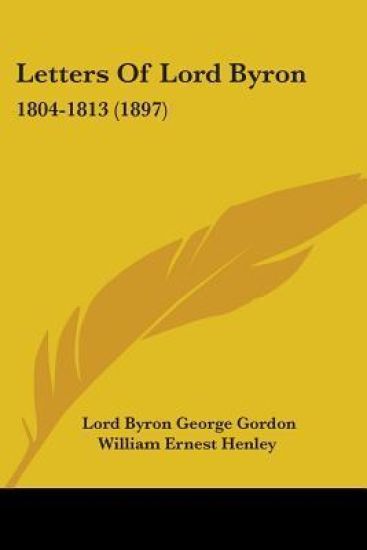
Letters Of Lord Byron
George Gordon Byron Byron; William Ernest (EDT) Henley
Kessinger Pub
2007
pokkari

Letters To Lord Byron On A Question Of Poetical Criticism
William Lisle Bowles
Kessinger Pub
2008
pokkari

Selected Poems Of Lord Byron
George Gordon Byron Byron; Matthew (EDT) Arnold; Nathan Haskell (CON) Dole
Kessinger Pub
2008
pokkari
Historic Union Cemetery: Byron-Brentwood_Knightsen Cemetery District
Union Cemetery Distict
Byron Hot Springs
2020
nidottu
Selections from Byron, Childe Harold, Canto IV, the Prisoner of Chillon, Mazeppa, and Other Poems
Samuel Marion Tucker
Trieste Publishing
2018
nidottu
The Works of the Right Honourable Lord Byron. in Six Volumes. Vol. VI
George Gordon N Byron
Trieste Publishing
2018
nidottu
The Works of the Right Honourable Lord Byron. in Four Volumes. Vol. IV. Ode to Napoleon Buonaparte-Poems-Hebrew Melodies
George Gordon Byron
Trieste Publishing
2018
nidottu

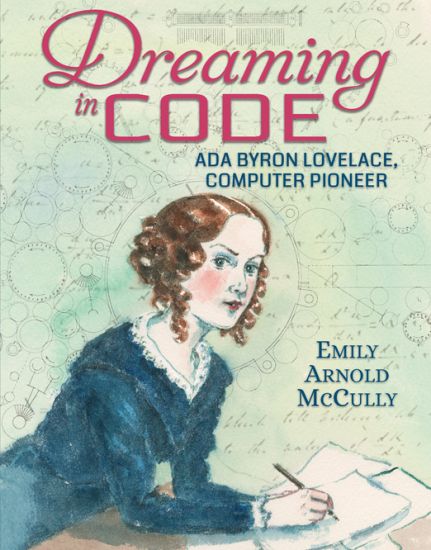
Dreaming in Code: Ada Byron Lovelace, Computer Pioneer
Emily Arnold McCully
Candlewick Press,U.S.
2019
sidottu
This illuminating biography reveals how the daughter of Lord Byron, Britain's most infamous Romantic poet, became the world's first computer programmer. Even by 1800s standards, Ada Byron Lovelace had an unusual upbringing. Her strict mother worked hard at cultivating her own role as the long-suffering ex-wife of bad-boy poet Lord Byron while raising Ada in isolation. Tutored by the brightest minds, Ada developed a hunger for mental puzzles, mathematical conundrums, and scientific discovery that kept pace with the breathtaking advances of the industrial and social revolutions taking place in Europe. At seventeen, Ada met eccentric inventor Charles Babbage, a kindred spirit. Their ensuing collaborations resulted in ideas and concepts that presaged computer programming by almost two hundred years, and Ada Lovelace is now recognized as a pioneer and prophet of the information age. Award-winning author Emily Arnold McCully opens the window on a peculiar and singular intellect, shaped -- and hampered -- by history, social norms, and family dysfunction. The result is a portrait that is at once remarkable and fascinating, tragic and triumphant.

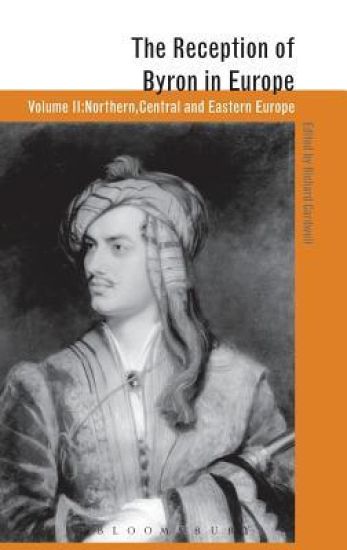
The Reception of Byron in Europe
Thoemmes Continuum
2005
sidottu
Richard Cardwell was given the Elma Dangerfield Award of the International Byron Society for the best book on Byron in 2005-06Byron, arguably, was and remains the most famous and infamous English poet in the modern period in Continental Europe. From Portugal in the West to Russia in the East, from Scandinavia in the North to Spain in the South he inspired and provoked, was adored and reviled, inspired notions of freedom in subject lands and, with it, the growth of national idealisms which, soon, would re-draw the map of Europe. At the same time the Byronic persona, incarnate in "Childe Harold", "Manfred", "Lara" and others, was received with enthusiasm and fear as experience demonstrated that Byron's Romantic outlook was two-edged, thrilling and appalling in the same moment. All the great writers—Goethe, Mickiewicz, Lermontov, Almeida Garret, Espronceda, Lamartine, among many others—strove to outdo, imitate, revise, and integrate the sublime Lord into their own cultures, to create new national voices, and to dissent from the old order. The volume explores Byron's European reception in its many guises, bringing new evidence, challenging old assumptions, and offering fresh perspectives on the protean impact of Lord Byron on the Continent. This book consistes of two volumes.Series Editor: Dr Elinor Shaffer FBA, Institute of Germanic & Romance Studies, School of Advanced Study, University of London Contributors Richard A. Cardwell, University of Nottingham, UK Joanne Wilkes, University of Auckland, NZ Peter Cochran, Cambridge, UK Ernest Giddey, University of Lausanne, Switzerland Edoardo Zuccato, IULM University, Milan Giovanni Iamartino, University of Milan, Italy Derek Flitter, University of Birmingham, UK Maria Leonor Machado de Sousa, University of Lisbon, Portugal Mihaela Anghelescu Irimia, University of Bucharest, Romania Frank Erik Pointner, University of Duisburg-Essen, Germany Achim Geisenhanslüke, University of Duisburg-Essen, Germany Theo D'haen, Leiden University, The Netherlands Martin Procházka, Charles University, Prague, Czech Republic Miroslawa Modrzewska, University of Gdansk, Poland Orsolya Rakai, Budapest, Hungary Nina Diakonova, St. Petersburg, Russia Vitana Kostadinova, Plovdiv University, Bulgaria Jørgen E. Nielsen, Copenhagen, Denmark Bjorn Tysdahl, University of Oslo, Norway Ingrid Elam, Sweden Anahit Bekaryan, Institute of Fine Arts of the National Academy of Sciences of the Republic of Armenia Innes Merabishvili, State University of Tbilisi, Georgia Litsa Trayiannoudi, Aristotle University of Thessaloniki, Greece Massimiliano Demata, Mansfield College, Oxford, UK
Approaches to Teaching Byron's Poetry
Modern Language Association of America
1991
sidottu
Now at seventy-three volumes, this popular MLA series (ISSN 1059-1133) addresses a broad range of literary texts. Each volume surveys teaching aids and critical material and brings together essays that apply a variety of perspectives to teaching the text. Upper-level undergraduate and graduate students, student teachers, education specialists, and teachers in all humanities disciplines will find these volumes particularly helpful.
Approaches to Teaching Byron's Poetry
Modern Language Association of America
1991
nidottu