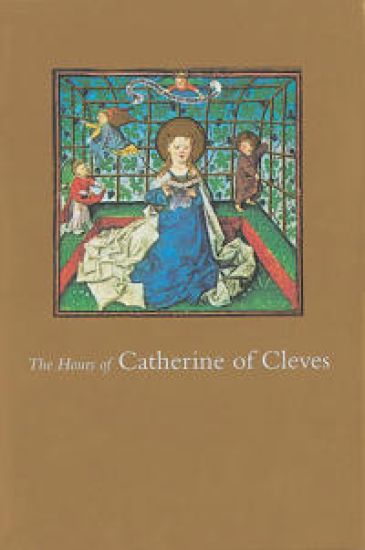
When the magnificent volume first appeared in 1966, it was celebrated for its extraordinary beauty. Now, more than thirty years since its first publication, it is made available once again. Illustrating one of the great art treasures of the world, The Hours of Catherine of Cleves is a fiteenth century illuminated manuscript containing a series of some of the most beautiful illustrations of the bible ever made. Many of the great scenes form the Old Testament and many more from the New Testament are included, besides the Stations of the Cross and portraits of the saints. The work of an unidentified Dutch master painter, the manuscript was made for Catherine of Cleves on the occasion of her marriage to the Duke of Guelders. All the 157 surviving miniatures are reproduced to actual size and in exquisite colour with gold, together with three samples of pages containing the Latin prayers. Page after page reveals the elaborate program and rich illumination of the original. The progression from beginning to end shows an artist increasing in skill, relying in his earlier work on tradition and later emerging as an independent artist of bold, clear colours, dynamic brushwork and lively imagination. He stands as one of the supreme painters of fifteenth century Northern Europe. Each page is accompanied by a descriptive and explanatory commentary by John Plummer. His introduction discusses the development of the Book of Hours as a liturgical form in general, and the history of the Cleves Hours specifically, and describes the place it holds in the history of Northern Painting.
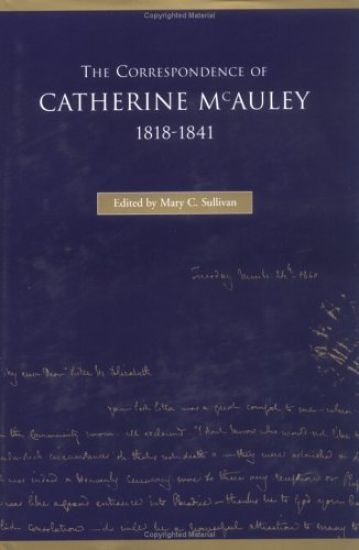
Catherine McAuley (1778-1841) founded the Sisters of Mercy in Dublin in 1831. Her letters are essential primary sources for readers interested in the life and works of this remarkable Irish churchwoman and in women's history and Irish church history more broadly. Whether McAuley is writing to family members, bishops, her solicitor, priests, lay coworkers, or Sisters of Mercy in Ireland and England, her letters reveal striking details about the church and society of her day as well as about her own spiritual convictions and unstinting personal service to poor, sick, homeless, or uneducated adults and children.The Correspondence of Catherine McAuley, 1818-1841, is a new, fully documented edition of more than 320 surviving letters written by, to, or about McAuley during her lifetime. Drawn from archives worldwide and arranged chronologically, the letters are carefully transcribed and generously annotated, with brief narratives introducing each group. In her letters as well as in those of the other correspondents, one sees a delightfully human, affectionate woman; a compassionate, persistent servant of the poor and neglected; an astute businesswoman; and an unpretentious, humorous friend.This edition of McAuley's correspondence is readily accessible to general readers and demonstrates not only her important role in the founding and amazing spread of the Mercy congregation in her lifetime (now numbering more than 10,000 members globally), but also her personal contributions to the pastoral development of the church in Ireland and England. Scholars and other readers will gain fresh insights into many prominent ecclesial leaders in the years 1828-1841, including Daniel Murray, archbishop of Dublin, and Thomas Griffiths, vicar apostolic of the London District. They will also find in these engaging letters one woman's grass-roots experience of certain social, economic, and ecclesiastical arrangements of her time and place.ABOUT THE EDITOR:Mary C. Sullivan, R.S.M., is Professor Emeritus of Language and Literature, and Dean Emeritus of the College of Liberal Arts, at the Rochester Institute of Technology. She is the author of numerous works, including Catherine McAuley and the Tradition of Mercy.PRAISE FOR THE BOOK: ""All those letters whose whereabouts are known have recently been tracked down, examined, verified and scrupulously edited. The Correspondence of Catherine McAuley, 1818-1841 is a work of impeccable and exhaustive scholarship. . . . This book is a very model of what such collections should be, and it could hardly have had a better editor than Mary C. Sullivan, herself a Sister of Mercy since 1950 and a distinguished academic for decades. . . . This is not the first collection of Mother McAuley's letters, but it is surely the most complete and meticulously edited.""--John W. Donohue, America""This monograph is a magnum opus. Edited by an indefatigable scholar, it is the most complete, accurate compendium of the correspondence of Catherine McAuley. . . . This expanded treasure is, however, dwarfed by another uniquely Sullivan contribution. Not only does each of the more than three hundred entries reflect a precise rendition of documents, but Sullivan has also supplemented each with meticulously researched clarifications of the texts. This bonus provides new historical information and identifies linguistic nuances that help the reader comprehend the content and the context of Catherine's life and accomplishments. . . . For its scholarly approach as well as for what it reveals about the impact of one great Irish woman, and religious women in general, Sullivan's latest monograph deserves our careful study.""--Dolores Liptak, RSM, American Catholic Studies""Mary C. Sullivan RSM has carefully edited and thoroughly annotated these letters. . . . Others besides Mercy sisters can be
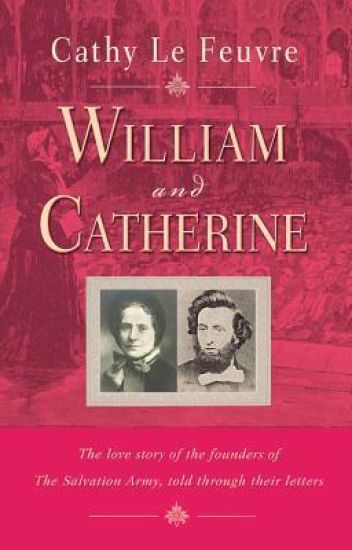
When William Booth met Catherine Mumford in 1852, it was the start of a story that would change the lives of millions of people across the world. Out of their love sprang a new and radical international Christian movement ' The Salvation Army. Throughout their life William and Catherine, when apart, exchanged letters and notes expressing not only their deep love but also a lasting friendship and mutual respect which would survive the challenges of separation, ill health, the struggle of raising a large family, opposition, disappointment and professional uncertainty. The letters, spanning nearly 40 years, reveal both the everyday minutiae of life in Victorian times, and the challenges of being revolutionary Christian thinkers in the second half of the 19th century.
This work has been selected by scholars as being culturally important and is part of the knowledge base of civilization as we know it.This work is in the public domain in the United States of America, and possibly other nations. Within the United States, you may freely copy and distribute this work, as no entity (individual or corporate) has a copyright on the body of the work.Scholars believe, and we concur, that this work is important enough to be preserved, reproduced, and made generally available to the public. To ensure a quality reading experience, this work has been proofread and republished using a format that seamlessly blends the original graphical elements with text in an easy-to-read typeface.We appreciate your support of the preservation process, and thank you for being an important part of keeping this knowledge alive and relevant.
This work has been selected by scholars as being culturally important and is part of the knowledge base of civilization as we know it.This work is in the public domain in the United States of America, and possibly other nations. Within the United States, you may freely copy and distribute this work, as no entity (individual or corporate) has a copyright on the body of the work.Scholars believe, and we concur, that this work is important enough to be preserved, reproduced, and made generally available to the public. To ensure a quality reading experience, this work has been proofread and republished using a format that seamlessly blends the original graphical elements with text in an easy-to-read typeface.We appreciate your support of the preservation process, and thank you for being an important part of keeping this knowledge alive and relevant.
This work has been selected by scholars as being culturally important and is part of the knowledge base of civilization as we know it.This work is in the public domain in the United States of America, and possibly other nations. Within the United States, you may freely copy and distribute this work, as no entity (individual or corporate) has a copyright on the body of the work.Scholars believe, and we concur, that this work is important enough to be preserved, reproduced, and made generally available to the public. To ensure a quality reading experience, this work has been proofread and republished using a format that seamlessly blends the original graphical elements with text in an easy-to-read typeface.We appreciate your support of the preservation process, and thank you for being an important part of keeping this knowledge alive and relevant.