

Kirjahaku
Etsi kirjoja tekijän nimen, kirjan nimen tai ISBN:n perusteella.
1000 tulosta hakusanalla Cecelia Ahern






""La soga del tiempo"" con un oficio netamente costumbrista nos lleva a la Argentina del ayer, cuando se privilegiaba la vida familiar, los vecinos y la radio. T'as revoloteando por las noches de insomnio, queriendo contar sus historias. La abuela perversa aterrorizando a sus nietos. La mudanza de un barrio que va cambiando. La gringa que ni siquiera puede mantener su esperanza. Los viejos reuniZndose en el parque, sosteniendo sus vidas. T'a Lisa con su especial historia y t'a Maruca, con un car+cter dif'cil y revolucionario. La justicia caminando por la cornisa de la injusticia. Y el tango dando vida a los momentos tristes de un hombre que espera. Los recuerdos de la autora y su especial forma de contarlos, har+n que los lectores conozcan un poco m+s de aquellos a-os. LLeva en la mochila el amor a la familia, al barrio, y una soga bien armada, con el tiempo justo para sostener sus sue-os.
Why do affluent consumers almost automatically acquire new versions or variations of products already at their disposal? Even though most of us know that this novelty consumption poses a serious threat to an environmentally and socially sustainable future, we continue to do it. Why? Research shows that consumption of new automobiles, clothing, furniture, electronics, home furnishing, household apparel, mobile phones, etc., is motivated by a desire to feel more secure, less anxious and better mood-wise. Affluent consumers seem to engage in novelty consumption not to feel better but rather to avoid feeling bad. Stress, Affluence and Sustainable Consumption discusses sustainable consumption from a stress perspective, adding an embodied understanding to the sustainability-related consumption challenges that we face today.A stress perspective on affluent consumption differs from current understandings on consumption, as it fully acknowledges the consumer as having a body (including a mind) that reacts to the numerous product offerings and retail spaces, both physical and online. A stress perspective can explain how our bodies try to cope with an overload of perceptual input provided by advertising messages, product launches and even store structures. This book will be of great interest to students and researchers of consumer psychology, sustainable consumption studies, sustainable marketing and markets as well as sustainable development more generally.
In contemporary global capitalism, the most powerful corporations are innovation or intellectual monopolies. The book’s unique perspective focuses on how private ownership and control of knowledge and data have become a major source of rent and power. The author explains how at the one pole, these corporations concentrate income, property and power in the United States, China, and in a handful of intellectual monopolies, particularly from digital and pharmaceutical industries, while at the other pole developing countries are left further behind.The book includes detailed empirical mappings of how intellectual monopolies develop and transform knowledge from universities and open-source collaborations into intangible assets. The result is a strategy that combines undermining the commons through privatization with harvesting from the same commons. The book ends with provoking reflections to tilt the scale against intellectual monopoly capitalism and arguing that desired changes require democratic mobilization of workers and citizens at large.This book represents one of the first attempts to capture the contours of an emerging new era where old perspectives lead us astray, and the old policy toolbox is hopelessly inadequate. This is true for the idea that the best, or only, way to promote innovation is to transform knowledge into private property. It is also true for anti-trust policies focusing exclusively on consumer prices. The formation of global infrastructures that lead to natural monopolies calls for public rather than private ownership.Scholars and professionals from the social sciences and humanities (in particular economics, sociology, political science, geography, educational science and science and technology studies) will enjoy a clear and all-embracing depiction of innovation dynamics in contemporary capitalism, with a particular focus on asymmetries between actors, regions and topics. In fact, its topical issue broadens the book’s scope to those curious about how innovation networks shape our world.Capitalism, Power and Innovation has won the Joan Robinson Prize, which is awarded biennially for the best monograph on a theme broadly in accord with the European Association for Evolutionary Political Economy (EAEPE) theoretical perspectives.
By taking an ethnographic approach to medical travel, this important book uses critical perspectives to understand inequalities in healthcare access and delivery, including gender, class and ethnicity, and explore how these are negotiated. In this key text Vindrola- Padros presents a comprehensive overview of the work carried out on this topic to date, highlights the gaps that remain and suggests strategies for enriching medical travel research in the future.Drawing from the author’s research on internal medical travel to access pediatric oncology treatment in Buenos Aires, Argentina and other research from across the globe, this book presents four dimensions of medical travel that can be explored through a critical (im)mobilities lens: infrastructures, differential mobility empowerments, culture and affective dimensions of care and travel. Vindrola-Padros encourages the reader to critically explore processes of medical travel by considering the structures that shape travel, individual capacities for travel, the role emotions play in decisions and experiences of movement and service delivery and the ways in which culture(s) influence both travel and care.This book will be important reading for scholars across medical sociology, anthropology and critical health studies.
This book chronicles the child performer as part of the Chicana/o/Mexican-American theatre experience. Borderlands Children’s Theatre explores the phenomenon of the Chicana/o/Mexican-American child performer at the center of Chicana/o and Latina/o theatre culture. Drawing from historical and contemporary theatrical traditions to finally the emergence of Latina/o Youth Theatre and Latina/o Theatre for Young Audiences, it raises crucial questions about the role of the child in these performative contexts and about how childhood and adolescence was experienced and understood. Analyzing contemporary plays for Chicana/o/Mexican-American child performer, it introduces theorizations of "performing mestizaje" and "border crossing" borderlands performance, gender, and ethnic identity and investigates theatre as a site in which children and youth have the opportunity to articulate their emerging selfhoods. This book adds to the national and international dialogue in theatre and gives voice to Chicana/o/Mexican-American children and youth and will be of great interest to students and scholars of Theatre studies and Latina/o studies.
This book chronicles the child performer as part of the Chicana/o/Mexican-American theatre experience. Borderlands Children’s Theatre explores the phenomenon of the Chicana/o/Mexican-American child performer at the center of Chicana/o and Latina/o theatre culture. Drawing from historical and contemporary theatrical traditions to finally the emergence of Latina/o Youth Theatre and Latina/o Theatre for Young Audiences, it raises crucial questions about the role of the child in these performative contexts and about how childhood and adolescence was experienced and understood. Analyzing contemporary plays for Chicana/o/Mexican-American child performer, it introduces theorizations of "performing mestizaje" and "border crossing" borderlands performance, gender, and ethnic identity and investigates theatre as a site in which children and youth have the opportunity to articulate their emerging selfhoods. This book adds to the national and international dialogue in theatre and gives voice to Chicana/o/Mexican-American children and youth and will be of great interest to students and scholars of Theatre studies and Latina/o studies.
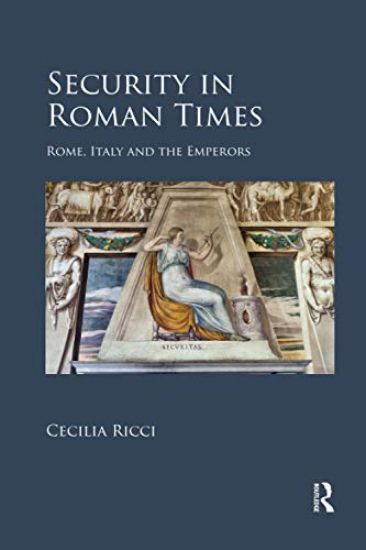
Using literary, epigraphic, numismatic and iconographic sources this book investigates the safety devices that were in place for the protection of the emperor and the city of Rome in the imperial age. In the aftermath of the civil wars Augustus continued to provide for his physical safety in the same way as in the old Republic while, at the same time, overturning the taboo of armed men in the city. During the Augustan age, the division of the city into 14 regions and 265 vici was designed to establish control over the urban space. Augustus’ successors consolidated his policy but the specific roles of the various military or paramilitary forces remain a matter for debate. Drawing on the testimony of ancient authors such as Tacitus and Suetonius and on material evidence, the volume examines both the circumstances in which these forces intervened and the strategies that they adopted. It also examines the pre-Augustan, Augustan and post-Augustan sense of ‘securitas’, both as a philosophical and a political concept. The final section expands the focus from the city of Rome to the Italian peninsula where the security of the emperor as he travelled to his country residences required advance planning and implementation.
In contemporary global capitalism, the most powerful corporations are innovation or intellectual monopolies. The book’s unique perspective focuses on how private ownership and control of knowledge and data have become a major source of rent and power. The author explains how at the one pole, these corporations concentrate income, property and power in the United States, China, and in a handful of intellectual monopolies, particularly from digital and pharmaceutical industries, while at the other pole developing countries are left further behind.The book includes detailed empirical mappings of how intellectual monopolies develop and transform knowledge from universities and open-source collaborations into intangible assets. The result is a strategy that combines undermining the commons through privatization with harvesting from the same commons. The book ends with provoking reflections to tilt the scale against intellectual monopoly capitalism and arguing that desired changes require democratic mobilization of workers and citizens at large.This book represents one of the first attempts to capture the contours of an emerging new era where old perspectives lead us astray, and the old policy toolbox is hopelessly inadequate. This is true for the idea that the best, or only, way to promote innovation is to transform knowledge into private property. It is also true for anti-trust policies focusing exclusively on consumer prices. The formation of global infrastructures that lead to natural monopolies calls for public rather than private ownership.Scholars and professionals from the social sciences and humanities (in particular economics, sociology, political science, geography, educational science and science and technology studies) will enjoy a clear and all-embracing depiction of innovation dynamics in contemporary capitalism, with a particular focus on asymmetries between actors, regions and topics. In fact, its topical issue broadens the book’s scope to those curious about how innovation networks shape our world.Capitalism, Power and Innovation has won the Joan Robinson Prize, which is awarded biennially for the best monograph on a theme broadly in accord with the European Association for Evolutionary Political Economy (EAEPE) theoretical perspectives.
Chan’s book explores the challenges in assessing experiential learning, deepens our understanding, and inspires readers to think critically about the purpose of assessment in experiential learning.Experiential learning has been studied and proven to be effective for student learning, particularly for the development of holistic competencies (i.e. 21st century skills, soft skills, transferable skills) considered essential for individuals to succeed in the increasingly global and technology-infused 21st century society. Universities around the world are now actively organising experiential learning activities or programmes for students to gain enriching and diversified learning experiences, however the assessment of these programmes tends to be limited, unclear, and contested.Assessment plays a central role in education policies and students’ approach to learning. But do educators know how to assess less traditional learning such as service learning, entrepreneurship, cross-discipline or cross-cultural projects, internships and student exchanges? While the current assessment landscape is replete with assessments that measure knowledge of core content areas such as mathematics, law, languages, science and social studies, there is a lack of assessments and research that focus on holistic competencies. How do we assess students’ ability to think critically, problem solve, adapt, self-manage and collaborate?Central to the discussion in this book, is the reason students are assessed and how they should be assessed to bring out their best learning outcomes. Offering a collection of best assessment practice employed by teachers around the world, this volume brings together both theoretical and empirical research that underpins assessment; and perceptions of different stakeholders – understanding of assessment in experiential learning from students, teachers, and policymakers. The idea of assessment literacy also plays an important role in experiential learning, for example, reflection is often used in assessing students in experiential learning but how reflection literate are educators, are they aware of the ethical dilemmas that arise in assessing students? These questions are discussed in detail. The volume also introduces a quality assurance programme to recognise student development within experiential learning programmes.The book will be particularly informative to academic developers, teachers, students and community partners who struggle with the development and assessment for experiential learning, those who plan to apply for funding in experiential learning, and policymakers and senior managements seeking evidence and advice on fine-tuning curricular, assessment designs and quality assurance.The Open Access version of this book, available at www.taylorfrancis.com, has been made available under a Creative Commons Attribution-Non Commercial-No Derivatives 4.0 license.

In her study of music-making in the Edwardian novel, Cecilia Björkén-Nyberg argues that the invention and development of the player piano had a significant effect on the perception, performance and appreciation of music during the period. In contrast to existing devices for producing music mechanically such as the phonograph and gramophone, the player piano granted its operator freedom of individual expression by permitting the performer to modify the tempo. Because the traditional piano was the undisputed altar of domestic and highly gendered music-making, Björkén-Nyberg suggests, the potential for intervention by the mechanical piano's operator had a subversive effect on traditional notions about the status of the musical work itself and about the people who were variously defined by their relationship to it. She examines works by Dorothy Richardson, E.M. Forster, Henry Handel Richardson, Max Beerbohm and Compton Mackenzie, among others, contending that Edwardian fiction with music as a subject undermined the prevalent antithesis, expressed in contemporary music literature, between a nineteenth-century conception of music as a means of transcendence and the increasing mechanisation of music as represented by the player piano. Her timely survey of the player piano in the context of Edwardian commercial and technical discourse draws on a rich array of archival materials to shed new light on the historically conditioned activity of music-making in early twentieth-century fiction.
Designed for psychiatric clinicians of every profession (including psychologists, psychiatrists, social workers, and nurses) as well as for psychiatric educators and their trainees, Money and Outpatient Psychiatry moves readers toward new, effective, and money-wise practices. The book begins by offering a hands-on approach to assessing money management issues in a professional practice. Mikalac shows readers how to do an overall assessment of their financial situation (including how to estimate how much money must be earned to cover expenses) and how to plan for the inevitable financial ups and downs of private practice. The remainder of the first section deals with core issues such as legal and ethical issues (patient contract; informed consent; ethical principles for billing), accounting (understanding cash flow and keeping proper records), and taxes (including how to select the best form of business proprietorship). In the second section of the book Mikalac covers larger matters that affect the financial health of a psychiatric practice. Insurance, managed care, the effects of drug companies, the role of; incentives, kickbacks, and other potential conflicts of interest—all of these have an impact of the finances and stability of a practice. These issues are also often of paramount importance to patients, but less often thought about by the practitioner. The final part of the book discusses managing money with patients. Mental health professionals need to know how to discuss money and billing with patients, how to negotiate patient fee reductions (and handle increases), how to manage non-payment (how to avoid this happening as well as what to do when it does), and issues of money transference. Mikalac offers guidelines for how to be money-smart when it comes to working with patients. Money and Outpatient Psychiatry is a resource for psychiatric clinicians of every profession. Whether you are new to private practice or have been working for years without a strong financial plan, this book contains all the information you need to make money matters easier and money management more efficient.
A uniquely clever and lightheartedly sinister giftbook, illustrating the infamous deaths of an eclectic selection of historical figures.
Here, the authors explore practical ways of implementing APL for the benefit of individuals, employers and the community as a whole, showing how it can make a real contribution to equality of opportunity. Chapters look at the particular needs of various sectors of the community, and how APL can be used to meet those needs. For ethnic communities, those whose first language is not English, and those who arrive in Britain with qualifications from overseas, the APL process can be a vital stage in the search for education, employment and equality of experience. People with disabilities find that APL can help break through barriers and offer new breadth of opportunity, whilst for women it can lead to greater recognition and improved career progression. Through the use of case studies and practical examples the authors offer detailed guidance on methods of implementation, staff development and continuing support to help tutors, managers and senior staff make effective use of APL.
Julia Kristeva is one of the most influential French thinkers of the twentieth century and is best known for her work in linguistics. Even though her work has been very influential, the political implications of her writings have so far been neglected. Kristeva and the Political is the first book to explore the relation of Kristeva's work to the political and casts new light on her work, connecting her to recent developments in literary theory, political theory, and cultural studies. In particular it shows how Kristeva's account of the unconscious and psychoanalysis generally, widens the notion of the political.Each chapter introduces a fundamental theme in Kristeva's work, highlighting a specific period of development in her thought and drawing on texts from the 1960s through to the 1990s. Themes addressed include Kristeva's theory of discourse, the theory of the subject, the notion of alterity, feminism and marginality and her theory known as the 'politics of meaning'. Kristeva and the Political also shows how Kristeva's notions of the political draw on a rich array of thinkers and writers, from Freud, Melanie Klein and Lacan, to Proust and Marguerite Duras.