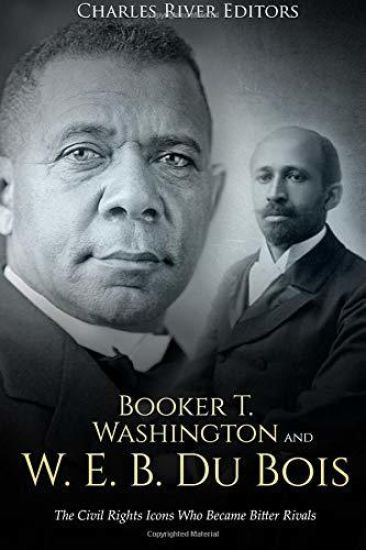
*Includes pictures *Includes online resources and a bibliography for further reading Despite a Union victory and Lincoln's Emancipation Proclamation, unthinkable in the previous century, a new form of suppression and violence descended on the African-American population. "Reconstruction" is employed as a generic term for the period that followed the American Civil War. Suggesting a successful rejuvenation of a war-ravaged South, it lamentably gave way to a resurrection of the same white ruling class and slave-owner mentality, protecting the status quo in the legislatures and courts. With the distortion of Reconstruction's intent came a body of racial policy and a tacitly understood social code that barred the pre-war slave class from personal freedom and opportunity, at the risk of great personal violence for anyone who objected. The arduous task of overthrowing Jim Crow codes and legislation marked one of the first strides toward the modern struggle for ethnic equality in American society and required nearly a century of struggle. That effort spawned a multitude of heroic African-American activists, but it is remembered in large part for the work of two iconic African-American men of stature. Much like their later counterparts, Reverend Martin Luther King, Jr. and Malcolm X, the debate between gradual integration through temporary accommodation and overtly insistent activism was led by Booker T. Washington and W. E. B. Du Bois. From 1890-1915, the most influential black man in America was Booker T. Washington, who less than 35 years earlier had been born into slavery. The young boy worked laboriously until emancipation before going on to seek an education, and by the time he was 40, he was consolidating a network of supporters that came to be known as the "Tuskegee Machine," helping coordinate action with the support of black businesses, religious communities, and others. Using his position of power, Washington spoke out against Jim Crow laws and Southern disfranchisement of blacks. Despite being so recognized, and perhaps in part because of it, by the early 20th century, Washington's tactics were questioned by other black leaders, notably W. E. B. Du Bois, who wanted to protest more vehemently in an effort to secure civil rights. Washington, 12 years Du Bois' senior, entered the field of education and founded the famous Tuskegee Institute based on his vision of what a population emerging from generations of slavery required in order to successfully integrate into modern life. His position was simply one of incremental entry by the provision of industrial education and political accommodation. He urged blacks to accept discrimination in the short term and concentrate on elevating themselves, thereby proving themselves through hard work and material prosperity. Du Bois would have none of that, believing it amounted to an approval of the Jim Crow regime of the South and a passive acceptance of racism. In opposition, he and other black leaders organized the Niagara Movement, citing opposition to Washington's moral leadership of the movement and marking their determination to fight for full civil equality for black Americans. The movement did not gain much traction, but it was in direct line of ascension to the much more influential National Association for the Advancement of Colored People (NAACP). Although Du Bois' name is still (and somewhat inexplicably) less well-known than that of Washington, his prolific writings serve as a bedrock to the modern social engines at work in the pursuit of racial equality in America. In his life and experience of nearly a century, he spanned the administrations of Andrew Johnson and Lyndon Baines Johnson, dying only one day before King's "I Have a Dream" speech.
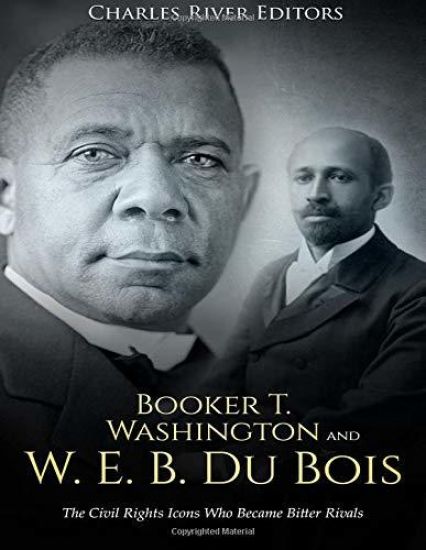
*Includes pictures *Includes online resources and a bibliography for further reading Despite a Union victory and Lincoln's Emancipation Proclamation, unthinkable in the previous century, a new form of suppression and violence descended on the African-American population. "Reconstruction" is employed as a generic term for the period that followed the American Civil War. Suggesting a successful rejuvenation of a war-ravaged South, it lamentably gave way to a resurrection of the same white ruling class and slave-owner mentality, protecting the status quo in the legislatures and courts. With the distortion of Reconstruction's intent came a body of racial policy and a tacitly understood social code that barred the pre-war slave class from personal freedom and opportunity, at the risk of great personal violence for anyone who objected. The arduous task of overthrowing Jim Crow codes and legislation marked one of the first strides toward the modern struggle for ethnic equality in American society and required nearly a century of struggle. That effort spawned a multitude of heroic African-American activists, but it is remembered in large part for the work of two iconic African-American men of stature. Much like their later counterparts, Reverend Martin Luther King, Jr. and Malcolm X, the debate between gradual integration through temporary accommodation and overtly insistent activism was led by Booker T. Washington and W. E. B. Du Bois. From 1890-1915, the most influential black man in America was Booker T. Washington, who less than 35 years earlier had been born into slavery. The young boy worked laboriously until emancipation before going on to seek an education, and by the time he was 40, he was consolidating a network of supporters that came to be known as the "Tuskegee Machine," helping coordinate action with the support of black businesses, religious communities, and others. Using his position of power, Washington spoke out against Jim Crow laws and Southern disfranchisement of blacks. Despite being so recognized, and perhaps in part because of it, by the early 20th century, Washington's tactics were questioned by other black leaders, notably W. E. B. Du Bois, who wanted to protest more vehemently in an effort to secure civil rights. Washington, 12 years Du Bois' senior, entered the field of education and founded the famous Tuskegee Institute based on his vision of what a population emerging from generations of slavery required in order to successfully integrate into modern life. His position was simply one of incremental entry by the provision of industrial education and political accommodation. He urged blacks to accept discrimination in the short term and concentrate on elevating themselves, thereby proving themselves through hard work and material prosperity. Du Bois would have none of that, believing it amounted to an approval of the Jim Crow regime of the South and a passive acceptance of racism. In opposition, he and other black leaders organized the Niagara Movement, citing opposition to Washington's moral leadership of the movement and marking their determination to fight for full civil equality for black Americans. The movement did not gain much traction, but it was in direct line of ascension to the much more influential National Association for the Advancement of Colored People (NAACP). Although Du Bois' name is still (and somewhat inexplicably) less well-known than that of Washington, his prolific writings serve as a bedrock to the modern social engines at work in the pursuit of racial equality in America. In his life and experience of nearly a century, he spanned the administrations of Andrew Johnson and Lyndon Baines Johnson, dying only one day before King's "I Have a Dream" speech.
"Now mark this, if the Expeditionary Force, and I ask for no more than two hundred men, does not come in ten days, the town may fall; and I have done my best for the honour of our country. Good bye." These are the poignant last words written by Major-General Charles George Gordon in the final entry of his journal kept at the city of Khartoum in the Sudan in January 1885, just prior to the fall of that city. Gordon and at least 10,000 residents of the city were slaughtered in the butchery which followed.Having first been appointed Governor-General of the Sudan in 1873 by the Egyptian government-with the approval of the British government-Gordon had worked hard to bring the country to order, suppressing the Islamic slave trade and uplifting the population. He was recalled to that office in 1883 following the outbreak of the 1881 Islamist uprising under a self-proclaimed "Mahdi" of Islam (the "Guided One") in the Sudan.Sent to Khartoum to organise the evacuation of the city, Gordon succeeded in arranging the safe departure of over 2,500 civilians, but stayed on with a small group of soldiers and others to defend the city against the Mahdist forces. The resultant siege lasted more than a year, during which time Gordon kept a what became a six volume journal, smuggled out in parts back to the British authorities. This journal recounted the day-to-day life, adventures, battles, tactics, survival mechanisms of the besieged city-such as the building of "homemade" landmines out of water cans filled with dynamite, and wooden dummy sentries in uniform on the city walls-among many other innovations.The journals-which read like a thriller-were also full of bitter recrimination towards the British government, which Gordon blamed for refusing to intervene, despite officially encouraging him to go in the first place.The year-long defence of the city gained Gordon wide admiration in Britain, and finally, public pressure forced the government to organise a relief column. This force however arrived two days too late: Khartoum had fallen, and Gordon had been killed and decapitated, and his head paraded around as trophy by the Mahdist leaders.This new edition of all six of Gordon's "Journals of Khartoum" is not a "facsimile reproduction," but has been entirely reset to modern standards. It contains all the author's original illustrations, digitally restored to the highest quality possible. This edition also has the original enlightening preliminary remarks by his brother, commissary-general Sir Henry Gordon, and the full set of appendices which contain supplementary letters, proclamations and other significant data.
*Includes pictures *Discusses the popular theories behind each mystery *Includes online resources and a bibliography for further reading It was the great mystery of its time and still reads like an episode of "Law and Order" today. In December 1910, a wealthy young woman, thought to be sheltered and above reproach, goes missing shortly after being seen in broad daylight on Fifth Avenue in New York City. The police are called in and begin to question those closest to her, only to have her father, a wealthy manufacturer, insist it must be foul play and that his daughter was on good terms with her entire family. Likewise, he claims that though she was in her mid-20s and in the prime of life, she had no serious romantic attachments. The mother tearfully backs these claims up. While the story was certainly fit for a gripping thriller, it was all too true for Dorothy Arnold and her family. Arnold was a young, well-known socialite whose disappearance was front page news on the East Coast in the early 20th century. By the mid-1930s, Amelia Earhart was one of the most famous women in the world. The American pilot had set a number of altitude and distance records, but she wanted to attempt a circumnavigation of the world. After an ill-fated first attempt, Earhart and Fred Noonan set off on another attempt, creating one of the 20th century's most enduring mysteries. Earhart and Noonan were to land on Howland Island, 1700 miles southwest of Hawaii, but radio transmissions ceased between the plane and authorities on the ground the morning of July 2, 1937. Earhart and Noonan had disappeared, never to be seen again, despite one of the nation's largest and costliest manhunts to date. The mysterious case of actress and dancer Jean Spangler remains one of the most enduring such riddles in the annals of Hollywood crime. The nature of the case itself still evokes a public fascination many decades after her disappearance. Spangler found herself in southern California as a beautiful actress and dancer trying to land movie roles, a common story among the many young women gravitating to American entertainment centers from more conservative towns and cities. As a high-profile celebrity event, Spangler's case does not match the sensationalism attributed to figures such as Amelia Earhart, who sought to circumnavigate the globe by air, the political importance of union boss Jimmy Hoffa, or the fate of Judge Crater, a likely victim of the New York underworld. However, the Spangler story differs in that it carries no dearth of rational possibilities or relevant clues with which to accommodate all of the leading theories. On November 24, 1971, there was little to suggest that the skies above the Pacific Northwest would produce one of the greatest mysteries in American history and a criminal investigation that is still ongoing over 40 years later. However, on the day before Thanksgiving, a man calling himself Dan Cooper boarded Northwest Orient Flight 305 from Portland to Seattle and sat in the rear of the cabin. The identity of the thief who ransomed hostages and then jumped out of a plane with the money that night remains unknown. In fact, his ultimate fate is a mystery, and over 40 years after he jumped out of that plane, the FBI doesn't know much more than it did in 1971. Jimmy Hoffa, once described by Bobby Kennedy as the second most powerful man in America, was a union boss who evoked both respect and fear, and he continues to be a legendary figure who often crops up in conversation and media over 40 years after his disappearance. While it was an open secret that Hoffa had shady connections, the success of his leadership allowed supporters to overlook them. To this day, authorities are still searching for him (or presumably his remains), having been overloaded with false and dead-end leads throughout the decades.
*Weaves the lives and presidencies of all 6 Democratic Presidents into one entertaining and educational narrative. *Includes dozens of pictures of the presidents and important people, places, and events in their lives. *Analyzes the legacies and accomplishments of each president. The Democrats who were elected president in the 20th century were responsible for a seemingly never ending list of accomplishments. Woodrow Wilson established the blueprint for the progressive presidents that would follow him, particularly Franklin Roosevelt and Lyndon Johnson, while guiding the nation through World War I. FDR expanded that vision with his New Deal, completely revolutionizing the social contract between Americans and their federal government. While combating the Great Depression and the Axis powers in World War II, FDR has widely been considered one of the greatest presidents in history. When Roosevelt died in April 1945, Vice President Truman, somewhat unprepared for the Presidency, now had to fill some of the biggest shoes in American history. The new president had to usher America through victory in Europe in his first month and decide to drop atomic bombs on Hiroshima and Nagasaki a few months later, but the end of World War II produced only the first of many consequential decisions Truman would face during his nearly 8 years in office. As president, Truman would lay the groundwork for the next 50 years of American foreign policy, as the architect of Cold War containment, the man who signed off on the Marshall Plan, and the commander-in-chief during much of the Korean War. In many ways, John Fitzgerald Kennedy and his young family were the perfect embodiment of the '60s. The decade began with a sense of idealism, personified by the attractive Kennedy, his beautiful and fashionable wife Jackie, and his young children. Months into his presidency, Kennedy exhorted the country to reach for the stars, calling upon the nation to send a man to the Moon and back by the end of the decade. In 1961, Kennedy made it seem like anything was possible, and Americans were eager to believe him. The Kennedy years were fondly and famously labeled "Camelot," by Jackie herself, suggesting an almost mythical quality about the young President and his family. While Kennedy represented lofty ideals, it was LBJ who got in the weeds and made things happen. . To the surprise of many, the Southern Democrat relied on his wealth of Senate experience and dogged determination to help push through an ambitious and progressive social agenda that formed the backbone of modern American society. Known as the Great Society, President Johnson's legislation included the landmark Civil Rights Act of 1964, as well as the establishment of Medicare, Medicaid, environmental protection, and the "War on Poverty." Everything from the National Endowment for the Arts to the Environmental Protection Agency has its roots in Johnson's presidency. The most popular Democrat alive today is "The Comeback Kid", Bill Clinton.Widely hailed as the greatest politician of his era, Clinton proved to be his own worst enemy, creating unnecessary scandals through his womanizing. Clinton was one of the first politicians to truly connect with young adults, yet in the process he provided ludicrous soundbytes like "I did not inhale." Long considered the Democratic Party's greatest spokesman and surrogate, Clinton's presidency was defined by centrist "triangulation". And though he is still publicly popular and considered a great president, Clinton became just the second president to be impeached in the House of Representatives. America's Greatest Democratic Presidents of the 20th Century looks at the lives and presidencies of these historic men and analyzes their legacies. Along with pictures and a Table of Contents, you will learn about them like you never have before.
*Weaves the lives of the 4 progressive presidents into one entertaining and educational narrative. *Includes pictures of the presidents and important people, places, and events in their lives. *Includes some of the presidents' most colorful quotes. *Includes a Bibliography for further reading. When President McKinley was assassinated in 1901, young Vice President Theodore Roosevelt was thrust into the presidency, one that would earn him a place on Mount Rushmore, Roosevelt's "Square Deal" domestic policies favored average citizens while busting trusts and monopolies. Roosevelt also promoted conservation as an environmental stance, while his "speak softly and carry a big stick" foreign policy is still an oft used phrase today. Roosevelt even earned a Nobel Prize during his presidency. By the time Roosevelt died in 1919, he was an American icon. As one of the most influential men of the 20th century, there is no shortage of adjectives to use when describing Woodrow Wilson's two terms as president of the United States. Wilson was a pioneer of the Progressive movement both before and during his presidency, becoming a populist champion a generation before Franklin Roosevelt's New Deal. He ran for reelection by touting his neutrality during World War I, only to lead his nation into the war and become the architect of a world body that would lead to greater inter-connection among nations. Today Wilson is best remembered for his Fourteen Points, one of the most forceful arguments for an idealistic foreign policy in American history, and his fight for the League of Nations, which set the model for today's United Nations. Franklin Delano Roosevelt might be America's greatest 20th century president, but there's no question that he was the most unique. A well-connected relative of Theodore Roosevelt, FDR was groomed for greatness until he was struck down by what was widely believed to be polio at the time. Nevertheless, he persevered, rising through New York politics to reach the White House just as the country faced its greatest challenge since the Civil War, beginning his presidency with one of the most iconic lines ever spoken during an inaugural address. For over a decade, President Roosevelt threw everything he had at the Great Depression, and then threw everything the country had at the Axis powers during World War II. Ultimately, he succumbed to illness in the middle of his fourth term, just before the Allies won the war. Kennedy has been nostalgically and fondly remembered for his youth, vigor and sense of unfinished potential, but it would be President Johnson who would bring much of the agenda to fruition. To the surprise of many, the Southern Democrat relied on his wealth of Senate experience and dogged determination to help push through an ambitious and progressive social agenda that formed the backbone of modern American society. Known as the Great Society, President Johnson's legislation included the landmark Civil Rights Act of 1964, as well as the establishment of Medicare, Medicaid, environmental protection, and the "War on Poverty." Everything from the National Endowment for the Arts to the Environmental Protection Agency has its roots in Johnson's presidency. Had Johnson's presidency included just his domestic agenda, he would have unquestionably been one of America's greatest presidents. Unfortunately, as he was engineering a new social contract at home, he was ramping up American military participation in a tiny country thousands of miles away in Southeast Asia. The Progressive Presidents chronicles the lives of each president and weaves their stories and accomplishments into one entertaining narrative, examining their records and analyzing their legacies. Along with pictures of important people, places, and events, you will learn about America's most important progressive presidents like you never have before.
Notice sur la vie, les travaux et les ouvrages de mon pere, J.-B. Schwilgue, ... createur de l'horloge astronomique de la cathedrale de Strasbourg... (2e edition) / par Charles Schwilgue http: //gallica.bnf.fr/ark: /12148/bpt6k56126