Kirjojen hintavertailu. Mukana 11 627 512 kirjaa ja 12 kauppaa.

Kirjahaku

Etsi kirjoja tekijän nimen, kirjan nimen tai ISBN:n perusteella.

1000 tulosta hakusanalla Charles David Musgrove

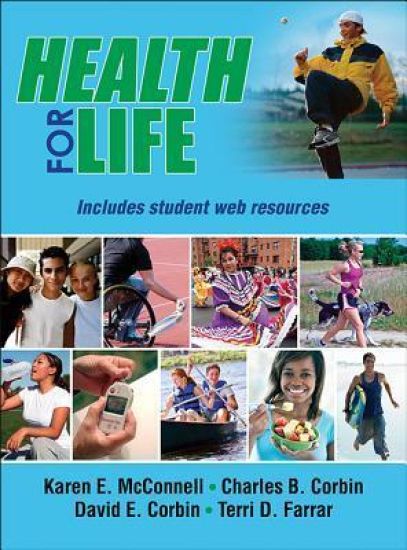
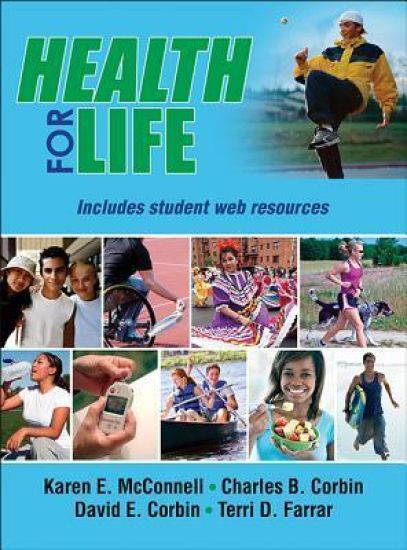
Health for Life With Web Resources-Cloth

Health for Life With Web Resources-Cloth

Karen E. McConnell; Charles B. Corbin; David E. Corbin; Terri D. Farrar

Human Kinetics
2014
sidottu
Health for Life provides the keys necessary for adopting healthy habits and committing to healthy living in high school and throughout the life span. The text covers all of the components of personal well-being, including physical, mental, emotional, social, and spiritual health. It provides students the knowledge in making healthy choices and fosters the skill development required for taking healthy actions.Health for Life helps students in these ways:Analyze how key influences affect their health and wellness, such as family, peers, media, and technologyExplore consumer topics and use appropriate resources to find answers to challenging questionsSharpen their interpersonal communication skills as they share health knowledge; debate controversial topics; demonstrate refusal, negotiation, and refusal skills; manage interpersonal conflicts; and promote healthy living among their peersUse decision-making skills and apply healthy living skills as they identify solutions to problems posedEvaluate their own health habits as they relate to a variety of behaviorsCreate goals for behavior change and establish plans for healthy livingCommunicate health information with family and advocate for healthy living at home and in their communitiesDiscover how health and technology intersect on various topicsThe text is divided into seven units of 20 chapters. The chapters help students explore a range of topics, including mental health, nutrition, physical activity, stress management, healthy relationships, avoiding destructive habits, and making good health choices throughout life.Health for Life has an abundance of features that help students connect with content in personal ways and retain the information. Here’s a glance at some of those features:Lesson Objectives, Lesson Vocabulary, Comprehension Check, and Chapter Review help students prepare to dive in to the material, understand it, and retain it (standard NHES 1).Connect spurs students to analyze various influences on their health and wellness (standard NHES 2).Consumer Corner aids students in exploring consumer health issues (standard NHES 3).Healthy Communication gets students to use and expand their interpersonal communication skills as they share their views about various health topics (standard NHES 4).Skills for Healthy Living and Making Healthy Decisions help students learn and practice self-management so they can make wise choices related to their health and wellness (standard NHES 5).Planning for Healthy Living assists students in applying what they’ve learned as they set goals and establish plans for behavior change (standard NHES 6).Self-Assessment offers students the opportunity to evaluate their health habits and monitor improvement in health behaviors (standard NHES 7).Take It Home and Advocacy in Action prepare students to advocate for health at home and in their communities (standard NHES 8).Health Science and Health Technology focus on the roles of science and technology as they rellate to health and where science and technology intersect regarding health issues.Living Well News challenges students to integrate health literacy, math, and language skills to better understand a current health issue.In addition, Health for Life is reinforced by its online resources for teachers and students. Following are highlights of these two invaluable resources.Teacher Web ResourceThe Teacher Web Resource contains the following:Complete lesson plans; the first three lessons have a corresponding PowerPoint slide showAn answer key to all worksheets and quizzesA test package that includes tests for each chapter; tests consist of multiple-choice, true-or-false, fill-in-the-blank, and short essay questionsAll lesson plans and assessments support identified learning objectives. Each lesson plan includes these features:Preparing the Lesson (lesson objectives and preparation)Bell Ringer (a journal question for students, or a quiz or activity to begin class)Lesson Focus (main points of the lesson paired with a student worksheet)Lesson Application (main activity paired with a worksheet)Reflection and Summary (lesson review)Evaluate (student quiz or test or worksheet review)Reinforcing the Lesson (Take It Home and Challenge activities)Student Web ResourceThe Student Web Resource contains these features:All worksheets, quizzes, and other materials referred to in the lesson plansVocabulary flip cards and other interactive elements from the iBook editionExpanded discussion of selected topics that are marked by web icons in the textReview questions from the text, presented in an interactive format for students to fill out to check their level of understandingDelivering the content that will help students value and adopt healthy lifestyles, and loaded with the features and online resources that will help students understand and retain the content, Health for Life promises to be one of the most crucial texts for students today.
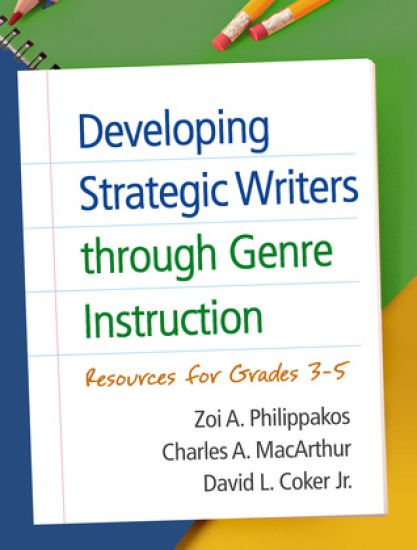
Developing Strategic Writers through Genre Instruction

Developing Strategic Writers through Genre Instruction

Zoi A. Philippakos; Charles A. MacArthur; David L. Coker Jr.

Guilford Press
2015
nidottu
This highly practical guide offers a systematic approach to instruction in the three main writing genres--narrative, persuasive, and informative--that students in grades 3–5 are expected to master. Ready-to-use lesson plans and materials are grounded in research on strategy instruction and self-regulated learning, and connect with learning standards. Presented are ways to teach students strategies for planning, drafting, evaluating, revising, editing, and publishing writing in each genre, while making connections between reading and writing. Sixty-four reproducible planning forms and student handouts are provided; the large-size format facilitates photocopying. The Appendix contains a Study Guide to support professional learning. Purchasers also get access to a Web page where they can download and print the reproducible materials. See also the authors' Developing Strategic Young Writers through Genre Instruction: Resources for Grades K-2.
Health for Life

Health for Life

Karen E. McConnell; Charles B. Corbin; David E. Corbin; Terri D. Farrar

Human Kinetics
2014
pokkari
Health for Life provides the keys necessary for adopting healthy habits and committing to healthy living in high school and throughout the life span. The text covers all of the components of personal well-being, including physical, mental, emotional, social, and spiritual health. It provides students the knowledge in making healthy choices and fosters the skill development required for taking healthy actions.Health for Life helps students in these ways:Analyze how key influences affect their health and wellness, such as family, peers, media, and technologyExplore consumer topics and use appropriate resources to find answers to challenging questionsSharpen their interpersonal communication skills as they share health knowledge; debate controversial topics; demonstrate refusal, negotiation, and refusal skills; manage interpersonal conflicts; and promote healthy living among their peersUse decision-making skills and apply healthy living skills as they identify solutions to problems posedEvaluate their own health habits as they relate to a variety of behaviorsCreate goals for behavior change and establish plans for healthy livingCommunicate health information with family and advocate for healthy living at home and in their communitiesDiscover how health and technology intersect on various topicsThe text is divided into seven units of 20 chapters. The chapters help students explore a range of topics, including mental health, nutrition, physical activity, stress management, healthy relationships, avoiding destructive habits, and making good health choices throughout life.Health for Life has an abundance of features that help students connect with content in personal ways and retain the information. Here’s a glance at some of those features:Lesson Objectives, Lesson Vocabulary, Comprehension Check, and Chapter Review help students prepare to dive in to the material, understand it, and retain it (standard NHES 1).Connect spurs students to analyze various influences on their health and wellness (standard NHES 2).Consumer Corner aids students in exploring consumer health issues (standard NHES 3).Healthy Communication gets students to use and expand their interpersonal communication skills as they share their views about various health topics (standard NHES 4).Skills for Healthy Living and Making Healthy Decisions help students learn and practice self-management so they can make wise choices related to their health and wellness (standard NHES 5).Planning for Healthy Living assists students in applying what they’ve learned as they set goals and establish plans for behavior change (standard NHES 6).Self-Assessment offers students the opportunity to evaluate their health habits and monitor improvement in health behaviors (standard NHES 7).Take It Home and Advocacy in Action prepare students to advocate for health at home and in their communities (standard NHES 8).Health Science and Health Technology focus on the roles of science and technology as they rellate to health and where science and technology intersect regarding health issues.Living Well News challenges students to integrate health literacy, math, and language skills to better understand a current health issue.In addition, Health for Life is reinforced by its online resources for teachers and students. Following are highlights of these two invaluable resources.Teacher Web ResourceThe Teacher Web Resource contains the following:Complete lesson plans; the first three lessons have a corresponding PowerPoint slide showAn answer key to all worksheets and quizzesA test package that includes tests for each chapter; tests consist of multiple-choice, true-or-false, fill-in-the-blank, and short essay questionsAll lesson plans and assessments support identified learning objectives. Each lesson plan includes these features:Preparing the Lesson (lesson objectives and preparation)Bell Ringer (a journal question for students, or a quiz or activity to begin class)Lesson Focus (main points of the lesson paired with a student worksheet)Lesson Application (main activity paired with a worksheet)Reflection and Summary (lesson review)Evaluate (student quiz or test or worksheet review)Reinforcing the Lesson (Take It Home and Challenge activities)Student Web ResourceThe Student Web Resource contains these features:All worksheets, quizzes, and other materials referred to in the lesson plansVocabulary flip cards and other interactive elements from the iBook editionExpanded discussion of selected topics that are marked by web icons in the textReview questions from the text, presented in an interactive format for students to fill out to check their level of understandingDelivering the content that will help students value and adopt healthy lifestyles, and loaded with the features and online resources that will help students understand and retain the content, Health for Life promises to be one of the most crucial texts for students today.
Searching Out the Headwaters

Searching Out the Headwaters

Sarah F. Bates; David H. Getches; Lawrence MacDonnell; Charles F. Wilkinson

Island Press
1993
nidottu
To the uninitiated, water policy seems a complicated, hypertechnical, and incomprehensible subject: a tangle of engineering jargon and legalese surrounding a complex, delicate, and interrelated structure. Decisions concerning the public's waters involve scant public participation, and in such a context, reform seems risky at best.Searching Out the Headwaters addresses that precarious situation by providing a thorough and straightforward analysis of western water use and the outmoded rules that govern it. The authors begin by tracing the history and evolution of the uses of western water. They describe the demographic and economic changes now occurring in the region, and identify the many communities of interest involved in all water-use issues. After an examination of the central precepts of current water policy, along with their original rationale and subsequent evolution, they consider the reform movement that has recently begun to emerge. In the end, the authors articulate the foundations for a water policy that can meet the needs of the new West and discuss the various means for effectively implementing such a policy, including market economics, regulation, the broad-based use of scientific knowledge, and open and full public participation.
Walk on the Wild Side

Walk on the Wild Side

Fabrice Bousteau; Édouard Carmignac; Charles Carmignac; David Cronenberg; Luc Ferry; Alejandro Jodorowsky; Catherine Millet; Camille Morineau; Barbara Soyer

Editions Skira Paris
2017
sidottu
A private collection is an account of an individual's passion and reveals something of its owner's personality.Composed of around 250 works by leading artists such as Roy Lichtenstein, Andy Warhol, Jean-Michel Basquiat, Keith Haring, Martial Raysse, Gerhard Richter and Ed Ruscha, the Carmignac Collection is also an open dialogue with emerging art scenes and contemporary creation by artists like Zhang Huan and Korakrit Arunanondchai.First exhibited in the offices of Carmignac Gestion, and now shared with the public at the Fondation Carmignac's premises in Porquerolles, the collection belonging to douard Carmignac has provoked its viewers since its inception in the early 1980s. In this volume Nicolas Bourriaud, Luc Ferry, Alejandro Jodorowsky, Camille Morineau, Catherine Millet and David Cronenberg lead you through six of its key themes.
Contract Research and Development Organizations-Their History, Selection, and Utilization

Contract Research and Development Organizations-Their History, Selection, and Utilization

Shayne C. Gad; Charles B. Spainhour; David G. Serota

Springer Nature Switzerland AG
2020
sidottu
This volume provides a complete update of all the materials in prior volumes on the subject (including current directories to testing labs and other support establishments worldwide), while adding substantial new material on the following topics: · The history of CROs, including snapshots of CROs and a genealogy chart making clear where they came from and where they went. · Study directors and principal investigators. · The nuts and bolts of study performance. · Electronic reporting requirements – SEND and eCTD (required for NDA, BLA, ANDA, and IND submissions). · Consultants and their roles. · An expanded examination of common problems and their solutions. This book boastscomplete directories to the global universe of operating labs – where they are, how to contact them, and what they do (including special capabilities). Additionally, checklists for qualifying labs and manufacturing facilities – and for auditing studies and projects at such facilities – are included. It is directed at those in industry (specifically directed at those working for companies using CRO services) but will also be of interest to scientists or administrators working in research organizations themselves. In this case, the contents of this new work are essential to the target reader because the work, regulations, and actors (CROs) have evolved and changed at a rapid pace in the 10 years since the earlier volume that the author published. Likewise, the companies using these services have come to all be almost completely dependent on outsourcing. The earlier texts remain the only source of their kind (paper or electronic) on the field and the only noncommercial guide tothe global industry and this volume provides a complete update.
Contract Research and Development Organizations-Their History, Selection, and Utilization

Contract Research and Development Organizations-Their History, Selection, and Utilization

Shayne C. Gad; Charles B. Spainhour; David G. Serota

Springer Nature Switzerland AG
2021
nidottu
This volume provides a complete update of all the materials in prior volumes on the subject (including current directories to testing labs and other support establishments worldwide), while adding substantial new material on the following topics: · The history of CROs, including snapshots of CROs and a genealogy chart making clear where they came from and where they went. · Study directors and principal investigators. · The nuts and bolts of study performance. · Electronic reporting requirements – SEND and eCTD (required for NDA, BLA, ANDA, and IND submissions). · Consultants and their roles. · An expanded examination of common problems and their solutions. This book boastscomplete directories to the global universe of operating labs – where they are, how to contact them, and what they do (including special capabilities). Additionally, checklists for qualifying labs and manufacturing facilities – and for auditing studies and projects at such facilities – are included. It is directed at those in industry (specifically directed at those working for companies using CRO services) but will also be of interest to scientists or administrators working in research organizations themselves. In this case, the contents of this new work are essential to the target reader because the work, regulations, and actors (CROs) have evolved and changed at a rapid pace in the 10 years since the earlier volume that the author published. Likewise, the companies using these services have come to all be almost completely dependent on outsourcing. The earlier texts remain the only source of their kind (paper or electronic) on the field and the only noncommercial guide tothe global industry and this volume provides a complete update.
A Spider’s Web

A Spider’s Web

Peter N. Witt; Charles F. Reed; David B. Peakall

Springer-Verlag Berlin and Heidelberg GmbH Co. K
2012
nidottu
"Gradually, a faint brightness appeared in the east, and the air, which had been very warm through the night, felt cool and chilly. Though there was no daylight yet, the darkness was diminished, and the stars looked pale. The prison, which had been a mere black mass with little shape or form, put on its usual aspect; and ever and anon a solitary watchman could be seen upon its roof, stopping to look down upon the preparations in the street . . . By and by the feeble light grew stronger, and the houses with their sign-boards and inscriptions stood plainly out, in the dull grey morning . . . And now, the sun's first beams came glancing into the street; and the night's work, which, in its various stages and in the varied fancies of the lookers-on had taken a hundred shapes, wore its own proper form - a scaffold and a gibbet . . . " (The Complete Works of Charles Dickens, Harper & Brothers, New York and London, Barnaby Rudge, Vol. II, Chapter XIX, page 164. ) Dickens describes an activity which takes place in the early morning hours, just before sunrise. As the day begins and people start to go about their business and get ready to watch the hanging, the hangman is ready with the gallows.
Ethnologue: Languages of Africa and Europe

Ethnologue: Languages of Africa and Europe

Gary F. Simons; David M. Eberhard; Charles D. Fennig

Sil International, Global Publishing
2025
sidottu
Published in 2025, Twenty-Eighth Edition Ethnologue(R) is the comprehensive reference work that catalogs all known living languages. Ethnologue(R) has been an active research project for more than 70 years. Thousands of linguists and other researchers all over the world rely on and have contributed to Ethnologue(R). It is widely regarded to be the most comprehensive listing of information of its kind. Ethnologue(R) is published in three volumes. Each volume is self-contained and can be used independently. This volume catalogs the languages of Africa and Europe. It includes: 2,540 language descriptions organized by continent and country 22,905 primary names, alternate names, and dialect names 108 country overviews with graphical language vitality profiles 106 color maps showing location and distribution of languages
Managing the Drug Discovery Process

Managing the Drug Discovery Process

Susan Miller; Walter Moos; Barbara Munk; Stephen Munk; Charles Hart; David Spellmeyer

ELSEVIER SCIENCE PUBLISHING CO INC
2023
nidottu
Managing the Drug Discovery Process, Second Edition thoroughly examines the current state of pharmaceutical research and development by providing experienced perspectives on biomedical research, drug hunting and innovation, including the requisite educational paths that enable students to chart a career path in this field. The book also considers the interplay of stakeholders, consumers, and drug firms with respect to a myriad of factors. Since drug research can be a high-risk, high-payoff industry, it is important to students and researchers to understand how to effectively and strategically manage both their careers and the drug discovery process. This new edition takes a closer look at the challenges and opportunities for new medicines and examines not only the current research milieu that will deliver novel therapies, but also how the latest discoveries can be deployed to ensure a robust healthcare and pharmacoeconomic future. All chapters have been revised and expanded with new discussions on remarkable advances including CRISPR and the latest gene therapies, RNA-based technologies being deployed as vaccines as well as therapeutics, checkpoint inhibitors and CAR-T approaches that cure cancer, diagnostics and medical devices, entrepreneurship, and AI. Written in an engaging manner and including memorable insights, this book is aimed at anyone interested in helping to save countless more lives through science. A valuable and compelling resource, this is a must-read for all students, educators, practitioners, and researchers at large—indeed, anyone who touches this critical sphere of global impact—in and around academia and the biotechnology/pharmaceutical industry.
Scanning Electron Microscopy and X-Ray Microanalysis

Scanning Electron Microscopy and X-Ray Microanalysis

Joseph Goldstein; Dale E. Newbury; David C. Joy; Charles E. Lyman; Patrick Echlin; Eric Lifshin; Linda Sawyer; J.R. Michael

Kluwer Academic/Plenum Publishers
2003
sidottu
In the decade since the publication of the second edition of Scanning Electron Microscopy and X-Ray Microanalysis, there has been a great expansion in the capabilities of the basic scanning electron microscope (SEM) and the x-ray spectrometers. The emergence of the variab- pressure/environmental SEM has enabled the observation of samples c- taining water or other liquids or vapor and has allowed for an entirely new class of dynamic experiments, that of direct observation of che- cal reactions in situ. Critical advances in electron detector technology and computer-aided analysis have enabled structural (crystallographic) analysis of specimens at the micrometer scale through electron backscatter diffr- tion (EBSD). Low-voltage operation below 5 kV has improved x-ray spatial resolution by more than an order of magnitude and provided an effective route to minimizing sample charging. High-resolution imaging has cont- ued to develop with a more thorough understanding of how secondary el- trons are generated. The ?eld emission gun SEM, with its high brightness, advanced electron optics, which minimizes lens aberrations to yield an - fective nanometer-scale beam, and “through-the-lens” detector to enhance the measurement of primary-beam-excited secondary electrons, has made high-resolution imaging the rule rather than the exception. Methods of x-ray analysis have evolved allowing for better measurement of specimens with complex morphology: multiple thin layers of different compositions, and rough specimens and particles. Digital mapping has transformed classic x-ray area scanning, a purely qualitative technique, into fully quantitative compositional mapping.
Birds of Kansas

Birds of Kansas

Max C. Thompson; Charles A. Ely; Bob Gress; Chuck Otte; Sebastian T. Patti; David Seibel

University Press of Kansas
2011
sidottu
Ever since the Lewis and Clark Expedition spotted its first wild turkey in Kansas, the state has celebrated a rich ornithological history—especially in light of its habitat diversity and its location within the Central Migratory Flyway. That birding bounty is now given its due by a respected team of authors, all recognized avian authorities, in a beautifully produced large-format volume highlighted with professional-quality color photographs and maps. The first such survey in twenty years, this remarkable book depicts every one of the state’s now-documented 473 species. Designed for all knowledgeable birders and professional ornithologists, it provides scientifically accurate information on distribution, breeding, and behavior for each species. It not only significantly updates the previous two-volume field guide Birds in Kansas but also reflects a more than 10% increase in known species—47 more than previously listed, including the Long-billed Murrelet, Ross’s Gull, and Broad-billed Hummingbird. The contents are arranged by family—from abundant groups like Plovers and Sandpipers to the lone Frigate Bird (Fregata magnificens) recorded in the state. For each species, a map shows the counties in which it has been reported, and many species include maps for both breeding and banding. Use of color in the distribution maps allows depiction of seasonal bird distribution. The text also includes a brief life history for most regularly breeding species, as well as information on migratory routes explaining where the birds travel when they leave Kansas. Birds of Kansas will be a vital addition to the library of anyone who seeks a better understanding of the diverse and ever-fascinating Kansas avifauna.
Rheumatology Examination and Injection Techniques

Rheumatology Examination and Injection Techniques

Michael Doherty; Brian L. Hazleman; Charles W. Hutton; Peter J. Maddison; Julian David Perry

W B Saunders Co Ltd
1998
sidottu
This highly illustrated text provides comprehensive coverage of the examination of patients with joint or periarticular disease. It includes full details of joint aspiration, injection techniques and examination of synovial fluid. This new edition contains more practical procedures than ever before, with new coverage of biopsy and epidural injections. All chapters have been revised and expanded to include more illustrations. Rheumatology Examination and Injection Techniques has established itself as the leading practical text of examination and injection techniques. This edition builds on the strengths of the first to provide a thorough and detailed step-by-step guide to practice in this area.Teaches basic clinical skills All chapters are enriched by high quality accurate illustrations Provides an informative review of joint assessment Designed to appeal to a wide audiencePractical Procedures section has been expanded to include: biopsy, epidural injections, and principles of diagnosis New chapter on patient assessment Approximately 20 new line illustrations Every chapter has been revised
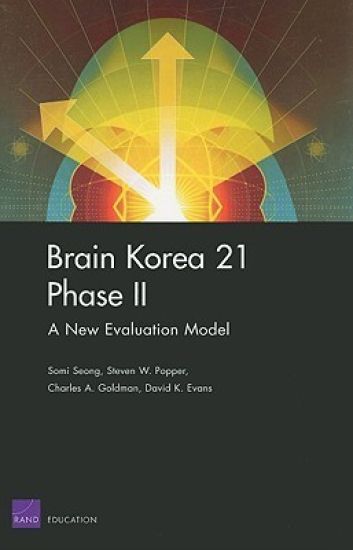
Brain Korea 21 Phase II

Brain Korea 21 Phase II

Somi Seong; Steven W. Popper; Charles A. Goldman; David K. Evans

RAND
2008
pokkari
The Brain Korea 21 Program (BK21), which seeks to make Korean research universities globally competitive and to produce more high-quality researchers in Korea, provides funding to graduate students and professors who belong to research groups at top universities. The authors develop quantitative and qualitative models to evaluate how well BK21 is fulfilling its goals and make suggestions for further stimulating Korean university research.
Historical Scholarship in America: Needs and Opportunities

Historical Scholarship in America: Needs and Opportunities

Arthur Meier Schlesinger; William L. Langer; Charles W. David

Literary Licensing, LLC
2013
sidottu
Historical Scholarship In America: Needs And Opportunities is a book written by Arthur Meier Schlesinger, a renowned American historian and political scientist. The book is a critical analysis of the state of historical scholarship in America during the mid-twentieth century. Schlesinger argues that there is a need for scholars to re-examine traditional interpretations of American history and to adopt new approaches to the study of the past. The book is divided into three parts. The first part provides an overview of the current state of historical scholarship in America, highlighting the strengths and weaknesses of the field. The second part focuses on the opportunities for new research and the need for historians to explore neglected areas of American history. The third part discusses the role of historical scholarship in shaping public policy and the need for historians to engage with the broader public.Schlesinger's analysis is based on his own experiences as a historian and his interactions with other scholars in the field. He argues that historical scholarship in America has become too focused on narrow topics and has neglected broader themes and issues. He calls for a more interdisciplinary approach to historical research and a greater emphasis on the social and cultural dimensions of American history.Overall, Historical Scholarship In America: Needs And Opportunities is a thought-provoking and insightful book that provides a valuable contribution to the field of American history. It is a must-read for anyone interested in the study of the past and the role of historical scholarship in shaping our understanding of the present.Additional Contributing Authors Include William S. Ferguson, Guy Stanton Ford, Carlton J. H. Hayes, And Dexter Perkins. Introduction By J. Franklin Jameson. A Report By The Committee Of The American Historical Association On The Planning Of Research.This scarce antiquarian book is a facsimile reprint of the old original and may contain some imperfections such as library marks and notations. Because we believe this work is culturally important, we have made it available as part of our commitment for protecting, preserving, and promoting the world's literature in affordable, high quality, modern editions, that are true to their original work.
Gold Panning - A Guide to Recreational Gold Panning on the Kenai Peninsula, Chugach National Forest, Alaska

Gold Panning - A Guide to Recreational Gold Panning on the Kenai Peninsula, Chugach National Forest, Alaska

Chugach National Forest; Bureau of Land Management; Carol Huber; Joseph Kurtak; David L. Allen; Charles Lindemuth; Kathy Sarns

Lulu.com
2016
nidottu
Striking it rich! Finding the mother lode! 'Tis the stuff of miners' dreams. Unlike professional gold seekers, recreational gold panners benefit mostly from the adventure. The entire family can share in the fun of prospecting and gold panning. In this booklet, we explain basic gold panning techniques, how to find gold, discuss mining rights and guidelines, and identify areas available for recreational panning on the Chugach National Forest portion of Alaska's Kenai Peninsula. Recreational gold panning on lands withdrawn from mineral entry is not a mining activity-it is a privilege. Be aware that panning, sluicing, and suction dredging can adversely affect water quality, thereby impacting vegetation, fish, wildlife, and ultimately people. During the process of separating soil from minerals, silt may be washed into streams, creating turbid water. Fish, fish eggs, and the aquatic insects have difficulty living in heavily silted water because of its reduced oxygen supply.
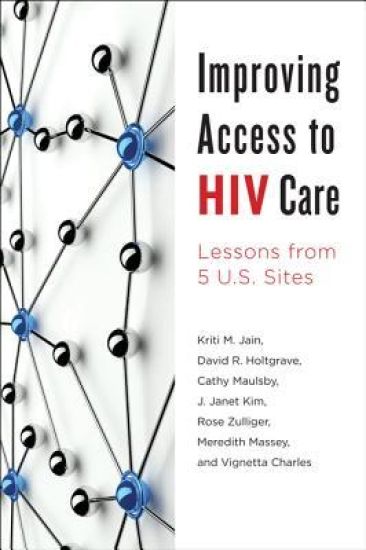
Improving Access to HIV Care

Improving Access to HIV Care

Kriti M. Jain; David R. Holtgrave; Cathy Maulsby; J. Janet Kim; Rose Zulliger; Meredith Massey; Vignetta Charles

Johns Hopkins University Press
2016
pokkari
The availability of combination antiretroviral therapy has changed the lives of millions of people living with HIV (PLWH), for whom a once fatal infection can now be a manageable chronic disease. Yet only 30 percent of PLWH in the United States are virally suppressed, and significant gaps in access to care persist. While programs to boost linkage to and retention in HIV care are critical to improving the health of PLWH, efforts to evaluate these programs are surprisingly scarce. Using cutting-edge implementation science, this book tackles the issue of how to better link and retain PLWH in ongoing primary medical care. A multipart case study examines successful strategies and provides detailed profiles of the organizations involved and their processes for reaching, linking, and retaining PLWH. Barriers to and facilitators of implementation are explored qualitatively, network analysis is used to assess changes in interagency collaboration among organizations serving PLWH, and evidence-based recommendations are offered for improving linkage to HIV care in the US.