Kirjojen hintavertailu. Mukana 11 627 425 kirjaa ja 12 kauppaa.

Kirjahaku

Etsi kirjoja tekijän nimen, kirjan nimen tai ISBN:n perusteella.

1000 tulosta hakusanalla Clark Smith Beardslee

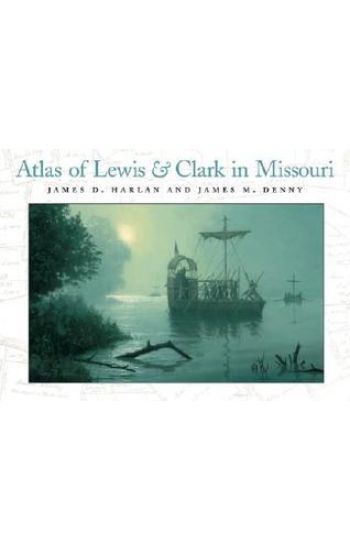
Atlas of Lewis and Clark in Missouri

Atlas of Lewis and Clark in Missouri

James D. Harlan; James M. Denny; Matt Blunt

University of Missouri Press
2003
sidottu
The Atlas of Lewis and Clark in Missouri is a splendid re-creation of the natural landscape in the days when a vast western frontier was about to be explored. The Corps of Discovery's expedition began in territorial Missouri, and this book of computer-generated maps opens an extraordinary window onto the rivers, land, and settlement patterns of the period. This book is an intensive examination of the Missouri portion of the expedition through a series of twenty-seven maps developed by combining early-nineteenth-century U.S. General Land Office (GLO) survey documents with narratives of the trip derived from expedition journals. The maps are impeccable. The twenty-seven map plates - including twenty-three of the traveled route and four of the river corridor's historic vegetative land cover - depict the expedition's course and offer the first accurate rendering of expedition campsites and foot explorations by crew members. Some maps locate the campsites in relation to present-day landmarks. Journal descriptions accompany the map plates, which also include old geographic names; historical hydrography; contemporary towns, settlements, and forts; Indian campsites and villages; and territorial land grants from the French and Spanish governments. Geographers and historians will be fascinated by the detail depicted in them, especially the charting of the modern course of the river on each map that shows the landscape changes caused by the powerful Mississippi and Missouri Rivers. The result is a reconstruction of geo-referenced maps that give, for the first time, a detailed representation of the Corps of Discovery's course through Missouri, with geographic data as authentic and accurate as yesterday's available information and today's technology can produce. The maps allow readers to better understand changes in the land over time and why the landscape encountered by the expedition differs so radically from ours today.
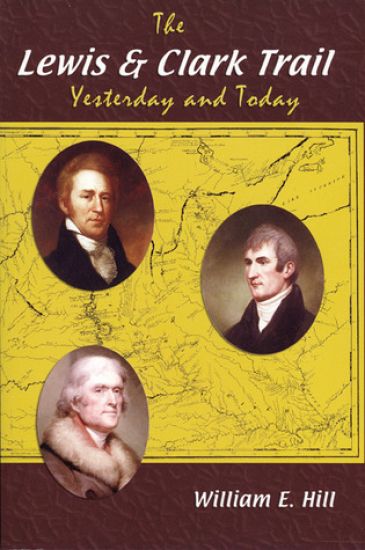
The Lewis and Clark Trail Yesterday and Today
Veteran author William Hill commemorates the 200th anniversary of the Lewis and Clark expedition with this guide to the history and the route of the Corps of Discovery. Journals, maps, paintings and photographs serve to vividly contrast the U.S. that Lewis and Clark ventured through to the land that the modern adventurers will pass through when following this guidebook.
Lewis and Clark Trail Maps

Lewis and Clark Trail Maps

Martin Plamondon II

Washington State University Press
2000
sidottu
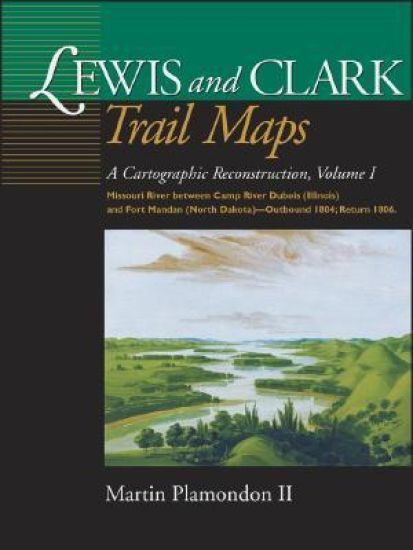
The Lewis and Clark Expedition bicentennial is producing an unprecedented flurry of interest in the United States, and an array of commemorative activities are being planned in the regions visited by the Corps of Discovery.During the 28-month trek (1804-06), Captain William Clark dutifully surveyed the expedition's route by taking continual compass readings to determine directions while estimating distances between geographic points. Clark assumed that his painstakingly recorded "surveyed traverse" would be converted into well-crafted, accurate maps by cartographers soon after the journey's completion. For a variety of reasons, this did not occur--until now.By using measurements, notes, maps, and sketches in Clark's records as well as other sources, Martin Plamondon II has accomplished the cartographic reconstruction that Clark expected upon the expedition's return. Volume I is the first of a three-volume set delineating the Corps' journey.The first volume includes 153 full-page maps of the Missouri River from Illinois to North Dakota. In addition to presenting key geographic and historic features, the maps compare the modern beds of rivers to their courses at the time of the exploration. The contrast is striking between what Lewis and Clark saw and what we see today. The ever meandering Missouri River, in particular, has changed its channel hundreds of times since the men of the expedition fought its currents. Even Clark commented on the return trip in 1806 that some sections fo the river were barely recognizable compared to when they passed by two years earlier. Modern America likewise has wrought great change.Of further interest in Volume I are the many excerpts from the expedition diaries, an insightful essay on frontier surveying, and cartographic indexes. Plamondon's years of careful cartographic reconstruction have resulted in a captivating and never-before-seen record of the American West.
Lewis and Clark Trail Maps

Lewis and Clark Trail Maps

Martin Plamondon II

Washington State University Press
2002
sidottu
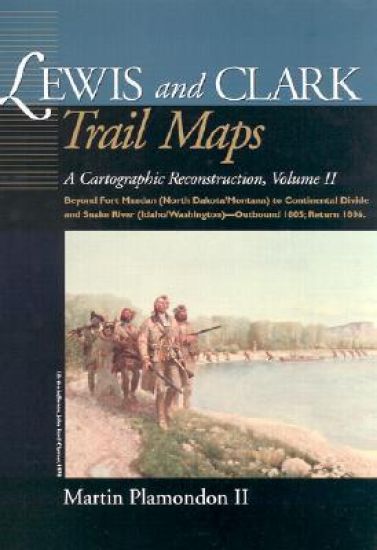
In Volume II, Martin Plamondon presents a cartographic reconstruction of the Corps of Discovery's trek across the northwestern United States in 1805-06. Beginning a short distance above Fort Mandan, 190 maps depict the explorers' route on the Missouri River in North Dakota and Montana, over the continental divide to Idaho, and down westward-flowing waters to the Snake-Columbia confluence in central Washington.The maps contrast modern riverbeds to their courses at the time of the exploration. Also included are pertinent excerpts from the journals and depictions of significant geographical features. Plamondon has utilized the actual traverse measurements and notes recorded by William Clark for each day that the expedition was on the move.This is the second of a three-volume set published by the WSU Press delineating the Corps' entire journey, both outbound and return, in 1804-06. Volume I, published in September 2000, includes 153 full-page maps of the explorers' route on the Missouri River from Illinois to North Dakota.
Lewis and Clark Trail Maps

Lewis and Clark Trail Maps

Martin Plamondon II

Washington State University Press
2004
sidottu
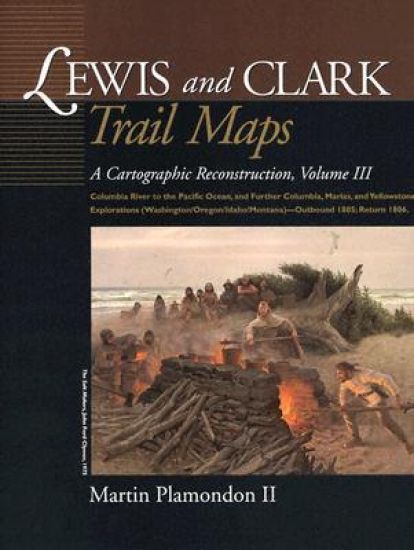
After crossing the Bitterroot Range and canoeing down the cataract-filled Snake River, the Corps of Discovery finally reached the long-sought Columbia River in the autumn of 1805. Volume III continues the cartographic reconstruction of the explorers' trek as they set out from the Snake-Columbia junction, October 18, 1805, on the final leg of their journey to the sea. In addition to intricately mapping the Columbia's great rapids, desert and rain-forest shorelines, spectacular mountain gorge, and broad estuary, Volume III reveals the vast number of Native American villages that lined the River of the West in Lewis and Clark's time. Additional maps and illustrations depict the Fort Clatsop winter quarters, Cascade volcanoes, coastal explorations, compares the modern beds of streams to their courses at the time of the exploration, and more. Though having reached their primary goal, the Pacific Ocean, the expedition's investigation of new terrain in western North America was far from over. Volume III outlines the significant discoveries recorded as they returned eastward in 1806 through the broad Columbia, Marias, and Yellowstone watersheds. Volume III concludes when the Corps of Discovery, long given up for dead by most Americans, paddled up to the St. Louis waterfront on September 23, 1806, to an arousing reception by the local population. Of further special interest in this volume are the many excerpts from the expedition diaries. This careful cartographic reconstruction is a captivating and never-before-seen record of the American West. Martin Plamondon II of Vancouver, Washington, is a former chairman of the Governor's Washington Lewis and Clark Trail Committee. His long-term research in exploration history and twenty-eight years of experience as a professional cartographer have provided the unique set of skills required to complete the trail maps.
Lewis and Clark Among the Nez Perce

Lewis and Clark Among the Nez Perce

Allen V. Pinkham; Steven R. Evans; Frederick E. Hoxie

Washington State University Press
2022
pokkari
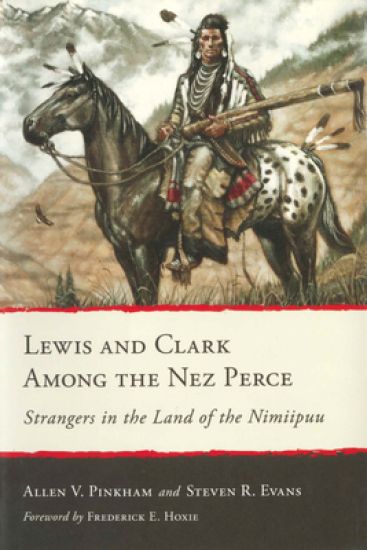
Lewis and Clark Among the Nez Perce is a generous and careful re-evaluation of Lewis and Clark west of the Bitterroot Mountains. An extraordinary new look at their extended visit--approximately four months of daily interchange with a community the white visitors regarded as especially friendly, hospitable, and helpful to their success--the book represents a breakthrough in Lewis and Clark studies. Many incidents suddenly take on a new light when the historical lens is reversed.In 1984, James Ronda's groundbreaking Lewis and Clark Among the Indians looked broadly at the Lewis and Clark expedition from the Native American perspective. Nearly three decades later, Nez Perce historians Allen V. Pinkham and Steven Ross Evans examined the journals of Lewis and Clark with painstaking care to tease out new insights from what Lewis and Clark wrote about their Nez Perce hosts. Pinkham and Evans evaluate both what Lewis and Clark understood and what they misunderstood in the Nez Perce (Nimiipuu) lifeway and political structure. More particularly, they have scoured the journals for clues about how the Nez Perce reacted to the bearded strangers, gathering and putting into print for the first time the stands of a surprisingly rich Nez Perce oral tradition.The first richly detailed exploration of the relationship between Mr. Jefferson's Corps of Discovery and a single tribe, this volume also serves as a template for a Lewis and Clark expedition tribal history series.
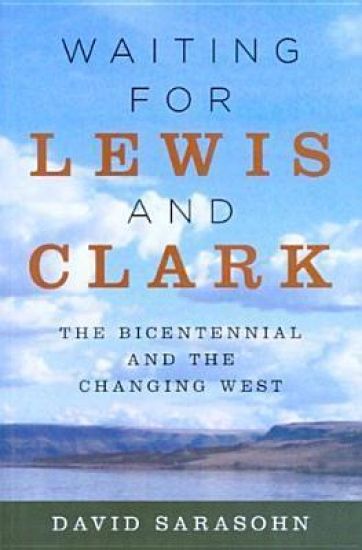
Waiting for Lewis and Clark

Waiting for Lewis and Clark

David Sarasohn

Oregon Historical Society Press
2005
pokkari
Across thousands of miles, Indian tribes, environmental activists, tourism promoters, and keelboat re-enactors saw the Lewis and Clark Bicentennial as a rare opportunity. The 200th anniversary of the expedition that helped open the West arrived at a time of seismic change in the region- a time when its economy, politics, and even population were shifting sharply. For three years, journalist and historian David Sarasohn followed the planning of the Bicentennial, recording how the past was being invoked to commemorate the Lewis and Clark Expedition and talking to those whose ideas were shaping national and regional events.Like the expedition itself, Waiting for Lewis and Clark ranges from Monticello and Washington, D.C., down the length of the Missouri, and over the Rockies to the Pacific, depicting three Wests: the past, the present, and the dreams of Westerners.
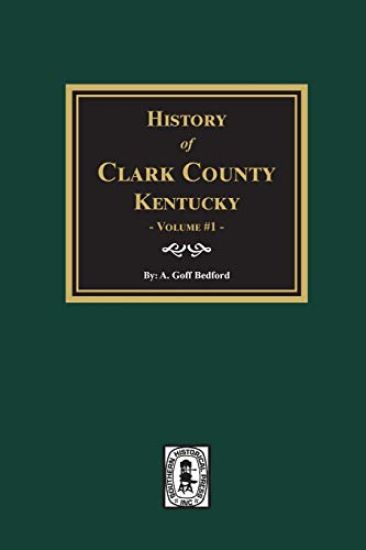
History of Clark County, Kentucky. (Volume #1): Land of Our Fathers
By: A. Goff Bedford, Pub. 1958, reprinted 2019, 582 pages, Index, soft cover, ISBN #0-89308-893-5.Original known as Bourbon County, Virginia, Clark County was created in 1785 from Fayette County, KY. It was much larger area than present-day Bourbon County, as its original territory included the counties of: Bracken, Boone, Campbell, Estill, Fleming, Floyd, Greenup, Harrison, Kenton, Mason, Montgomery, Lewis, Nicholas, Pendleton, Powell and Robertson. This book is similar to other history books of the era, but what does set it apart is the extensive section of religion and the churches role in its development. This book is filled with over 6,000 names that helped its development.
Gordon Matta-Clark: Doors, Floors, Doors
MoMA PS1 presents the fourth iteration of Greater New York. Recurring every five years, the exhibition has traditionally showcased the work of emerging artists living and working in the New York metropolitan area. Considering the "greater" aspect of its title in terms of both geography and time, Greater New York. begins roughly with the moment when MoMA PS1 was founded in 1976 as an alternative venue that took advantage of disused real estate, reaching back to artists who engaged the margins of the city. In conjunction with the exhibition, MoMA PS1 is publishing a series of readers that will be released throughout the run of the exhibition. These short volumes revisit older histories of New York while also inviting speculation about its future, highlighting certain works in the exhibition and engaging a range of subjects including disco, performance anxiety, real estate and newly unearthed historical documents. The series features contributions from Fia Backström, Mark Beasley, Gregg Bordowitz, Susan Cianciolo, Douglas Crimp, Catherine Damman, David Grubbs, Angie Keefer, Aidan Koch, Glenn Ligon, Gordon Matta-Clark, Claudia Rankine, Collier Schorr, and Sukhdev Sandhu, concluding with a round-table conversation with exhibition curators Peter Eleey, Douglas Crimp, Thomas J. Lax and Mia Locks. The series is edited by Jocelyn Miller, Curatorial Associate, MoMA PS1.
Elisabeth Lutyens and Edward Clark

Elisabeth Lutyens and Edward Clark

Annika Forkert

Cambridge University Press
2023
sidottu
The composer Elisabeth Lutyens and her second husband, the conductor and music programmer Edward Clark, were innovators in composition, conducting, programming, teaching, and music administration in Britain between 1918 and 1983. Controversial in their professional and personal views and tastes, their achievements obscured by layers of anecdote and some self-inflicted reputational harm, this book critically re-assesses their roles as cornerstones of structures and developments in British music that we now take for granted. Key to understanding their central roles in orchestrating musical progress is the ambiguous role of influence in their work and the intimate connections between British and European music. This study critically charts their professional lives in music, taking a holistic approach to contextualise Lutyens and Clark's multifaceted work in music historically, music-analytically, and culturally.
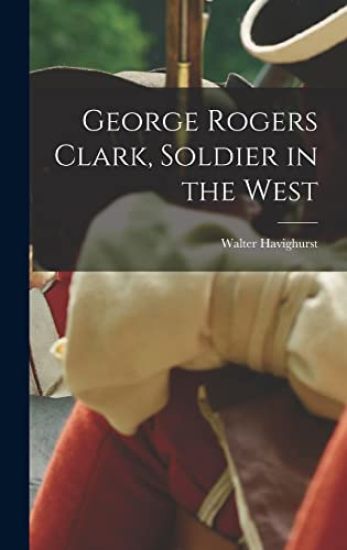
George Rogers Clark, Soldier in the West

George Rogers Clark, Soldier in the West

Walter 1901- Havighurst

Hassell Street Press
2021
sidottu
This work has been selected by scholars as being culturally important and is part of the knowledge base of civilization as we know it.This work is in the public domain in the United States of America, and possibly other nations. Within the United States, you may freely copy and distribute this work, as no entity (individual or corporate) has a copyright on the body of the work.Scholars believe, and we concur, that this work is important enough to be preserved, reproduced, and made generally available to the public. To ensure a quality reading experience, this work has been proofread and republished using a format that seamlessly blends the original graphical elements with text in an easy-to-read typeface.We appreciate your support of the preservation process, and thank you for being an important part of keeping this knowledge alive and relevant.
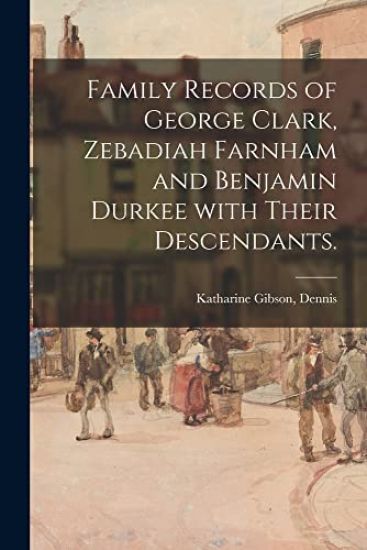
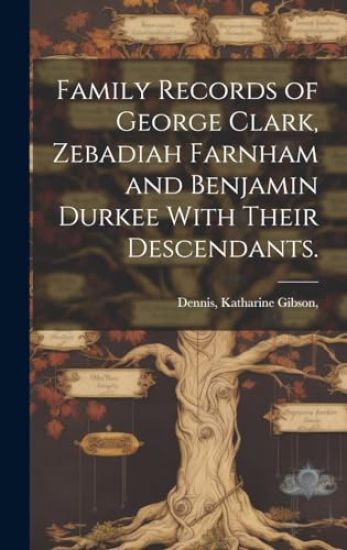
Family Records of George Clark, Zebadiah Farnham and Benjamin Durkee With Their Descendants.
This work has been selected by scholars as being culturally important and is part of the knowledge base of civilization as we know it.This work is in the public domain in the United States of America, and possibly other nations. Within the United States, you may freely copy and distribute this work, as no entity (individual or corporate) has a copyright on the body of the work.Scholars believe, and we concur, that this work is important enough to be preserved, reproduced, and made generally available to the public. To ensure a quality reading experience, this work has been proofread and republished using a format that seamlessly blends the original graphical elements with text in an easy-to-read typeface.We appreciate your support of the preservation process, and thank you for being an important part of keeping this knowledge alive and relevant.
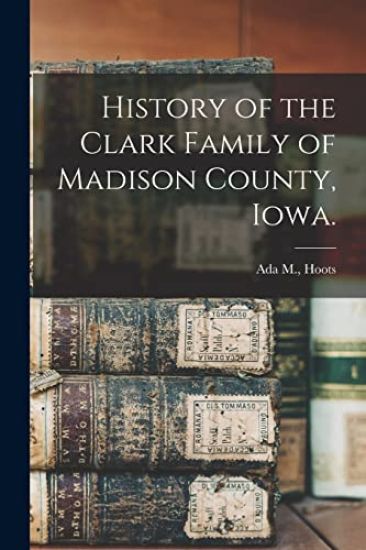
History of the Clark Family of Madison County, Iowa.
This work has been selected by scholars as being culturally important and is part of the knowledge base of civilization as we know it.This work is in the public domain in the United States of America, and possibly other nations. Within the United States, you may freely copy and distribute this work, as no entity (individual or corporate) has a copyright on the body of the work.Scholars believe, and we concur, that this work is important enough to be preserved, reproduced, and made generally available to the public. To ensure a quality reading experience, this work has been proofread and republished using a format that seamlessly blends the original graphical elements with text in an easy-to-read typeface.We appreciate your support of the preservation process, and thank you for being an important part of keeping this knowledge alive and relevant.
Family Records of George Clark, Zebadiah Farnham and Benjamin Durkee With Their Descendants.
This meticulously researched volume presents the family histories of three early New England settlers, and their many descendants, spanning generations and states. Filled with original documents and photographs, this book is a treasure trove for genealogists and history enthusiasts alike.This work has been selected by scholars as being culturally important, and is part of the knowledge base of civilization as we know it.This work is in the "public domain in the United States of America, and possibly other nations. Within the United States, you may freely copy and distribute this work, as no entity (individual or corporate) has a copyright on the body of the work.Scholars believe, and we concur, that this work is important enough to be preserved, reproduced, and made generally available to the public. We appreciate your support of the preservation process, and thank you for being an important part of keeping this knowledge alive and relevant.
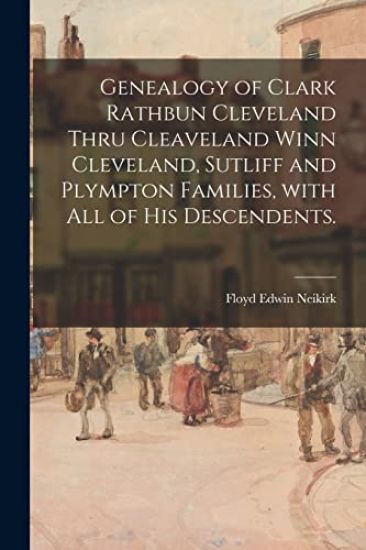
Genealogy of Clark Rathbun Cleveland Thru Cleaveland Winn Cleveland, Sutliff and Plympton Families, With All of His Descendents.
Genealogy of Clark Rathbun Cleveland thru Cleaveland, Winn, Cleveland, Sutliff, and Plympton Families with All of his Descendents is an extensive family history that traces the genealogy of the Cleveland family through multiple branches. Developed by Floyd Edwin Neikirk, this book offers detailed biographical information on hundreds of individuals, highlighting their achievements and contributions to their communities. With a focus on the Cleveland family's impact on American history, this genealogy is an invaluable resource for anyone interested in tracing their own family history.This work has been selected by scholars as being culturally important, and is part of the knowledge base of civilization as we know it.This work is in the "public domain in the United States of America, and possibly other nations. Within the United States, you may freely copy and distribute this work, as no entity (individual or corporate) has a copyright on the body of the work.Scholars believe, and we concur, that this work is important enough to be preserved, reproduced, and made generally available to the public. We appreciate your support of the preservation process, and thank you for being an important part of keeping this knowledge alive and relevant.
Lewis and Clark

Lewis and Clark

William R. (William Rheem) Lighton

Anson Street Press
2025
nidottu
"Lewis and Clark: Meriwether Lewis and William Clark" recounts one of the most pivotal expeditions in American history. This meticulously prepared edition details the Lewis and Clark Expedition (1804-1806), a journey of exploration that charted the vast and largely unknown American West. William R. Lighton chronicles the experiences of Meriwether Lewis and William Clark as they navigated treacherous landscapes, encountered diverse Native American tribes, and documented the rich natural resources of the territory acquired in the Louisiana Purchase. This historical narrative captures the spirit of adventure and the unwavering determination of Lewis and Clark as they pushed the boundaries of knowledge and expanded the horizons of the young United States. Explore the challenges and triumphs of this legendary expedition, a cornerstone of American history and westward expansion. A compelling read for anyone interested in the history of exploration, the American West, and the enduring legacy of "Lewis and Clark."This work has been selected by scholars as being culturally important, and is part of the knowledge base of civilization as we know it.This work is in the public domain in the United States of America, and possibly other nations. Within the United States, you may freely copy and distribute this work, as no entity (individual or corporate) has a copyright on the body of the work.Scholars believe, and we concur, that this work is important enough to be preserved, reproduced, and made generally available to the public. We appreciate your support of the preservation process, and thank you for being an important part of keeping this knowledge alive and relevant.