A biography of the late Claude W. Ahrens, 1912-2000, Iowa entrepreneur and philanthropist who was a pioneer in the fields of agricultural and playground equipment manufacturing. As founder and owner of Miracle Recreation Equipment Company, Claude was also an instrumental advocate for the national parks and recreation field. In 1993, Claude created a private foundation (the first of others to follow) and built one of the nation's premier private parks and sports complexes in memory of his late son and late family friend, located in Iowa. Claude's motto "Leave it better than you found it" is the motto of the Claude W. and Dolly Ahrens Foundation today.
Cette monographie sur La Mise en scene de Claude Ollier (1922-) suit le heros pas a pas dans son odyssee initiatique a travers l'espace de la fiction. L'etude minutieuse des composantes spatiales et temporelles du roman revele dans le miroitement generalise du texte la mise en scene d'un univers psychique a structure mythique par le frayage de l'ecriture. L'espace-but d'Imlil devient alors le theatre ou les phantasmes du heros sont mis en acte dans une dramatisation symbolique en trois actes. Sa progression harmonique en amont a travers les couches de la memoire permet l'effraction de l'espace hallucinatoire et secret d'une medina interdite dans un declic mysterieux d'ou jaillit la vision globale et instantanee - origine de la creation et de la destruction de l'edifice fictionnel.
Il y a sept ou huit ans, un homme nomm Claude Gueux, pauvre ouvrier, vivait Paris. Il avait avec lui une fille qui tait sa ma tresse, et un enfant de cette fille. Je dis les choses comme elles sont, laissant le lecteur ramasser les moralit s mesure que les faits les s ment sur leur chemin. L'ouvrier tait capable, habile, intelligent, fort mal trait par l' ducation, fort bien trait par la nature, ne sachant pas lire et sachant penser
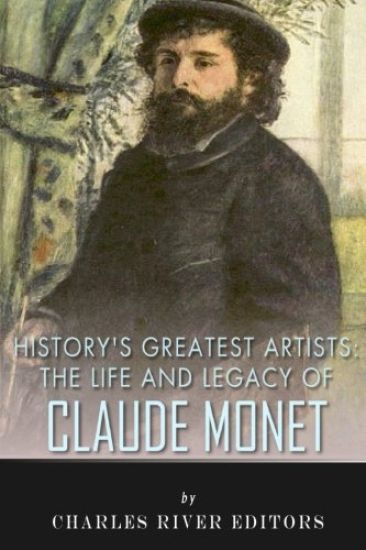
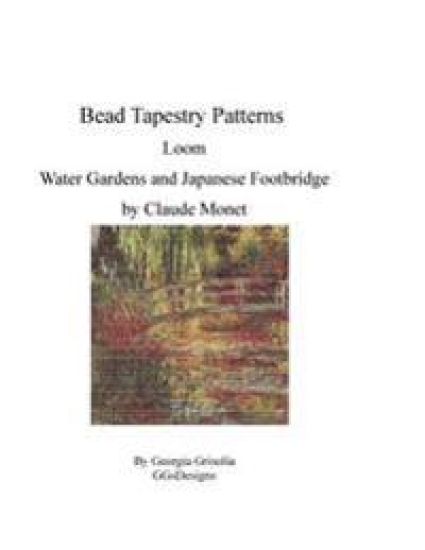
*Includes pictures of Monet and his most famous art *Includes Monet's quotes *Includes online resources and a bibliography for further reading *Includes a table of contents "Everyone discusses my art and pretends to understand, as if it were necessary to understand, when it is simply necessary to love." - Claude Monet To get a sense of the kind of prestige that Claude Monet's reputation has within the art world, one need only learn that his Le Bassin Aux Nymphe s (1919) - from his series of paintings featuring water lilies - sold for the equivalent of more than $70 million. This is an incredibly staggering price, especially considering that early in his life, Monet had been so poor and debt-ridden that some of his paintings were taken from him by creditors. How, exactly, did Monet progress from being an impoverished young Impressionist artist working at the vanguard of European art to the legendary Master whose works command prices near the very pinnacle of the art world? Naturally, Monet's commercial success soared exponentially in the decades following his death in 1926, at a time in which the prices commanded by the great Masters of Western art began rising in price at exponential rates. Yet even during his own lifetime, Monet enjoyed a sharp rise to fame and was canonized as one of the greatest painters in France. Following sharply in the footsteps of Edouard Manet, Claude Monet was one of the first painters identified within the Impressionist circle (indeed, it was Monet himself who coined the label of Impressionist after using it in the title of one of his paintings). Where some artists reach the peak of their acclaim early in life, Monet's star continued to rise even throughout his old age; although some would argue that the last decade or so of his life were anticlimactic, at least from an artistic standpoint, his landmark water lilies were made during his elderly years. And even though Monet would continue to paint well after the canonical period of Impressionism had ended, his name was and remains synonymous with Impressionism, along with cherished acquaintances of his, including such luminaries as Pierre-August Renoir, Camille Pissarro, and Edouard Manet. Simply put, Monet is a monumental figure when it comes to examining Western art during the second half of the 19th century. Like many other great artists, Monet's artistic style developed in tandem with the unfolding changes in his personal life and the professional relationships he maintained. His upbringing was in certain respects unremarkable (at least before the premature death of his mother), but it was during his childhood that Monet cultivated his passion for painting, and even during that time that he met certain artists who would prove instrumental in the nurturing of his prodigious talents. Whether or not Monet was the most brilliant or gifted of the Impressionists is a matter of opinion, but either way, his abilities were molded by his upbringing, his temperament and personality, his formal style, and his standing within the Parisian art world. History's Greatest Artists: The Life and Legacy of Claude Monet looks at the personal background that led to him becoming an artist and the cultural climate in which he rose to fame. Monet's formal technique and artistic legacy are also analyzed, including his working methods and artistic education. Along with pictures of important people, places, and events, you will learn about Monet like never before, in no time at all.
Ce roman se pr sente comme le journal qu'un condamn mort crit durant les vingt-quatre derni res heures de son existence dans lequel il relate ce qu'il a v cu depuis le d but de son proc s jusqu'au moment de son ex cution, soit environ six semaines de sa vie. Ce r cit, long monologue int rieur, est entrecoup de r flexions angoiss es et de souvenirs de son autre vie, la vie d'avant . Le lecteur ne conna t ni le nom de cet homme, ni ce qu'il a fait pour tre condamn , mis part la phrase: moi, mis rable qui ai commis un v ritable crime, qui ai vers du sang . L'oeuvre se pr sente comme un t moignage brut, la fois sur l'angoisse du condamn mort et ses derni res pens es, les souffrances quotidiennes morales et physiques qu'il subit et sur les conditions de vie des prisonniers, par exemple dans la sc ne du ferrage des for ats. Il exprime ses sentiments sur sa vie ant rieure et ses tats d' me... ll se fera ex cuter sous la clameur du peuple qui voit sa mort comme un spectacle.
Le lendemain, des pas traversaient la for t, Un chien le long du fleuve en aboyant errait; Et quand la bachelette en larmes Revint s'asseoir, le coeur rempli d'alarmes, Sur la tant vieille tour de l'antique ch tel, Elle entendit les flots g mir, la triste Isaure, Mais plus n'entendit la mandore Du gentil m nestrel
From the early years of our nation, the coasting schooner served as the primary means of hauling the cargoes that fueled the country's growth. Several thousand of these coasters once existed, but by the late 1930s, relatively few remained. Among those still in operation was the coasting schooner Coral." Hailing from Fairhaven, Massachusetts, the "Coral" and her owner, Captain Claude S. Tucker, carried goods to ports throughout southern New England. The "Coral" hauled cargo into the twilight years of the coasting trade, long after new technologies began to replace it. Authors Robert Demanche, Donald F. Tucker and Caroline B. Tucker use first-person accounts of crew members and captains to trace the life of the "Coral" and Captain Tucker. Set sail to discover the story of the "Coral" through her glory days until the 1938 hurricane left her beyond repair, hastening the end of an era."
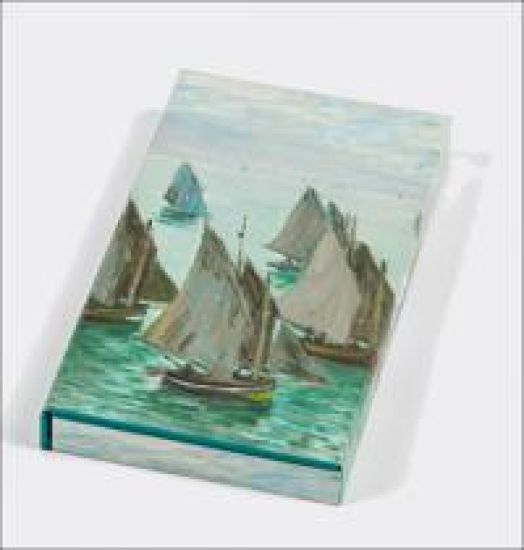
Our sleek, portable case of 8 ball point pens. Our expertly printed pen set is made with coils of paper, making it softer and more eco-friendly than any other pen set. Fishing Boats by Claude Monet is one of a series of paintings observed at different times of day to record the light and colour reflected between the water and sky. This would be a great set that sits nicely with our Monet A4 Notebook. Each case contains 8 paper-wrapped pens in 2 designs, 4 of each, packaged in a sleek cigarette-case style box with magnetic flap closure.
A collection of expertly printed wrapping papers, using art from the best art, past and present, in a big format paperback book. Flowers is a collection of master works by Claude Monet reprinted by teNeues Publishing to help bring the beauty of fine art to a practical and delightful use. Find our other Claude Monet titles including 8-Pen Set, A4 Notebook, FlipTop Notecard Box, Mini Notebook and more.