Kirjojen hintavertailu. Mukana 12 425 921 kirjaa ja 12 kauppaa.

Kirjahaku

Etsi kirjoja tekijän nimen, kirjan nimen tai ISBN:n perusteella.

1000 tulosta hakusanalla Constantinos Paschalidis

The Order of the Red Cross of Constantine

The Order of the Red Cross of Constantine

Harold V. B. Voorhis

Literary Licensing, LLC
2013
sidottu
The Order of the Red Cross of Constantine is a book written by Harold V. B. Voorhis that delves into the history and practices of the titular order. The Red Cross of Constantine is a Christian fraternal order that dates back to the 18th century and is steeped in tradition and symbolism. The book provides a detailed account of the order's origins, its place in history, and its various rituals and ceremonies. It also explores the symbolism behind the order's regalia and the significance of its various ranks and titles. The book is a comprehensive guide to the Red Cross of Constantine and is an essential read for anyone interested in the history of fraternal orders or the Christian faith.This is a new release of the original 1963 edition.This scarce antiquarian book is a facsimile reprint of the old original and may contain some imperfections such as library marks and notations. Because we believe this work is culturally important, we have made it available as part of our commitment for protecting, preserving, and promoting the world's literature in affordable, high quality, modern editions, that are true to their original work.
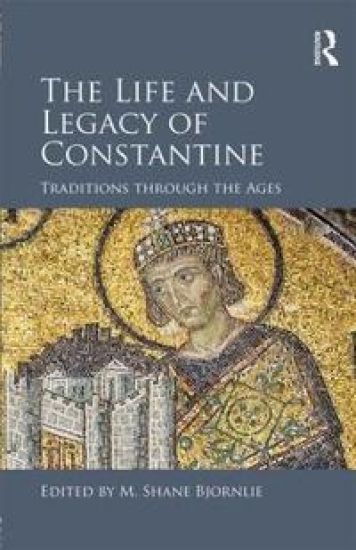
The Life and Legacy of Constantine
The transformation from the classical period to the medieval has long been associated with the rise of Christianity. This association has deeply influenced the way that modern audiences imagine the separation of the classical world from its medieval and early modern successors. The role played in this transformation by Constantine as the first Christian ruler of the Roman Empire has also profoundly shaped the manner in which we frame Late Antiquity and successive periods as distinctively Christian. The modern demarcation of the post-classical period is often inseparable from the reign of Constantine.The attention given to Constantine as a liminal figure in this historical transformation is understandable. Constantine’s support of Christianity provided the religion with unprecedented public respectability and public expressions of that support opened previously unimagined channels of social, political and economic influence to Christians and non-Christians alike. The exact nature of Constantine’s involvement or intervention has been the subject of continuous and densely argued debate. Interpretations of the motives and sincerity of his conversion to Christianity have characterized, with various results, explanations of everything from the religious culture of the late Roman state to the dynamics of ecclesiastical politics. What receives less-frequent attention is the fact that our modern appreciation of Constantine as a pivotal historical figure is itself a direct result of the manner in which Constantine’s memory was constructed by the human imagination over the course of centuries. This volume offers a series of snapshots of moments in that process from the fourth to the sixteenth century.
Algerian Recipes: From Algiers to Constantine, Taste all of Algeria, in One Easy Algerian Cookbook (2nd Edition)
Delicious Algerian Cuisine.Get your copy of the best and most unique Algerian recipes from BookSumo Press Come take a journey with us into the delights of easy cooking. The point of this cookbook and all our cookbooks is to exemplify the effortless nature of cooking simply. In this book we focus on Algerian food. The Algerian Recipes is a complete set of simple but very unique Algerian dishes. You will find that even though the recipes are simple, the tastes are quite amazing. So will you join us in an adventure of simple cooking? Here is a Preview of the Algerian Recipes You Will Learn: Chicken Soup North African Algerian Bread Hot Broad Beans Picnic Rice with Vinaigrette North African Style Carrots Tomato Chicken and Chickpeas Pepper and Egg Salad Aunty's Beef Stew Empanadas in Algeria Algerian Chicken Hot Pot Lulu's Oven Tagine North African Dinner Bread Orange Blossom Cookies Algerian Saffron Bowls Hot Minty Carrots Buttery Lentil Bowls Algerian beef and Potatoes Baked Chicken Oran Honey Semolina Layered Pastry Algerian Soup Pot Algerian Honey Puff Pastry Algerian Sweet Lime Cakes Spicy Harissa Couscous Summer Fennel Salad North African Eggplants Handmade Pasta with Sauce 5-Ingredient Semolina Bread How to Make HarissaMuch, much more Again remember these recipes are unique so be ready to try some new things. Also remember that the style of cooking used in this cookbook is effortless. So even though the recipes will be unique and great tasting, creating them will take minimal effort Related Searches: Algerian cookbook, Algerian recipes, Algeria cookbook, Algeria, algerian cooking, algerian cuisine, algeria recipes
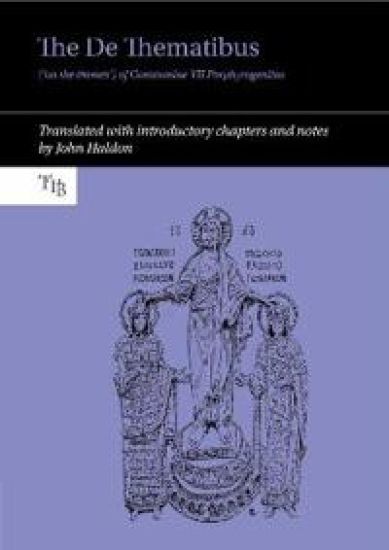
The De Thematibus ('on the themes') of Constantine VII Porphyrogenitus
The 10th-century treatise on the military provinces (the ‘themes’) of the medieval East Roman (Byzantine) empire is one of the most enigmatic of the works ascribed to the emperor Constantine VII Porphyrogennetos. A mix of historical geography, imperial propaganda, historical information and legend or myth drawn from ancient, Hellenistic as well as Roman and late Roman sources, it was one of the emperor’s earliest works, although the extent to which he was its author remains debated. Its purpose, and the emperor’s aims in commissioning or writing it, are equally unclear, since it offers neither an accurate historical account of the evolution of the themata nor does it appear to draw on available administrative material that would have been available to its writer. It has remained until now untranslated into English and thus inaccessible to many, in particular to students at all levels both within and outside the field of Byzantine Studies, as well as non-specialist readers. This volume is intended to rectify this situation with a translation into English, accompanying detailed notes, and three introductory chapters providing context and background to the history of the text, Byzantine ideas about geography, and the debate over the themata themselves.
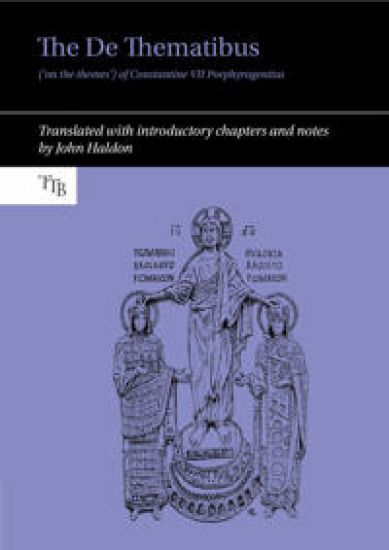
The De Thematibus ('on the themes') of Constantine VII Porphyrogenitus
The 10th-century treatise on the military provinces (the ‘themes’) of the medieval East Roman (Byzantine) empire is one of the most enigmatic of the works ascribed to the emperor Constantine VII Porphyrogennetos. A mix of historical geography, imperial propaganda, historical information and legend or myth drawn from ancient, Hellenistic as well as Roman and late Roman sources, it was one of the emperor’s earliest works, although the extent to which he was its author remains debated. Its purpose, and the emperor’s aims in commissioning or writing it, are equally unclear, since it offers neither an accurate historical account of the evolution of the themata nor does it appear to draw on available administrative material that would have been available to its writer. It has remained until now untranslated into English and thus inaccessible to many, in particular to students at all levels both within and outside the field of Byzantine Studies, as well as non-specialist readers. This volume is intended to rectify this situation with a translation into English, accompanying detailed notes, and three introductory chapters providing context and background to the history of the text, Byzantine ideas about geography, and the debate over the themata themselves.
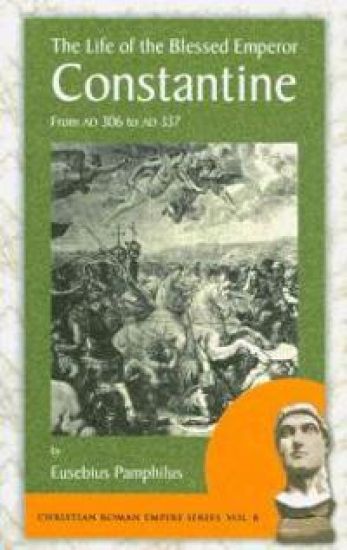
The Life of the Blessed Emperor Constantine

The Life of the Blessed Emperor Constantine

Evolution Publishing Manufacturing
2009
pokkari
Constantine the Great is one of those rare historical figures who is nearly as controversial today as he was in his own time. Lauded, both then and now, as a military hero who ended the brutal persecutions of Christians and as the first Roman emperor to himself embrace Christianity, Constantine is just as often vilified as a destructive innovator, a coddler of heretics, and a tyrannical hypocrite with the blood of his own family on his hands. The Life of the Blessed Emperor Constantine was penned shortly after the emperor's death in AD 337 by the great Church historian Eusebius Pamphilus, bishop of C sarea. Though criticized as mere panegyric lionizing Constantine's virtues while ignoring his flaws, Eusebius's Life is nonetheless the most substantial and detailed biography of the first Christian emperor to come down to us from antiquity. The work is also the sole source for several key episodes in Constantine's life--including the emperor's famous vision of a cross in the sky accompanied by the words, "Conquer by this."