This book studies the urban spaces imagined by the technocrats who had the power to shape Madrid between 1900 and 1936 and relates them to the fiction of authors who responded by creating utopian and dystopian narratives.
The papers collected in this volume are alike in dealing with media discourse, but differ in that they represent widely differing approaches. However, in spite of their seeming differences, they all share the quality of being concerned with news discourse and striving to find new ways of analysing news discourse. On the face of it, they also differ in that while the majority of them are concerned exclusively with linguistic discourse analysis, some with the analysis of both linguistic and non-linguistic signs, and one exclusively with non-linguistic signification, these differences are bridged by their common quest for finding new ways of reading news discourse.
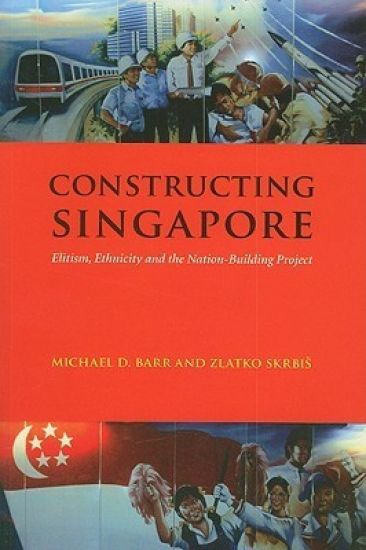
Singapore has few natural resources but, in a relatively short history, its economic and social development and transformation are nothing short of remarkable. Today Singapore is by far the most successful exemplar of material development in Southeast Asia and it often finds itself the envy of developed countries. Furthermore over the last three and a half decades the ruling party has presided over the formation of a thriving community of Singaporeans who love and are proud of their country.Nothing about these processes has been 'natural' in any sense of the word. Much of the country's investment in nation building has in fact gone into the selection, training and formation of a ruling and administrative elite that reflects and will perpetuate its vision of the nation. The government ownership of the nation-building project, its micromanagement of everyday life and the role played by the elite are three fundamental elements in this complex and continuing process of construction of a nation. The intense triangulation of these elements and the pace of change they produce make Singapore one of the most intriguing specimens of nation building in the region.In a critical study of the politics of ethnicity and elitism in Singapore, Constructing Singapore looks inside the supposedly 'meritocratic' system, from nursery school to university and beyond, that produces Singapore's political and administrative elite. Focusing on two processes elite formation and elite selection it gives primary attention to the role that ethno-racial ascription plays in these processes but also considers the input of personal connections, personal power, class and gender.The result is a study revealing much about how Singapore's elite-led nationbuilding project has reached its current state whereby a Singaporean version of Chinese ethno-nationalism has overwhelmed the discourse on national and Singaporean identity.
Singapore has few natural resources but, in a relatively short history, its economic and social development and transformation are nothing short of remarkable. Today Singapore is by far the most successful exemplar of material development in Southeast Asia and it often finds itself the envy of developed countries. Furthermore over the last three and a half decades the ruling party has presided over the formation of a thriving community of Singaporeans who love and are proud of their country.Nothing about these processes has been 'natural' in any sense of the word. Much of the country's investment in nation building has in fact gone into the selection, training and formation of a ruling and administrative elite that reflects and will perpetuate its vision of the nation. The government ownership of the nation-building project, its micromanagement of everyday life and the role played by the elite are three fundamental elements in this complex and continuing process of construction of a nation. The intense triangulation of these elements and the pace of change they produce make Singapore one of the most intriguing specimens of nation building in the region.In a critical study of the politics of ethnicity and elitism in Singapore, Constructing Singapore looks inside the supposedly 'meritocratic' system, from nursery school to university and beyond, that produces Singapore's political and administrative elite. Focusing on two processes elite formation and elite selection it gives primary attention to the role that ethno-racial ascription plays in these processes but also considers the input of personal connections, personal power, class and gender. The result is a study revealing much about how Singapore's elite-led nationbuilding project has reached its current state whereby a Singaporean version of Chinese ethno-nationalism has overwhelmed the discourse on national and Singaporean identity.
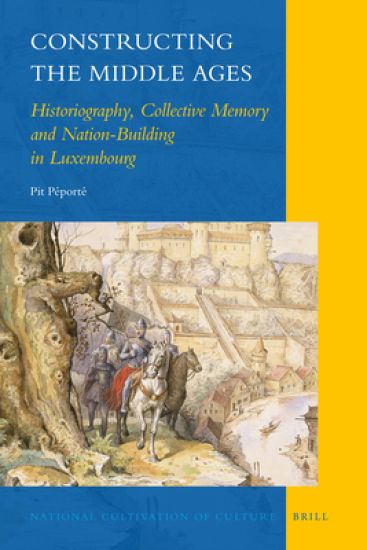
Recognising the importance of the Middle Ages as a vital point of reference in the construction of national identities, this challenging book examines the remarkable role played by the period in the grand duchy of Luxembourg. This country is representative of the close relationship between historicism and nation-building in modern Europe. Tracing the fortunes of four pivotal figures from their own lifetimes to the present, this book uncovers how they each entered collective memory and came to play a key role in a national narrative of history. The analysis includes the foundation myth of Sigefroid and Melusine, the posthumous career of Countess Ermesinde and King John of Bohemia's transformation into a national hero.Borrowing some of its theoretical framework from the study of lieux de m moire, this wide-ranging book crosses disciplinary boundaries and addresses not only historical writing, but also literature, the visual arts, and popular culture.
In Constructing Change, Ezgi B. Unsal provides a political economy of electricity and housing provision in Turkey. By using the case studies of electricity and housing in Turkey, the book explores how social provision is increasingly commodified across the globe as a defining feature of financialisation. Distinguishing this trend from macroeconomic definitions of financialisation, the book offers a contextual narrative of economic change in Turkey, with undetermined macroeconomic outcomes. It contributes to the literature on the financialisation of social provision and the political economy of Turkey, by confirming the increasing influence of finance on social provision sectors, making them prone to volatility while contributing to their growth at the same time.
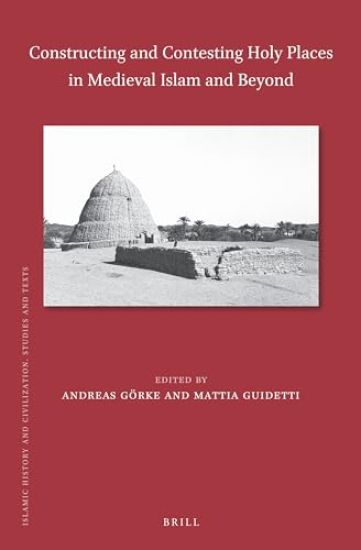
This volume brings together thirteen case studies devoted to the establishment, growth, and demise of holy places in Muslim societies, thereby providing a global look on Muslim engagement with the emplacement of the holy. Combining research by historians, art historians, archaeologists, and historians of religion, the volume bridges different approaches to the study of the concept of "holiness" in Muslim societies. It addresses a wide range of geographical regions, from Indonesia and India to Morocco and Senegal, highlighting the strategies implemented in the making and unmaking of holy places in Muslim lands. Contributors: David N. Edwards, Claus-Peter Haase, Beatrice Hendrich, Sara Kuehn, Zacharie Mochtari de Pierrepont, Sara Mondini, Harry Munt, Luca Patrizi, George Quinn, Eric Ross, Ruggero Vimercati Sanseverino, Ethel Sara Wolper.
The influence of Japanese art and culture on art in late 19th-century Europe and America through collections of objects and knowledge transfer is already recognised. However, the research in this field often neglects architecture. This study takes a new approach, placing architecture at the centre. Through in-depth analysis of contemporary textual and visual sources, Beate L ffler shows how western actors from different backgrounds interpreted Japanese architecture as they experienced it, either face-to-face or via texts and images. It unveils a complex process of appropriation and rejection, of claim to interpretive sovereignty, and fascination with the foreign, that led to both new knowledge and cultural clich s.
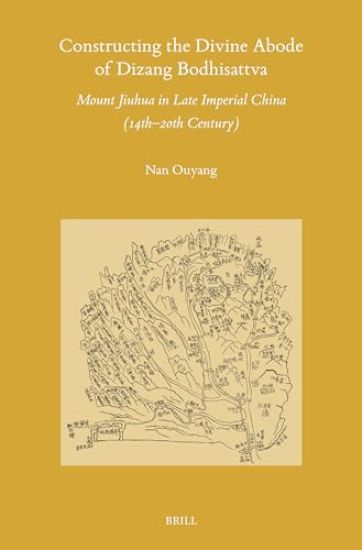
This book explores how Mount Jiuhua became the seat of Dizang Bodhisattva and evolved into a renowned Buddhist mountain during the late imperial period. The uncoordinated yet collective efforts of various interested parties shaped the dynamic interplay between tangible elements (mummies, masters, pilgrimage practices) and intangible factors (myths, popular literature), redefining and reinforcing the mountain's divine status. By incorporating previously overlooked sources, such as inscriptions, amulets, drama scripts, and "underworld passes," this study highlights the critical role of rank-and-file religious practitioners in the sacred place-making process.
A striking feature of the book of Jubilees is the visibility it gives to women in comparison to Genesis, with the matriarchs especially seeming to play an outsized role in the rewriting. Utilising approaches drawn from the fields of gender and feminist studies, Constructing Femininity in the Book of Jubilees interrogates the motives and priorities that guided the rewriter in his re-presentation of the matriarchs, asking to what extent the treatment of these characters was unique to this text and its author's attitude towards women or typical of the then literary Zeitgeist.
The issue of tortious liability for harm caused by climate change has risen to some prominence in recent legal literature. However, except for a few U.S. cases, litigation in this area remains dormant in most jurisdictions. Now, in anticipation of the likelihood - and desirability - of such litigation, this ground-breaking study examines the extent to which a claim brought by a private, public, or quasi-public claimant against a private defendant (such as a producer of fossil fuels or major emitter of greenhouse gases) alleging climate change-related damage, and based on one or more causes of action under the English law of torts, can be pursued in the English Courts. Focusing on the circumstances and the prerequisites that must be met in order to construct a potentially successful case, the author addresses the following questions: * On the basis of a high-level review of the relevant scientific literature, what impacts is climate change expected to have on the human and natural environment? * What goals would be served by climate change litigation? * Under what circumstances would the English Courts accept jurisdiction in relation to a climate change claim?* To what extent can existing tort law precedents - e.g., negligence, product liability, public nuisance - be used in climate change-related claims? * To what extent does the existence of a regulatory framework limit or extinguish the liability of the defendants if they can show full compliance with the provisions of the relevant regulations? * How would the current law of causation need to develop in order to overcome the difficulties inherent in ascribing certain forms of damage to climate change? The analysis considers each available cause of action in turn, setting out the elements that would have to be established, as well as highlighting the obstacles that would need to be overcome if the validity of the claim was to be upheld. The defences that would be available to the defendants are also examined, and their effectiveness at invalidating a claim is tested. In addition, the study assesses the remedies that could be claimed in law and equity for climate change-related damage. The analysis also incorporates examination of case law from tobacco, asbestosis, handguns, and other relevant types of litigation - including climate-based litigation cases in the U.S.- where comparable issues of multiple tortfeasors, proportional liability, materiality thresholds, increase in risk, and other complexities of causation have already been considered at some length. By concentrating on tortious liability, the author clearly shows that litigation can become a significant means of compensating climate change victims, encouraging regulatory change, and facilitating a socioeconomic transition away from the fossil fuel economy. Although the book will be of particular interest to lawyers in multinational corporations and certain non-governmental organizations, the book's relevance to a much broader spectrum of jurists, academics, and policymakers is undeniable.
Former World Bank education specialist Bjorn Nordtveit argues in this groundbreaking study that a development project or policy should not be understood and analyzed as a linear system. Instead, he believes we should view it as a complex and dialectical organism. Basing his theories on post-development and complexity theories as well as New Institutional Economics, Nordtveit lays out a novel method of analyzing development – both on the ground and in the think-tank. Informed by detailed quotations from interviews with local people involved in a World Bank literacy project in Senegal, the author demonstrates how a project is entangled in the global economy, and how it constructs development through a discourse of gender equity, growth of the civil society, and promotion of the use of private provision of social services. Nordtveit’s new analytical methodology claims it is necessary for all development initiatives to first investigate whether the donors’ vision of development coincides with national – and local – notions of development. Only then can the holistic and complex interrelations between the project and all other development desires and services in the community be studied. Finally, the project’s cost effectiveness must be considered. The author also examines the strengths and weaknesses of ‘public-private partnerships’, which are being used ever more frequently by donor agencies to implement social services. Constructing Development is a tour de force. Going back and forth between the global and the local, it examines a World Bank women's literacy project in Senegal through a critical and integrated discussion of education and development, globalization, gender, civil society, and privatization. Nordtveit offers an insightful and innovative critique of development theory and practice, drawing on new authors and fields, such as Complexity Theory. His book is a must read across a number of fields includingcomparative and international education, adult education, gender studies, and economic development. Steven J. Klees, Former President, Comparative and International Education Society Harold R.W. Benjamin Professor of International and Comparative Education University of Maryland
Legal theory has been much occupied with understanding legal systems and analysing the concept of legal system. This has usually been done on the tacit or explicit assumption that legal systems and states are co-terminous. But since the Rome Treaty there has grown up in Europe a `new legal order', neither national law nor international law, and under its sway older conceptions of state sovereignty have been rendered obsolete. At the same time, it has been doubted whether the `European Union' that has grown out of the original `European Communities' has a satisfactory constitution or any constitution at all. What kind of legal and political entity is this `Union' and how does it relate juridically and politically to its member states? Further, the activity of construing or constructing `legal system' and legal knowledge becomes visibly problematic in this context. These essays wrestle with the above problems.
Examining the debate between activists and professional planners over the vision of the future of a large growth corridor in Sydney, Australia, this case study maps the history of development from the late sixties to the mid-nineties, during which time serious environmental and financial problems arose. The book outlines five major visions of the future development and examines forms of political, economic, and institutional power applied by the parties in the project, with emphasis on the processes of infrastructure privatization and ecological impacts. The conclusion reflects on contemporary dilemmas about pluralism.
Examining the debate between activists and professional planners over the vision of the future of a large growth corridor in Sydney, Australia, this case study maps the history of development from the late sixties to the mid-nineties, during which time serious environmental and financial problems arose. The book outlines five major visions of the future development and examines forms of political, economic, and institutional power applied by the parties in the project, with emphasis on the processes of infrastructure privatization and ecological impacts. The conclusion reflects on contemporary dilemmas about pluralism.
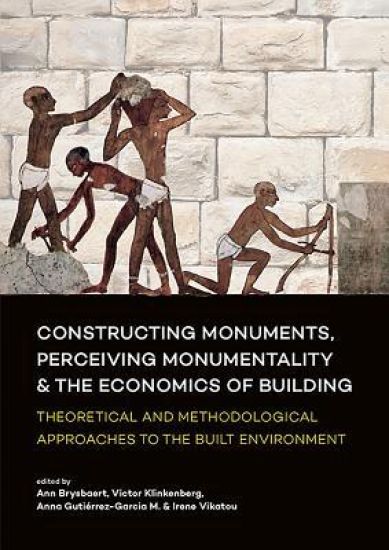
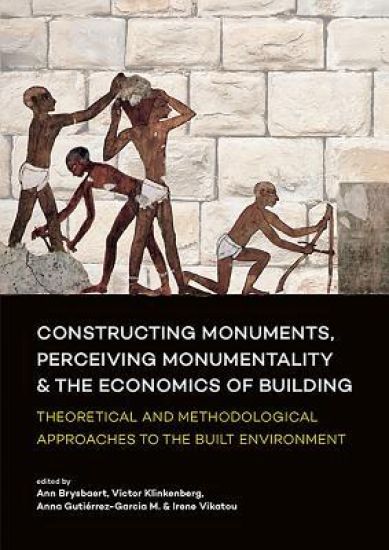
In many societies monuments are associated with dynamic socio-economic and political processes that these societies underwent and/or instrumentalised. Due to the often large human and other resources input involved in their construction and maintenance, such constructions form an useful research target in order to investigate both their associated societies as well as the underlying processes that generated differential construction levels. Monumental constructions may physically remain the same for some time but certainly not forever. The actual meaning, too, that people associate with these may change regularly due to changing contexts in which people perceived, assessed, and interacted with such constructions.These changes of meaning may occur diachronically, geographically but also socially. Realising that such shifts may occur forces us to rethink the meaning and the roles that past technologies may play in constructing, consuming and perceiving something monumental. In fact, it is through investigating the processes, the practices of building and crafting, and selecting the specific locales in which these activities took place, that we can argue convincingly that meaning may already become formulated while the form itself is still being created. As such, meaning-making and -giving may also influence the shaping of the monument in each of its facets: spatially, materially, technologically, socially and diachronically.This volume varies widely in regional and chronological focus and forms a useful manual to studying both the acts of building and the constructions themselves across cultural contexts. A range of theoretical and practical methods are discussed, and papers illustrate that these are applicable to both small or large architectural expressions, making it useful for scholars investigating urban, architectural, landscape and human resources in archaeological and historical contexts. The ultimate goal of this book is to place architectural studies, in which people’s interactions with each other and material resources are key, at the crossing of both landscape studies and material culture studies, where it belongs.
In many societies monuments are associated with dynamic socio-economic and political processes that these societies underwent and/or instrumentalised. Due to the often large human and other resources input involved in their construction and maintenance, such constructions form an useful research target in order to investigate both their associated societies as well as the underlying processes that generated differential construction levels. Monumental constructions may physically remain the same for some time but certainly not forever. The actual meaning, too, that people associate with these may change regularly due to changing contexts in which people perceived, assessed, and interacted with such constructions.These changes of meaning may occur diachronically, geographically but also socially. Realising that such shifts may occur forces us to rethink the meaning and the roles that past technologies may play in constructing, consuming and perceiving something monumental. In fact, it is through investigating the processes, the practices of building and crafting, and selecting the specific locales in which these activities took place, that we can argue convincingly that meaning may already become formulated while the form itself is still being created. As such, meaning-making and -giving may also influence the shaping of the monument in each of its facets: spatially, materially, technologically, socially and diachronically.This volume varies widely in regional and chronological focus and forms a useful manual to studying both the acts of building and the constructions themselves across cultural contexts. A range of theoretical and practical methods are discussed, and papers illustrate that these are applicable to both small or large architectural expressions, making it useful for scholars investigating urban, architectural, landscape and human resources in archaeological and historical contexts. The ultimate goal of this book is to place architectural studies, in which people’s interactions with each other and material resources are key, at the crossing of both landscape studies and material culture studies, where it belongs.
Leadership is in no way an innate capacity, leaders learn how to lead. This involves constructing leadership through reflection. Reflection takes many different forms. One is to practice being a leader, another is to take courses, read books or why not watch films. Most people have seen more films than read books and in this book a thesis that the role of the cinema in providing work place behavioural norms has in fact been underestimated is launched. Constructing Leadership is the product of a longitudinal research project in which feature films are construed from a leadership perspective. It aims to say something interesting about leadership and also to encourage greater attentiveness to the films we watch. In this book nine films are analysed in terms of what they say about leadership. They are: `Any Given Sunday , `Elizabeth , `Beck The Man With Icons , `Nixon , `The Mozart Brothers , `Life of Brian , `The Godfather and `The Bridge on the River Kwai . Each film raises a number of themes that are analysed on the basis of theories dealing with leadership. Constructing Leadership has been written for leaders and leaders-to-be. It will suit students in higher education. But we hope as well that the book will be read by everyone who, like us, is interested in the essence of leadership.
This series of ad hoc publications deals with topical issues in the field of arms limitation, disarmament and international security and are intended primarily for those concerned with these matters in Government, civil society and in the academic community. This issue focuses on tactical nuclear weapon (TNW) reduction, both in the US and Europe. Despite the many debates, little has been done in recent years to reduce or eliminate the forward-deployed NATO nuclear weapons. This paper presents an overview of relevant discussion points ranging from a brief historic outline, theoretical and practical arguments for TNW disarmament, the logic of nuclear disarmament, and the provision of a clear description of the different positions of relevant NATO member States on the TNW issue.