Flip the Book Upside & Flip your Thinking Flip the drawing turtle meets many sea creatures with unique problems that are solved with clever changes in perspective. The wonderful and engaging illustrations in this unique picture book by talented Australian author and illustrator Dale Baker change appearance once flipped upside down. Coupled with positive messages, this fabulous book encouages kids to flip their thinking to more helpful thoughts.A beautifully illustrated and cleverly written picture book that all children will genuninely love
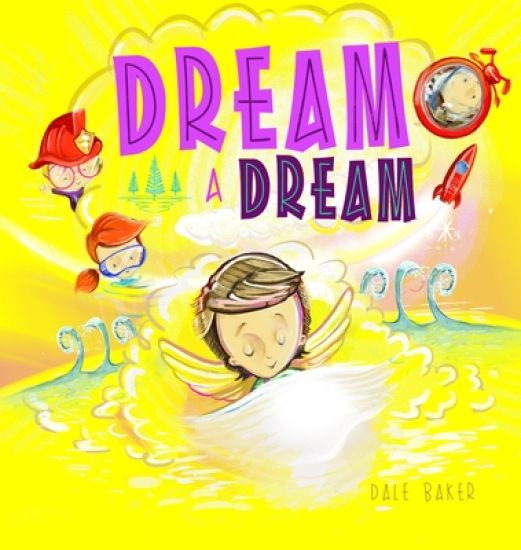
The secret to becoming Clever Forever is in this book. Will you decide to read it, or take a quick look? The answer is clear once you know exactly how. It's been taught in my classroom and is being taught right now.'How to be Clever Forever' is a celebration of each child's unique characteristics and interests, encouraging kids to follow their passions. This book gives real examples of students Dale has taught over many years that have done just that to go onto successful career paths. Teacher Dale Baker creates Clever Kid's Book that encourage positive thinking, that kids love.
How to be an Artist is a perfect picture book for 3-6 year old creative kids When Matisse decides that she is going to become an artist, she finds out being original isn't as easy as first thought. She comes to the realisation that inspiration can be more important than motivation. How to be an Artist is a lovely story of persistence and insight. Engaging step by step illustrations by a practising artist, author and illustrator together with fun facts on some of the greatest artists make this the perfect book to inspire young creative kids
Fran McMillan, a thirty-something chisel-wielding woman, is camped at Mount Clear in Namadgi National Park, escaping the heat of a Queensland summer, when she encounters Kelvin, one of a group of men from Canberra restoring a high-country hut. She inveigles her way into the work party - a weekend that changes her life.As Fran works on the hut, she hears the fragmented story of the pioneering Thompson family who came to live in the harsh Snow Belt in 1909, and of Yenohan, an Aboriginal girl who befriended their daughter, Eleanor. Love also pays Fran a brief visit during the weekend when she follows Kelvin into the wilderness. Fran returns to Queensland and resumes furniture making until a disaster calls her back south: it is January 2003, and wildfires are racing through the Alps, ravaging the national park, destroying lovingly-restored huts in their path and altering the nature of the Australian High Country forever.In Queensland, Fran watches television reports in disbelief as a firestorm engulfs the outer suburbs of Canberra, consuming 500 homes and four people. For three days, she tries to contact Kelvin. On the fourth she throws her backpack into her car and drives south to Canberra to face the truth - and Kelvin's wife and family. Whilst in Canberra Fran visits Tilly Anderson (a descendant of the Thompson family) and the final pieces of the puzzle surrounding the relationship between the family and Yenohan fall into place.
The rift between black theology, with its social and political concerns, and black churches, with their emphases on pastoral care and piety, has been growing. Here, Dale Andrews offers a way to bridge this gap by redefining the paradigm of church as "refuge" in terms of a faith identity that brings together a concern for liberation with a pastoral focus on spirituality. This faith identity emerges from dominant biblical themes that shape preaching and pastoral care.Andrews' insightful analysis of the gulf between black churches and black theology reveals the invasive influence of individualism in black religious life as well as the shared values for social change and care of the soul. Notably, it is this influence of individualism that has disrupted communal solidarity and brought about the neglect of liberation ethics within black church life. This practical theology will contribute greatly towards renewing the pastoral and prophetic ministry of black religious life.
Probing into numerous questions about gender and sexuality, Dale Martin delves into the biblical texts anew and unearths surprising findings. Avoiding preconceptions about ancient sexuality, he explores the ethics of desire and marriage and pays careful attention to the original meanings of words, especially those used as evidence of Paul's opposition to homosexuality. For example, after a remarkably faithful reading of the scriptural texts, Martin concludes that our contemporary obsession with marriage--and the whole search for the "right" sexual relationships--is antithetical to the message of the gospel. In all of these essays, however, Martin argues for engaging Scripture in a way that goes beyond the standard historical-critical questions and the assumptions of textual agency in order to find a faith that has no foundations other than Jesus Christ.
For generations, most seminary teaching of the Bible has focused on the historical-critical method. While this method has been the standard in almost every seminary curriculum, the effects of this approach to Scripture have hardly been examined. From examining the biblical studies courses at ten different seminaries and divinity schools, Dale Martin learned what faculties were doing and what students were hearing. This book presents his discoveries, offering the best-ever inside look at the teaching of the Bible for ministry.Going beyond mere description, Martin argues for a new emphasis on interpreting Scripture within the context of church history and theology. Such a reading would be more theological, more integrated into the whole theological curriculum, and more theoretical (as it would focus on what's at stake in interpretation); however, Martin surprisingly argues, it would be more practical at the same time.
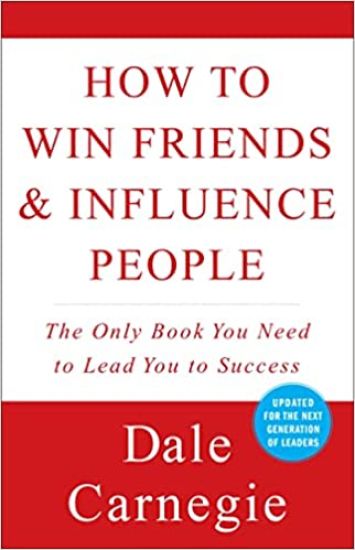
Updated in 2022 for today's readers, Dale Carnegie's timeless bestseller How to Win Friends and Influence People is a classic that has improved and transformed the professional and personal and lives of millions. One of the best-known motivational guides in history, Dale Carnegie's groundbreaking book has sold tens of millions of copies, been translated into almost every known language, and has helped countless people succeed. Originally published during the depths of the Great Depression--and equally valuable during booming economies or hard times--Carnegie's rock-solid, time-tested advice has carried countless people up the ladder of success in their professional and personal lives. How to Win Friends and Influence People teaches you: -How to communicate effectively -How to make people like you -How to increase your ability to get things done -How to get others to see your side -How to become a more effective leader -How to successfully navigate almost any social situation -And so much more Achieve your maximum potential with this updated version of a classic--a must-read for the 21st century.
The first trade paperback edition of the classic guide to conquering the fears and worries that prevent individuals from living full and happy lives offers practical advice on how to eliminate business and financial anxieties, turn criticism into an advantage, avoid fatigue, and more. Reprint. 25,000 first printing.
The Roman author Pliny the Younger characterizes Christianity as “contagious superstition”; two centuries later the Christian writer Eusebius vigorously denounces Greek and Roman religions as vain and impotent “superstitions.” The term of abuse is the same, yet the two writers suggest entirely different things by “superstition.”Dale Martin provides the first detailed genealogy of the idea of superstition, its history over eight centuries, from classical Greece to the Christianized Roman Empire of the fourth century C.E. With illuminating reference to the writings of philosophers, historians, and medical teachers he demonstrates that the concept of superstition was invented by Greek intellectuals to condemn popular religious practices and beliefs, especially the belief that gods or other superhuman beings would harm people or cause disease. Tracing the social, political, and cultural influences that informed classical thinking about piety and superstition, nature and the divine, Inventing Superstition exposes the manipulation of the label of superstition in arguments between Greek and Roman intellectuals on the one hand and Christians on the other, and the purposeful alteration of the idea by Neoplatonic philosophers and Christian apologists in late antiquity.Inventing Superstition weaves a powerfully coherent argument that will transform our understanding of religion in Greek and Roman culture and the wider ancient Mediterranean world.
The question of whether true friendship could exist in an era of patronage occupied Renaissance Florentines as it had the ancient Greeks and Romans whose culture they admired and emulated. Rather than attempting to measure Renaissance friendship against a universal ideal defined by essentially modern notions of disinterestedness, intimacy, and sincerity, in this book Dale Kent explores the meaning of love and friendship as they were represented in the fifteenth century, particularly the relationship between heavenly and human friendship.She documents the elements of shared experience in friendships between Florentines of various occupations and ranks, observing how these were shaped and played out in the physical spaces of the city: the streets, street corners, outdoor benches and loggias, family palaces, churches, confraternal meeting places, workshops of artisans and artists, taverns, dinner tables, and the baptismal font.Finally, Kent examines the betrayal of trust, focusing on friends at moments of crisis or trial in which friendships were tested, and failed or endured. The exile of Cosimo de’ Medici in 1433 and his recall in 1434, the attempt in 1466 of the Medici family’s closest friends to take over their patronage network, and the Pazzi conspiracy to assassinate Lorenzo and Giuliano de’ Medici in 1478 expose the complexity and ambivalence of Florentine friendship, a combination of patronage with mutual intellectual passion and love—erotic, platonic, and Christian—sublimely expressed in the poetry and art of Michelangelo.
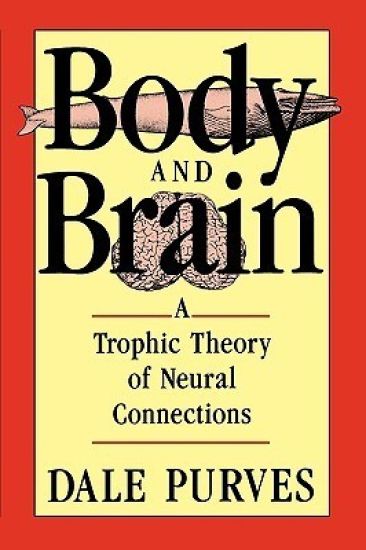
The major goal of developmental neurobiology is to understand how the nervous system is put together. A central theme that has emerged from research in this field over the last several decades is the crucial role of trophic interactions in neural assembly, and indeed throughout an animal's life. Trophic—which means nutritive—refers to long-term interdependencies between nerve cells and the cells they innervate.The theory of trophic effects presented in this book offers an explanation of how the vertebrate nervous system is related to—and regulated by—the body it serves. The theory rationalizes the nervous system's accommodation, throughout life, to the changing size and form of the body it tenants, indicating the way connections between nerve cells change in response to stimuli as diverse as growth, injury, experience, and natural selection.Dale Purves, a leading neurobiologist best known for his work on the formation and maintenance of synaptic connections, presents this theory within the historical setting of earlier ideas about neural organization—from Weiss's theory of functional reorganization to the chemoaffinity theory championed by Sperry. In addition to illuminating eighty years of work on trophic interactions, this book asks its own compelling questions: Are trophic interactions characteristic of all animals or only of those with complex nervous systems? Are trophic interactions related to learning? What does the trophic theory of neural connections imply about the currently fashionable view that the nervous system operates according to Darwinian principles?Purves lays the theoretical foundation for practical exploration of trophic interactions as they apply to neural connections, a pursuit that will help us understand how our own nervous systems generate change. The ideas in this book not only enrich neurobiology but also convey the profound relevance of neuroscience to other fields of life science.
The universality of musical tones has long fascinated philosophers, scientists, musicians, and ordinary listeners. Why do human beings worldwide find some tone combinations consonant and others dissonant? Why do we make music using only a small number of scales out of the billions that are possible? Why do differently organized scales elicit different emotions? Why are there so few notes in scales? In Music as Biology, Dale Purves argues that biology offers answers to these and other questions on which conventional music theory is silent.When people and animals vocalize, they generate tonal sounds—periodic pressure changes at the ear which, when combined, can be heard as melodies and harmonies. Human beings have evolved a sense of tonality, Purves explains, because of the behavioral advantages that arise from recognizing and attending to human voices. The result is subjective responses to tone combinations that are best understood in terms of their contribution to biological success over evolutionary and individual history. Purves summarizes evidence that the intervals defining Western and other scales are those with the greatest collective similarity to the human voice; that major and minor scales are heard as happy or sad because they mimic the subdued and excited speech of these emotional states; and that the character of a culture’s speech influences the tonal palette of its traditional music.Rethinking music theory in biological terms offers a new approach to centuries-long debates about the organization and impact of music.
The 1990 Pulitzer Prize-winning author of And Their Children After Them presents four Californians--Black, White, Asian, Latino--and their search fo r a new center in the shrill immigration debate, and how it can guide the country. Graphs, maps.
This intensive social biography of a rural Moroccan judge discusses Islamic education, the concept of knowledge it embodies, and its communication from the early years of colonial rule in twentieth-century Morocco to the present. The work sensitively combines the outlooks and perceptions of the author and those of the shrewd and reflective 'Abd ar-Rahman, supplementing our knowledge of resurgent militant Islamic movements by describing other popularly supported Islamic attitudes toward the contemporary world.
In this updated paperback edition, Dale Eickelman and James Piscatori explore how the politics of Islam play out in the lives of Muslims throughout the world. They discuss how recent events such as September 11 and the 2003 war in Iraq have contributed to reshaping the political and religious landscape of Muslim-majority countries and Muslim communities elsewhere. As they examine the role of women in public life and Islamic perspectives on modernization and free speech, the authors probe the diversity of the contemporary Islamic experience, suggesting general trends and challenging popular Western notions of Islam as a monolithic movement. In so doing, they clarify concepts such as tradition, authority, ethnicity, pro-test, and symbolic space, notions that are crucial to an in-depth understanding of ongoing political events. This book poses questions about ideological politics in a variety of transnational and regional settings throughout the Muslim world. Europe and North America, for example, have become active Muslim centers, profoundly influencing trends in the Middle East, Africa, Central Asia, and South and Southeast Asia. The authors examine the long-term cultural and political implications of this transnational shift as an emerging generation of Muslims, often the products of secular schooling, begin to reshape politics and society--sometimes in defiance of state authorities. Scholars, mothers, government leaders, and musicians are a few of the protagonists who, invoking shared Islamic symbols, try to reconfigure the boundaries of civic debate and public life. These symbolic politics explain why political actions are recognizably Muslim, and why "Islam" makes a difference in determining the politics of a broad swath of the world.
Does growing economic interdependence among great powers increase or decrease the chance of conflict and war? Liberals argue that the benefits of trade give states an incentive to stay peaceful. Realists contend that trade compels states to struggle for vital raw materials and markets. Moving beyond the stale liberal-realist debate, Economic Interdependence and War lays out a dynamic theory of expectations that shows under what specific conditions interstate commerce will reduce or heighten the risk of conflict between nations. Taking a broad look at cases spanning two centuries, from the Napoleonic and Crimean wars to the more recent Cold War crises, Dale Copeland demonstrates that when leaders have positive expectations of the future trade environment, they want to remain at peace in order to secure the economic benefits that enhance long-term power. When, however, these expectations turn negative, leaders are likely to fear a loss of access to raw materials and markets, giving them more incentive to initiate crises to protect their commercial interests. The theory of trade expectations holds important implications for the understanding of Sino-American relations since 1985 and for the direction these relations will likely take over the next two decades. Economic Interdependence and War offers sweeping new insights into historical and contemporary global politics and the actual nature of democratic versus economic peace.
An Economist Biggest Book of the YearHow commerce determines whether America preserves the peace or goes to warWhen the Cold War ended, many believed that expanding trade would usher in an era of peace. Yet today the United States finds itself confronting not just Russia in Europe but China in the Indo-Pacific, Africa, and Latin America. Shedding new light on how trade both reduces and increases the risks of international crisis, A World Safe for Commerce traces how, since the nation’s founding, the United States has consistently moved from peace to conflict when the commerce needed for national security is under threat.Dale Copeland shows how commerce pushes the United States and its rivals to expand their spheres of influence for access to goods even as they worry about provoking a breakdown in trade relations that could spiral into military conflict. Taking readers from the wars with Britain in 1776 and 1812 to World War II and the Cold War, he describes how America’s leaders have grappled with this inherent tension, and why they have shifted, sometimes dramatically, from peaceful, mutually beneficial policies to coercion and force in order to increase control over vital trade and prevent economic decline.A World Safe for Commerce reveals how trade competition could lead the United States and China into full-scale confrontation. But it also offers hope that both sides can work to improve their overall trade expectations and foster the confidence needed for long-term peace and stability.