

Kirjahaku
Etsi kirjoja tekijän nimen, kirjan nimen tai ISBN:n perusteella.
1000 tulosta hakusanalla Daniel P

First published more than 20 years ago, Superpuppy was instantly celebrated for its unique approach to dog training, which emphasizes the importance of understanding a dog's personality. Clarion is proud to announce the publication of a revised edition, updated for contemporary readers and featuring brand-new cover art. Award-winning authors Jill and Daniel Pinkwater share their enthusiasm and knowledge in this accessible guidebook. Readers will find advice on all aspects of puppy care, from how to pick the right puppy to the proper way to housebreak and train it. Enlivened by personal anecdotes and enhanced by black-and-white illustrations, the new Superpuppy is sure to be embraced by loyal fans as well as a new generation of dog enthusiasts.
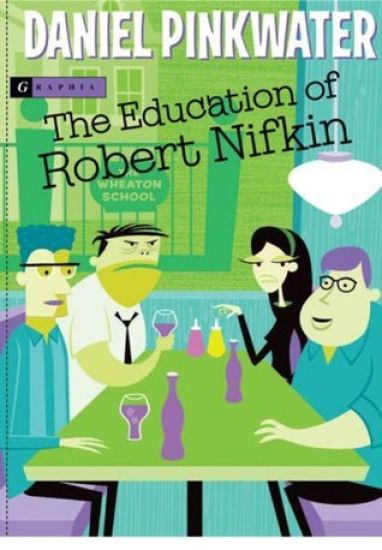
The Education of Robert Nifkin is the education of a beatnik. Set in 1950s Chicago and conveyed in the form of a college essay, Robert Nifkin details his journey from a mind-numbing high school that smells to the curriculum-free carnival of a private school ruled by bohemians, beatniks, and freaks.
What Young Chimpanzees Know about Seeing
Daniel Povinelli; Timothy Eddy
JOHN WILEY AND SONS LTD
2000
nidottu
Previous experimental research has suggested that chimpanzees may understand some of the epitemological aspects of visual perception, such as how the perceptual act of seeing can have internal mental consequences for an individual's state of knowledge. Other research suggests that chimpanzees and other nonhuman primates may understand visual perception at a simpler level; that is, they may at least understand seeing as a mental event that subjectively anchors organisms to the external world. However, these results are ambiguous and are open to several interpretations. In this Monograph, we report the results of 15 studies that were conducted with chimpanzees and preschool children to explore their knowledge about visual perception.

Daniel Patte argues here that when male European-American scholars interpret the Bible to produce a universally legitimate reading, they silence the Bible itself. Their reading practices exclude feminist, African American, and other so-called "minority" readings, as well as the interpretations of conservative and liberal laity. He further claims that ethical accountability requires recognizing that all exegesis consists of bringing critical understanding to ordinary readings, especially faith interpretations. Patte concludes that biblical studies must affirm the legitimacy of diverse ordinary readings and lead to an open discussion of the relative value of these readings.

A “delightful reader’s companion” (The New York Times) to the great nineteenth-century British novels of Austen, Dickens, Trollope, the Brontës, and more, this lively guide clarifies the sometimes bizarre maze of rules and customs that governed life in Victorian England.For anyone who has ever wondered whether a duke outranked an earl, when to yell “Tally Ho!” at a fox hunt, or how one landed in “debtor’s prison,” this book serves as an indispensable historical and literary resource. Author Daniel Pool provides countless intriguing details (did you know that the “plums” in Christmas plum pudding were actually raisins?) on the Church of England, sex, Parliament, dinner parties, country house visiting, and a host of other aspects of nineteenth-century English life—both “upstairs” and “downstairs. An illuminating glossary gives at a glance the meaning and significance of terms ranging from “ague” to “wainscoting,” the specifics of the currency system, and a lively host of other details and curiosities of the day.
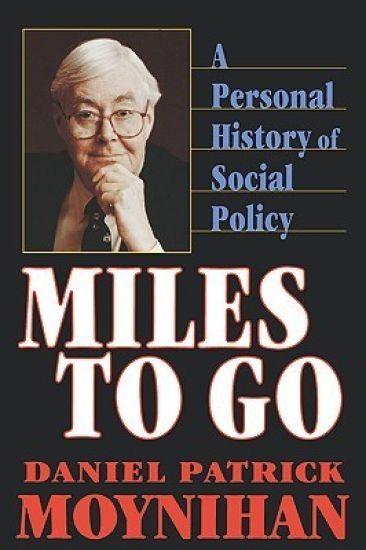
The democratic senator reflects on the politics, economics, and social problems of the last sixty years, and describes why the Democratic party has seen its social programs reversed in recent years
Foreign Policy. “In the annals of forgetfulness there is nothing quite to compare with the fading from the American mind of the idea of the law of nations.”Grenada. “We might have benefited from a weekend’s pause in which we could have considered our interests rather than merely giving in to our impulses.”The mining of Nicaraguan harbors. “A practice of deception mutated into a policy of deceit.”Iran–Contra. “The idea of international law had faded. But just as important, in the 1980s it had come to be associated with weaknesses in foreign policy. Real men did not cite Grotius.”As the era of totalitarianism recedes, the time is at hand to ask by what rules we expect to conduct ourselves, Senator Daniel Patrick Moynihan writes in this pellucid, and often ironic, examination of international law. Our founding fathers had a firm grasp on the importance and centrality of such law; later presidents affirmed it and tried to establish international institutions based on such high principles; but we lost our way in the fog of the Cold War.Moynihan’s exploration of American attitudes toward international law—those of presidents, senators, congressmen, public officials, and the public at large—reveals the abiding reverence for a law of nations and the attempts for almost two hundred years to make international law the centerpiece of foreign and strategic policy. Only in the last decade did a shift in values at the highest levels of government change the goals and conduct of the United States.Displaying a firm grasp of history, informed by senatorial insights and investigative data, elegantly written, this book is a triumph of scholarship, interpretation, and insight.
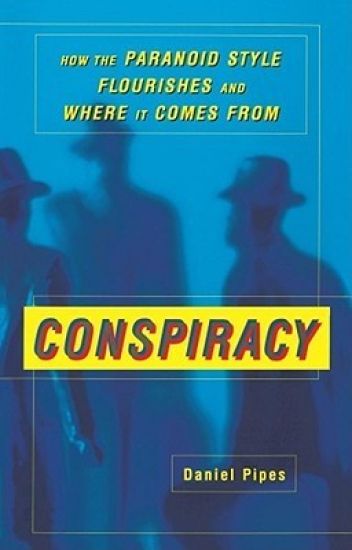
Was AIDS intentionally inflicted upon blacks by whites? Was JFK assassinated as part of an intricate conspiracy? Pipes traces conspiracy theories through history to show that "Conspiracism"—genuine and virulent belief in a conspiracy—dates back to the First Crusade and reached a peak in the Soviet Union and Nazi Germany, with the focus shifting from the Jews, groups such as Freemasons and the Rosicrucians, and back again. —DanielPipes.org
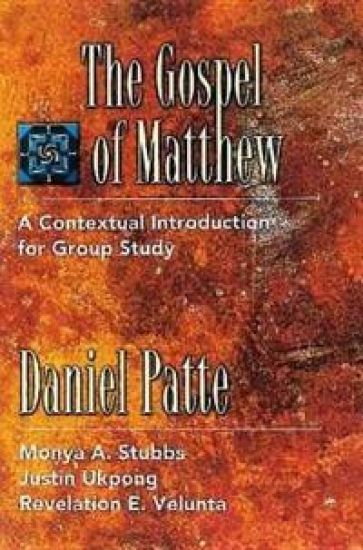
Two of the primary aims of most Bible teachers, expecially those in colleges and seminaries, are very nearly contradictory: 1) the teacher wants the student to gain perspective, to learn the limitations of his or her own understanding of the biblical text by encountering divergent viewpoints and 2) the teacher wants the student to gain confidence in his or her own ability to interpret the biblical text responsibly. This introduction to the book of Matthew assists the instructor with these two primary aims by: 1. Introducing the student to the wide variety of claims that are being made about the meaning of the Gospel of Matthew. 2. Introducing the student to ways of assessing these claims. 3. Leading the student to take responsibility within a group context for the choices he or she will make between these competing claims as an interpreter of the biblical text (church leader, preacher, or teacher). The book introduces the main themes and issues in the interpretation of the Gospel of Mathhew in a student- (and Instructor-) friendly format. This Introduction to the Gospel of Matthew also exemplifies a new direction in biblical interpretation being used at seminaries in the U. S.The method is comparative cultural and religious interpretation, using existing scholarly and popular interpretations as exemplars for study and student discussion.

The Global Bible Commentary invites its users to expand their horizon by reading the Bible with scholars from all over the world and from different religious persuasions. These scholars have approaches and concerns that often are poles apart. Yet they share two basic convictions: biblical interpretation always matters; and reading the Bible "with others" is highly rewarding. Each of the short commentaries of the Global Bible Commentary is a readily accessible guide for reading a biblical book. Written for undergraduate and seminary students and their teachers, as well as for pastors, priests, and Adult Sunday School classes, it introduces the users to the main features of the biblical book and its content. Yet each short commentary does more. It also brings us a precious gift, namely the opportunity of reading this biblical book as if for the first time. By making explicit the specific context and the concerns from which she/he reads the Bible, the scholar points out to us the significance of aspects of the biblical text that we simply took for granted or overlooked."If any book demonstrates the value of cultural criticism and the importance of particularity in interpretation, this is it! Scholars from diverse social locations in every continent bring their distinctive context to bear on the act of interpreting. In so doing, they shed eye-opening light on the biblical texts. The resulting critical dialogue with the Bible exposes the oppressive as well as the liberating dynamics of the texts while at the same time showing how the Bible might address the social, political, cultural, and economic dynamics of our world today. This collection can change the way you read the Bible-scholars and students, clergy and laity alike." -David Rhoads, Professor of New Testament, Lutheran School of Theology, Chicago, IL

Four-fantastic-books-in-one by the popular author of The Hoboken Chicken Emergency: Borgel Yobgorgle The Worms of Kukumlima The Snarkout Boys & the Baconburg Horror

Where is one place you don't want to go alone? Remember Werewolf Club members Ralf Alfa, Billy Furball, Lucy Fang, and Norman Gnormal? Well, they are back. Now they wreak havoc on a local restaurant they call "The Lunchroom of Doom." Tomato catsup squirts. Paper straws fly. Laughts and weird things abund. Don't miss this gripping story of the supernatural.
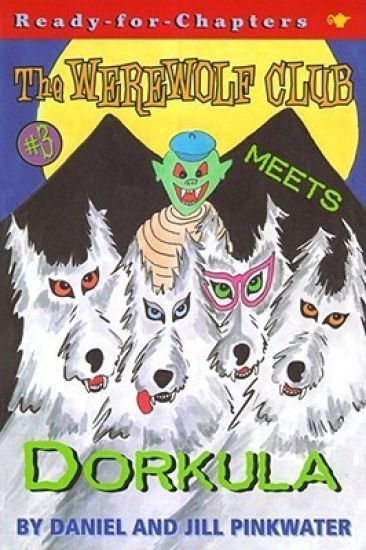
Just when you thought it was safe... Here comes Dorkula. Who is he and what does he want? Is this the vampire of ancient legend and bad late-night movies? Being in the Werewolf Club has never been so much fun! Just ask Ralf Alfa, Billy Furball, Lucy Fang, and Norman Gnormal. Follow their funny exploits as they wend their way through this spine-tingling tale of werewolves, vampires, and inspired lunacy.

What's small and round and smells like knackwurst, and is very, very scary? The Werewolf Club is about to find out! After a stop at the Local Yokel Diner to eat jitterbugs (you don't want to know), the young werewolves are off to Basketball Hall, the ancestral home of their teacher Mr. Talbot's uncle, Hugo Basketball. Generations of Basketballs have been cursed by their servants, the peculiar Barrymores, (it's so hard to get good help) not to mention by monstrous Hound of the Basketballs. Who better to vanquish the frightful hound, Hugo figures, than a pack of werewolves? So with the moon full (and their belies full of knackwurst and sauerkraut) our intrepid heroes are once again risking their young lives to rid the world of evil. But what about the haunted pastrami?
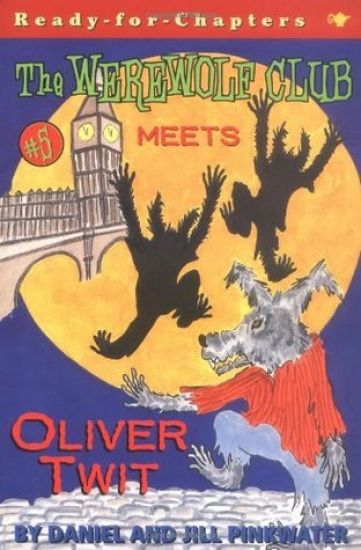
Would you buy a used time machine from this man? Mr. Talbot has taken the Werewolf Club to London! Unfortunately, they made the trip in Uncle H. G. Talbot's unreliable time-and-space machine, and they've arrived in 1890 London -- where it might be a tad difficult to buy the 212 double-A batteries they need for the machine to get them home. The Werewolf Club's goose is cooked -- and not for a good old-fashioned English Christmas dinner. While they're figuring out what to do, the young werewolves have plenty of time to take in some sights usually missed by your average tour bus, and even help legendary detective Sherlock Holmes thwart the notorious Jack the Schlepper's attempt to steal the crown jewels from the Tower of London. There will always be an England -- but never one like the Werewolf Club's England.

The delightful sequel to Mush, a Dog from Space revisits Mush's earlier days, before he met Kelly, when he and his jazz band called the Hot Animals saved their boss's dancehall and ice-cream parlor from dastardly burglars. Simultaneous.

LASSIE, GO HOME -- MUSH IS HERE! Now that Kelly Mangiaro's family has moved out of their apartment into a house, she figures her parents will finally let her get a dog. Instead, her mother gets a job, and Kelly gets a baby-sitter. Then Kelly comes upon Mush, a mushamute -- a breed not recognized by the Westminster Kennel Club, or by anyone else for that matter, possibly because mushamutes come from the planet Growf-Woof-Woof, in the solar system of Arfturus. Mushamutes can talk, tell time, cook up a storm, and even clean up the kitchen afterwards. Who needs a baby-sitter when there's a mushamute around? Now if only Kelly can persuade her parents to let her keep Mush....
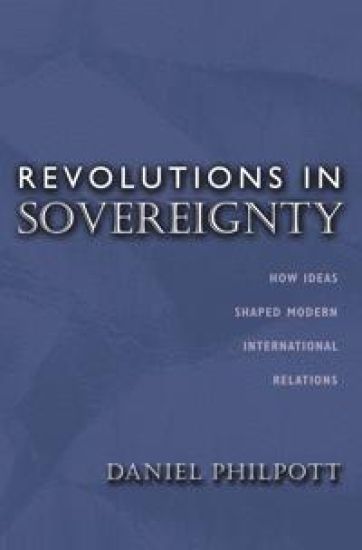
How did the world come to be organized into sovereign states? Daniel Philpott argues that two historical revolutions in ideas are responsible. First, the Protestant Reformation ended medieval Christendom and brought a system of sovereign states in Europe, culminating at the Peace of Westphalia in 1648. Second, ideas of equality and colonial nationalism brought a sweeping end to colonial empires around 1960, spreading the sovereign states system to the rest of the globe. In both cases, revolutions in ideas about legitimate political authority profoundly altered the "constitution" that establishes basic authority in the international system. Ideas exercised influence first by shaping popular identities, then by exercising social power upon the elites who could bring about new international constitutions. Swaths of early modern Europeans, for instance, arrived at Protestant beliefs, then fought against the temporal powers of the Church on behalf of the sovereignty of secular princes, who could overthrow the formidable remains of a unified medieval Christendom. In the second revolution, colonial nationalists, domestic opponents of empire, and rival superpowers pressured European cabinets to relinquish their colonies in the name of equality and nationalism, resulting in a global system of sovereign states. Bringing new theoretical and historical depth to the study of international relations, Philpott demonstrates that while shifts in military, economic, and other forms of material power cannot be overlooked, only ideas can explain how the world came to be organized into a system of sovereign states.
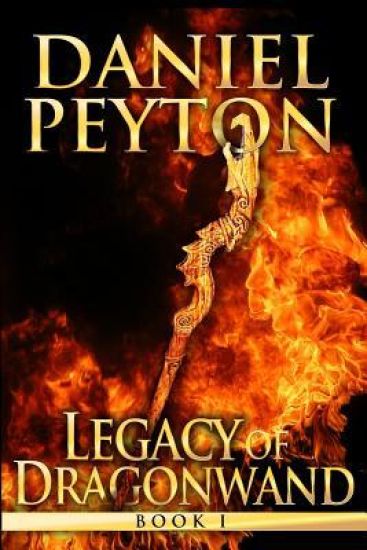
A teenage would-be wizard just wants to go to wizard school, but he finds himself on an epic quest instead...all the standard elements of a YA fantasy protagonist's transformation into a hero - KIRKUS REVIEWS HE WHO SEEKS POWER, SEEKS DESTRUCTIONOver 1000 years ago, nearly all the ancient wizards were destroyed after the Wizard Wars. However, the one who started the War still remains, having worked his will in secret. If he can find the last Dragonwand, he will regain his powers as the dark dragon. Unaware of the Dragonwand or the betrayer, sixteen-year-old Markus is looking for a wizard who will give him a letter of recommendation for the College of Wizardry. During his journey, he stumbles upon Tolen the Wise, who sends Markus on a quest to end the darkness and find the Dragonwand before it gets into the wrong hands. As Markus discovers growing powers and makes allies, will he find what he needs to complete Tolen's task, or will the ancient, dark wizard uncover the Dragonwand and forever change the fate of the land of Gallenor?Amazon Best Sellers In: #1 in Kindle Store > Kindle eBooks > Teen & Young Adult > Literature & Fiction > Visionary & Metaphysical #1 in Kindle Store > Kindle eBooks > Teen & Young Adult > Science Fiction & Fantasy > Fantasy > Fairy Tales & Folklore > Anthologies #1 in Books > Teens > Science Fiction & Fantasy > Fantasy > Fairy Tales & Folklore > Anthologies"Great high fantasy for young adults ""An Epic Fantasy Adventure ""A wonderful tale of wizards and warriors ""A High Fantasy Quest not to be missed "