Mysti and her three 'bears', Polar, Grizzly, and Kodiak, love their visits to their mountain cabin where Mysti's writing thrives and the boys revel, romping in the mountain forest. Winter visits always come with unique experiences and set of challenges. However, this visit's experience and challenges far exceed any previous ones.Dillon prides himself on being able to handle any situation, but nothing could have prepared him for the situation he finds himself in given his current condition.
Throughout her long and illustrious career, Lillian Fuchs was lauded as one of the first great American violists. This penetrating study of Ms. Fuchs's professional life as a performer, teacher, composer, arranger, and chamber music coach offers a fascinating view of this remarkable personality. whose professional life influenced countless musicians. Based upon conversations with Ms. Fuchs and members of her family, interviews with former students and colleagues, and concert reviews, "Lillian Fuchs: First Lady of the Viola" draws together oral and written information to create a biographical portrait that also sheds light on the history of American music in the twentieth century--a time when talented women had to struggle fiercely to survive in the face of male domination of the music profession.
Calculating Credibility examines—and ultimately rejects—a fundamental belief held by laypeople and the makers of American foreign policy: the notion that backing down during a crisis reduces a country's future credibility. Fear of diminished credibility motivated America's costly participation in the Korean and Vietnam wars, and, since the end of the Cold War, this concern has continued to guide American policy decisions. Daryl G. Press uses historical evidence, including declassified documents, to answer two crucial questions: When a country backs down in a crisis, does its credibility suffer? How do leaders assess their adversaries' credibility? Press illuminates the decision-making processes behind events such as the crises in Europe that preceded World War II, the superpower showdowns over Berlin in the 1950s and 60s, and the Cuban Missile Crisis. When leaders face the prospect of high-stakes military conflicts, Press shows, they do not assess their adversaries' credibility by peering into their opponents' past and evaluating their history of keeping or breaking commitments. Power and interests in the current crisis—not past actions—determine the credibility of a threat. Press demonstrates that threats are credible only if backed by sufficient power and only if pursuing important interests. Press believes that Washington's obsession with the dangers of backing down has made U.S. foreign policy unnecessarily rigid. In every competitive environment—sports, gambling, warfare—competitors use feints and bluffs to tremendous advantage. Understanding the real sources of credibility, Press asserts, would permit a more flexible, and more effective, foreign policy.
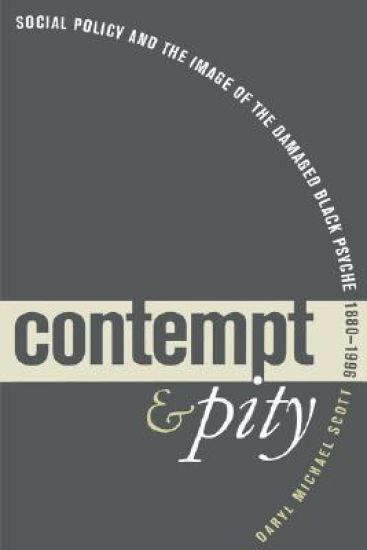
For over a century, the idea that African Americans are psychologically damaged has played an important role in discussions of race. In this provocative work, Daryl Michael Scott argues that damage imagery has been the product of liberals and conservatives, of racists and antiracists. While racial conservatives, often playing on white contempt for blacks, have sought to use findings of black pathology to justify exclusionary policies, racial liberals have used damage imagery primarily to promote policies of inclusion and rehabilitation. In advancing his argument, Scott challenges some long-held beliefs about the history of damage imagery. He rediscovers the liberal impulses behind Stanley Elkins's Sambo hypothesis and Daniel Patrick Moynihan's Negro Family and exposes the damage imagery in the work of Ralph Ellison, the leading anti-pathologist. He also corrects the view that the Chicago School depicted blacks as pathological products of matriarchy. New Negro experts such as Charles Johnson and E. Franklin Frazier, he says, disdained sympathy-seeking and refrained from exploring individual pathology. Scott's reassessment of social science sheds new light on Brown v. Board of Education , revealing how experts reversed four decades of theory in order to represent segregation as inherently damaging to blacks. In this controversial work, Scott warns the Left of the dangers in their recent rediscovery of damage imagery in an age of conservative reform. |In reassessing the image of the damaged black psyche from 1880 to 1996, Scott argues that damage imagery has been the product of both liberals and conservatives, racists and antiracists. While racial conservatives, often playing on white contempt for blacks, have sought to use findings of black pathology to justify exclusionary policies, racial liberals have used damage imagery primarily to promote policies of inclusion and rehabilitation. Scott challenges long-held beliefs about the history of damage imagery, warning the Left of the dangers in their rediscovery of damage imagery in an age of conservative reform.
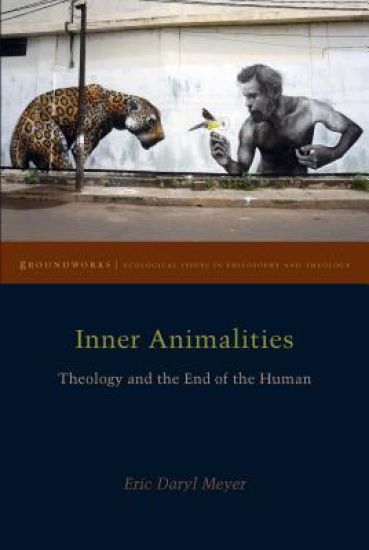
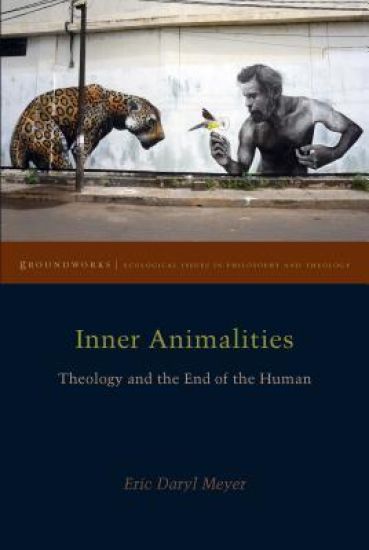
Most theology proceeds under the assumption that divine grace works on human beings at the points of our supposed uniqueness among earth's creatures—our freedom, our self-awareness, our language, or our rationality. Inner Animalities turns this assumption on its head. Arguing that much theological anthropology contains a deeply anti-ecological impulse, the book draws creatively on historical and scriptural texts to imagine an account of human life centered in our creaturely commonality. The tendency to deny our own human animality leaves our self-understanding riven with contradictions, disavowals, and repressions. How are human relationships transformed when God draws us into communion through our instincts, our desires, and our bodily needs? Meyer argues that humanity's exceptional status is not the result of divine endorsement, but a delusion of human sin. Where the work of God knits human beings back into creaturely connections, ecological degradation is no longer just a matter of bodily life and death, but a matter of ultimate significance. Bringing a theological perspective to the growing field of Critical Animal Studies, Inner Animalities puts Gregory of Nyssa and Karl Rahner in conversation with Jacques Derrida, Giorgio Agamben, Kelly Oliver, and Cary Wolfe. What results is not only a counterintuitive account of human life in relation with nonhuman neighbors, but also a new angle into ecological theology.
Most theology proceeds under the assumption that divine grace works on human beings at the points of our supposed uniqueness among earth's creatures—our freedom, our self-awareness, our language, or our rationality. Inner Animalities turns this assumption on its head. Arguing that much theological anthropology contains a deeply anti-ecological impulse, the book draws creatively on historical and scriptural texts to imagine an account of human life centered in our creaturely commonality. The tendency to deny our own human animality leaves our self-understanding riven with contradictions, disavowals, and repressions. How are human relationships transformed when God draws us into communion through our instincts, our desires, and our bodily needs? Meyer argues that humanity's exceptional status is not the result of divine endorsement, but a delusion of human sin. Where the work of God knits human beings back into creaturely connections, ecological degradation is no longer just a matter of bodily life and death, but a matter of ultimate significance. Bringing a theological perspective to the growing field of Critical Animal Studies, Inner Animalities puts Gregory of Nyssa and Karl Rahner in conversation with Jacques Derrida, Giorgio Agamben, Kelly Oliver, and Cary Wolfe. What results is not only a counterintuitive account of human life in relation with nonhuman neighbors, but also a new angle into ecological theology.
This international collection explores the role of ideology in the information age, challenging the dominant ideology of the information age through examinations of its philosophical and theoretical assumptions, its images of the future, and its international dimensions.
This work has been selected by scholars as being culturally important and is part of the knowledge base of civilization as we know it.This work is in the public domain in the United States of America, and possibly other nations. Within the United States, you may freely copy and distribute this work, as no entity (individual or corporate) has a copyright on the body of the work.Scholars believe, and we concur, that this work is important enough to be preserved, reproduced, and made generally available to the public. To ensure a quality reading experience, this work has been proofread and republished using a format that seamlessly blends the original graphical elements with text in an easy-to-read typeface.We appreciate your support of the preservation process, and thank you for being an important part of keeping this knowledge alive and relevant.
This work has been selected by scholars as being culturally important and is part of the knowledge base of civilization as we know it.This work is in the public domain in the United States of America, and possibly other nations. Within the United States, you may freely copy and distribute this work, as no entity (individual or corporate) has a copyright on the body of the work.Scholars believe, and we concur, that this work is important enough to be preserved, reproduced, and made generally available to the public. To ensure a quality reading experience, this work has been proofread and republished using a format that seamlessly blends the original graphical elements with text in an easy-to-read typeface.We appreciate your support of the preservation process, and thank you for being an important part of keeping this knowledge alive and relevant.
This work has been selected by scholars as being culturally important and is part of the knowledge base of civilization as we know it.This work is in the public domain in the United States of America, and possibly other nations. Within the United States, you may freely copy and distribute this work, as no entity (individual or corporate) has a copyright on the body of the work.Scholars believe, and we concur, that this work is important enough to be preserved, reproduced, and made generally available to the public. To ensure a quality reading experience, this work has been proofread and republished using a format that seamlessly blends the original graphical elements with text in an easy-to-read typeface.We appreciate your support of the preservation process, and thank you for being an important part of keeping this knowledge alive and relevant.