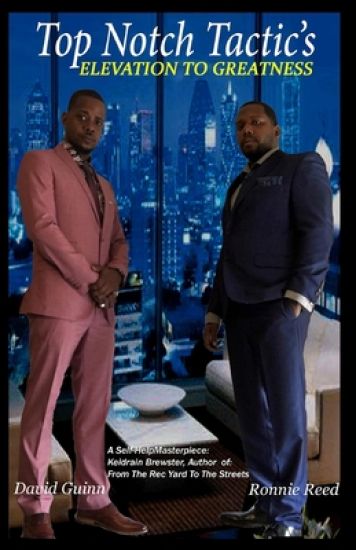
Top Notch Tactic's is a straight forward way to helping people achieve their highest potential possible. It's methods will set you aside from those using conventional thinking, trying to gain the above-average status. As of right now before you chose to read TNT you are simply adding to your success. Once you finish reading TNT you'll be multiplying your success.
Nearly onequarter of America is covered with forests--almost 800 million acres. There are 151 national forests, comprising close to 200 million acres in thirtynine states and Puerto Rico. These protected lands are administered by the U.S. Forest Service, an agency of the Department of Agriculture. David Clary here examines the history of and controversies surrounding the Forest Service's policies for timber management in our national forests. In this first indepth study of the political, bureaucratic, social, and ideological relationships between the Forest Service and the production of timber, Clary traces the continuity in the agency's outlook from its creation in 1905 through fears of a "timber famine" to the "clearcutting" controversies of the mid 1970s. He shows convincingly that, despite legislative remedies and agency reports, timber production has remained the agency's first priority and that other (multiple uses--recreation, watershed protection, wilderness, livestock grazing, and wildlife management--were regulated so that they would not interfere with potential timber harvests. Throughout its history, the agency is shown to have been enchanted with the objective of producing timber. Clary's theme, in what he describes as an "administrative, political, scientific, and anecdotal history," is that the Forest Service exhibited consistent actions and attitudes over the years and failed to confront realistically changes in the national culture that altered what the American people wanted from the forests and the Forest Service.
As Americans wrestle with red-versus-blue debates over traditional values, defense of marriage, and gay rights, reason often seems to take a back seat to emotion. In response, David Richards, a widely respected legal scholar and long-time champion of gay rights, reflects upon the constitutional and democratic principles - relating to privacy, intimate life, free speech, tolerance, and conscience - that underpin these often heated debates. The distillation of Richards's thirty-year advocacy for the rights of gays and lesbians, his book provides a reflective treatise on basic human rights that touch all of our lives. Drawing upon his own experiences as a gay man, Richards interweaves personal observations with philosophical, political, judicial, and psychological insights to make a compelling case that gays should be entitled to the same rights and protections that every American enjoys. Indeed, the call for gay rights can trace its lineage back to the powerful protest movements of the 1960s and 1970s, which demanded racial and sexual equality and ultimately overthrew the bigoted status quo. Richards focuses particularly on two key Supreme Court cases: the 1986 decision in Bowers v. Hardwick upholding Georgia's anti-sodomy laws and the 2003 decision in Lawrence v. Texas striking down Texas anti-sodomy laws and overturning Bowers. He shows how Bowers arose in a period of constitutional crisis over the right to privacy and examines the opinions in light of the Court's division in Roe v. Wade. He then shows that Lawrence must be understood in the context of later cases, notably Casey and Romer, which required that Bowers be reconsidered and overruled. Along the way, he examines current debates over gays in the military and same-sex marriage, assesses the Massachusetts Supreme Court's decision to permit gay marriage, and critiques the 1996 Defense of Marriage Act. Eloquent and impassioned, Richards's work crystallizes the essence of the argument for a much more expansive and tolerant view of gay rights in America. It also offers a touching account of one gay man's very personal struggle to find the voice he needed to speak truth to the powerful forces of discrimination.
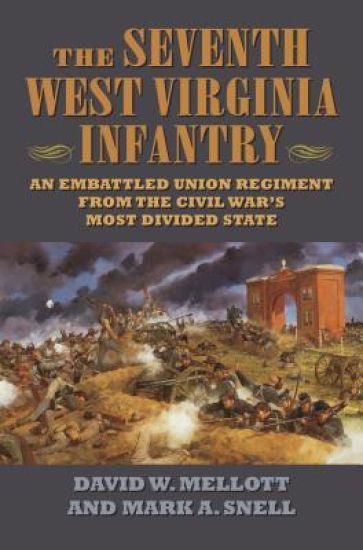
Though calling itself “The Bloody Seventh” after only a few minor skirmishes, the Seventh West Virginia Infantry earned its nickname many times over during the course of the Civil War. Fighting in more battles and suffering more losses than any other West Virginia regiment, the unit was the most embattled Union regiment in the most divided state in the war. Its story, as it unfolds in this book, is a key chapter in the history of West Virginia, the only state created as a direct result of the Civil War. It is also the story of the citizen soldiers, most of them from Appalachia, caught up in the bloodiest conflict in American history.The Seventh West Virginia fought in the major campaigns in the eastern theater, from Winchester, Antietam, and Fredericksburg to Chancellorsville, Gettysburg, and Petersburg. Weaving military, social, and political history, The Seventh West Virginia Infantry details strategy, tactics, battles, campaigns, leaders, and the travails of the rank and file. It also examines the circumstances surrounding events, mundane and momentous alike such as the soldiers' views on the Emancipation Proclamation, West Virginia Statehood, and Lincoln's re-election. The product of decades of research, the book uses statistical analysis to profile the Seventh's soldiers from a socio-economic, military, medical, and personal point of view; even as its authors consult dozens of primary sources, including soldiers' living descendants, to put a human face on these “sons of the mountains.” The result is a multilayered view, unique in its scope and depth, of a singular Union regiment on and off the Civil War battlefield—its beginnings, its role in the war, and its place in history and memory.
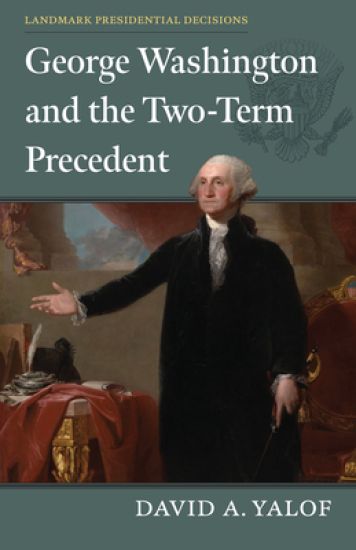
One of the earliest and most consequential presidential decisions in American history was George Washington’s choice to step down after two terms in office, despite the fact that he would almost certainly have won a third term had he chosen to run. The example he intended to set—and the circumstances he faced at the time—tell a more complicated story of the true motives behind his decision to retire and the impact his decision had on his successors and the nation. In George Washington and the Two-Term Precedent, David A. Yalof examines how this decision set a pattern that would be followed by presidents for more than a century until FDR began serving a third term in 1941.While often portrayed simply as a noble decision by Washington to restrain the power of the executive office, Washington’s decision was in fact motivated by self-interest and a desire to cement a legacy of honor and integrity. Yalof shows that he was never motivated by the desire to reign in the executive with an unwritten two-term limit. If anything, Washington hoped to strengthen the executive branch by demonstrating that the institution of the presidency could be trusted with the power and independence than it had so far received. His voluntary relinquishment of the presidency after two terms in office achieved these goals.Yalof focuses on the two-term precedent and how it came into being not by legal prescription but by the tacit influence of Washington’s refusal to run for a third term and what it suggests about American conceptions of executive power. George Washington and the Two-Term Precedent offers a sober reminder that the country’s most famous and original hero chose to walk away from power, and it was that decision that cemented his greatness in American history.
One of the earliest and most consequential presidential decisions in American history was George Washington’s choice to step down after two terms in office, despite the fact that he would almost certainly have won a third term had he chosen to run. The example he intended to set—and the circumstances he faced at the time—tell a more complicated story of the true motives behind his decision to retire and the impact his decision had on his successors and the nation. In George Washington and the Two-Term Precedent, David A. Yalof examines how this decision set a pattern that would be followed by presidents for more than a century until FDR began serving a third term in 1941.While often portrayed simply as a noble decision by Washington to restrain the power of the executive office, Washington’s decision was in fact motivated by self-interest and a desire to cement a legacy of honor and integrity. Yalof shows that he was never motivated by the desire to reign in the executive with an unwritten two-term limit. If anything, Washington hoped to strengthen the executive branch by demonstrating that the institution of the presidency could be trusted with the power and independence than it had so far received. His voluntary relinquishment of the presidency after two terms in office achieved these goals.Yalof focuses on the two-term precedent and how it came into being not by legal prescription but by the tacit influence of Washington’s refusal to run for a third term and what it suggests about American conceptions of executive power. George Washington and the Two-Term Precedent offers a sober reminder that the country’s most famous and original hero chose to walk away from power, and it was that decision that cemented his greatness in American history.
For nearly 40 years "among the glades of Epping Forest" Churchill found a base for his parliamentary life. This book relates with anecdotal and archival evidence the attempt to unseat him after what many supporters considered an injudicious Munich speech.
The lathe is an essential tool for all but the most basic of workshops. It enables the engineer to produce turned components to a high degree of accuracy. Often called the 'king of machine tools', it is also very versatile and can be used to make a wide range of engineering components. This new book shows you how to make full use of your lathe safely and effectively in your workshop. Topics covered include: a guide to choosing a lathe looking at different sizes and features available; advice on installing and maintaining a lathe, selecting and sharpening tools, and working with chucks, and finally, instruction is given on a range of techniques ranging from how to hold work in a collet through to cutting a screw thread.
Milling is one of the principal and most versatile machining processes for sizing parts in the workshop. Whether a professional engineer looking for advice, or an amateur looking to install your first milling machine, this book will show you how to make full use of your milling machine safely and effectively, and enhance your milling skills. Focusing on the commonly used vertical mill and vertical turret mill, and with practical advice and diagrams throughout, the book includes: a guide to buying, installing and using a small milling machine and accessories. It also covers basic cutting tool principles and more advanced milling methods, including drilling, tapping and reaming. Instruction is also given on a variety of techniques ranging from work holding in the vice to using a rotary table.
The practical application of geomorphological science now forms a regular part of any project involving flood protection, fisheries, conservation, recreation, environmental protection and river restoration. In this book, the authors use their extensive experience gained through fieldwork, analysis, and input to the design process to provide a thorough understanding of geomorphology in the river environment and describe effective ways to incorporate geomorphological science into river engineering and management.
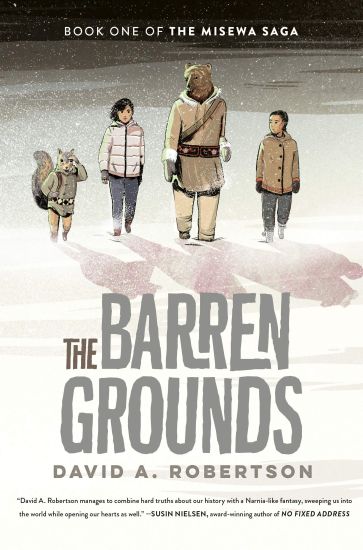
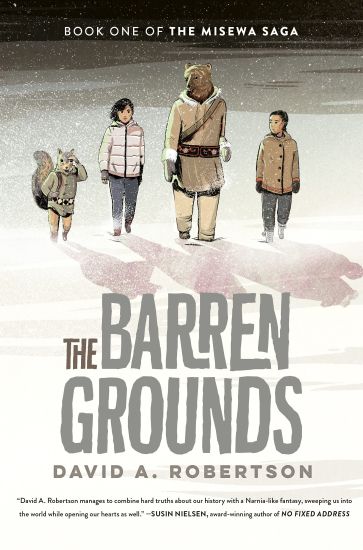
It's a race against time to save Eli, in this third book in the award-winning, Narnia-inspired Indigenous middle-grade fantasy series. After discovering a near-lifeless Eli at the base of the Great Tree, Morgan knows she doesn't have much time to save him. And it will mean asking for help -- from friends old and new. Racing against the clock, and with Arik and Emily at her side, Morgan sets off to follow the trail away from the Great Tree to find Eli's soul before it's too late. As they journey deep into the northern woods, a place they've been warned never to enter, they face new challenges and life-threatening attacks from strange and horrifying creatures. But a surprise ally comes to their aid, and Morgan finds the strength to focus on what's most important: saving her brother's life.
From the award-winning author of On the Trapline comes a cinematic fantasy-adventure story inspired by Indigenous legends. One summer day, Lauren and her little brother, James, go on a trip to the land with their Moshom (grandfather). After they've arrived, the children decide to fish for dinner while Moshom naps. They are in their canoe in the middle of the lake when the water around them begins to swirl and crash. They are thrown overboard and when Lauren surfaces she sees her brother being pulled away by the Memekwesewak -- creatures who live in and around water and like to interfere with humans. Lauren must follow the Memekwesewak through a portal and along a watery path to find and bring back James. But when she finally comes upon her brother, she too feels the lure of the Memekwesewak's song. Something even stronger must pull them back home.
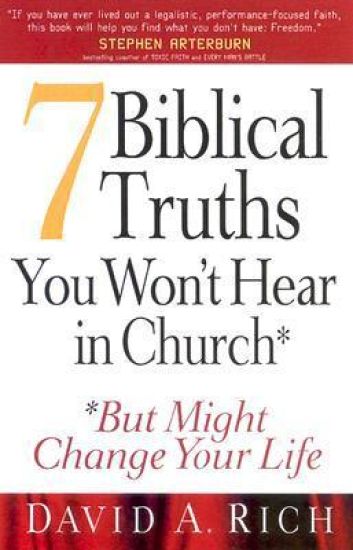
Concise and straightforward, 7 Biblical Truths You Won't Hear in Church is a fast-moving, thought-stimulating book for believers who want "something more"...or for Christians who've given up expecting anything from their faith. Author and speaker David Rich points to key issues that can refresh readers' enthusiasm in such provocatively titled chapters as the Ten Commandments were not given to be kept trying to live for Jesus will only frustrate you prayer doesn't change God's mind God doesn't grade on a curve what you see in the mirror is not the real you Readers will be encouraged that the truth is still there to be found-and through it, a truly fulfilling relationship with Jesus Christ.
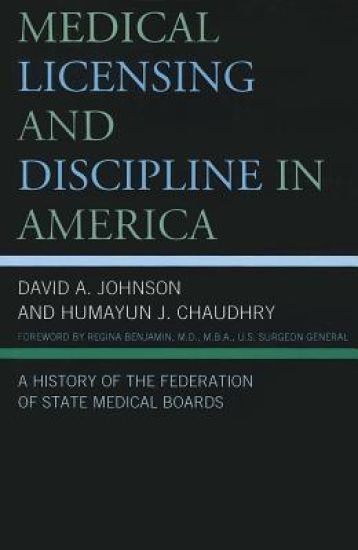
Medical Licensing and Discipline in America traces the evolution of the U.S. medical licensing system from its historical antecedents in the 18th and 19th century to its modern structure. David A. Johnson and Humayun J. Chaudhry provide an organizational history of the Federation of State Medical Boards within the broader context of the development of America’s state-based system. As the national organization representing the interests of the individual state medical boards, the Federation has been at the forefront of developments in licensing, discipline, and regulation impacting the medical profession, medical education, and health policy within the United States. The narrative shifts between micro- and macro-level developments in the evolution of America’s medical licensing system, blending national context with state-specific and Federation initiatives. For example, the book documents such milestones as the national shift toward greater public accountability by state medical boards as evidenced by California’s inclusion of public members on its medical board, New Mexico’s requirement for continuing medical education by physicians as a condition for license renewal and the Federation’s policy development work advocating for both initiatives among all state medical boards. The book begins by examining the 18th and 19th century origins of the modern state-based medical regulatory system, including the reinstitution of licensing boards in the latter part of the 19th century and the early challenges facing boards, e.g., license portability, examinations, physician impostors, inter-professional tensions among physicians, etc. Medical Licensing and Discipline in America picks up the story of the Federation and its role in the major issue of licensing and discipline in the 20th century: uniformity in medical statute, evaluation of international medical graduates, nationally administered examinations for licensure, etc.
Medical Licensing and Discipline in America traces the evolution of the U.S. medical licensing system from its historical antecedents in the 18th and 19th century to its modern structure. David A. Johnson and Humayun J. Chaudhry provide an organizational history of the Federation of State Medical Boards within the broader context of the development of America’s state-based system. As the national organization representing the interests of the individual state medical boards, the Federation has been at the forefront of developments in licensing, discipline, and regulation impacting the medical profession, medical education, and health policy within the United States. The narrative shifts between micro- and macro-level developments in the evolution of America’s medical licensing system, blending national context with state-specific and Federation initiatives. For example, the book documents such milestones as the national shift toward greater public accountability by state medical boards as evidenced by California’s inclusion of public members on its medical board, New Mexico’s requirement for continuing medical education by physicians as a condition for license renewal and the Federation’s policy development work advocating for both initiatives among all state medical boards. The book begins by examining the 18th and 19th century origins of the modern state-based medical regulatory system, including the reinstitution of licensing boards in the latter part of the 19th century and the early challenges facing boards, e.g., license portability, examinations, physician impostors, inter-professional tensions among physicians, etc. Medical Licensing and Discipline in America picks up the story of the Federation and its role in the major issue of licensing and discipline in the 20th century: uniformity in medical statute, evaluation of international medical graduates, nationally administered examinations for licensure, etc.