Inhumanities is an unprecedented account of the ways Nazi Germany manipulated and mobilized European literature, philosophy, painting, sculpture and music in support of its ideological ends. David B. Dennis shows how, based on belief that the Third Reich represented the culmination of Western civilization, culture became a key propaganda tool in the regime's program of national renewal and its campaign against political, national and racial enemies. Focusing on the daily output of the Völkischer Beobachter, the party's official organ and the most widely circulating German newspaper of the day, he reveals how activists twisted history, biography and aesthetics to fit Nazism's authoritarian, militaristic and anti-Semitic world views. Ranging from National Socialist coverage of Germans such as Luther, Dürer, Goethe, Beethoven, Wagner and Nietzsche to 'great men of the Nordic West' such as Socrates, Leonardo and Michelangelo, Dennis reveals the true extent of the regime's ambitious attempt to reshape the 'German mind'.
A century-old strategy holds the secret to toppling corporate giants. 'In a world where advantage increasingly depends upon movement rather than position, "Judo Strategy" drills home the ultimate principle of strategy: maximize impact while minimizing effort. This is easy to say but difficult to accomplish. The authors provide pragmatic techniques and examples to help make this principle come alive. Don't enter the market without this book' - John Hagel, Author, "Net Gain and Net Worth", and Chief Strategy Officer, 12 Entrepreneuring, Inc. Why do some companies succeed in defeating stronger rivals, while others fail? This is a question that, sooner or later, all ambitious competitors must face.Whether you're a tiny start-up taking on industry giants or a giant moving into markets dominated by powerful incumbents, the basic problem remains the same: How do you compete with opponents who have size, strength, and history on their side? The answer lies in a simple but powerful lesson: Rather than oppose strength to strength, successful challengers use their opponents' size and power to bring them down. This is the message at the heart of "Judo Strategy". Based on extensive research by Harvard Business School professor David Yoffie and research associate Mary Kwak, "Judo Strategy" introduces a groundbreaking approach to competition that shows companies how to win against imposing odds. Using vivid examples from companies ranging from Wal-Mart and Charles Schwab to Juniper Networks and Palm Computing, the authors demonstrate how managers can translate the core principles of judo - a martial art that prizes skill not size - into a winning business strategy.By mastering movement, managers learn to seize the lead and make the most of their initial advantage. By maintaining balance, they can successfully engage with opponents and respond to rivals' attacks. And finally, by exploiting leverage, managers can transform their competitors' strengths into strategic liabilities. This book will help any company - large or small, new or old, virtual or physical - become a more effective competitor. In addition to developing the concept of judo strategy, it presents a defensive primer - in the form of "sumo strategy" - for companies facing judo attacks.Packed with the insights of world-class managers and strategists, "Judo Strategy" does double duty: it can help you become a giant-killer, while also teaching you to protect your hard-fought position from challengers in the wings.
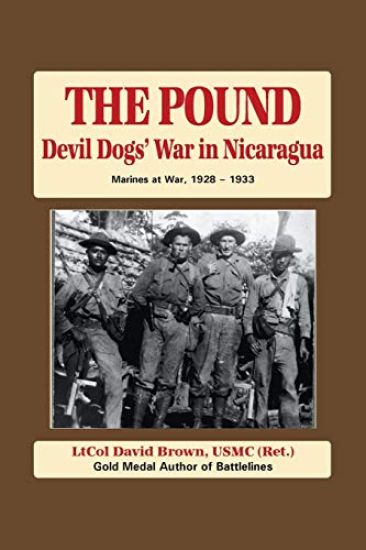
Despite the unpopularity of the war in Nicaragua, the Marines experience a wide variety of activities and learn many lessons in a small wars environment, which will serve them well into the next century. Fighting insurgents, forming a host-nation's police force and army, ensuring safe elections, providing medical assistance for the rural population, building roads, constructing airfields, and organizing earthquake disaster relief will occupy the years from 1928 to 1933 for the Devil Dogs. If you ever hear a Marine say, "This is a lousy war, but it's the only one we have," you'll understand the mentality of the men in The Pound: Devil Dogs' War in Nicaragua.
Always been baffled by the book of Revelation? Find your answers in God's word as Mr. Hathcock lets the bible interrupt the book of Revelation for you. A graduate of Almeda University with a M.A. in Religious Theology, he will show you where the answers are in the Bible using KJ bible as reference.
There were approximately 7,000 full-time bandsmen serving in the British army in the interwar years. This was about a third of the total number of musicians in the music profession in the United Kingdom, making the War Office the largest single employer of professional musicians in the country. British army musicians were a key stakeholder in the music industry in the United Kingdom, but also farther afield, where it made a significant contribution to the maintenance of British imperial authority. To sustain the large number of bands, residential institutions provided young boys for recruitment into the army as bandsmen and, as a consequence, the army set the standard for musical training and performance. The music industry relied upon the existence of army bands for its business and the military played a significant part in the adoption of an international standard of musical pitch. Nevertheless, there was a tempestuous relationship between army bands and the BBC, as well as the recording industry as a whole. Using untapped sources and original material, Major David Hammond reveals the role and soft power influence of British army music in the interwar years.
Cette tude a examin l' ducation agricole dans le cadre du programme National Agricultural Advisory Services (NAADS) en Ouganda. Elle tait essentielle, car environ 80 % de la population d pend de l'agriculture pour sa subsistance, et l'am lioration de cette activit conomique m ritait donc toute notre attention. Depuis 2001, le programme NAADS a t lanc pour permettre aux agriculteurs de demander des services de conseil et d'adopter des techniques agricoles modernes. L' tude visait comprendre comment et si les agriculteurs de subsistance taient autonomis s gr ce aux principes de l' ducation des adultes. De nature qualitative, l' tude a utilis des entretiens approfondis, des observations et des sources documentaires. Les r sultats ont montr que l' ducation agricole suivait une approche descendante, sans participation active des agriculteurs la conception du programme. Bien que certains agriculteurs de subsistance aient obtenu de bons r sultats, beaucoup n'ont pas t autonomis s. Les principes de l' ducation des adultes ayant t largement ignor s, les agriculteurs de subsistance n'ont pas am lior leur productivit et leurs syst mes agricoles, et leurs moyens de subsistance n'ont donc pas t transform s.
Questo studio ha esaminato l'educazione agricola nell'ambito del programma National Agricultural Advisory Services (NAADS) in Uganda. Si trattava di un tema fondamentale, poich circa l'80% della popolazione dipende dall'agricoltura per il proprio sostentamento, quindi il miglioramento di questa attivit economica meritava attenzione. Dal 2001 stato avviato il programma NAADS per consentire agli agricoltori di richiedere servizi di consulenza e adottare tecniche agricole moderne. Lo studio ha cercato di capire come e se gli agricoltori di sussistenza fossero stati responsabilizzati utilizzando i principi dell'educazione degli adulti. Essendo di natura qualitativa, lo studio ha utilizzato interviste approfondite, osservazioni e fonti documentarie. I risultati hanno evidenziato che l'educazione agricola seguiva un approccio dall'alto verso il basso, senza il coinvolgimento attivo degli agricoltori nella formulazione del programma. Sebbene alcuni agricoltori di sussistenza abbiano ottenuto buoni risultati, molti non sono stati responsabilizzati. Poich i principi dell'educazione degli adulti sono stati in gran parte ignorati, gli agricoltori di sussistenza non hanno migliorato la loro produttivit e i loro sistemi agricoli e, di conseguenza, il loro sostentamento non stato trasformato.
W niniejszym badaniu przeanalizowano edukację rolniczą w ramach programu Krajowych Uslug Doradztwa Rolniczego (NAADS) w Ugandzie. Bylo to bardzo ważne, ponieważ okolo 80% ludności utrzymuje się z rolnictwa, więc poprawa tej dzialalności gospodarczej zaslugiwala na uwagę. W 2001 r. uruchomiono program NAADS, aby wzmocnic pozycję rolnik w, tak aby mogli oni domagac się uslug doradczych i wdrażac nowoczesne techniki rolnicze. W badaniu starano się zrozumiec, w jaki spos b i czy rolnicy produkujący na wlasne potrzeby zostali wzmocnieni dzięki zastosowaniu zasad edukacji doroslych. Badanie mialo charakter jakościowy i opieralo się na poglębionych wywiadach, obserwacjach i źr dlach dokumentacyjnych. Wyniki pokazaly, że edukacja rolnicza byla prowadzona w spos b odg rny, bez aktywnego udzialu rolnik w w opracowywaniu programu. Chociaż niekt rzy rolnicy produkujący na wlasne potrzeby osiągnęli dobre wyniki, wielu z nich nie zyskalo większych możliwości. Ponieważ zasady ksztalcenia doroslych byly w dużej mierze ignorowane, rolnicy produkujący na wlasne potrzeby nie poprawili swojej wydajności i system w upraw, a zatem ich źr dla utrzymania nie ulegly zmianie.
Este estudo explorou a educa o agr cola no mbito do programa Servi os Nacionais de Assessoria Agr cola (NAADS) no Uganda. Foi fundamental, uma vez que cerca de 80% da popula o depende da agricultura para a sua subsist ncia, pelo que a melhoria desta atividade econ mica merecia aten o. Desde 2001, o programa NAADS foi iniciado para capacitar os agricultores a exigir servi os de assessoria e adotar t cnicas agr colas modernas. O estudo procurou compreender como e se os agricultores de subsist ncia foram capacitados utilizando os princ pios da educa o de adultos. Sendo qualitativo, o estudo utilizou entrevistas aprofundadas, observa es e fontes documentais. As conclus es foram que a educa o agr cola seguiu uma abordagem de cima para baixo, sem o envolvimento ativo dos agricultores na formula o do programa. Embora alguns agricultores de subsist ncia tenham apresentado bons resultados, muitos n o foram capacitados. Como os princ pios da educa o de adultos foram amplamente ignorados, os agricultores de subsist ncia n o melhoraram a sua produtividade e os seus sistemas agr colas e, portanto, os seus meios de subsist ncia n o foram transformados.
Diese Studie untersuchte die landwirtschaftliche Bildung im Rahmen des Programms "National Agricultural Advisory Services" (NAADS) in Uganda. Dies war von entscheidender Bedeutung, da etwa 80 % der Bev lkerung f r ihren Lebensunterhalt von der Landwirtschaft abh ngig sind und daher die Verbesserung dieser wirtschaftlichen T tigkeit Aufmerksamkeit verdiente. Seit 2001 wurde das NAADS-Programm ins Leben gerufen, um Landwirte zu bef higen, Beratungsdienste in Anspruch zu nehmen und moderne Anbaumethoden anzuwenden. Die Studie versuchte zu verstehen, wie und ob Subsistenzbauern unter Anwendung der Prinzipien der Erwachsenenbildung gest rkt wurden. Da es sich um eine qualitative Studie handelte, wurden ausf hrliche Interviews, Beobachtungen und dokumentarische Quellen herangezogen. Die Ergebnisse zeigten, dass die landwirtschaftliche Ausbildung einem Top-down-Ansatz folgte, ohne dass die Landwirte aktiv in die Gestaltung des Programms einbezogen wurden. Obwohl einige Subsistenzbauern gute Ergebnisse erzielten, wurden viele nicht gest rkt. Da die Prinzipien der Erwachsenenbildung weitgehend ignoriert wurden, konnten die Subsistenzbauern ihre Produktivit t und ihre Anbausysteme nicht verbessern, sodass sich ihre Lebensgrundlage nicht ver nderte.
Many tens of thousands of mental health and health care professionals have used this essential book--now significantly revised with 70% new content reflecting important advances in the field--to develop and sharpen their skills in motivational interviewing (MI). Clear explanations of core MI concepts are accompanied by carefully crafted sample dialogues, exercises, and practice opportunities. Readers build proficiency for moving through the four processes of MI--engaging, focusing, evoking, and planning--using open-ended questions, affirmations, reflective listening, and summaries (OARS), plus information exchange. In a large-size format for easy photocopying, the volume includes more than 80 reproducible worksheets. Purchasers get access to a companion website where they can download and print the reproducible materials. New to This Edition Fully revised and restructured around the new four-process model of MI. Chapters on exploring values and goals and "finding the horizon." Additional exercises, now with downloadable worksheets. Teaches how to tailor OARS skills for each MI process. Integrates key ideas from positive psychology. Winner (First Place)--American Journal of Nursing Book of the Year Award, Adult Primary Care Category See also Motivational Interviewing, Fourth Edition: Helping People Change and Grow, by William R. Miller and Stephen Rollnick, and Motivational Interviewing and CBT: Combining Strategies for Maximum Effectiveness, by Sylvie Naar and Steven A. Safren. This book is in the Applications of Motivational Interviewing series, edited by Stephen Rollnick, William R. Miller, and Theresa B. Moyers.
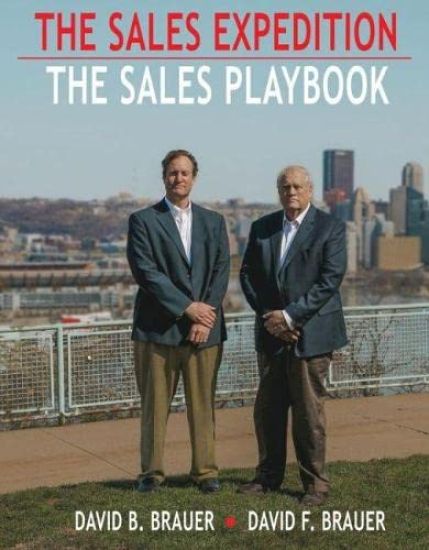
Groundbreaking Publication Now Available!The Sales Expedition, The Sales Playbook provides the reader, whether a sales novice, or a seasoned salesperson, a step-by-step approach to become a top sales professional. After interviewing hundreds of salespeople, sales managers, business owners and customers, the format and order were developed. Other sales textbooks deal with honesty and integrity later on the in the process. This playbook discusses these topics first, because they are proven to be most important to customers and sales success.The Sales Expedition, The Sales Playbook provides readers with detailed proven methods to:overcome obstacles to prospecting.construct what an Ideal Customer is.develop lasting relationships.become a great listener.master the art of asking questions.making memorable presentations.handling and neutralizing objections.explain cost versus price.become a great closer and obtain referrals.craft impactful sales narratives.create other sales tools: Becoming an emcee, making standout bios and pre/post call checklists.This playbook provides numerous real-life examples and case studies to reinforce the topics. Most of which come from the authors' personal experiences in sales. The book is written, reviewed, and augmented by many successful salespeople who want to see others also succeed.To complete the classroom experience, the authors are available for discussion of any of the points in the book.
This book provides the student, researcher or practitioner with the tools to understand many of the most commonly used advanced statistical analysis tools in criminology and criminal justice, and also to apply them to research problems. The volume is structured around two main topics, giving the user flexibility to find what they need quickly. The first is “the general linear model” which is the main analytic approach used to understand what influences outcomes in crime and justice. It presents a series of approaches from OLS multivariate regression, through logistic regression and multi-nomial regression, hierarchical regression, to count regression. The volume also examines alternative methods for estimating unbiased outcomes that are becoming more common in criminology and criminal justice, including analyses of randomized experiments and propensity score matching. It also examines the problem of statistical power, and how it can be used to better designstudies. Finally, it discusses meta analysis, which is used to summarize studies; and geographic statistical analysis, which allows us to take into account the ways in which geographies may influence our statistical conclusions.