The manual teaches group leaders how to effectively and successfully administer Wexler’s internationally-recognized program by integrating cognitive behavioral skills and a client-centered, skill-building approach that emphasizes respect for the offender himself.Treatment providers will find the open-ended 26-week psychoeducational treatment model—packed with new and innovative specific skills-training exercises, handouts, and homework—easily adaptable to different settings. Its structured interventions, clear guidelines, and philosophical orientation are neatly presented in five sections: Foundations, Special Program Sessions, Group Sessions: Self-Management, Group Sessions: Relationship Skills, and Standard Forms. The accompanying workbook and the skills learned from the CD-ROM exercises are invaluable take-home resources for the group members, fully engaging the abusive male in his own education and healing process.
The third edition of the acclaimed Domestic Violence 2000, this comprehensive instruction manual teaches group leaders how to effectively and successfully administer David B. Wexler’s trusted program. The treatment integrates cognitive behavioral skills and a client-centered, skill-building approach that engages the abuser in his own healing process.
What compels a person to strap a vest loaded with explosives onto his body and blow himself up in a crowded street? Scholars have answered this question by focusing on the pathology of the "terrorist mind" or the "brainwashing" practices of terrorist organizations. In Caravan of Martyrs, David Edwards argues that we need to understand the rise of suicide bombing in relation to the cultural beliefs and ritual practices associated with sacrifice. Before the war in Afghanistan began, the sacrificial killing of a sheep demonstrated a tribe's desire for peace. After the Soviet invasion of 1979, as thousands of people were killed, sacrifice took on new meanings. The dead were venerated as martyrs, but this informal conferral of status on the casualties of war soon became the foundation for a cult of martyrs exploited by political leaders for their own advantage. This first repurposing of the machinery of sacrifice set in motion a process of mutation that would lead nineteen Arabs who had received their training in Afghanistan to hijack airplanes on September 11 and that would in time transform what began as a cult of martyrs created by a small group of Afghan jihadis into the transnational scattering of suicide bombers that haunts our world today. Drawing on years of research in the region, Edwards traces the transformation of sacrifice using a wide range of sources, including the early poetry of jihad, illustrated martyr magazines, school primers and legal handbooks, martyr hagiographies, videos produced by suicide bombers, the manual of ritual instructions used by the 9/11 hijackers, and Facebook posts through which contemporary "Talifans" promote the virtues of self-destruction.
This hands-on introduction to computational electromagnetics (CEM) links theoretical coverage of the three key methods - the FDTD, MoM and FEM - to open source MATLAB codes (freely available online) in 1D, 2D and 3D, together with many practical hints and tips gleaned from the author's 25 years of experience in the field. Updated and extensively revised, this second edition includes a new chapter on 1D FEM analysis, and extended 3D treatments of the FDTD, MoM and FEM, with entirely new 3D MATLAB codes. Coverage of higher-order finite elements in 1D, 2D and 3D is also provided, with supporting code, in addition to a detailed 1D example of the FDTD from a FEM perspective. With running examples through the book and end-of-chapter problems to aid understanding, this is ideal for professional engineers and senior undergraduate/graduate students who need to master CEM and avoid common pitfalls in writing code and using existing software.
What can 'globalisation' teach us about law in the Western tradition? This important new work seeks to explore that question by analysing key ideas and events in the Western legal tradition, including the Papal Revolution, the Protestant Reformations and the Enlightenment. Addressing the role of law, morality and politics, it looks at the creation of orders which offer the possibility for global harmony, in particular the United Nations and the European Union. It also considers the unification of international commercial laws in the attempt to understand Western law in a time of accelerating cultural interconnections. The title will appeal to scholars of legal history and globalisation as well as students of jurisprudence and all those trying to understand globalisation and the Western dynamic of law and authority.
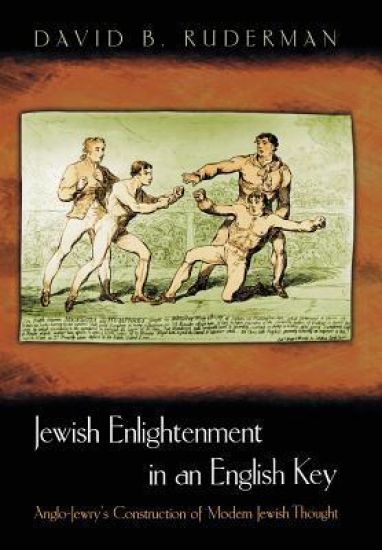
Historians of the European Jewish experience have long marginalized the intellectual achievement of Jews in England, where it was assumed no seminal figures contributed to the development of modern Jewish thought. In this first comprehensive account of the emergence of Anglo-Jewish thought in the eighteenth and nineteenth centuries, David Ruderman impels a reconsideration of the formative beginnings of modern European Jewish culture. He uncovers a vibrant Jewish intellectual life in England during the Enlightenment era by examining a small but fascinating group of hitherto neglected Jewish thinkers in the process of transforming their traditional Hebraic culture into a modern English one. This lively portrait of English Jews reformulating their tradition in light of Enlightenment categories illuminates an overlooked corner in the history of Jewish culture in England and Jewish thought during the Enlightenment. Ruderman overturns the conventional view that the origins of modern Jewish consciousness are located exclusively within the German-Jewish experience, particularly Moses Mendelssohn's circle. Independent of the better-known German experience, the encounter between Jewish and English thought was incubated amid the unprecedented freedom enjoyed by Jews in England. This resulted in a less inhibited defense of Jews and Judaism. In addition to the original and prolific thinkers David Levi and Abraham Tang, Ruderman introduces Abraham and Joshua Van Oven, Mordechai Shnaber Levison, Samuel Falk, Isaac Delgado, Solomon Bennett, Hyman Hurwitz, Emanuel Mendes da Costa, Ralph Shomberg, and others. Of obvious appeal and import to students of Jewish and English history, this study depicts the challenge of defining a religious identity in the modern age.
Born in the Country was the first-and is still the only-general history of rural America published. Ranging from pre-Columbian times to the enormous changes of the twentieth century, Born in the Country masterfully integrates agricultural, technological, and economic themes with new questions social historians have raised about the American experience-including the different experiences of whites and blacks, men and women, natives and new immigrants. In this second edition, David B. Danbom expands and deepens his coverage of the late twentieth and early twenty-first centuries, focusing on the changes in agriculture and rural life since 1945. He discusses the alarming decline of agriculture as a productive enterprise and the parallel disintegration of farm families into demographic insignificance. In a new and provocative afterword, Danbom reflects on whether a distinctive style of rural life exists any longer. Combining mastery of existing scholarship with a fresh approach to new material, Born in the Country continues to define the field of American rural history.
This collection of documents, set in a framework of introductory and explanatory comments, vividly portrays the vexatious issue and the disparate sectional tensions it bared. Expanded analysis, illustrations, new documents and maps are provided in this re
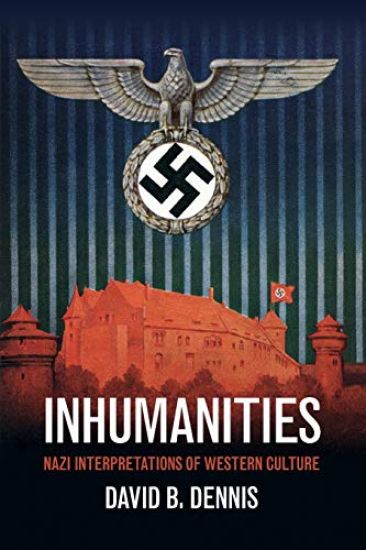
Inhumanities is an unprecedented account of the ways Nazi Germany manipulated and mobilized European literature, philosophy, painting, sculpture and music in support of its ideological ends. David B. Dennis shows how, based on belief that the Third Reich represented the culmination of Western civilization, culture became a key propaganda tool in the regime's program of national renewal and its campaign against political, national and racial enemies. Focusing on the daily output of the Völkischer Beobachter, the party's official organ and the most widely circulating German newspaper of the day, he reveals how activists twisted history, biography and aesthetics to fit Nazism's authoritarian, militaristic and anti-Semitic world views. Ranging from National Socialist coverage of Germans such as Luther, Dürer, Goethe, Beethoven, Wagner and Nietzsche to 'great men of the Nordic West' such as Socrates, Leonardo and Michelangelo, Dennis reveals the true extent of the regime's ambitious attempt to reshape the 'German mind'.
A century-old strategy holds the secret to toppling corporate giants. 'In a world where advantage increasingly depends upon movement rather than position, "Judo Strategy" drills home the ultimate principle of strategy: maximize impact while minimizing effort. This is easy to say but difficult to accomplish. The authors provide pragmatic techniques and examples to help make this principle come alive. Don't enter the market without this book' - John Hagel, Author, "Net Gain and Net Worth", and Chief Strategy Officer, 12 Entrepreneuring, Inc. Why do some companies succeed in defeating stronger rivals, while others fail? This is a question that, sooner or later, all ambitious competitors must face.Whether you're a tiny start-up taking on industry giants or a giant moving into markets dominated by powerful incumbents, the basic problem remains the same: How do you compete with opponents who have size, strength, and history on their side? The answer lies in a simple but powerful lesson: Rather than oppose strength to strength, successful challengers use their opponents' size and power to bring them down. This is the message at the heart of "Judo Strategy". Based on extensive research by Harvard Business School professor David Yoffie and research associate Mary Kwak, "Judo Strategy" introduces a groundbreaking approach to competition that shows companies how to win against imposing odds. Using vivid examples from companies ranging from Wal-Mart and Charles Schwab to Juniper Networks and Palm Computing, the authors demonstrate how managers can translate the core principles of judo - a martial art that prizes skill not size - into a winning business strategy.By mastering movement, managers learn to seize the lead and make the most of their initial advantage. By maintaining balance, they can successfully engage with opponents and respond to rivals' attacks. And finally, by exploiting leverage, managers can transform their competitors' strengths into strategic liabilities. This book will help any company - large or small, new or old, virtual or physical - become a more effective competitor. In addition to developing the concept of judo strategy, it presents a defensive primer - in the form of "sumo strategy" - for companies facing judo attacks.Packed with the insights of world-class managers and strategists, "Judo Strategy" does double duty: it can help you become a giant-killer, while also teaching you to protect your hard-fought position from challengers in the wings.
Despite the unpopularity of the war in Nicaragua, the Marines experience a wide variety of activities and learn many lessons in a small wars environment, which will serve them well into the next century. Fighting insurgents, forming a host-nation's police force and army, ensuring safe elections, providing medical assistance for the rural population, building roads, constructing airfields, and organizing earthquake disaster relief will occupy the years from 1928 to 1933 for the Devil Dogs. If you ever hear a Marine say, "This is a lousy war, but it's the only one we have," you'll understand the mentality of the men in The Pound: Devil Dogs' War in Nicaragua.
Always been baffled by the book of Revelation? Find your answers in God's word as Mr. Hathcock lets the bible interrupt the book of Revelation for you. A graduate of Almeda University with a M.A. in Religious Theology, he will show you where the answers are in the Bible using KJ bible as reference.
There were approximately 7,000 full-time bandsmen serving in the British army in the interwar years. This was about a third of the total number of musicians in the music profession in the United Kingdom, making the War Office the largest single employer of professional musicians in the country. British army musicians were a key stakeholder in the music industry in the United Kingdom, but also farther afield, where it made a significant contribution to the maintenance of British imperial authority. To sustain the large number of bands, residential institutions provided young boys for recruitment into the army as bandsmen and, as a consequence, the army set the standard for musical training and performance. The music industry relied upon the existence of army bands for its business and the military played a significant part in the adoption of an international standard of musical pitch. Nevertheless, there was a tempestuous relationship between army bands and the BBC, as well as the recording industry as a whole. Using untapped sources and original material, Major David Hammond reveals the role and soft power influence of British army music in the interwar years.
Cette tude a examin l' ducation agricole dans le cadre du programme National Agricultural Advisory Services (NAADS) en Ouganda. Elle tait essentielle, car environ 80 % de la population d pend de l'agriculture pour sa subsistance, et l'am lioration de cette activit conomique m ritait donc toute notre attention. Depuis 2001, le programme NAADS a t lanc pour permettre aux agriculteurs de demander des services de conseil et d'adopter des techniques agricoles modernes. L' tude visait comprendre comment et si les agriculteurs de subsistance taient autonomis s gr ce aux principes de l' ducation des adultes. De nature qualitative, l' tude a utilis des entretiens approfondis, des observations et des sources documentaires. Les r sultats ont montr que l' ducation agricole suivait une approche descendante, sans participation active des agriculteurs la conception du programme. Bien que certains agriculteurs de subsistance aient obtenu de bons r sultats, beaucoup n'ont pas t autonomis s. Les principes de l' ducation des adultes ayant t largement ignor s, les agriculteurs de subsistance n'ont pas am lior leur productivit et leurs syst mes agricoles, et leurs moyens de subsistance n'ont donc pas t transform s.
Questo studio ha esaminato l'educazione agricola nell'ambito del programma National Agricultural Advisory Services (NAADS) in Uganda. Si trattava di un tema fondamentale, poich circa l'80% della popolazione dipende dall'agricoltura per il proprio sostentamento, quindi il miglioramento di questa attivit economica meritava attenzione. Dal 2001 stato avviato il programma NAADS per consentire agli agricoltori di richiedere servizi di consulenza e adottare tecniche agricole moderne. Lo studio ha cercato di capire come e se gli agricoltori di sussistenza fossero stati responsabilizzati utilizzando i principi dell'educazione degli adulti. Essendo di natura qualitativa, lo studio ha utilizzato interviste approfondite, osservazioni e fonti documentarie. I risultati hanno evidenziato che l'educazione agricola seguiva un approccio dall'alto verso il basso, senza il coinvolgimento attivo degli agricoltori nella formulazione del programma. Sebbene alcuni agricoltori di sussistenza abbiano ottenuto buoni risultati, molti non sono stati responsabilizzati. Poich i principi dell'educazione degli adulti sono stati in gran parte ignorati, gli agricoltori di sussistenza non hanno migliorato la loro produttivit e i loro sistemi agricoli e, di conseguenza, il loro sostentamento non stato trasformato.
W niniejszym badaniu przeanalizowano edukację rolniczą w ramach programu Krajowych Uslug Doradztwa Rolniczego (NAADS) w Ugandzie. Bylo to bardzo ważne, ponieważ okolo 80% ludności utrzymuje się z rolnictwa, więc poprawa tej dzialalności gospodarczej zaslugiwala na uwagę. W 2001 r. uruchomiono program NAADS, aby wzmocnic pozycję rolnik w, tak aby mogli oni domagac się uslug doradczych i wdrażac nowoczesne techniki rolnicze. W badaniu starano się zrozumiec, w jaki spos b i czy rolnicy produkujący na wlasne potrzeby zostali wzmocnieni dzięki zastosowaniu zasad edukacji doroslych. Badanie mialo charakter jakościowy i opieralo się na poglębionych wywiadach, obserwacjach i źr dlach dokumentacyjnych. Wyniki pokazaly, że edukacja rolnicza byla prowadzona w spos b odg rny, bez aktywnego udzialu rolnik w w opracowywaniu programu. Chociaż niekt rzy rolnicy produkujący na wlasne potrzeby osiągnęli dobre wyniki, wielu z nich nie zyskalo większych możliwości. Ponieważ zasady ksztalcenia doroslych byly w dużej mierze ignorowane, rolnicy produkujący na wlasne potrzeby nie poprawili swojej wydajności i system w upraw, a zatem ich źr dla utrzymania nie ulegly zmianie.