

Kirjahaku
Etsi kirjoja tekijän nimen, kirjan nimen tai ISBN:n perusteella.
1000 tulosta hakusanalla David Michaelson

An Extract of the Life of David Brainerd
David Brainerd; John (EDT) Wesley
Kessinger Pub
2009
pokkari
David Hume Uber Den Glauben
Friedrich Heinrich Jacobi; Hamilton Beck
Kessinger Publishing
2009
pokkari
David, Virtutis Exercitatissimae Probatum Deo Spectaculum, Ex Dauidis, Pastoris, Militis Dacis, Exsulis Ac Propherae Exemplia (1597)
Benedictus Arias Montanus
KESSINGER PUBLISHING, LLC
2009
nidottu



David Everett wrote the way he played the piano -- for the sheer joy of entertaining. His stories are unfailingly funny. Everett's memoirs tell of growing up in east Texas during WWII, the military after Korea but before Viet Nam, gays at UT in the 50s, Winedale and Johnson City in the 60s, playing the piano behind the iron curtain in Europe, and much, much more. Diagnosed with Parkinson's at 45, Everett continued to enjoy life for another 28 years, first working on campus and then retiring to Mexico. This book tells in droll detail the story of the coming of age of a gay Texan, the pleasures and traumas of the 60s, the heroic struggles of an unrepentant iconoclast, beset with a degenerative disease, who faced the world with intelligence, sensitivity, and humor. This book is a song with many verses and a single underlying theme: art as a form of salvation, writing as a pure act of love.

When Patty Gates decides to restore her husbands old family estate located along the Hudson River, she had no other choice but hire a builder that lived far away. Locals just would not come close to the home, Regretfully, she found Robert on Angies List. After slipping and falling into a chimney, the chimney sweep dies a horrible death leaving an unrested entity full of vegance. Deaths continue on for nearly thirty years.

After inquiring about an old friend during a high school reunion the classmates find he never returned home from Vietnam. Fifteen men train to enter the jungles and rescue him forty years later

The novel recounts the adventures of David, orphaned grandson of a wealthy Yorkshire businessman, as he grows from a teenager brought up and disciplined by a succession of governesses, and moves out into the world of painting and drawing. While visiting the art centers of Europe, the young artist is involved with several fascinating and attractive women in Florence. In turn they become sexually interested in David and several of them seem to enjoy spanking him. This is not really surprising because David is a natural 'bottom' and he tends to attract women who are natural 'tops'. He thoroughly enjoys their attentions and submitting to their dominant behavior. Back in England his adventures among maturer women, including models and a fellow student, continue at university, Along the way he discovers that women who enjoy spanking men are just as likely to enjoy spanking other women too. What he witnesses as much as what he experiences gives him a rich education in art, women, sex - and spanking
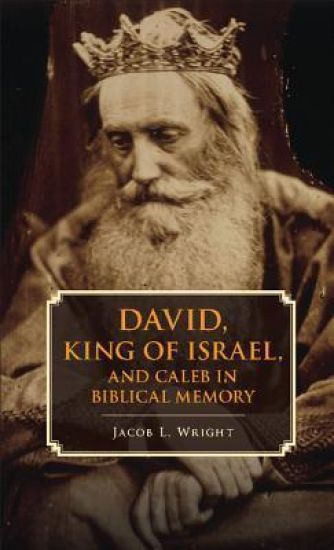
David, King of Israel, and Caleb in Biblical Memory
Jacob L. Wright
Cambridge University Press
2014
sidottu
Of all the Bible's personalities, David is the most profoundly human. Courageous, cunning, and complex, he lives life to the hilt. Whatever he does, he does with all his might, exuding both vitality and vulnerability. No wonder it has been said that Israel revered Moses yet loved David. But what do we now know about the historical David? Why does his story stand at the center of the Bible? Why didn't the biblical authors present him in a more favorable light? And what is the special connection between him and Caleb - the Judahite hero remembered for his valor during the wars of conquest? In this groundbreaking study, Jacob L. Wright addresses all these questions and presents a new way of reading the biblical accounts. His work compares the function of these accounts to the role war memorials play over time. The result is a rich study that treats themes of national identity, statehood, the exercise of power, and the human condition.

This book offers a reappraisal of David Ben-Gurion's role in Jewish-Israeli history from the perspective of the twenty-first century, in the larger context of the Zionist 'renaissance', of which he was a major and unique exponent. Some have described Ben-Gurion's Zionism as a dream that has gone sour, or a utopia doomed to be unfulfilled. Now - after the dust surrounding Israel's founding father has settled, archives have been opened, and perspective has been gained since Ben-Gurion's downfall - this book presents a fresh look at this statesman-intellectual and his success and tragic failures during a unique period of time that he and his peers described as the 'Jewish renaissance'. The resulting reappraisal offers a new analysis of Ben-Gurion's actual role as a major player in Israeli, Middle Eastern, and global politics.

The Cambridge bookseller Gustave David (1860–1936) was a key feature of the Cambridge landscape from the late nineteenth century until his death. This small volume, first published in 1937, collects together several obituaries written by David's friends in academia, including Sir Arthur Quiller-Couch. This book will be of value to anyone with an interest in the history of one of Cambridge's enduring personalities.

Why did Americans reject the British gentleman as their dominant model of masculinity? Why is a boy's relationship to his mother a crucial factor in shaping his masculinity? What and how do boys learn about what it means to be a man? Holmberg demonstrates how David Mamet's plays provide insights into these questions, and into the masculine malaise. Through the gangsters, businessmen, soldiers, sailors, athletes, frontiersmen and thugs he created, Mamet celebrates and criticizes American macho. The book provides close readings of Mamet's well-known plays as well as plays which have not previously received the critical attention they deserve, and includes discussions of recent films and unpublished film scripts that shed light on Mamet's attitudes to American macho. Holmberg also presents detailed analysis of Mamet as director of his own plays, which gives fascinating insights into the playwright's intentions through his instructions to actors on how to play a part.

David, King of Israel, and Caleb in Biblical Memory
Jacob L. Wright
Cambridge University Press
2014
pokkari
Of all the Bible's personalities, David is the most profoundly human. Courageous, cunning, and complex, he lives life to the hilt. Whatever he does, he does with all his might, exuding both vitality and vulnerability. No wonder it has been said that Israel revered Moses yet loved David. But what do we now know about the historical David? Why does his story stand at the center of the Bible? Why didn't the biblical authors present him in a more favorable light? And what is the special connection between him and Caleb - the Judahite hero remembered for his valor during the wars of conquest? In this groundbreaking study, Jacob L. Wright addresses all these questions and presents a new way of reading the biblical accounts. His work compares the function of these accounts to the role war memorials play over time. The result is a rich study that treats themes of national identity, statehood, the exercise of power, and the human condition.

David Brainerd (1718–1747) was a colonial American missionary to Native Americans made famous when Jonathan Edwards (1703–1758) posthumously edited his journal and other writings into a popular biographical narrative. Having spent time at Yale University, Brainerd entered the ministry in 1742 and dedicated his life to work amongst native peoples in Massachusetts, Pennsylvania, and New Jersey before expiring at the age of 29. This 1902 edition of The Diary and Journal of David Brainerd provided readers with a broader picture of his life and the source material from which Edwards composed his narrative. Volume 1 focuses mostly upon the diary, which contains Brainerd's discussion of his brief life, including not insignificant reference to the illness that claimed him. Ultimately, the thoughts preserved in this two-volume set are an important resource for those interested in religion in America during the period known as the 'Great Awakening'.

David Brainerd (1718–1747) was a colonial American missionary to Native Americans made famous when Jonathan Edwards (1703–1758) posthumously edited his journal and other writings into a popular biographical narrative. Having spent time at Yale University, Brainerd entered the ministry in 1742 and dedicated his life to work amongst native peoples in Massachusetts, Pennsylvania, and New Jersey before expiring at the age of 29. This 1902 edition of The Diary and Journal of David Brainerd provided readers with a broader picture of his life and the source material from which Edwards composed his narrative. Volume 2 focuses mostly upon his work with Native Americans as well as correspondence and other religious writing. The thoughts preserved in this two-volume set are an important resource for those interested in religion in America during the period known as the 'Great Awakening'.

The Last Journals of David Livingstone in Central Africa, from 1865 to his Death
David Livingstone
Cambridge University Press
2011
pokkari
One of the most renowned nineteenth-century British explorers of Africa, David Livingstone (1813–73) was a medical missionary who received the Royal Geographical Society gold medal in 1855. His fame was established by his 1853–6 coast-to-coast exploration of the African interior, and by the best-selling Missionary Travels and Researches in South Africa, published upon his return to England in 1857 (also reissued in this series). Livingstone's last expedition in search of 'the true source of the Nile', undertaken in 1866, forms the core of this two-volume travel diary, published posthumously in 1874. Volume 1 describes his illness-plagued journey from Zanzibar to Ujiji, in Western Tanzania. It also records his 1871 encounter with the New York Herald correspondent and explorer Henry Morton Stanley, who had been dispatched to find him after Livingstone had been cut off from the outside world for so long that he was presumed dead.

The Last Journals of David Livingstone in Central Africa, from 1865 to his Death
David Livingstone
Cambridge University Press
2011
pokkari
One of the most renowned nineteenth-century British explorers of Africa, David Livingstone (1813–73) was a medical missionary who received the Royal Geographical Society gold medal in 1855. His fame was established by his 1853–6 coast-to-coast exploration of the African interior, and by the best-selling Missionary Travels and Researches in South Africa, published upon his return to England in 1857 (also reissued in this series). Livingstone's last expedition in search of 'the true source of the Nile', undertaken in 1866, forms the core of this two-volume travel diary, published posthumously in 1874. Volume 2 describes the last two years of his life, when, after his meeting with the journalist Henry Morton Stanley in 1871, Livingstone insisted on staying in Africa despite his poor health. It includes details about his death and the journey to bring his body back to the British authorities, reported by Livingstone's attendants Chuma and Susi.
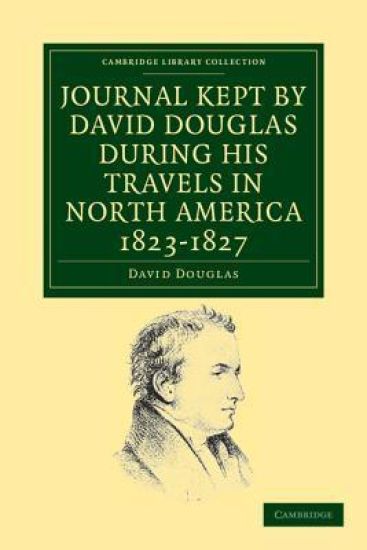
Journal Kept by David Douglas during his Travels in North America 1823–1827
David Douglas
Cambridge University Press
2011
pokkari
David Douglas (1799–1834), the influential Scottish botanist and plant collector, trained as a gardener before attending Perth College and Glasgow University. His genius for botany flourished and his talents came to the attention of the Royal Horticultural Society. With the society's backing he went to North America in 1823, beginning his life-long fascination with the region's flora. He discovered thousands of new species and introduced 240 of them to Britain, including the Douglas fir. Douglas continued to explore and discover plant species until his death in the Sandwich Islands (present-day Hawaii) in 1834. This remarkable journal, which remained unpublished until 1914, describes his adventures in North America during 1823–7. It also includes extracts from his journal of his explorations of Hawaii during 1833–4. The appendices include a listing of the plants Douglas introduced to Britain, and contemporary accounts of investigations into the mysterious circumstances of his death.