Kirjojen hintavertailu. Mukana 12 390 323 kirjaa ja 12 kauppaa.

Kirjahaku

Etsi kirjoja tekijän nimen, kirjan nimen tai ISBN:n perusteella.

1000 tulosta hakusanalla David Peter

National Rights, International Obligations

National Rights, International Obligations

David George; Prof. Peter Jones; Simon Caney

Westview Press Inc
1996
pokkari
Nationalism is once again rising and spreading. Nationlist movements are active throughout the world, demanding political recognition of their nations' identity. Yet the current revival of nationalism has taken place alongside claims that nation-states are becoming obsolete in an increasingly globalized world. In addition, now perhaps more than ever, people are conscious of humanity as a whole and are ready to take seriously the international dimensions of morality.In this collection of timely essays, distinguished moral and political philosophers examine issues raised by the competing claims of nationhood and internationalism from a variety of perspectives, and defend a variety of answers. Questions discussed include: Is humanity really divided into nations or are nations invented by nationalists? Does a nation have the right to be self-determining? If so, must each nation form a separate and sovereign state? Do our obligations stop at national boundaries? Do we not have obligations to human beings as such? Why then should we be less concerned about foreigners" than about our compatriots? Can we be concerned for social justice within societies yet not across the world as a whole? If we embrace ideas of human rights and global obligations, how do we establish what those rights and obligations actually are? Is it proper, plausible, or practical to aspire to such universal moral principles in a world characterized by national diversity and cultural difference?
The South, the Nation and the World

The South, the Nation and the World

David L. Carlton; Peter A. Coclanis

University of Virginia Press
2003
nidottu
Like the rest of British North America, the American South was ""born capitalist."" The slave plantation, then, was essentially a form of business enterprise like any other - indeed, one quite modern and sophisticated for its time. There were initially very few significant differences in business culture between the northern and southern parts of what became the United States Yet the plantation placed its peculiar stamp on the South, and vice versa, and its path of development diverged increasingly from that of the growing manufacturing belt of the North. In their essays collected in The South, the Nation, and the World, David Carlton and Peter Coclanis effectively argue that the chronic economic difficulties of the American South cannot simply be explained away as resulting from a distinctive ""premodern"" business climate, because there was actually very little variation between one region's business climate and another's during the Antebellum period. Instead, it was the collapse of the slave regime in the 1860s that left the South in dire need of economic restructuring, and by Reconstruction the emergent American economy had foreclosed options formerly available to southern enterprise. Forced to play catch-up, southerners have had at best mixed success in the continuing struggle to create an economic life affording stable growth and broad opportunity to all the region's people - and Carlton and Coclanis offer a fascinating illumination of the twists and turns in that economic history.
Narrative Theory

Narrative Theory

David Herman; James Phelan; Peter J Rabinowitz; Brian Richardson; Robyn R Warhol

OHIO STATE UNIVERSITY PRESS
2012
pokkari
Narrative Theory: Core Concepts and Critical Debates addresses two frequently asked questions about narrative studies: "what is narrative theory?" and "how do different approaches to narrative relate to each other?" In engaging with these questions, the book demonstrates the diversity and vitality of the field and promotes a broader dialogue about its assumptions, methods, and purposes. In Part One, the co-authors explore the scope and aims of narrative from four distinct perspectives: rhetorical (Phelan and Rabinowitz), feminist (Warhol), mind-oriented (Herman), and unnatural (Richardson). Using case studies (Huckleberry Finn, Persuasion, On Chesil Beach, and Midnight's Children, respectively), the co-authors explain their different takes on the same core concepts: authors, narrators, narration; plot, time, and progression; space, setting, and perspective; character; reception and the reader; and narrative values. In Part Two, the co-authors respond to one another's views. As they discuss the relation of the approaches to each other, they highlight significant current debates and map out key developments in the field. Accessibly written, Narrative Theory can serve as the basis for a wide range of courses, even as its incisive presentation of four major approaches and its lively give-and-take about the powers and limitations of each make the book an indispensable resource for specialists.
Digital Health Information for the Consumer

Digital Health Information for the Consumer

David Nicholas; Paul Huntington; Peter Williams

CRC Press Inc
2017
nidottu
This unique book draws on research that constituted the first major nationwide evaluation of the use and impact of key digital health information platforms which were provided to thousands of health consumers in the UK. The authors offer the first comprehensive and detailed comparison of usage and impact of the three major ICT platforms delivering health information - the internet, touch-screen kiosks and digital interactive television. It provides an extensive reference source on how health consumers behave when online, whether this differs according to digital platform or type of user, how users perceive digital health services and what health benefits these services deliver. The book will be invaluable reading for all those interested in digital health information - students, academics, health policy-makers and information managers.
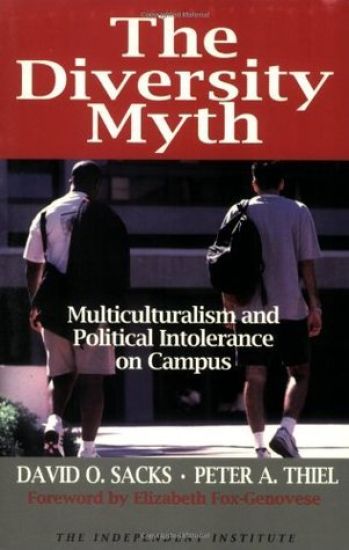
The Diversity Myth

The Diversity Myth

David O. Sacks; Peter A. Thiel; Elizabeth Fox-Genovese

Independent Institute,U.S.
1999
pokkari
This is a powerful exploration of the debilitating impact that politically-correct “multiculturalism” has had upon higher education and academic freedom in the United States. In the name of diversity, many leading academic and cultural institutions are working to silence dissent and stifle intellectual life. This book exposes the real impact of multiculturalism on the institution most closely identified with the politically correct decline of higher education—Stanford University. Authored by two Stanford graduates, this book is a compelling insider’s tour of a world of speech codes, “dumbed-down” admissions standards and curricula, campus witch hunts, and anti-Western zealotry that masquerades as legitimate scholarly inquiry. Sacks and Thiel use numerous primary sources—the Stanford Daily, class readings, official university publications—to reveal a pattern of politicized classes, housing, budget priorities, and more. They trace the connections between such disparate trends as political correctness, the gender wars, Generation X nihilism, and culture wars, showing how these have played a role in shaping multiculturalism at institutions like Stanford. The authors convincingly show that multiculturalism is not about learning more; it is actually about learning less. They end their comprehensive study by detailing the changes necessary to reverse the tragic disintegration of American universities and restore true academic excellence.
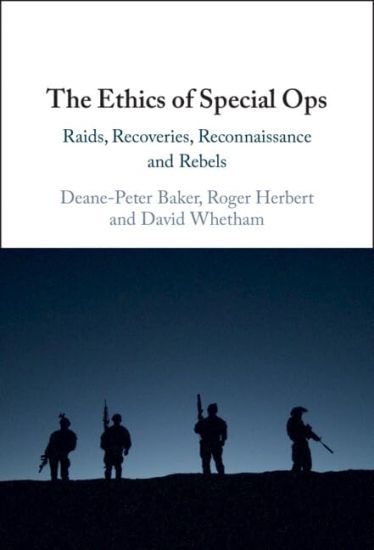
The Ethics of Special Ops

The Ethics of Special Ops

Deane-Peter Baker; Roger Herbert; David Whetham

Cambridge University Press
2023
sidottu
The field of military ethics has generally been attentive to emerging trends in modern warfare. Cyber, robotics and AI, for example, have inspired an abundant and flourishing literature. One trend, however, has been largely overlooked: the emergence of special operations as a prominent instrument of statecraft. Drawing extensively on historical cases and first-hand experience, the authors of this book call attention to qualities inherent in special operations – and special operators – that challenge the moral framework which has long informed conventional military operations. Moral theorists will find this analysis provocative, while practitioners – those who conduct or oversee special operations and have an interest in the moral wellbeing of special operators – can put the authors' insights to practical use. Those who simply view with fascination the opaque world of special operations will find this book illuminating.
The Ethics of Special Ops

The Ethics of Special Ops

Deane-Peter Baker; Roger Herbert; David Whetham

Cambridge University Press
2025
pokkari
The field of military ethics has generally been attentive to emerging trends in modern warfare. Cyber, robotics and AI, for example, have inspired an abundant and flourishing literature. One trend, however, has been largely overlooked: the emergence of special operations as a prominent instrument of statecraft. Drawing extensively on historical cases and first-hand experience, the authors of this book call attention to qualities inherent in special operations – and special operators – that challenge the moral framework which has long informed conventional military operations. Moral theorists will find this analysis provocative, while practitioners – those who conduct or oversee special operations and have an interest in the moral wellbeing of special operators – can put the authors' insights to practical use. Those who simply view with fascination the opaque world of special operations will find this book illuminating.
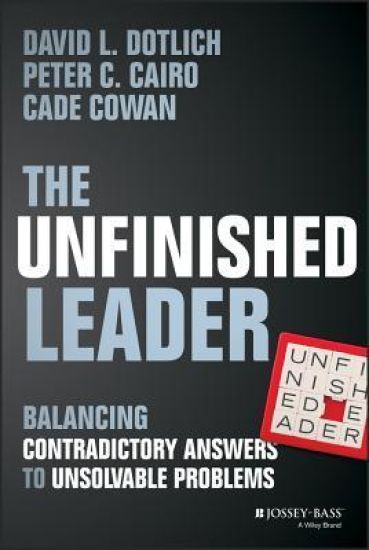
The Unfinished Leader

The Unfinished Leader

David L. Dotlich; Peter C. Cairo; Cade Cowan

John Wiley Sons Inc
2014
sidottu
With the demands of technology, transparency, and constant connectedness, and calls for higher performance, leaders from the front line to the C-suite face complex dilemmas that cannot be easily denied or postponed. These perplexing, recurring issues are familiar to anyone in a leadership role today, including: How do I balance my functional or business unit goals with the needs of my peers and the whole company?How do I support and promote others while still advancing my own career?How do I emphasize teamwork and still reward the “stars”?Can I really devote enough time and energy to both family and work? These are not “problems” but paradoxes—situations in which there will never be a single correct solution—and while they make many leaders feel overwhelmed and challenged, this remarkable book provides help. The Unfinished Leader is a modern handbook for recognizing, facing, and inspiring others to expose the real issues that underlie paradoxes in modern organizations. Leaders must first recognize situations they will never be able to “solve” and understand how to confront the barriers—in their own heads and their organizations—that push them towards seeking ultimate solutions that don’t exist. Leading through complexity requires giving up the illusion of control, consistency, and closure, while embracing the reality of being permanently “unfinished.” Drawing from interviews with 100 CEOs and top leaders from a wide range of companies—such as Avon, Nike, Colgate, DeutschePost DHL, Johnson & Johnson, PepsiCo, and many more— The Unfinished Leader provides the mindsets and tools to recognize contradictory requirements, understand competing demands, and still be able to take action. No one can find or even should look for perfect solutions to impossible situations. The Unfinished Leader will help leaders at all levels understand and excel at their true task: guiding themselves and their teams through ongoing paradoxes, reconciling competing outcomes, continually changing and adapting, and thereby building lasting success.
Wisdom and Management in the Knowledge Economy

Wisdom and Management in the Knowledge Economy

David Rooney; Bernard McKenna; Peter Liesch

Routledge
2014
nidottu
Today there are more technology, technologists, knowledge and experts than at any time in human history; but from a global perspective, it is difficult to argue that this accumulation of knowledge and technology has put the world in an unambiguously better position than it was in the past. Business is not getting any easier to do and major corporate collapses based on poor decisions, poor conduct, and poor judgement continue to occur. In public administration too, basic institutions and services (education, health, transport) seem to be continually undergoing “crises” of inadequate delivery and excessive pressure. Wisdom and Management in the Knowledge Economy explains why unwise managerial practice can happen in a world characterized by an excess of information and knowledge. Drawing on Aristotle’s idea of practical wisdom, the book develops a theory of social practice wisdom that addresses important social psychological and sociological dynamics that underpin wise management and organizations. As well as providing a detailed theory of social practice wisdom, this book considers practical issues in organizational communication, behavior, culture, change and knowledge as well as in HRM, leadership, ethics, strategy, international business, business education, and wisdom research. By introducing the notion of social practice wisdom, aspects of social structure, organizational culture, and organizational communication needed for wisdom to flourish are for the first time rendered visible in a way that opens new possibilities for wiser management, wiser organizations, and wisdom research.
Accounting for Business

Accounting for Business

David Harvey; Edward McLaney; Peter Atrill

Routledge
2016
sidottu
'Accounting for Business' is ideal for undergraduate students on business and accounting courses who need to understand the nuts and bolts of financial accounting. This popular textbook has always enjoyed a deserved reputation for accessibility and thoroughness. Now in its third edition, its contents have been fully updated and restructured to make them even easier to use. Readers will benefit from the coverage of current accounting practices and legislation, in addition to the range of worked examples and self-test activities throughout the book. 'Accounting for Business' clearly explains accounting information's role in making sound business decisions and focuses upon the aspects of accounting practice which are most relevant to the non-specialist manager. It is ideal for first year undergraduates of business studies, higher students and those pursuing professional accountancy qualifications. This third edition has been restructured, to further enhance its 'student centred' approach. The content has now been broken down into 25 roughly equivalent 'bite-sized' individual study topics. Each of these requires 6 hours of study time, enabling this book to support a full scale semester course with two topics a week, or a full year course at one topic a week. Includes a wide selection of topical case studies, with a broad spread of international examples.
IT for All

IT for All

David Banes; Carole Thornett; Peter Gossage; Caroline Coles

Routledge
2017
sidottu
This work on the teaching of information technology considers the purposes of teaching pupils with a range of special educational needs. They look at the issues of planning, teaching strategies, assessment and recording progress. The book is part of the Entitlement for All series.
Science Fiction and Narrative Form

Science Fiction and Narrative Form

David Roberts; Andrew Milner; Peter Murphy

BLOOMSBURY PUBLISHING PLC
2023
sidottu
Establishing science fiction as its own distinct and increasingly important narrative form, this book explores how the genre challenges pervasive perceptions of society as they appear in the conventional modern novel. Inspired by, and building upon, Georg Lukács’s criticism of the orthodox novel for its depiction of life as alienating and disjointed, Milner, Murphy and Roberts demonstrate that science fiction steps beyond this contemporary form to be a more constructive form of literature, one able to conceive of society as complete, integrated and well-rounded. Taking stock of three kinds of science fiction which lie outside the scope of the modern novel – theological/ ontological science fiction, the science fiction of future history and epic science fiction – this book demonstrates the genre’s unique capacity to encapsulate the whole world, persons and events, things and objects in a glance, and address the motive behind the longing for meaningful totality. With reference to a vast array of works by authors such as Michel Houellebecq, Elias Canetti, Isaac Asimov, Jules Verne, H. G. Wells, Aldous Huxley, Marge Piercy, Iain M. Banks, Margaret Atwood, Ursula K. Le Guin, William Gibson, Dirk C. Fleck, Philip K. Dick, George Orwell and Kazuo Ishiguro, this book offers a compelling argument for rethinking the position and potential of the science fiction novel and to challenge the way we perceive our culture.
Science Fiction and Narrative Form

Science Fiction and Narrative Form

David Roberts; Andrew Milner; Peter Murphy

BLOOMSBURY PUBLISHING PLC
2024
nidottu
Establishing science fiction as its own distinct and increasingly important narrative form, this book explores how the genre challenges pervasive perceptions of society as they appear in the conventional modern novel. Inspired by, and building upon, Georg Lukács’s criticism of the orthodox novel for its depiction of life as alienating and disjointed, Milner, Murphy and Roberts demonstrate that science fiction steps beyond this contemporary form to be a more constructive form of literature, one able to conceive of society as complete, integrated and well-rounded. Taking stock of three kinds of science fiction which lie outside the scope of the modern novel – theological/ ontological science fiction, the science fiction of future history and epic science fiction – this book demonstrates the genre’s unique capacity to encapsulate the whole world, persons and events, things and objects in a glance, and address the motive behind the longing for meaningful totality. With reference to a vast array of works by authors such as Michel Houellebecq, Elias Canetti, Isaac Asimov, Jules Verne, H. G. Wells, Aldous Huxley, Marge Piercy, Iain M. Banks, Margaret Atwood, Ursula K. Le Guin, William Gibson, Dirk C. Fleck, Philip K. Dick, George Orwell and Kazuo Ishiguro, this book offers a compelling argument for rethinking the position and potential of the science fiction novel and to challenge the way we perceive our culture.
The Definitive Guide to MongoDB

The Definitive Guide to MongoDB

David Hows; Eelco Plugge; Peter Membrey; Tim Hawkins

APress
2013
nidottu
The Definitive Guide to MongoDB, Second Edition, is updated for the latest version and includes all of the latest MongoDB features, including the aggregation framework introduced in version 2.2 and hashed indexes in version 2.4. MongoDB is the most popular of the "Big Data" NoSQL database technologies, and it's still growing. David Hows from 10gen, along with experienced MongoDB authors Peter Membrey and Eelco Plugge, provide their expertise and experience in teaching you everything you need to know to become a MongoDB pro.
Psychology

Psychology

David F. Bjorklund; Gray Peter O.

W.H.Freeman Co Ltd
2014
sidottu
Peter Gray's evolutionary perspective and emphasis on critical thinking have made his rigorous yet accessible introduction to psychology a widely respected classroom favourite, edition after edition. Now thoroughly revised, with the help of new co-author David Bjorklund, the seventh edition of Psychology invites and stimulates students to investigate the big ideas in psychological science. Psychology can be purchased with the breakthrough online resource, LaunchPad, which offers innovative media content, curated and organised for easy assignability. LaunchPad's intuitive interface presents quizzing, flashcards, animations and much more to make learning actively engaging.
Researching Communications

Researching Communications

David Deacon; Michael Pickering; Peter Golding; Graham Murdock

Bloomsbury Academic USA
2021
nidottu
The new edition of the highly respected Researching Communications is a comprehensive and authoritative guide to researching media and communication. Researching Communications, Third Edition is an invaluable guide to performing and analysing research tasks, introducing the major research methods, giving detailed examples of research analysis and practical step-by-step guidance in clear language.Written by highly regarded experts in the field, the third edition includes new sections on social media analysis, digital research methods and comparative research, as well as updated case studies, international examples and details of recent developments in media and communication studies.Undergraduate and postgraduate media and communication students will find Researching Communications an invaluable resource at all stages of their course.
Researching Communications

Researching Communications

David Deacon; Michael Pickering; Peter Golding; Graham Murdock

Bloomsbury Academic USA
2021
sidottu
The new edition of the highly respected Researching Communications is a comprehensive and authoritative guide to researching media and communication. Researching Communications, Third Edition is an invaluable guide to performing and analysing research tasks, introducing the major research methods, giving detailed examples of research analysis and practical step-by-step guidance in clear language.Written by highly regarded experts in the field, the third edition includes new sections on social media analysis, digital research methods and comparative research, as well as updated case studies, international examples and details of recent developments in media and communication studies.Undergraduate and postgraduate media and communication students will find Researching Communications an invaluable resource at all stages of their course.
Overcoming Trauma through Yoga

Overcoming Trauma through Yoga

David Emerson; Elizabeth Hopper; Peter A. Levine; Stephen Cope

North Atlantic Books,U.S.
2011
pokkari
Survivors of trauma whether abuse, accidents, or war can end up profoundly wounded, betrayed by their bodies that failed to get them to safety and that are a source of pain. In order to fully heal from trauma, a connection must be made with oneself, including one s body. The trauma-sensitive yoga described in this book moves beyond traditional talk therapies that focus on the mind, by bringing the body actively into the healing process. This allows trauma survivors to cultivate a more positive relationship to their body through gentle breath, mindfulness, and movement practices. " Overcoming Trauma through Yoga "is a book for survivors, clinicians, and yoga instructors who are interested in mind/body healing. It introduces trauma-sensitive yoga, a modified approach to yoga developed in collaboration between yoga teachers and clinicians at the Trauma Center at Justice Resource Institute, led by yoga teacher David Emerson, along with medical doctor Bessel van der Kolk. The book begins with an in-depth description of trauma and post-traumatic stress disorder (PTSD), including a description of how trauma is held in the body and the need for body-based treatment. It offers a brief history of yoga, describes various styles of yoga commonly found in Western practice, and identifies four key themes of trauma-sensitive yoga. Chair-based exercises are described that can be incorporated into individual or group therapy, targeting specific treatment goals, and modifications are offered for mat-based yoga classes. Each exercise includes trauma-sensitive language to introduce the practice, as well as photographs to illustrate the poses. The practices have been offered to a wide range of individuals and groups, including men and women, teens, returning veterans, and others. Rounded out by valuable quotes and case stories, the book presents mindfulness, breathing, and yoga exercises that can be used by home practitioners, yoga teachers, and therapists as a way to cultivate awareness, tolerance, and an increased acceptance of the self. "