The pale Usher-threadbare in coat, heart, body, and brain; I see him now. He was ever dusting his old lexicons and grammars, with a queer handkerchief, mockingly embellished with all the gay flags of all the known nations of the world. He loved to dust his old grammars; it somehow mildly reminded him of his mortality. "While you take in hand to school others, and to teach them by what name a whale-fish is to be called in our tongue leaving out, through ignorance, the letter H, which almost alone maketh the signification of the word, you deliver that which is not true." -HACKLUYT "WHALE... . Sw. and Dan. hval.
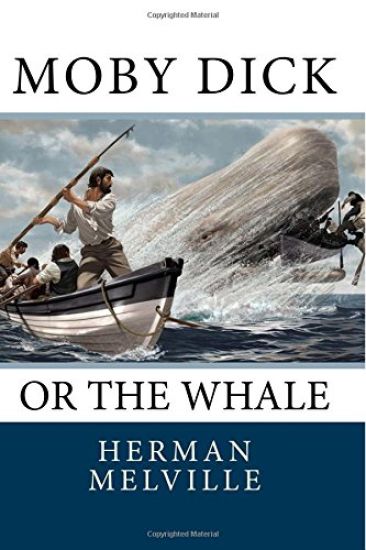
Moby-Dick; or, The Whale is a novel by American writer Herman Melville, published in 1851 during the period of the American Renaissance. Sailor Ishmael tells the story of the obsessive quest of Ahab, captain of the whaler the Pequod, for revenge on Moby Dick, the white whale that on the previous whaling voyage bit off Ahab's leg at the knee. The novel was a commercial failure and out of print at the time of the author's death in 1891, but during the 20th century, its reputation as a Great American Novel was established. William Faulkner confessed he wished he had written it himself, and D. H. Lawrence called it "one of the strangest and most wonderful books in the world", and "the greatest book of the sea ever written". "Call me Ishmael" is among world literature's most famous opening sentences.The novel has been adapted or represented in art, film, books, cartoons, television, and more than a dozen versions in comic-book format. The first adaptation was the 1926 silent movie The Sea Beast, starring John Barrymore, in which Ahab kills the whale and returns to marry his fianc e. The most famous adaptation was the John Huston 1956 film produced from a screenplay by author Ray Bradbury.This classic title has been published by RADLEY BOOKS. Each RADLEY CLASSIC is a meticulously restored, luxurious and faithful reproduction of a classic book; produced with elegant text layout, clarity of presentation, and stylistic features that make reading a true pleasure. Special attention is given to legible fonts and adequate letter sizing, correct line length for readability, generous margins and triple lead (lavish line separation); plus we do not allow any mistakes/changes/additions to creep into the author's words.Visit RADLEY BOOKS at www.radleybooks.com (or search RADLEY CLASSIC on Amazon) to see more classic book titles in this series.
Washing the face and hands is usually considered proper in commencing the day, but Dick was above such refinement. He had no particular dislike to dirt, and did not think it necessary to remove several dark streaks on his face and hands. But in spite of his dirt and rags there was something about Dick that was attractive. It was easy to see that if he had been clean and well dressed he would have been decidedly good-looking. Some of his companions were sly, and their faces inspired distrust; but Dick had a frank, straight-forward manner that made him a favorite. Dick's business hours had commenced. He had no office to open. His little blacking-box was ready for use, and he looked sharply in the faces of all who passed, addressing each with, "Shine yer boots, sir?" "How much?" asked a gentleman on his way to his office. "Ten cents," said Dick, dropping his box, and sinking upon his knees on the sidewalk, flourishing his brush with the air of one skilled in his profession. "Ten cents Isn't that a little steep?" "Well, you know 'taint all clear profit," said Dick, who had already set to work. "There's the blacking costs something, and I have to get a new brush pretty often." "And you have a large rent too," said the gentleman quizzically, with a glance at a large hole in Dick's coat.
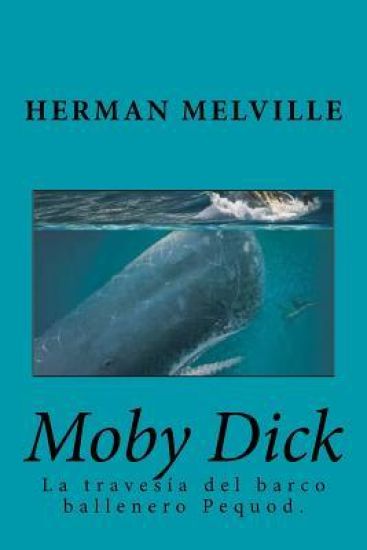
Moby Dick de Herman Melville es una historia pica de la traves a del barco ballenero Pequod y su capit n Ahab, quien persigue incansable al gran cachalote (el personaje principal) durante un viaje alrededor del mundo. El narrador de la novela es Ismael, un marinero en el Pequod que emprende el viaje de su afecto por el mar. Moby Dick comienza con la llegada de Ismael en New Bedford a medida que viaja hacia Nantucket. l se apoya en el Spouter Inn en New Bedford, donde conoce a Queequeg, un arponero de Nueva Zelanda que tambi n navegar en el Pequod. Aunque Queequeg parece peligroso, e Ismael debe compartir la cama junto, y el narrador crece r pidamente aficionado al arponero algo incivilizado. Queequeg es en realidad el hijo de un gran jefe que sali de Nueva Zelanda debido a su deseo de aprender entre los cristianos. Al d a siguiente, Ismael asiste a un servicio de la iglesia y escucha un serm n del padre Mapple, un predicador de renombre que pronuncia un serm n considerando Jon s y la ballena que se llega a la conclusi n de que la historia es una lecci n para predicador La verdad en la cara de la mentira. En una goleta de Nantucket, Ismael y Queequeg se encuentran con un cateto local que se burla de Queequeg. Sin embargo, cuando este cateto es barrido por la borda, Queequeg lo salva. En Nantucket, Queequeg e Ismael elegir entre tres barcos para un viaje de a o, y decidir sobre el Pequod. El capit n del Pequod, Peleg, ahora se retira, y se limita a propietaria de la embarcaci n con otra Quaker, Bildad. Peleg les dice del nuevo capit n, Acab, y le describe inmediatamente como un hombre grande y malos. Antes de salir para su viaje, Ismael y Queequeg se encuentran con un extra o llamado El as, que predice un desastre en su viaje. Antes de salir en el Pequod, El as predice de nuevo desastre.
Al margen de la persecuci n y evoluci n de sus personajes, el tema de la novela es eminentemente enciclop dico al incluir detalladas y extensas descripciones de la caza de las ballenas en el siglo XIX y multitud de otros detalles sobre la vida marinera de la poca.
Herman Melville, autor de la novela y gran conocedor del mar, detalla de forma magn fica la vida de los marinos y los pormenores de la caza de ballenas durante la traves a del Pequod en busca de Moby Dick. La persecuci n tuvo sus frutos y la tripulaci n avista al temido animal, cuyo lomo est cubierto de los arpones clavados y retorcidos, recuerdos de otras contiendas de las que sali victorioso. Sin embargo, en esta ocasi n Moby Dick se enfrenta a la peor de las batallas, la que est impulsada por el odio m s absoluto y el deseo ciego de venganza, y en el intento brutal de aplacar este rencor pierden la vida casi todos sus contrincantes. Todos excepto uno, que salv la vida para cont rnoslo; se trata del narrador que se presenta ante nosotros modestamente con un par de palabras: "Llamadme Ismael."
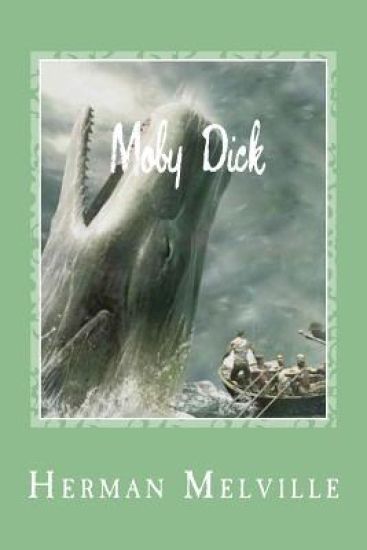
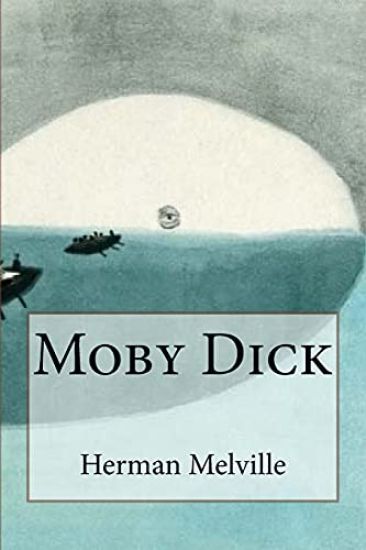
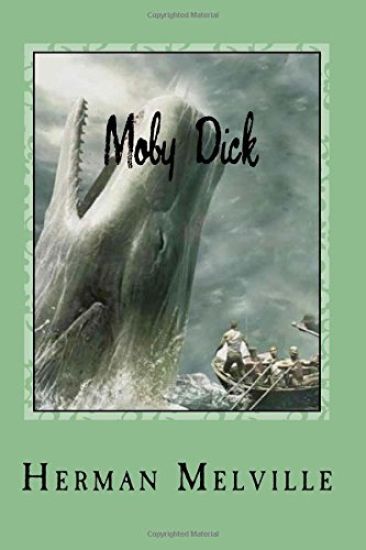
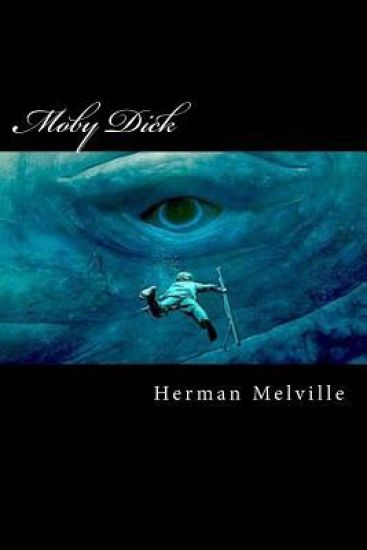
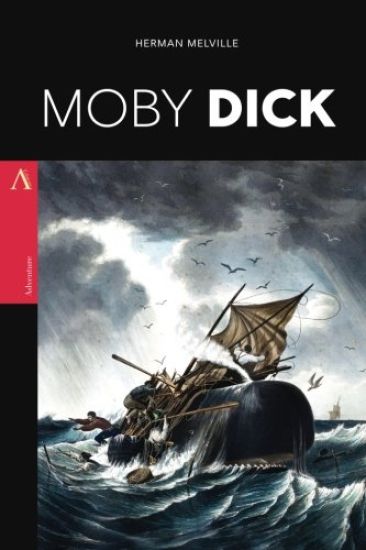
Moby-Dick is an 1851 novel by Herman Melville. The story tells the adventures of the wandering sailor Ishmael and his voyage on the whaling ship Pequod, commanded by Captain Ahab. Ishmael soon learns that Ahab seeks one specific whale, Moby-Dick, a white whale of tremendous size and ferocity. Comparatively few whaling ships know of Moby-Dick, and fewer yet have encountered him. In a previous encounter, the whale destroyed Ahab's boat and bit off his leg. Ahab intends to exact revenge.
Moby-Dick is an 1851 novel by Herman Melville. The story tells the adventures of the wandering sailor Ishmael and his voyage on the whaling ship Pequod, commanded by Captain Ahab. Ishmael soon learns that Ahab seeks one specific whale, Moby-Dick, a white whale of tremendous size and ferocity. Comparatively few whaling ships know of Moby-Dick, and fewer yet have encountered him.
Full text."Call me Ishmael." Here is one of the world literature's most famous opening sentences. And so begins Herman Melville's masterpiece, one of the greatest works of imagination in literary history. As Ishmael is drawn into Captain Ahab's obsessive quest to slay the white whale Moby-Dick, he finds himself engaged in a metaphysical struggle between good and evil. More than just a novel of adventure, more than an paean to whaling lore and legend, Moby-Dick is a haunting social commentary, populated by some of the most enduring characters in literature; the crew of the Pequod, from stern, Quaker First Mate Starbuck, to the tattooed Polynesian harpooner Queequeg, are a vision of the world in microcosm, the pinnacle of Melville's lifelong meditation on America. Written with wonderfully redemptive humour, Moby-Dick is a profound, poetic inquiry into character, faith, and the nature of perception.