Title: Sir John. A novel.] By the Author of "Anne Dysart" Miss Douglas].Publisher: British Library, Historical Print EditionsThe British Library is the national library of the United Kingdom. It is one of the world's largest research libraries holding over 150 million items in all known languages and formats: books, journals, newspapers, sound recordings, patents, maps, stamps, prints and much more. Its collections include around 14 million books, along with substantial additional collections of manuscripts and historical items dating back as far as 300 BC.The FICTION & PROSE LITERATURE collection includes books from the British Library digitised by Microsoft. The collection provides readers with a perspective of the world from some of the 18th and 19th century's most talented writers. Written for a range of audiences, these works are a treasure for any curious reader looking to see the world through the eyes of ages past. Beyond the main body of works the collection also includes song-books, comedy, and works of satire. ++++The below data was compiled from various identification fields in the bibliographic record of this title. This data is provided as an additional tool in helping to insure edition identification: ++++ British Library Anonymous; 1879. 3 vol.; 8 . 12625.n.1.
Title: Sir John. A novel.] By the Author of "Anne Dysart" Miss Douglas].Publisher: British Library, Historical Print EditionsThe British Library is the national library of the United Kingdom. It is one of the world's largest research libraries holding over 150 million items in all known languages and formats: books, journals, newspapers, sound recordings, patents, maps, stamps, prints and much more. Its collections include around 14 million books, along with substantial additional collections of manuscripts and historical items dating back as far as 300 BC.The FICTION & PROSE LITERATURE collection includes books from the British Library digitised by Microsoft. The collection provides readers with a perspective of the world from some of the 18th and 19th century's most talented writers. Written for a range of audiences, these works are a treasure for any curious reader looking to see the world through the eyes of ages past. Beyond the main body of works the collection also includes song-books, comedy, and works of satire. ++++The below data was compiled from various identification fields in the bibliographic record of this title. This data is provided as an additional tool in helping to insure edition identification: ++++ British Library Anonymous; 1879. 3 vol.; 8 . 12625.n.1.
Title: Sir John. A novel.] By the Author of "Anne Dysart" Miss Douglas].Publisher: British Library, Historical Print EditionsThe British Library is the national library of the United Kingdom. It is one of the world's largest research libraries holding over 150 million items in all known languages and formats: books, journals, newspapers, sound recordings, patents, maps, stamps, prints and much more. Its collections include around 14 million books, along with substantial additional collections of manuscripts and historical items dating back as far as 300 BC.The FICTION & PROSE LITERATURE collection includes books from the British Library digitised by Microsoft. The collection provides readers with a perspective of the world from some of the 18th and 19th century's most talented writers. Written for a range of audiences, these works are a treasure for any curious reader looking to see the world through the eyes of ages past. Beyond the main body of works the collection also includes song-books, comedy, and works of satire. ++++The below data was compiled from various identification fields in the bibliographic record of this title. This data is provided as an additional tool in helping to insure edition identification: ++++ British Library Anonymous; 1879. 3 vol.; 8 . 12625.n.1.
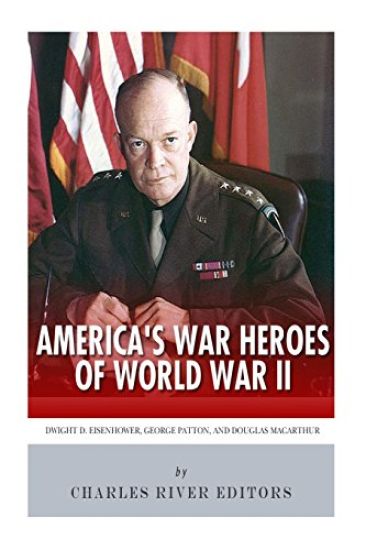
*Weaves the lives and careers of the generals into one entertaining and educational narrative. *Includes some of the generals' most colorful and inspiring quotes, including Patton's Speech to the Third Army and MacArthur's Farewell Address to Congress. *Includes pictures of the generals and other important people, places, and events. *Discusses the relationships between the three generals. *Explains the generals' roles in the Atlantic and Pacific Theaters. *Includes a Bibliography for further reading. During the middle of the 20th century, the United States completed its transformation into one of the world's superpowers, and few were as instrumental in this development as Dwight D. Eisenhower (1890-1969), A career military man, Ike was too young to serve in combat during World War I, but he began a long and productive career collaborating with future military legends George Patton and Douglas MacArthur while serving some of the nation's other famous generals, including George Marshall and John J. Pershing. Amazingly, he had never served in anything but administrative positions before World War II. By 1942, Eisenhower was given the role of appointed Supreme Commander Allied (Expeditionary) Force in North Africa, and after his success there, Eisenhower oversaw the invasion of Sicily in 1943, which at the time had been the largest amphibious invasion in history. In both campaigns he had the fortune of commanding George Patton. With those successes, President Roosevelt picked Eisenhower to be the Supreme Allied Commander of the Allied Expeditionary Force, leaving him in charge of Operation Overlord and the defining moment of his military career, D-Day. By the time he died in 1969, President Nixon aptly described Eisenhower as "the world's most admired and respected man, truly the first citizen of the world." Rommel, Guderian, Liddell-Hart and JFC Fuller were all early exponents and practitioners of armored warfare, tactics that were to break the stalemate that had characterized World War I. Advocates of the tank and above all speed, it was their ideas which decimated Saddam Hussein's forces in the 1990 Gulf War. But among the proponents and practitioners of armored warfare, the brash, bold, arrogant and eccentric George S. Patton remains the world's greatest armored commander by the one yardstick that really counts: the battlefield. In 1944-45, Patton's Third Army raced across northern Europe, covering more ground and destroying more enemy resources than any other equivalent force in history. Patton is one of America's most celebrated generals and one of the most famous generals of the 20th century, but his story has its origins in the form of a shy, dyslexic boy who could cry uncontrollably and who viewed his own emotional intelligence as unmanly. Patton was a fascinating, complicated and controversial man whose life story ranges between genius, folly and tragedy, with absolute determination the one constant theme. Of all the military men America produced during the 19th and 20th centuries, it's hard to find one as important, successful and controversial as General Douglas MacArthur. The son of a Civil War veteran, MacArthur rose to become the most instrumental commander in the Pacific Theater during World War II. His legendary return to the Philippines in 1944 made good on one of the war's most famous vows, and it was MacArthur who fittingly who oversaw the occupation and reconstruction of Japan following the war. Given his long and celebrated career, MacArthur was the obvious choice to lead the newly created United Nations' troops during the Korean War, but his arguments over war strategy and policy eventually led to his controversial firing by President Harry Truman in 1951. After that, in his own words, he "faded away", living out his remaining days on the top floor of the Waldorf Hotel until his death in 1964.








![Onwards. by the Author of "Anne Dysart," Etc. [Miss Douglas.]](/covers/9781240866847.jpg)
![Onwards. by the Author of "Anne Dysart," Etc. [Miss Douglas.]](/covers/9781240866861.jpg)
![Onwards. by the Author of "Anne Dysart," Etc. [Miss Douglas.]](/covers/9781240866878.jpg)
![Sir John. [A Novel.] by the Author of "Anne Dysart" [Miss Douglas].](/covers/9781241371586.jpg)
![Sir John. [A Novel.] by the Author of "Anne Dysart" [Miss Douglas].](/covers/9781241574338.jpg)
![Sir John. [A Novel.] by the Author of "Anne Dysart" [Miss Douglas].](/covers/9781241574345.jpg)