NEW RELEASE FOR CHRISTIAN ATHLETES IN FULL COLOR FROM A READER: "The basketball coaches were praising my son in front of the whole team today (02/15/14). Later, the coach asked what my son has been doing differently in preparation. My son said, "I am trusting in Christ." Your book launched Christ and my son's relationship. Thank you " FROM THE BOOK: "Being a CONTENDER FOR CHRIST is an honor that must be treasured at all times. You have God-given talent and when you tap into all He has in place for you then you will begin competing far beyond even your own expectations. He wants you to shine His light - in everything you do - so He can take you from the ordinary to the extraordinary. Take you from the extraordinary to the supernatural. He wants you to be your very best " At the end of each chapter is a CHALK TALK with reminders for all situations athletes encounter. There are also SET PLAYS that bring scripture to life followed by JOURNALING PAGES for you to set goals in stone. Organized sports can be tough on the players and tough on the parents. However, they shouldn't be Sports should be fun. Sports should be competitive. And, sports should be a learning tool for building character. Christian Athletes of all ages - and their parents - will benefit from this powerful guide to the ultimate championship. Heaven. This spiritually important guide is designed to keep all young athletes' attention throughout. In fact, today's Christian Athletes are facing more temptations than ever before and this guide will keep their eye on the ultimate prize. Plus, the SET PLAYS and scriptures in the book can be used for individual and team Bible Studies to keep all Christian Athletes focused and prepared to shine His light. CONTENDER FOR CHRIST will teach and remind Christian Athletes that failure is never an option when God is at their side. Throughout the entire read are powerful reminders of how and why athletes compete.
Learn to become a winning trader using fixed-odds binary options, including five specific (and timeless) strategies. The popularity of this unique derivative has recently exploded, with dozens of online brokers now competing for your trading dollar. This creates an attractive environment for small-stakes financial market players. Drew Kasch is an expert in probability games that are played for money, including trading stocks and options. His books will arm you with knowledge and tactics that will give you the best chance for success at your chosen area of risk taking. Fixed-odds binary options are one of his favorite tools, and they'll very likely soon be one of yours as well. The first thing Kasch does is show you what you're up against. He'll actually try to talk you out of this hobby by showing you why 90% of traders in this market fail, and, in particular, how the binary options brokers make so much money from them. If you're stubborn enough not be dissuaded, you will then be taught how to beat this particular probability game by adopting the proper mindset and developing indispensable risk/reward analysis skills. So armed, the five core strategies will then be rolled out, which span all different time frames including an intraday system. Finally, the author will show you how to run your binary options trading as a business and use it to springboard yourself into wealth and trading success in all different markets. The reader will come away from this work with a clear roadmap for becoming a successful trader for life, starting with a tiny amount of capital today.
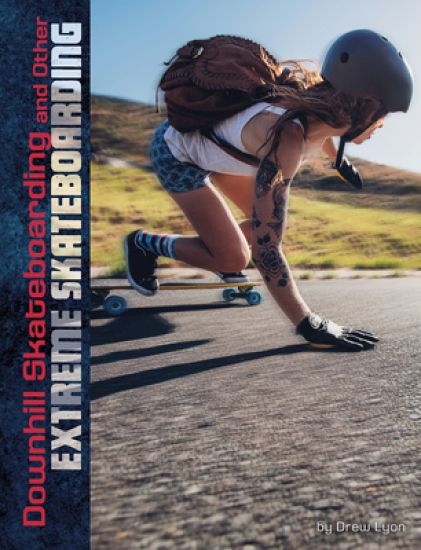
Explore the breathtaking sport of downhill skateboarding Learn about skateboarding, how it started, equipment needed, and safety measures taken for this extreme sport. Discover other styles of skateboarding, and find out how athletes practice their skills and experience thrills in nature.
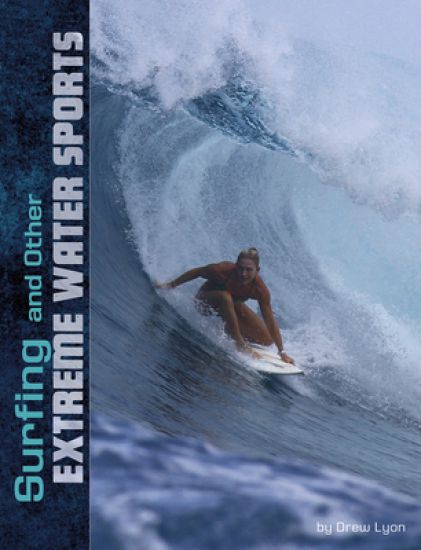
Ride a wave and check out the wild world of surfing Learn about surfing, how it started, equipment needed, and safety measures taken for this extreme sport. Discover other water sports, and how learn how athletes practice their skills and experience thrills in nature.
WHOOSH Nothing gets fans' hearts racing more than an extreme athlete launching high into the air or zipping along on the track--except when that big stunt sets a new record Behind every big-time record is a dramatic story of how an extreme athlete achieved greatness in their sport. From the greatest rock-climbing records to the most awe-inspiring aerial stunts, here are record-setting moments that will keep extreme sports fans turning the page for more.
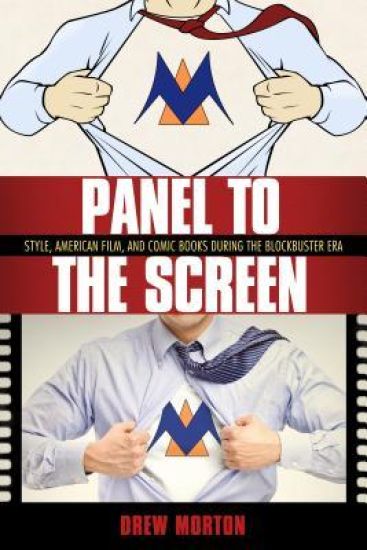
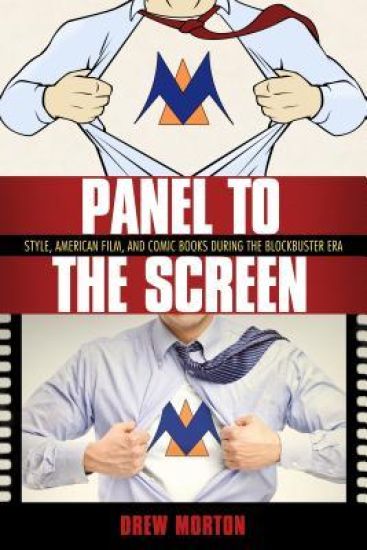
Over the past forty years, American film has entered into a formal interaction with the comic book. Such comic book adaptations as Sin City, 300, and Scott Pilgrim vs. the World have adopted components of their source materials' visual style. The screen has been fractured into panels, the photographic has given way to the graphic, and the steady rhythm of cinematic time has evolved into a far more malleable element. In other words, films have begun to look like comics.Yet, this interplay also occurs in the other direction. In order to retain cultural relevancy, comic books have begun to look like films. Frank Miller's original Sin City comics are indebted to film noir while Stephen King's The Dark Tower series could be a Sergio Leone spaghetti western translated onto paper. Film and comic books continuously lean on one another to reimagine their formal attributes and stylistic possibilities.In Panel to the Screen, Drew Morton examines this dialogue in its intersecting and rapidly changing cultural, technological, and industrial contexts. Early on, many questioned the prospect of a ""low"" art form suited for children translating into ""high"" art material capable of drawing colossal box office takes. Now the naysayers are as quiet as the queued crowds at Comic-Cons are massive. Morton provides a nuanced account of this phenomenon by using formal analysis of the texts in a real-world context of studio budgets, grosses, and audience reception.
Over the past forty years, American film has entered into a formal interaction with the comic book. Such comic book adaptations as Sin City, 300, and Scott Pilgrim vs. the World have adopted components of their source materials' visual style. The screen has been fractured into panels, the photographic has given way to the graphic, and the steady rhythm of cinematic time has evolved into a far more malleable element. In other words, films have begun to look like comics.Yet, this interplay also occurs in the other direction. In order to retain cultural relevancy, comic books have begun to look like films. Frank Miller's original Sin City comics are indebted to film noir while Stephen King's The Dark Tower series could be a Sergio Leone spaghetti western translated onto paper. Film and comic books continuously lean on one another to reimagine their formal attributes and stylistic possibilities.In Panel to the Screen, Drew Morton examines this dialogue in its intersecting and rapidly changing cultural, technological, and industrial contexts. Early on, many questioned the prospect of a ""low"" art form suited for children translating into ""high"" art material capable of drawing colossal box office takes. Now the naysayers are as quiet as the queued crowds at Comic-Cons are massive. Morton provides a nuanced account of this phenomenon by using formal analysis of the texts in a real-world context of studio budgets, grosses, and audience reception.
Schism 2] Press drops Drew Kalbach's first collection, Spooky Plan. Drew Kalbach's Spooky Plan is spooky-an uncanny directive working in and out of time. The speaker operates the paradoxical technology of the lyric like a drone pilot, virtuosic and remote; immobilized, isolated, instrumentalized, and lethal. Meanwhile, the lyric lines toggle between literally ancient modes of address-graffiti transcribed from the walls of Pompeii-and the ultra-purposeful/ultra-random language of SPAM-bots. What is the strange-spooky-texture that knits up in the oscillation between these poles? Spooky action at a distance? The illusion of consciousness and intimacy that makes the universe, and the lyric, and the Internet function, while each is in fact a mass of dazzling, unparaphrasable relays? What wonders is the Sublime sitting on, somewhere over the paywall? Spooky Plan sez, "Drop down and get your worship on." Bow down. Bow-wow. - Joyelle McSweeney, author of Percussion Grenade In his wonderful first book, Spooky Plan, Drew Kalbach manages to write short lyrics that are somehow incredibly punchy even as they pile up the refuse of centuries together with defecations, nocturnal emissions and other bodily fluids/media. "You are coming to blow me but not until later. I learned this while I was alive" time spasms and drags, while "the baby girls" "grind and booty shake" and "put me under." The dance of this menacing, hilarious, sexy (in possible an illegal way) group provides if not a narrative then something like a volatile pattern to the otherwise formless excrement of the narrator's "post-continuity" visions of the body and sexuality. With this book, Kalbach joins a growing group of younger poets - poets like Jennifer Tamayo, Trisha Low, Monica McLure - who are changing American poets with their irreverent lyricism, performativity and media obsessions: "goodbye giggling in the carwreck" - Johannes G ransson, author of Haute Surveillance These are the dreams for the commercials in post-surveillance capitalism. Kalbach's poems are real guns, real volts, real gifts, and they're usually about how we live today-even as we're afraid to admit it. His poems are in community (ethereal and ethernet) while recovering isolation (in sickbeds and video games). His visions defer to an ethos, but it's a post-integrity kind, where the body's fallen into corporations and hostile takeovers and hostage situations, and the tremendous cost crushes thoughts into what you'd expect: flickering sadness, blinkered rage, but best-this roving curiosity for finding a better way to be electric and dead and still wanting one more try at the slots. You can't "glitch it back together," Kalbach has noted elsewhere. But the attempt is a funny, bracing instrument, and it's exquisite. - Evan Bryson
Understanding the underlying system of how files are stored, what happens when they are deleted, and how to potentially recover them is essential to the digital forensic examiner. Today's computer forensic tools automate the process of file recovery, but understanding what those tools are accomplishing and knowing whether they are providing accurate results requires an understanding of the information provided in this text. The FAT and NTFS file systems are the most commonly utilized information storage methods and while there are many other methods available, concentrating on these two lays the foundation for learning the others in the future. A brief introduction of ExFAT is included, as it is a relatively new file system used with larger flash drives. Forensic Examination of Windows-Supported File Systems will provide the basis for this knowledge and the practical expertise to begin the journey of becoming a digital forensic scientist.
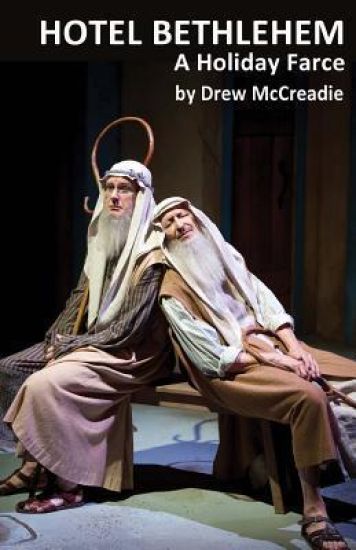
Hotel Bethlehem is the hit Canadian holiday farce set in the famous inn from the nativity story, year zero.What was going on inside the inn the night that Joseph and his very pregnant wife Mary were forced to stay in the stable? Finally, award winning playwright Drew McCreadie answers that question with his hilarious take on the famous story.