Kirjojen hintavertailu. Mukana 11 627 425 kirjaa ja 12 kauppaa.

Kirjahaku

Etsi kirjoja tekijän nimen, kirjan nimen tai ISBN:n perusteella.

1000 tulosta hakusanalla Duffy P Weber

Kinematic Analysis of Robot Manipulators

Kinematic Analysis of Robot Manipulators

III Crane; Joseph Duffy

Cambridge University Press
1998
sidottu
A robot manipulator is a movable chain of links interconnected by joints. One end is fixed to the ground, and a hand or end effector that can move freely in space is attached at the other end. This book begins with an introduction to the subject of robot manipulators. Next, it describes in detail a forward and reverse analysis for serial robot arms. Most of the text focuses on closed form solution techniques applied to a broad range of manipulator geometries, from typical industrial robot designs (relatively simple geometries) to the most complicated case of seven general links serially connected by six revolute joints. A unique feature is its detailed analysis of 6R-P and 7R mechanisms. Case studies show how the techniques described in the book are used in real engineering applications. The book will be useful to both graduate students and engineers working in the field of robotics.
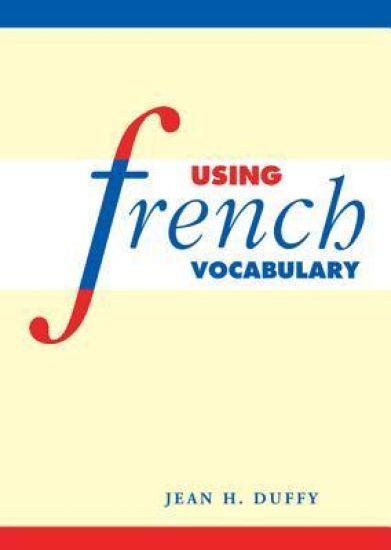
Using French Vocabulary

Using French Vocabulary

Jean H. Duffy

Cambridge University Press
1999
pokkari
This textbook provides a comprehensive and structured vocabulary for all levels of undergraduate French courses, including relevant higher and further education courses. It offers a broad coverage of concrete and abstract vocabulary relating to the physical, cultural, social, commercial and political environment, as well as exposure to commonly encountered technical terminology. Within each section, words and phrases have been grouped into manageable, assimilable units and broadly ‘graded’ according to likely usefulness and difficulty. The accompanying exercises for private study and classroom use are designed to reinforce the work done on lists, to develop good dictionary use, to encourage independent and collaborative learning, to promote precision and awareness of nuance and register, and to offer the opportunity for the development of cognate transferable skills, such as communicative competence, teamwork and problem-solving. The division of the book into twenty thematic sections allows it to be easily integrated into a modular course structure.
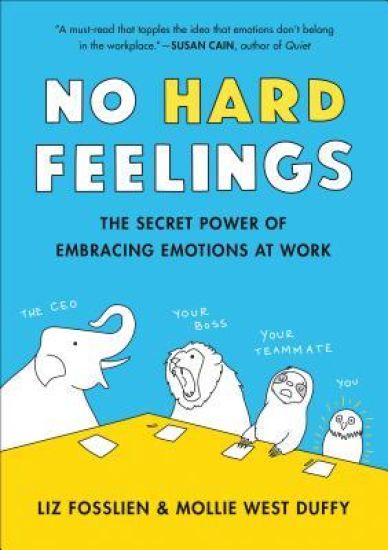
No Hard Feelings: The Secret Power of Embracing Emotions at Work
Wall Street Journal Bestseller Next Big Idea Club selection―chosen by Malcolm Gladwell, Susan Cain, Dan Pink, and Adam Grant as one of the "two most groundbreaking new nonfiction reads of the season " "A must-read that topples the idea that emotions don't belong in the workplace."--Susan Cain, author of Quiet A hilarious guide to effectively expressing your emotions at the office, finding fulfillment, and defining work-life balance on your own terms. How do you stop the office grouch from ruining your day? How do you enjoy a vacation without obsessing about the unanswered emails in your inbox? If you're a boss, what should you do when your new, eager hire wants to follow you on Instagram? The modern workplace can be an emotional minefield, filled with confusing power structures and unwritten rules. We're expected to be authentic, but not too authentic. Professional, but not stiff. Friendly, but not an oversharer. Easier said than done As both organizational consultants and regular people, we know what it's like to experience uncomfortable emotions at work - everything from mild jealousy and insecurity to panic and rage. Ignoring or suppressing what you feel hurts your health and productivity -- but so does letting your emotions run wild. Our goal in this book is to teach you how to figure out which emotions to toss, which to keep to yourself, and which to express in order to be both happier and more effective. We'll share some surprising new strategies, such as: * Be selectively vulnerable Be honest about how you feel, but don't burden others with your deepest problems. * Remember that your feelings aren't facts What we say isn't always what we mean. In times of conflict and miscommunication, try to talk about your emotions without getting emotional. * Be less passionate about your job Taking a chill pill can actually make you healthier and more focused. Drawing on what we've learned from behavioral economics, psychology, and our own experiences at countless organizations, we'll show you how to bring your best self (and your whole self) to work every day.
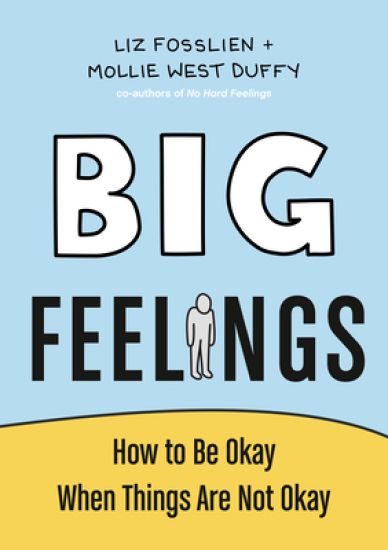
Big Feelings: How to Be Okay When Things Are Not Okay

Big Feelings: How to Be Okay When Things Are Not Okay

Liz Fosslien; Mollie West Duffy

PORTFOLIO
2022
sidottu
From the duo behind the bestselling book No Hard Feelings and the wildly popular @LizandMollie Instagram, an insightful and approachable illustrated guide to handling our most difficult emotions. We all experience unwieldy feelings. But between our emotion-phobic society and the debilitating uncertainty of modern times, we usually don't know how to talk about what we're going through, much less handle it. Over the past year, Liz Fosslien and Mollie West Duffy's online community has laughed and cried about productivity guilt, pandemic anxiety, and Zoom fatigue. Now, Big Feelings addresses anyone intimidated by oversized feelings they can't predict or control, offering the tools to understand what's really going on, find comfort, and face the future with a sense of newfound agency. Weaving surprising science with personal stories and original illustrations, each chapter examines one uncomfortable feeling--like envy, burnout, and anxiety--and lays out strategies for turning big emotions into manageable ones. You'll learn: - How to end the cycle of intrusive thoughts brought on by regret, and instead use this feeling as a compass for making decisions - How to identify what's behind your anger and communicate it productively, without putting people on the defensive - Why we might be suffering from perfectionism even if we feel far from perfect, and how to detach your self-worth from what you do Big Feelings helps us understand that difficult emotions are not abnormal, and that we can emerge from them with a deeper sense of meaning. We can't stop emotions from bubbling up, but we can learn how to make peace with them.
The Skeptical, Passionate Christian

The Skeptical, Passionate Christian

Michael F. Duffy

Westminster/John Knox Press,U.S.
2006
nidottu
In the warm, inviting tone of a trusted chaplain, Michael Duffy takes his readers through a personal theological journey, exploring what it means to discern and live out a thoughtful, informed, and responsible faith. Encouraging Christians to develop and commit themselves to a critically developed vision of God, Duffy introduces the basic intents, questions, and conversations of theology, providing guidance on how to responsibly engage each one. Finally, he utilizes the skills he introduces to lead his readers through an exploration of vocation--whether God calls, whether God calls each of us individually, and, if so, what God calls us to.
Making Sense of Sex

Making Sense of Sex

Michael F. Duffy

Westminster/John Knox Press,U.S.
2011
pokkari
Having sex can be a loving and delightful experience, but it can also be emotionally, physically, and spiritually devastating. Many singles struggle to sort out how to make their own sexual experiences physically and emotionally healthy ones. This book can help. Duffy offers a thoughtful guide to sexual decision making for single twentysomethings, exploring ten issues readers should consider when deciding whether and when to have sex. Appropriate for non-Christians and Christians alike, Duffy's work is as relevant to those who have already had sex as it is to those who are considering it for the first time.
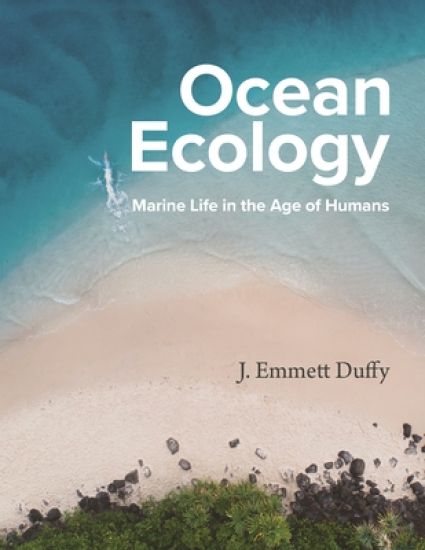
Ocean Ecology

Ocean Ecology

J. Emmett Duffy

PRINCETON UNIVERSITY PRESS
2021
sidottu
A comprehensive introduction to ocean ecology and a new way of thinking about ocean lifeMarine ecology is more interdisciplinary, broader in scope, and more intimately linked to human activities than ever before. Ocean Ecology provides advanced undergraduates, graduate students, and practitioners with an integrated approach to marine ecology that reflects these new scientific realities, and prepares students for the challenges of studying and managing the ocean as a complex adaptive system. This authoritative and accessible textbook advances a framework based on interactions among four major features of marine ecosystems—geomorphology, the abiotic environment, biodiversity, and biogeochemistry—and shows how life is a driver of environmental conditions and dynamics. Ocean Ecology explains the ecological processes that link organismal to ecosystem scales and that shape the major types of ocean ecosystems, historically and in today's Anthropocene world.Provides an integrated new approach to understanding and managing the oceanShows how biological diversity is the heart of functioning ecosystemsSpans genes to earth systems, surface to seafloor, and estuary to ocean gyreLinks species composition, trait distribution, and other ecological structures to the functioning of ecosystemsExplains how fishing, fossil fuel combustion, industrial fertilizer use, and other human impacts are transforming the Anthropocene oceanAn essential textbook for students and an invaluable resource for practitioners
Crafting a Class

Crafting a Class

Elizabeth A. Duffy; Idana Goldberg

Princeton University Press
2014
pokkari
Admissions and financial aid policies at liberal arts colleges have changed dramatically since 1955. Through the 1950s, most colleges in the United States enrolled fewer than 1000 students, nearly all of whom were white. Few colleges were truly selective in their admissions; they accepted most students who applied. In the 1960s, as the children of the baby boom reached college age and both federal and institutional financial aid programs expanded, many more students began to apply to college. For the first time, liberal arts colleges were faced with an abundance of applicants, which raised new questions. What criteria would they use to select students? How would they award financial aid? The answers to these questions were shaped by financial and educational considerations as well as by the struggles for civil rights and gender equality that swept across the nation. The colleges' answers also proved crucial to their futures, as the years since the mid-1970s have shown. When the influx of baby boom students slowed, colleges began to recruit aggressively in order to maintain their class sizes. In the past decade, financial aid has become another tool that colleges use to compete for the best students. By tracing the development of competitive admission and financial aid policies at a selected group of liberal arts colleges, Crafting a Class explores how institutional decisions reflect and respond to broad demographic, economic, political, and social forces. Elizabeth Duffy and Idana Goldberg closely studied sixteen liberal arts colleges in Massachusetts and Ohio. At each college, they not only collected empirical data on admissions, enrollment, and financial aid trends, but they also examined archival materials and interviewed current and former administrators. Duffy and Goldberg have produced an authoritative and highly readable account of some of the most important changes that have taken place in American higher education during the tumultuous decades since the mid-1950s. Crafting a Class will interest all readers who are concerned with the past and future directions of higher education in the United States. Originally published in 1997. The Princeton Legacy Library uses the latest print-on-demand technology to again make available previously out-of-print books from the distinguished backlist of Princeton University Press. These editions preserve the original texts of these important books while presenting them in durable paperback and hardcover editions. The goal of the Princeton Legacy Library is to vastly increase access to the rich scholarly heritage found in the thousands of books published by Princeton University Press since its founding in 1905.
Crafting a Class

Crafting a Class

Elizabeth A. Duffy; Idana Goldberg

Princeton University Press
2016
sidottu
Admissions and financial aid policies at liberal arts colleges have changed dramatically since 1955. Through the 1950s, most colleges in the United States enrolled fewer than 1000 students, nearly all of whom were white. Few colleges were truly selective in their admissions; they accepted most students who applied. In the 1960s, as the children of the baby boom reached college age and both federal and institutional financial aid programs expanded, many more students began to apply to college. For the first time, liberal arts colleges were faced with an abundance of applicants, which raised new questions. What criteria would they use to select students? How would they award financial aid? The answers to these questions were shaped by financial and educational considerations as well as by the struggles for civil rights and gender equality that swept across the nation. The colleges' answers also proved crucial to their futures, as the years since the mid-1970s have shown. When the influx of baby boom students slowed, colleges began to recruit aggressively in order to maintain their class sizes. In the past decade, financial aid has become another tool that colleges use to compete for the best students. By tracing the development of competitive admission and financial aid policies at a selected group of liberal arts colleges, Crafting a Class explores how institutional decisions reflect and respond to broad demographic, economic, political, and social forces. Elizabeth Duffy and Idana Goldberg closely studied sixteen liberal arts colleges in Massachusetts and Ohio. At each college, they not only collected empirical data on admissions, enrollment, and financial aid trends, but they also examined archival materials and interviewed current and former administrators. Duffy and Goldberg have produced an authoritative and highly readable account of some of the most important changes that have taken place in American higher education during the tumultuous decades since the mid-1950s. Crafting a Class will interest all readers who are concerned with the past and future directions of higher education in the United States. Originally published in 1997. The Princeton Legacy Library uses the latest print-on-demand technology to again make available previously out-of-print books from the distinguished backlist of Princeton University Press. These editions preserve the original texts of these important books while presenting them in durable paperback and hardcover editions. The goal of the Princeton Legacy Library is to vastly increase access to the rich scholarly heritage found in the thousands of books published by Princeton University Press since its founding in 1905.
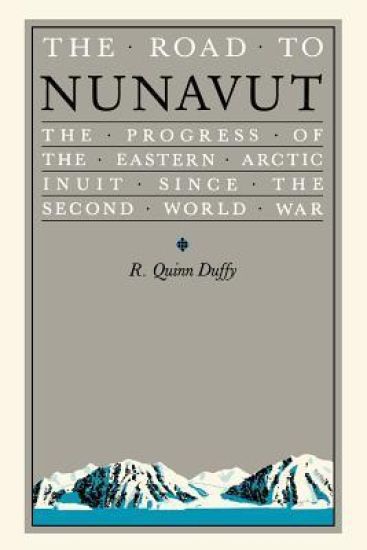
The Road to Nunavut

The Road to Nunavut

R. Quinn Duffy

McGill-Queen's University Press
1988
nidottu
In The Road to Nunavut, R. Quinn Duffy analyses federal government policy on the social and economic growth of the Inuit. Duffy describes the economic, social, and political changes in the Eastern Arctic and provides the historical background to the current debate on Inuit land claims and political subdivision of the Northwest Territory. Gradually, and somewhat reluctantly, the Canadian government assumed the role of guardian of the Inuit and became involved in their housing, education, employment, and health services. The evolution of government-supported services created problems that are still unmet; the changes in life-style that resulted were exacerbated by unemployment and the Inuit's inferior social and political status. Starting in the 1960's, these complex problems led to increased delinquency, violence, and abuse of alcohol. Duffy shows how the Inuit gradually assumed responsibility for improving their situation, eventually developing the political maturity that found expression in the Inuit Tapirisat of Canada, its affiliated organizations, and the pressure for regional self-determination.
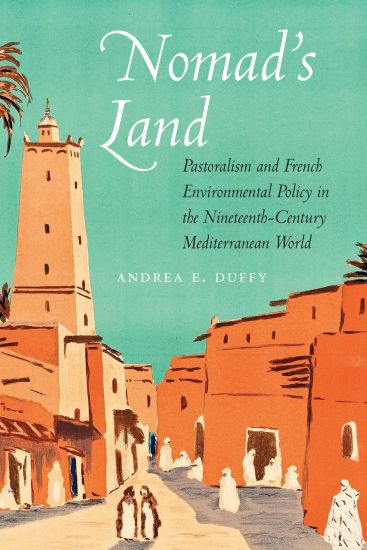
Nomad's Land

Nomad's Land

Andrea E. Duffy

University of Nebraska Press
2019
sidottu
2020 Charles A. Weyerhaeuser Award During the nineteenth century, the development and codification of forest science in France were closely linked to Provence’s time-honored tradition of mobile pastoralism, which formed a major part of the economy. At the beginning of the century, pastoralism also featured prominently in the economies and social traditions of North Africa and southwestern Anatolia until French forest agents implemented ideas and practices for forest management in these areas aimed largely at regulating and marginalizing Mediterranean mobile pastoral traditions. These practices changed not only landscapes but also the social order of these three Mediterranean societies and the nature of French colonial administration. In Nomad’s Land Andrea E. Duffy investigates the relationship between Mediterranean mobile pastoralism and nineteenth-century French forestry through case studies in Provence, French colonial Algeria, and Ottoman Anatolia. By restricting the use of shared spaces, foresters helped bring the populations of Provence and Algeria under the control of the state, and French scientific forestry became a medium for state initiatives to sedentarize mobile pastoral groups in Anatolia. Locals responded through petitions, arson, violence, compromise, and adaptation. Duffy shows that French efforts to promote scientific forestry both internally and abroad were intimately tied to empire building and paralleled the solidification of Western narratives condemning the pastoral tradition, leading to sometimes tragic outcomes for both the environment and pastoralists.
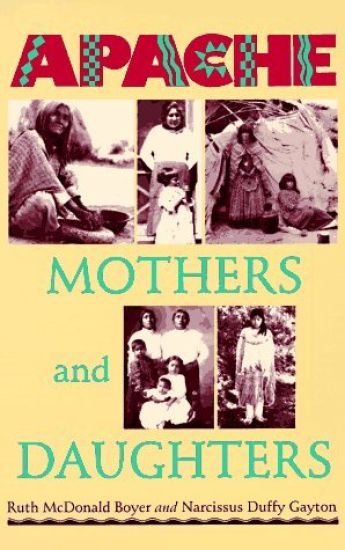
Apache Mothers and Daughters

Apache Mothers and Daughters

Ruth McDonald Boyer; Narcissus Duffy Gayton

University of Oklahoma Press
1997
nidottu
Apache Mothers and Daughters, an illustrated family history of four generations of Chiricahua Apache women from 1848 to the present, is an eloquent testimonial to the strength and the stamina of Apache women. Over the course of thirty-five years, anthropologist Ruth McDonald Boyer collected the remembrances of Narcissus Duffy Gayton, great-great-granddaughter of the Apache chief Victorio. This intimate record of Apache life, told from an Apache perspective, highlights the key roles women play in tribal life. The story begins with Dilth-cheyhen, Victorio's daughter, whose life encompassed much of the traditional cultures of the Tchi-hèné band of the Chiricahua Apaches. Her daughter, Beshád-e, was just sixteen in 1886 when the twenty-seven-year incarceration of the Chiricahuas began. Beshád-e and her family were forced to move to Florida, Alabama, Oklahoma, and then New Mexico, where the Mescalero Apaches remain today. When Beshád-e's daughter Christine died of tuberculosis in her twenties, she left her daughter Narcissus in Beshád-e's care. After struggling to complete her education, Narcissus returned to serve her tribe as a registered nurse and an advocate for health care. This account documents rituals such as the puberty rite and the cradle-making ceremony, the importance of religion (traditional as well as Anglo) in Apache life, and the intense bond between Apache mothers and daughters.
Becoming an Antiracist School Leader

Becoming an Antiracist School Leader

Patrick A. Duffy

TEACHERS' COLLEGE PRESS
2023
nidottu
Eradicating systemic racism in our schools requires a systemic response. This book describes an adaptive framework that includes ten tenets for developing structural and curricular antiracist leadership. In three parts, school leaders are asked to: Know Themselves through self-reflection and racial autobiography; Distinguish Knowledge From Foolishness through critical race ethnography and an exploration of racial identity development; and Build for Eternity by using a model for student-centered antiracist leadership development. Providing a combination of scholarly and practical examples, readers will learn how to foster academic success, cultural proficiency, and critical consciousness in all learners. The text features a comprehensive, three-year critical ethnographic study of a Midwestern high school and its ups and downs with antiracist leadership. This resource offers both a vision and everyday guidance to any educator committed to an antiracist democracy, educational love, student empowerment, leadership development, liberatory teaching and learning, and racial equity. Book Features:Introduces a ten-point model for antiracist leadership development with practical applications for the leaders of systems, schools, and student groups.Describes an adaptive framework for approaching antiracist school leadership through reflective racial autobiography, critical ethnographic research, and student-centered leadership development.Examines a high school attempting to enact antiracist leadership, including analysis of the environment through a critical race theory lens and a breakdown of interviews with 30 leaders through the lens of their racial identity development.Contains ten personal narratives from a diverse group of antiracist leaders who detail a rich tapestry of a high-functioning school district in St. Louis Park, MN.
Becoming an Antiracist School Leader

Becoming an Antiracist School Leader

Patrick A. Duffy

TEACHERS' COLLEGE PRESS
2023
sidottu
Eradicating systemic racism in our schools requires a systemic response. This book describes an adaptive framework that includes ten tenets for developing structural and curricular antiracist leadership. In three parts, school leaders are asked to: Know Themselves through self-reflection and racial autobiography; Distinguish Knowledge From Foolishness through critical race ethnography and an exploration of racial identity development; and Build for Eternity by using a model for student-centered antiracist leadership development. Providing a combination of scholarly and practical examples, readers will learn how to foster academic success, cultural proficiency, and critical consciousness in all learners. The text features a comprehensive, three-year critical ethnographic study of a Midwestern high school and its ups and downs with antiracist leadership. This resource offers both a vision and everyday guidance to any educator committed to an antiracist democracy, educational love, student empowerment, leadership development, liberatory teaching and learning, and racial equity. Book Features:Introduces a ten-point model for antiracist leadership development with practical applications for the leaders of systems, schools, and student groups.Describes an adaptive framework for approaching antiracist school leadership through reflective racial autobiography, critical ethnographic research, and student-centered leadership development.Examines a high school attempting to enact antiracist leadership, including analysis of the environment through a critical race theory lens and a breakdown of interviews with 30 leaders through the lens of their racial identity development.Contains ten personal narratives from a diverse group of antiracist leaders who detail a rich tapestry of a high-functioning school district in St. Louis Park, MN.
Step-Up-To-Excellence

Step-Up-To-Excellence

Francis M. Duffy

Rowman Littlefield Education
2002
nidottu
This book answers two basic questions for educational practitioners. The first is how educators may re-design an entire school system to perform at the highest optimum levels. The second — and no less important — is what exactly educational administrators may do not only to manage, but also to reward the performance that sustains those very improvements. This book should be of interest to the K-12 administrator, the teacher and school board member, the consultant, professors teaching topical courses, or any layperson interested in the issue of school improvement.