Frenki rabotaet v knizhnom magazine, zachityvaetsja klassikoj i mechtaet o bolshoj ljubvi, kak v romanakh Dzhejn Ostin. Kogda na poro- ge ee magazina pojavljaetsja obajatelnyj i nepredskazuemyj Sanni - vylityj Edvard Kallen i poklonnik podrostkovoj literatury, - Frenki ne uverena, chto oni najdut obschij jazyk. No, mozhet byt, nastojaschaja ljubov stoit togo, chtoby rasshirit svoi literaturnye gorizonty?
This book has been considered by academicians and scholars of great significance and value to literature. This forms a part of the knowledge base for future generations. So that the book is never forgotten we have represented this book in a print format as the same form as it was originally first published. Hence any marks or annotations seen are left intentionally to preserve its true nature.
Beaumarchais And The War Of American Independence (Volume I): With A Foreword By James M. Beck (In Two Volumes, Vol. I.) This book is a result of an effort made by us towards making a contribution to the preservation and repair of original classic literature. In an attempt to preserve, improve and recreate the original content, we have worked towards: 1. Type-setting & Reformatting: The complete work has been re-designed via professional layout, formatting and type-setting tools to re-create the same edition with rich typography, graphics, high quality images, and table elements, giving our readers the feel of holding a 'fresh and newly' reprinted and/or revised edition, as opposed to other scanned & printed (Optical Character Recognition - OCR) reproductions. 2. Correction of imperfections: As the work was re-created from the scratch, therefore, it was vetted to rectify certain conventional norms with regard to typographical mistakes, hyphenations, punctuations, blurred images, missing content/pages, and/or other related subject matters, upon our consideration. Every attempt was made to rectify the imperfections related to omitted constructs in the original edition via other references. However, a few of such imperfections which could not be rectified due to intentional\unintentional omission of content in the original edition, were inherited and preserved from the original work to maintain the authenticity and construct, relevant to the work. We believe that this work holds historical, cultural and/or intellectual importance in the literary works community, therefore despite the oddities, we accounted the work for print as a part of our continuing effort towards preservation of literary work and our contribution towards the development of the society as a whole, driven by our beliefs. We are grateful to our readers for putting their faith in us and accepting our imperfections with regard to preservation of the historical content. HAPPY READING
Beaumarchais And The War Of American Independence (Volume II): With A Foreword By James M. Beck (In Two Volumes, Vol. II.) This book is a result of an effort made by us towards making a contribution to the preservation and repair of original classic literature. In an attempt to preserve, improve and recreate the original content, we have worked towards: 1. Type-setting & Reformatting: The complete work has been re-designed via professional layout, formatting and type-setting tools to re-create the same edition with rich typography, graphics, high quality images, and table elements, giving our readers the feel of holding a 'fresh and newly' reprinted and/or revised edition, as opposed to other scanned & printed (Optical Character Recognition - OCR) reproductions. 2. Correction of imperfections: As the work was re-created from the scratch, therefore, it was vetted to rectify certain conventional norms with regard to typographical mistakes, hyphenations, punctuations, blurred images, missing content/pages, and/or other related subject matters, upon our consideration. Every attempt was made to rectify the imperfections related to omitted constructs in the original edition via other references. However, a few of such imperfections which could not be rectified due to intentional\unintentional omission of content in the original edition, were inherited and preserved from the original work to maintain the authenticity and construct, relevant to the work. We believe that this work holds historical, cultural and/or intellectual importance in the literary works community, therefore despite the oddities, we accounted the work for print as a part of our continuing effort towards preservation of literary work and our contribution towards the development of the society as a whole, driven by our beliefs. We are grateful to our readers for putting their faith in us and accepting our imperfections with regard to preservation of the historical content. HAPPY READING
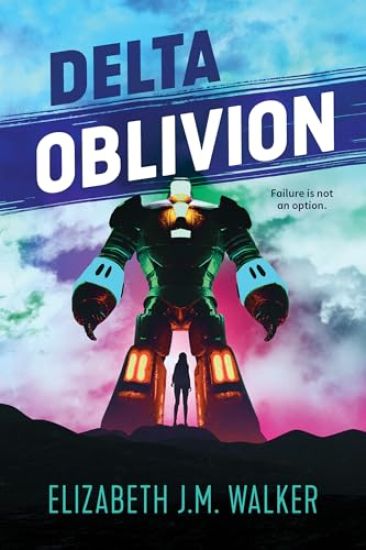
Sixteen-year-old Tallie and her best friend Diego have always shared the same dream: to become mechbot pilots and compete in the Mech Battles, a hugely popular sport that promises fame and fortune to successful pilots. On the day that copilots are assigned, Tallie is devastated when she doesn't get paired with Diego. Instead, she has to partner with Zaina Chandra, a troubled pilot who got kicked off her last team. But to drive a mechbot, pilots have to connect their minds, which means sharing your deepest thoughts and secrets. Tallie was ready to share her secrets with Diego, but Zaina? She's a complete stranger. With her dreams and pride riding on the partnership, Tallie will have to find a way to open up and convince Zaina to do the same. This short novel is a high-interest, low-reading-level book for teen readers who are building reading skills, want a quick read or say they don't like to read
This volume has long been an invaluable resource for students and practitioners of social work. It thoroughly and clearly presents research concepts and skills, uniquely organizing them according to assessment and treatment formulation, treatment implementation and monitoring, and evaluation. Also, numerous practice cases and detailed exercises offer a complete grasp of crucial concepts and techniques. This new edition reflects contemporary developments in practice research, such as an emphasis on empirical or evidence-based practice; the importance of evaluation within the managed-care environment; the role of social work ethics in practice research; the value of qualitative research methodology for particular aspects of monitoring and evaluation; and the role of computer technology and the use of the Internet.
This volume has long been an invaluable resource for students and practitioners of social work. It thoroughly and clearly presents research concepts and skills, uniquely organizing them according to assessment and treatment formulation, treatment implementation and monitoring, and evaluation. Also, numerous practice cases and detailed exercises offer a complete grasp of crucial concepts and techniques. This new edition reflects contemporary developments in practice research, such as an emphasis on empirical or evidence-based practice; the importance of evaluation within the managed-care environment; the role of social work ethics in practice research; the value of qualitative research methodology for particular aspects of monitoring and evaluation; and the role of computer technology and the use of the Internet.
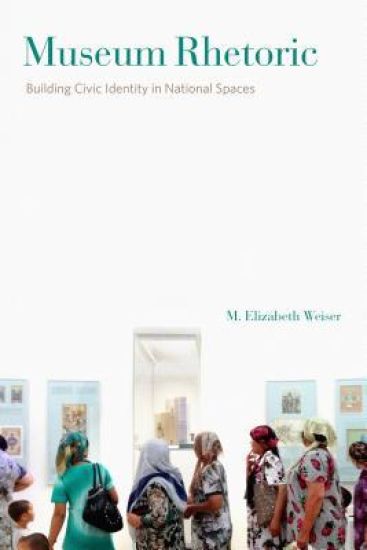
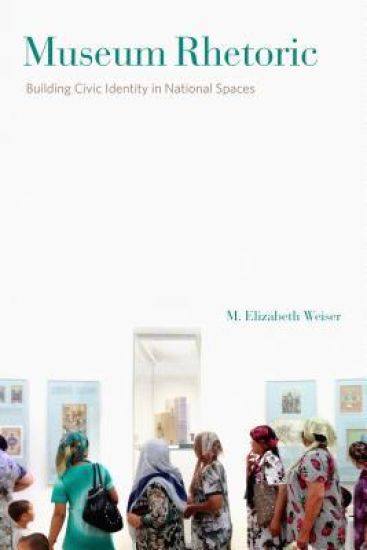
In today’s diverse societies, museums are the primary institutions within the public sphere in which individuals can both engage critical thought and celebrate community. This volume uses the lens of rhetoric to explore the role these societal repositories play in establishing and altering cultural heritage and national identity.Based on fieldwork conducted in over sixty museums in twenty-two countries across six continents, Museum Rhetoric explores how heritage museum exhibits persuade visitors to unite their own sense of identity with that of the broader civic society and how the latter changes in response. Elizabeth Weiser examines what compels communities, organizations, and nations to create museum spaces, and how museums operate as sites of both civic engagement and rhetorical persuasion. Moving beyond rhetorical explorations of museums as “memory sites,” she shows how they intentionally straddle the divides between style and content, intellect and affect, and unity and diversity, and why their portrayal of the past matters to civic life—and particularly studies of nationalism—in the present and future.Deeply researched and artfully argued, Museum Rhetoric sheds light on the public impact of cultural and aesthetic heritage and opens avenues of inquiry for scholars of museum studies and public history.
In today’s diverse societies, museums are the primary institutions within the public sphere in which individuals can both engage critical thought and celebrate community. This volume uses the lens of rhetoric to explore the role these societal repositories play in establishing and altering cultural heritage and national identity.Based on fieldwork conducted in over sixty museums in twenty-two countries across six continents, Museum Rhetoric explores how heritage museum exhibits persuade visitors to unite their own sense of identity with that of the broader civic society and how the latter changes in response. Elizabeth Weiser examines what compels communities, organizations, and nations to create museum spaces, and how museums operate as sites of both civic engagement and rhetorical persuasion. Moving beyond rhetorical explorations of museums as “memory sites,” she shows how they intentionally straddle the divides between style and content, intellect and affect, and unity and diversity, and why their portrayal of the past matters to civic life—and particularly studies of nationalism—in the present and future.Deeply researched and artfully argued, Museum Rhetoric sheds light on the public impact of cultural and aesthetic heritage and opens avenues of inquiry for scholars of museum studies and public history.
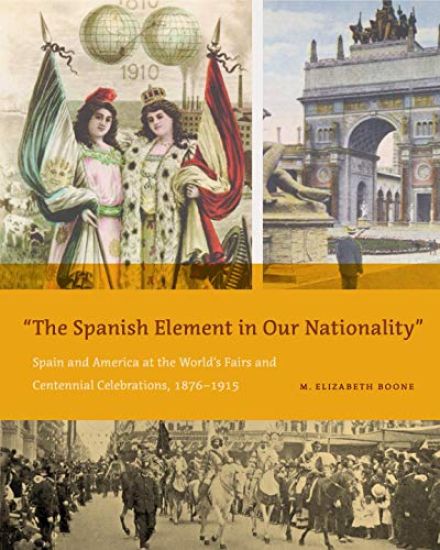
“The Spanish Element in Our Nationality” delves beneath the traditional “English-only” narrative of U.S. history, using Spain’s participation in a series of international exhibitions to illuminate more fully the close and contested relationship between these two countries.Written histories invariably record the Spanish financing of Columbus’s historic voyage of 1492, but few consider Spain’s continuing influence on the development of U.S. national identity. In this book, M. Elizabeth Boone investigates the reasons for this problematic memory gap by chronicling a series of Spanish displays at international fairs. Studying the exhibition of paintings, the construction of ephemeral architectural space, and other manifestations of visual culture, Boone examines how Spain sought to position itself as a contributor to U.S. national identity, and how the United States—in comparison to other nations in North and South America—subverted and ignored Spain’s messages, making it possible to marginalize and ultimately obscure Spain’s relevance to the history of the United States.Bringing attention to the rich and understudied history of Spanish artistic production in the United States, “The Spanish Element in Our Nationality” recovers the “Spanishness” of U.S. national identity and explores the means by which Americans from Santiago to San Diego used exhibitions of Spanish art and history to mold their own modern self-image.
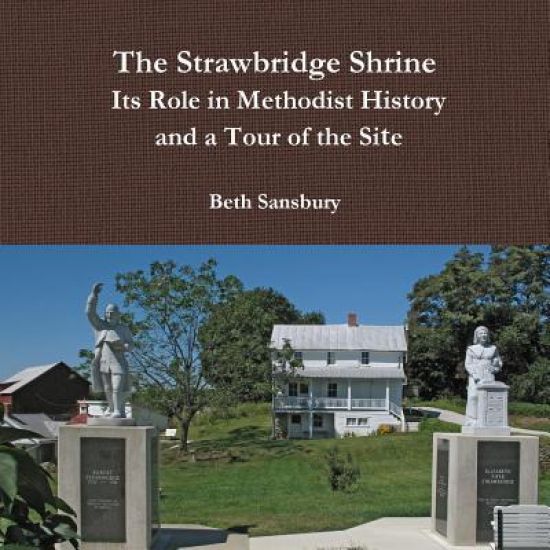
This is a guidebook to the Strawbridge Shrine in New Windsor, Maryland, that discusses how Methodism began in England, how it was transmitted to America and what role Robert Strawbridge played in this movement. It also discusses the Strawbridge legacy--societies and churches that he started and the influence of those he converted. It also includes a virtual tour of the site including the farmhouse lived in by Robert and Elizabeth Strawbridge, the Evans House, a replica of the Log Meeting House, and the statues of Robert and Elizabeth Strawbridge.
Immunizationisoneofthegreatadvancesinpublichealth. Figure0. 1showsacamel with a solar-powered refrigerator on his back carrying vaccines across a hot desert to the far reaches of civilization. Many vaccines contain live viruses that need to be kept cold, or the vaccine viruses will die, and the vaccines will lose their ability to produce an immune response. Thus a continuous chain of refrigeration, the cold chain, from the origin to delivery of some vaccines needs to be maintained. The inspiration of the camel image is that it represents the dedication of the world to bring vaccines to everyone. The ?rst major success, and the origin of the word vaccination (vacca for cow), was Jenner's introducing cowpox-based vaccine against smallpox in the late 18th century. After nearly a century hiatus, at the end of the 19th century, inoculations against cholera, typhoid, plague (caused by bacteria) and rabies (caused by a virus) were developed. By the early 20th century, statisticians of the stature of Karl Pe- son, Major Greenwood, and Udny Yule were heartily involved in discussions of evaluating these vaccines in the ?eld. In the 1920s, new vaccines included pert- sis, diptheria, tetanus, and bacille Calmette-Guerin ' against tuberculosis. The 1930s saw development of yellow fever, in?uenza, and rickettsia vaccines. After World War II, the advent of cell cultures in which viruses could grow enabled production of polio vaccine and vaccines against measles, mumps, rubella, varicella, and a- novirus, among others (Plotkin et al 2008).
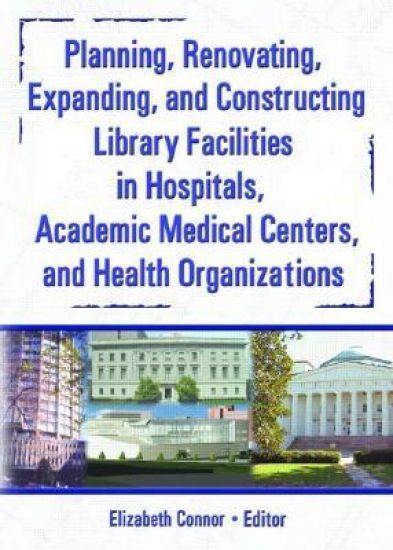
Get the tools to meet the challenge of building or renovating a library!The challenge of renovating or constructing a library requires organizational skill, resourcefulness, creativity, and willingness to compromise. Planning, Renovating, Expanding, and Constructing Library Facilities in Hospitals, Academic Medical Centers, and Health Organizations presents thirteen insightful case studies revealing how many libraries have been have been built or renovated using innovations designed to meet a specific organization's needs. Each study plainly highlights objectives, methods, results, and conclusions, and reviews the design of the completed library. Ideas and approaches are presented clearly, showing the designing, refurbishing, and refurnishing of existing library space; the merging of library collections and services; and the construction of multimillion dollar library buildingswith each study explaining proven strategies which can be used or adapted to fit the reader’s own circumstances. Planning, Renovating, Expanding, and Constructing Library Facilities in Hospitals, Academic Medical Centers, and Health Organizations explains the steps in the planning process, including needs analysis, goal setting, and public relations, as well as the practical considerations of packing and unpacking. The contributors are noted library authorities intimately involved in every facet of the construction procedure and cost accounting, and the book includes helpful photographs, illustrations, tables, and appendices to clarify and help practicing librarians and library students alike fully understand the strategies needed to create a functional library facility that fulfills expectations.Planning, Renovating, Expanding, and Constructing Library Facilities in Hospitals, Academic Medical Centers, and Health Organizations includes case studies of: a resource library moved into a basement renovations to the Osler Library at McGill University, Montreal, Quebec construction of the Booker Health Services Library at the Jersey Shore University Medical Center a merger of two libraries at Trinitas Hospital, Elizabeth, New Jersey the renovation of a small hospital library designing a new library in a historic naval hospital the Hope Fox Eccles Clinical Library Renovation Project expansion and renovation of the Welch Medical Library at Johns Hopkins University and much more! Planning, Renovating, Expanding, and Constructing Library Facilities in Hospitals, Academic Medical Centers, and Health Organizations is an insightful resource for educators, students, and librarians of all types.
Get the tools to meet the challenge of building or renovating a library!The challenge of renovating or constructing a library requires organizational skill, resourcefulness, creativity, and willingness to compromise. Planning, Renovating, Expanding, and Constructing Library Facilities in Hospitals, Academic Medical Centers, and Health Organizations presents thirteen insightful case studies revealing how many libraries have been have been built or renovated using innovations designed to meet a specific organization's needs. Each study plainly highlights objectives, methods, results, and conclusions, and reviews the design of the completed library. Ideas and approaches are presented clearly, showing the designing, refurbishing, and refurnishing of existing library space; the merging of library collections and services; and the construction of multimillion dollar library buildingswith each study explaining proven strategies which can be used or adapted to fit the reader’s own circumstances. Planning, Renovating, Expanding, and Constructing Library Facilities in Hospitals, Academic Medical Centers, and Health Organizations explains the steps in the planning process, including needs analysis, goal setting, and public relations, as well as the practical considerations of packing and unpacking. The contributors are noted library authorities intimately involved in every facet of the construction procedure and cost accounting, and the book includes helpful photographs, illustrations, tables, and appendices to clarify and help practicing librarians and library students alike fully understand the strategies needed to create a functional library facility that fulfills expectations.Planning, Renovating, Expanding, and Constructing Library Facilities in Hospitals, Academic Medical Centers, and Health Organizations includes case studies of: a resource library moved into a basement renovations to the Osler Library at McGill University, Montreal, Quebec construction of the Booker Health Services Library at the Jersey Shore University Medical Center a merger of two libraries at Trinitas Hospital, Elizabeth, New Jersey the renovation of a small hospital library designing a new library in a historic naval hospital the Hope Fox Eccles Clinical Library Renovation Project expansion and renovation of the Welch Medical Library at Johns Hopkins University and much more! Planning, Renovating, Expanding, and Constructing Library Facilities in Hospitals, Academic Medical Centers, and Health Organizations is an insightful resource for educators, students, and librarians of all types.
What is the world like for todayÆs children? How do they construct meaning in it? Answering these key questions, Studying Children in Context explains the art and science of doing qualitative research involving children. Authors M. Elizabeth Graue and Daniel J. Walsh carefully discuss the research process, dealing succinctly with generic research issues yet emphasizing where work with children presents its own particular challenges. They look across the research enterprise in the first part of the book, conceptualizing it as a holistic activity. They next focus on fieldwork, and in the final section examine the interpreting and reporting aspects of qualitative research. In addition to presenting their own considerable experiences in fieldwork with children, Graue and Walsh also present the contributions of numerous researchers with their own insights on key issues. Studying Children in Context will be an invaluable addition to the libraries of teachers and researchers interested in qualitative research methods in general and in doing fieldwork with children in particular.