
Kirjahaku
Etsi kirjoja tekijän nimen, kirjan nimen tai ISBN:n perusteella.
1000 tulosta hakusanalla Emily Butler
Reproduction of the original: Emily Bronte by A. Mary F. Robinson
Reproduction of the original: Emily Bronte by A. Mary F. Robinson

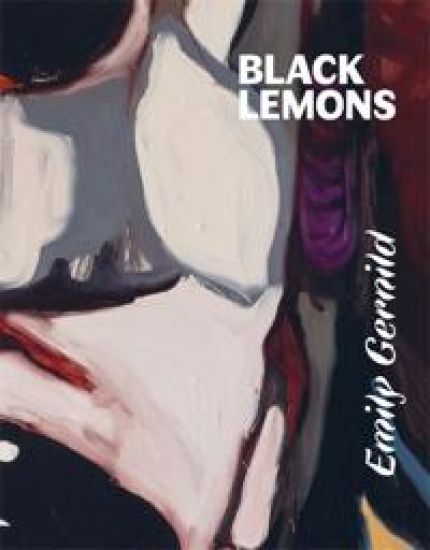
Emily Gernild
Kerber Verlag
2021
sidottu
Focusing on recent works, the richly illustrated monograph Black Lemons provides an introduction to the work of Danish artist Emily Gernild (*1985). In conversation with editor and curator Milena Høgsberg, the artist explores how she builds her assertive, textured, colourful paintings, drawing from everyday life, dreams, curious idioms, or types of historical still life painting, determined to squeeze more out of them. With great ease she moves between oil paint and rabbit skin glue and pigment, allowing her to investigate the dynamic relationship between figure and ground in different ways. Art historian and writer Grant Klarich Johnson situates Gernild's practice in the landscape of contemporary painting, drawing comparisons to other generations of women artists, who have also explored genres historically deemed “lesser”.




Emily Hahn war eine amerikanische Journalistin und Autorin, die ber 50 Jahre lang f r das Magazin The New Yorker geschrieben hat. Neugierig, intelligent und eigenwillig f hrte sie ein Leben, das f r eine Frau ihrer Zeit h chst ungew hnlich war. Als erste weibliche Bergbauingenieurin schloss sie ihr Studium ab. Mit 24 Jahren reiste sie allein nach Belgisch-Kongo und arbeitete ein Jahr lang auf einer Krankenstation, bevor sie mit Pygm en zu Fu den Kontinent durchquerte. Die n chste gro e Reise f hrte sie nach Asien ins Shanghai der 30er Jahre, in das Paris des Ostens. Hier wurde sie w hrend eines vierj hrigen Aufenthaltes die Muse eines ber hmten Million rs und die Konkubine eines chinesischen Intellektuellen. Den japanisch-chinesischen Krieg erlebte sie in Hongkong, wo sie den Mann ihres Lebens, Major Charles Boxer, den Leiter des britischen Geheimdienstes, traf. Zusammen mit der unehelichen Tochter Carola entkam sie den Kriegswirren und kehrte 1943 nach Amerika zur ck. Sp ter lebte sie mit ihrer Familie meist in England, hatte aber immer ein Appartement in New York und bereiste f r Studienzwecke die ganze Welt. Ihr Lebenswerk umfasst 52 B cher und mehr als 180 Artikel und Geschichten.

Emily wohnt mit ihren Eltern und Bruder Ben in einer H tte am Waldesrand. Es schneit heftig und Weihnachten steht vor der T r. Die Mutter ist krank und Emily muss in den verschneiten Wald Holz sammeln. Der Vater sagte zuvor zu seinen Kindern, in diesem Jahr kann das Christkind nicht kommen. Emilly w nschte sich nur eines vom Christkind, ihre Mutter solle wieder ganz gesund werden. Emily verirrt sich im Wald und ein Reh f hrt sie zu einer Futterkrippe. Sie legte sich hinein und schlief vor M digkeit sofort ein. Ein B r legte die schlafende Emily auf den R cken des Rehs und es flog weit ber die Wolken hinaus. Emily wird wach als sie vor einer Treppe standen. Sie geht mit dem Reh die Stufen hinauf, wo sie zu einem Schloss gelangen. Emily verbringt sch ne Stunden im Engelreich wo auch das Christkind wohnt.
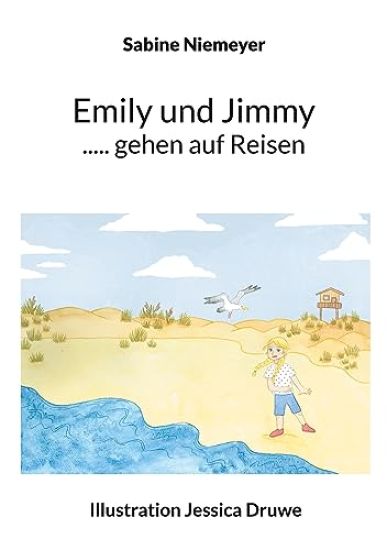
Im 1. Band "Emily und Jimmy ... eine Freundschaft auf Sylt" hast du vielleicht schon gelesen, was es mit der geheimen Freundschaft auf sich hat. Dann wei t du bereits, dass Emily auf Sylt lebt, zusammen mit der M we Jimmy. Du kannst aber auch gleich mit diesem 2. Band beginnen, das macht gar nichts. Denn in "Emily und Jimmy ... gehen auf Reisen" besucht Emily mit ihrem Bruder Tim die Gro eltern in Hamburg. Klar, Jimmy will nat rlich auch unbedingt mitkommen, was sich allerdings als sehr schwierig erweist. Komme mit auf diese Reise und freue dich auf die lustigen Abenteuer, die sie alle in Hamburg erleben.







Emily Hobhouse and the Reports on the Concentration Camps during the Boer War 1899-1902
Birgit S Seibold
ibidem-Verlag, Jessica Haunschild u Christian Schon
2011
nidottu
"The black spot the one very black spot in the picture is the frightful mortality in the Concentration Camps. I entirely agree with you in thinking, that while a hundred explanations may be offered and a hundred excuses made, they do not really amount to any adequate defence. I should much prefer to say at once, so far as the Civil authorities are concerned, that we were suddenly confronted with a problem not of our making, with which it was beyond our power properly to grapple. And no doubt its vastness was not realised soon enough. It was not till six weeks or two months ago that it dawned on me personally, (I cannot speak for others), that the enormous mortality was not merely incidental to the first formation of the camps and the sudden inrush of thousands of people already sick and starving, but was going to continue. The fact that it continues, is no doubt a condemnation of the Camp system. The whole thing, I think now, has been a mistake." - Alfred Milner to Joseph Chamberlain, December 7th, 1901 The British scorched earth policy during the last phase of the Anglo-Boer War of 1899-1902 led to the burning of farms, the destruction of homesteads, harvests and livestock and to the internment of the civil population in the so-called concentration camps. There, people -- mainly women and children -- died of malnutrition and diseases such as measles, pneumonia and typhoid. The death rate in the camps was so high -- nearly 28,000 white Boers succumbed - that the English population, renowned for its gallantry and chivalry, was consternated. Lloyd George blamed his government for its policy of extermination, Campbell-Bannerman spoke of methods of barbarism, and philanthropic institutions protested, led by Emily Hobhouse, who was the first civilian to investigate the conditions of the camps. The government reacted and sent a ladies' commission under the leadership of Millicent Garrett Fawcett to South Africa. Birgit Seibold's study is the first to compare the 'inofficial' and the official report on the camps and to give an insight into conditions in each of the thirty-three white concentration camps. Based on first-hand research among the Hobhouse manuscripts, this book is both scholarly and compulsively readable.