Kirjojen hintavertailu. Mukana 11 530 474 kirjaa ja 12 kauppaa.

Kirjahaku

Etsi kirjoja tekijän nimen, kirjan nimen tai ISBN:n perusteella.

1000 tulosta hakusanalla Erica David

Barbie's Queer Accessories

Barbie's Queer Accessories

Erica Rand

Duke University Press
1995
sidottu
She’s skinny, white, and blond. She’s Barbie-an icon of femininity to generations of American girls. She’s also multiethnic and straight-or so says Mattel, Barbie’s manufacturer. But, as Barbie’s Queer Accessories demonstrates, many girls do things with Barbie never seen in any commercial. Erica Rand looks at the corporate marketing strategies used to create Barbie’s versatile (She’s a rapper! She’s an astronaut! She’s a bride!) but nonetheless premolded and still predominantly white image. Rand weighs the values Mattel seeks to embody in Barbie-evident, for example, in her improbably thin waist and her heterosexual partner-against the naked, dyked out, transgendered, and trashed versions favored by many juvenile owners and adult collectors of the doll.Rand begins by focusing on the production and marketing of Barbie, starting in 1959, including Mattel’s numerous tie-ins and spin-offs. These variations, which include the much-promoted multiethnic Barbies and the controversial Earring Magic Ken, helped make the doll one of the most profitable toys on the market. In lively chapters based on extensive interviews, the author discusses adult testimony from both Barbie "survivors" and enthusiasts and explores how memories of the doll fit into women’s lives. Finally, Rand looks at cultural reappropriations of Barbie by artists, collectors, and especially lesbians and gay men, and considers resistance to Barbie as a form of social and political activism.Illustrated with photographs of various interpretations and alterations of Barbie, this book encompasses both Barbie glorification and abjection as it testifies to the irrefutably compelling qualities of this bestselling toy. Anyone who has played with Barbie-or, more importantly, thought or worried about playing with Barbie-will find this book fascinating.

Barbie's Queer Accessories

Barbie's Queer Accessories

Erica Rand

Duke University Press
1995
pokkari
She’s skinny, white, and blond. She’s Barbie-an icon of femininity to generations of American girls. She’s also multiethnic and straight-or so says Mattel, Barbie’s manufacturer. But, as Barbie’s Queer Accessories demonstrates, many girls do things with Barbie never seen in any commercial. Erica Rand looks at the corporate marketing strategies used to create Barbie’s versatile (She’s a rapper! She’s an astronaut! She’s a bride!) but nonetheless premolded and still predominantly white image. Rand weighs the values Mattel seeks to embody in Barbie-evident, for example, in her improbably thin waist and her heterosexual partner-against the naked, dyked out, transgendered, and trashed versions favored by many juvenile owners and adult collectors of the doll.Rand begins by focusing on the production and marketing of Barbie, starting in 1959, including Mattel’s numerous tie-ins and spin-offs. These variations, which include the much-promoted multiethnic Barbies and the controversial Earring Magic Ken, helped make the doll one of the most profitable toys on the market. In lively chapters based on extensive interviews, the author discusses adult testimony from both Barbie "survivors" and enthusiasts and explores how memories of the doll fit into women’s lives. Finally, Rand looks at cultural reappropriations of Barbie by artists, collectors, and especially lesbians and gay men, and considers resistance to Barbie as a form of social and political activism.Illustrated with photographs of various interpretations and alterations of Barbie, this book encompasses both Barbie glorification and abjection as it testifies to the irrefutably compelling qualities of this bestselling toy. Anyone who has played with Barbie-or, more importantly, thought or worried about playing with Barbie-will find this book fascinating.

The Ellis Island Snow Globe

The Ellis Island Snow Globe

Erica Rand

Duke University Press
2005
sidottu
In The Ellis Island Snow Globe, Erica Rand, author of the smart and entertaining book Barbie’s Queer Accessories, takes readers on an unconventional tour of Ellis Island, the migration station turned heritage museum, and its neighbor, the Statue of Liberty. By pausing to reflect on what is and is not on display at these two iconic national monuments, Rand focuses attention on whose heritage is honored and whose obscured. She also reveals the shifting connections between sex, money, material products, and ideas of the nation in everything from the ostensible father-mother-child configuration on an Ellis Island golf ball purchased at the gift shop to the multi-million dollar July 4, 1986 Liberty Weekend extravaganza celebrating the Statue’s centennial just days after the Supreme Court’s un-Libertylike decision upholding the antisodomy laws challenged in Bowers v. Hardwick.Rand notes that portrayals of the Statue of Liberty as a beacon for immigrants tend to suppress the Statue’s connections to people brought to this country by force. She examines what happened to migrants at Ellis Island whose bodies did not match the gender suggested by the clothing they wore. In light of contemporary ideas about safety and security, she examines the “Decide an Immigrant’s Fate” program, which has visitors to Ellis Island act as a 1910 board of inspectors hearing the appeal of an immigrant about to be excluded from the country. Rand is a witty, insightful, and open-minded tour guide, able to synthesize numerous diverse ideas-about tourism, immigration history, sexuality, race, ethnicity, commodity culture, and global capitalism-and to candidly convey her delight in her Ellis Island snow globe. And pen. And lighter. And back scratcher. And golf ball. And glittery pink key chain.
The Ellis Island Snow Globe

The Ellis Island Snow Globe

Erica Rand

Duke University Press
2005
pokkari
In The Ellis Island Snow Globe, Erica Rand, author of the smart and entertaining book Barbie’s Queer Accessories, takes readers on an unconventional tour of Ellis Island, the migration station turned heritage museum, and its neighbor, the Statue of Liberty. By pausing to reflect on what is and is not on display at these two iconic national monuments, Rand focuses attention on whose heritage is honored and whose obscured. She also reveals the shifting connections between sex, money, material products, and ideas of the nation in everything from the ostensible father-mother-child configuration on an Ellis Island golf ball purchased at the gift shop to the multi-million dollar July 4, 1986 Liberty Weekend extravaganza celebrating the Statue’s centennial just days after the Supreme Court’s un-Libertylike decision upholding the antisodomy laws challenged in Bowers v. Hardwick.Rand notes that portrayals of the Statue of Liberty as a beacon for immigrants tend to suppress the Statue’s connections to people brought to this country by force. She examines what happened to migrants at Ellis Island whose bodies did not match the gender suggested by the clothing they wore. In light of contemporary ideas about safety and security, she examines the “Decide an Immigrant’s Fate” program, which has visitors to Ellis Island act as a 1910 board of inspectors hearing the appeal of an immigrant about to be excluded from the country. Rand is a witty, insightful, and open-minded tour guide, able to synthesize numerous diverse ideas-about tourism, immigration history, sexuality, race, ethnicity, commodity culture, and global capitalism-and to candidly convey her delight in her Ellis Island snow globe. And pen. And lighter. And back scratcher. And golf ball. And glittery pink key chain.
Red Nails, Black Skates

Red Nails, Black Skates

Erica Rand

Duke University Press
2012
sidottu
In her forties, Erica Rand bought a pair of figure skates to vary her workout routine. Within a few years, the college professor was immersed in adult figure skating. Here, in short, incisive essays, she describes the pleasures to be found in the rink, as well as the exclusionary practices that make those pleasures less accessible to some than to others. Throughout the book, Rand situates herself as a queer femme, describing her mixed feelings about participating in a sport with heterosexual story lines and rigid standards for gender-appropriate costumes and moves. She chronicles her experiences competing in the Gay Games and at the annual U.S. Adult National Figure Skating Championship, or "Adult Nationals"; Aided by her comparative study of roller derby and women's hockey, including a brief attempt to play hockey herself, she addresses matters such as skate color conventions, judging systems, racial and sexual norms, transgender issues in sports, and the economics of athletic participation and risk taking. Mixing sharp critique with genuine appreciation and delight, Rand suggests ways to make figure skating more inclusive, while portraying the unlikely friendships facilitated by sports and the sheer elation of gliding on ice.
Red Nails, Black Skates

Red Nails, Black Skates

Erica Rand

Duke University Press
2012
pokkari
In her forties, Erica Rand bought a pair of figure skates to vary her workout routine. Within a few years, the college professor was immersed in adult figure skating. Here, in short, incisive essays, she describes the pleasures to be found in the rink, as well as the exclusionary practices that make those pleasures less accessible to some than to others. Throughout the book, Rand situates herself as a queer femme, describing her mixed feelings about participating in a sport with heterosexual story lines and rigid standards for gender-appropriate costumes and moves. She chronicles her experiences competing in the Gay Games and at the annual U.S. Adult National Figure Skating Championship, or "Adult Nationals"; Aided by her comparative study of roller derby and women's hockey, including a brief attempt to play hockey herself, she addresses matters such as skate color conventions, judging systems, racial and sexual norms, transgender issues in sports, and the economics of athletic participation and risk taking. Mixing sharp critique with genuine appreciation and delight, Rand suggests ways to make figure skating more inclusive, while portraying the unlikely friendships facilitated by sports and the sheer elation of gliding on ice.
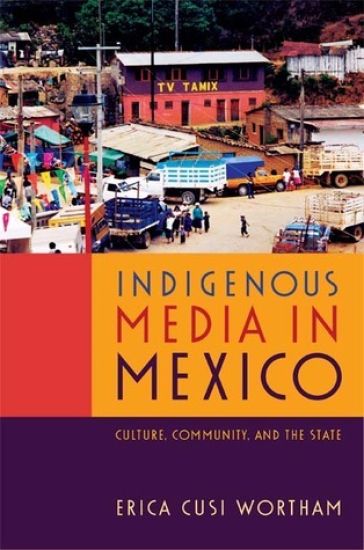
Indigenous Media in Mexico

Indigenous Media in Mexico

Erica Cusi Wortham

Duke University Press
2013
sidottu
In Indigenous Media in Mexico, Erica Cusi Wortham explores the use of video among indigenous peoples in Mexico as an important component of their social and political activism. Funded by the federal government as part of its "pluriculturalist" policy of the 1990s, video indígena programs became social processes through which indigenous communities in Oaxaca and Chiapas engendered alternative public spheres and aligned themselves with local and regional autonomy movements. Drawing on her in-depth ethnographic research among indigenous mediamakers in Mexico, Wortham traces their shifting relationship with Mexican cultural agencies; situates their work within a broader, hemispheric network of indigenous media producers; and complicates the notion of a unified, homogeneous indigenous identity. Her analysis of projects from community-based media initiatives in Oaxaca to the transnational Chiapas Media Project highlights variations in cultural identity and autonomy based on specific histories of marginalization, accommodation, and resistance.
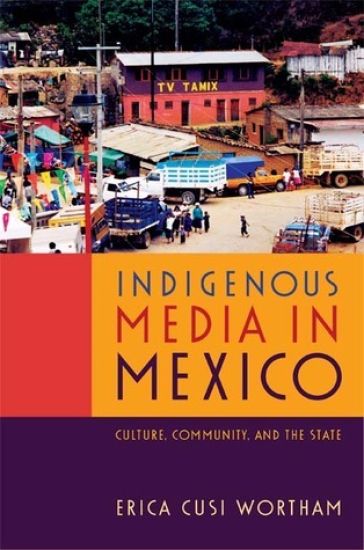
Indigenous Media in Mexico

Indigenous Media in Mexico

Erica Cusi Wortham

Duke University Press
2013
pokkari
In Indigenous Media in Mexico, Erica Cusi Wortham explores the use of video among indigenous peoples in Mexico as an important component of their social and political activism. Funded by the federal government as part of its "pluriculturalist" policy of the 1990s, video indígena programs became social processes through which indigenous communities in Oaxaca and Chiapas engendered alternative public spheres and aligned themselves with local and regional autonomy movements. Drawing on her in-depth ethnographic research among indigenous mediamakers in Mexico, Wortham traces their shifting relationship with Mexican cultural agencies; situates their work within a broader, hemispheric network of indigenous media producers; and complicates the notion of a unified, homogeneous indigenous identity. Her analysis of projects from community-based media initiatives in Oaxaca to the transnational Chiapas Media Project highlights variations in cultural identity and autonomy based on specific histories of marginalization, accommodation, and resistance.
Reconceptualizations of the African Diaspora

Reconceptualizations of the African Diaspora

Erica L. Ball; Melina Pappademos; Michelle Ann Stephens

Duke University Press
2008
pokkari
This special issue of Radical History Review aims to revitalize African diaspora studies by shifting current emphases within the field. The contributors rethink current understandings of African and diaspora as a dispersal of Africans from the African continent via the Atlantic slave trade and offer reconceptualizations of dominant paradigms, such as home, origins, migrations, politics, blackness, African, Africa, African-descended, and Americanness. The contributors draw on perspectives from political science, history, cultural studies, art history, anthropology, feminist theory, sexuality and queer studies, and Caribbean and African American studies. The collection addresses transnational discourses of race, gender, and sexuality in African diaspora politics, African diaspora experiences on the African continent, the politics of African-descended peoples in Europe, and creative uses of the discourses of memory and diaspora to support political organizing and local struggles. Essays on Venezuelans, Bolivians, and Mexicans address the status of race in the study of African-descended populations and cultures in Latin America. The issue also includes two essays that showcase African diasporic art and curatorial practices in the United States, the Caribbean, and the United Kingdom.Contributors: Erica Ball, Anthony Bogues, Lisa Brock, Sara Busdiecker, Prudence Cumberbatch,Jacqueline Francis, Anita González, Amoaba Gooden, Dayo Gore, Laura A. Harris, Christopher J. Lee, Kevin Mumford, Melina Pappademos, Cristóbal Valencia Ramírez, Rochelle Rowe, Theresa Runstedtler, Michelle Ann Stephens, Tyler Stovall, Deborah Thomas, Leon Wainwright, Cadence Wynter, Paul Tiyambe Zeleza
Development Design

Development Design

Erica Morawski

UNIVERSITY OF PITTSBURGH PRESS
2025
pokkari
Underneath picturesque views of palm trees, fruity cocktails in hotel lounges, and day trips to preserved colonial zones lies a history of tourism design that intersects with larger projects of development and national and cultural identity formation. Locating modernity and coloniality as the key framework within which tourism development takes place, Development Design focuses on hotel design and its relation to larger urban and rural landscapes to uncover the way these seemingly carefree spaces are bound to local politics and international relations. Focusing on three sites in the Hispanic Caribbean—San Juan, Ciudad Trujillo, and Havana—Morawski traces different attitudes and approaches to tourism and its material design through five hotels that serve as case studies. Through examination of wicker chairs and lobby interiors, architecture and landscaping, public works and urban planning, Development Design illustrates the integral role hotel design played in negotiated and contested histories of development in Puerto Rico, the Dominican Republic, and Cuba.
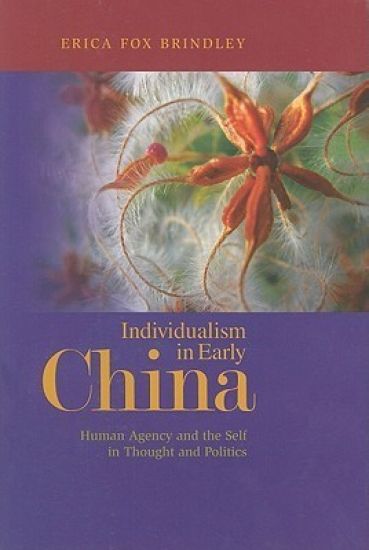
Individualism in Early China

Individualism in Early China

Erica Brindley

University of Hawai'i Press
2010
sidottu
“Contrary to common claims about the absence of individualism in early China and its supposed reification in ‘the West,’ both the Western and Chinese traditions have historically been characterized by diverse and constantly evolving attitudes toward the individual. This book serves as an important corrective to monolithic or essentializing accounts of early Chinese thought, and the narrative concerning the evolution of the concept of the individual in early China is an interesting and novel one. It will appeal widely to people working on early Chinese thought and comparative religion more broadly.” —Edward Slingerland, University of British Columbia. “There is a great deal of resistance to the very applicability of the concept of individualism in early China. In this impressively ambitious project, Erica Brindley succeeds in deploying the concept to the understanding of early Chinese thought. In exploring the emergence of and response to distinctively Chinese forms of individuals, she puts some familiar and major texts in a surprising light as part of an overall dynamic. One of the significant lessons of this book is that there is a variety of ways to conceive of and value the individual.” —David Wong, Duke University. Conventional wisdom has it that the concept of individualism was absent in early China. In this uncommon study of the self and human agency in ancient China, Erica Fox Brindley provides an important corrective to this view and persuasively argues that an idea of individualism can be applied to the study of early Chinese thought and politics with intriguing results. She introduces the development of ideological and religious beliefs that link universal, cosmic authority to the individual in ways that may be referred to as individualistic and illustrates how these evolved alongside and potentially helped contribute to larger sociopolitical changes of the time, such as the centralization of political authority and the growth in the social mobility of the educated elite class. Starting with the writings of the early Mohists (fourth century BCE), Brindley analyzes many of the major works through the early second century BCE by Laozi, Mencius, Zhuangzi, Xunzi, and Han Feizi, as well as anonymous authors of both received and excavated texts. Changing notions of human agency affected prevailing attitudes toward the self as individual—in particular, the onset of ideals that stressed the power and authority of the individual, either as a conformist agent in relation to a larger whole or as an individualistic agent endowed with inalienable cosmic powers and authorities. She goes on to show how distinctly internal (individualistic), external (institutionalized), or mixed (syncretic) approaches to self-cultivation and state control emerged in response to such ideals. In her exploration of the nature of early Chinese individualism and the various theories for and against it, she reveals the ways in which authors innovatively adapted new theories on individual power to the needs of the burgeoning imperial state. With clarity and force, Individualism in Early China illuminates the importance of the individual in Chinese culture. By focusing on what is unique about early Chinese thinking on this topic, it gives readers a means of understanding particular “Chinese” discussions of and respect for the self.
Ethics of Belonging

Ethics of Belonging

Erica M. Larson

UNIVERSITY OF HAWAI'I PRESS
2023
sidottu
The city of Manado and province of North Sulawesi have built a public identity based on religious harmony, claiming to successfully model tolerance and inter-religious relations for the rest of Indonesia. Yet, in discourses and practices relevant to everyday interactions in schools and political debates in the public sphere, two primary contested frames for belonging emerge in tension with one another. On the one hand, "aspirational coexistence" recognizes a common goal of working toward religious harmony and inclusive belonging. On the other hand, "majoritarian coexistence," in which the legitimacy of religious minorities is understood as guaranteed exclusively by the goodwill of the Protestant majority, also emerges in discourses and practices of coexistence. These two agonistic frames of coexistence stem from both a real pride at having staved off ethno-religious violence that plagued surrounding regions at the turn of the twenty-first century, as well as a concern about whether the area will maintain a Christian majority in the future. Based on ethnographic research in Manado, North Sulawesi, a Protestant-majority region of Indonesia, Ethics of Belonging investigates the dynamics of ethical deliberation about religious coexistence. In this analysis, schools are understood as central sites for exchange about the ethics and politics of belonging in the nation. The author draws on in-depth fieldwork at three secondary schools (a public high school, private Catholic boarding school, and public madrasah), an inter-religious "exchange" program among university students, and societal debates about religion and belonging. Each of the schools promotes a distinct method to addressing diversity and a particular understanding of the relationship between religious and civic values. Larson’s research demonstrates how ethical frameworks for approaching religious difference are channeled and negotiated through educational institutions, linking up with their broader political context and debates in the community. This resource argues for a consideration of ethical reflection as a fundamentally pedagogical process, with important ramifications beyond the immediate environment. The focus on educational institutions provides a critical connection between interpersonal and public ethical deliberation, elucidating the entanglements of ethics and politics and their manifestation across different societal scales.
Ethics of Belonging

Ethics of Belonging

Erica M. Larson

UNIVERSITY OF HAWAI'I PRESS
2024
nidottu
The city of Manado and province of North Sulawesi have built a public identity based on religious harmony, claiming to successfully model tolerance and inter-religious relations for the rest of Indonesia. Yet, in discourses and practices relevant to everyday interactions in schools and political debates in the public sphere, two primary contested frames for belonging emerge in tension with one another. On the one hand, "aspirational coexistence" recognizes a common goal of working toward religious harmony and inclusive belonging. On the other hand, "majoritarian coexistence," in which the legitimacy of religious minorities is understood as guaranteed exclusively by the goodwill of the Protestant majority, also emerges in discourses and practices of coexistence. These two agonistic frames of coexistence stem from both a real pride at having staved off ethno-religious violence that plagued surrounding regions at the turn of the twenty-first century, as well as a concern about whether the area will maintain a Christian majority in the future. Based on ethnographic research in Manado, North Sulawesi, a Protestant-majority region of Indonesia, Ethics of Belonging investigates the dynamics of ethical deliberation about religious coexistence. In this analysis, schools are understood as central sites for exchange about the ethics and politics of belonging in the nation. The author draws on in-depth fieldwork at three secondary schools (a public high school, private Catholic boarding school, and public madrasah), an inter-religious "exchange" program among university students, and societal debates about religion and belonging. Each of the schools promotes a distinct method to addressing diversity and a particular understanding of the relationship between religious and civic values. Larson’s research demonstrates how ethical frameworks for approaching religious difference are channeled and negotiated through educational institutions, linking up with their broader political context and debates in the community. This resource argues for a consideration of ethical reflection as a fundamentally pedagogical process, with important ramifications beyond the immediate environment. The focus on educational institutions provides a critical connection between interpersonal and public ethical deliberation, elucidating the entanglements of ethics and politics and their manifestation across different societal scales.
The Lost Lieutenant

The Lost Lieutenant

Erica Vetsch

Kregel Publications,U.S.
2020
nidottu
He's doing what he can to save the Prince Regent's life . . . but can he save his new marriage as well? Evan Eldridge never meant to be a war hero--he just wanted to fight Napoleon for the future of his country. And he certainly didn't think that saving the life of a peer would mean being made the Earl of Whitelock. But when the life you save is dear to the Prince Regent, things can change in a hurry. Now Evan has a new title, a manor house in shambles, and a stranger for a bride, all thrust upon him by a grateful ruler. What he doesn't have are all his memories. Traumatized as a result of his wounds and bravery on the battlefield, Evan knows there's something he can't quite remember. It's important, dangerous--and if he doesn't recall it in time, will jeopardize not only his marriage but someone's very life. Readers who enjoy Julie Klassen, Carolyn Miller, and Kristi Ann Hunter will love diving into this brand-new Regency series filled with suspense, aristocratic struggles, and a firm foundation of faith.
The Gentleman Spy

The Gentleman Spy

Erica Vetsch

Kregel Publications,U.S.
2020
nidottu
He only wanted a duchess for a day--but she's determined to make it a marriage for life When his father and older brother suddenly pass away, the new Duke of Haverly is saddled with a title he never expected to bear. To thwart the plans of his scheming family, the duke impulsively marries a wallflower. After all, she's meek and mild; it should be easy to sequester her in the country and get on with his life--as a secret agent for the Crown. But his bride has other ideas. She's determined to take her place not only as his duchess but as his wife. As a duchess, she can use her position to help the lowest of society--the women forced into prostitution because they have no skills or hope. Her endeavors are not met favorably in society, nor by her husband who wishes she'd remain in the background as he ordered. Can the duke succeed in relegating her to the sidelines of his life? When his secrets are threatened with exposure, will his new wife be an asset or a liability?
The Indebted Earl

The Indebted Earl

Erica Vetsch

KREGEL PUBLICATIONS,U.S.
2021
nidottu
Can Captain Wyvern keep his new marriage of convenience all business--or will it turn into something more? Captain Charles Wyvern owes a great debt to the man who saved his life--especially since Major Richardson lost his own life in the process. The best way to honor that hero's dying wish is for Wyvern to escort the man's grieving fianc e and mother safely to a new cottage home by the sea. But along the way, he learns of another obligation that has fallen on his shoulders: his uncle has died and the captain is now the Earl of Rothwell. When he and the ladies arrive at his new manor house in Devon, they discover an estate in need of a leader and a gaggle of girls, all wards of the former earl. War the new earl knows; young ladies and properties he does not. Still wishing to provide for the bereaved Lady Sophia Haverly, Charles proposes a marriage of convenience. Sophie is surprised to find she isn't opposed to the idea. It will help her care for her betrothed's elderly mother, and she's already fallen in love with the wayward girls on the Rothwell estate. This alliance is a chance to repay the captain who has done so much for her care, as well as divert her attention from her grief. When Wyvern returns to his sea commission, she'll stay behind to oversee his property and wards. It sounds so simple. Until the stalwart captain is arrested on suspicion of smuggling, and Sophie realizes how much he's come to mean to her. Now she'll have to learn to fight, not only for his freedom but also for his love.
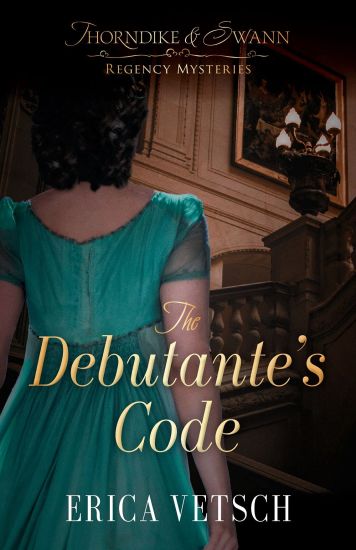
The Debutante`s Code

The Debutante`s Code

Erica Vetsch

KREGEL PUBLICATIONS,U.S.
2021
nidottu
Jane Austen meets Sherlock Holmes in this new Regency mystery series Newly returned from finishing school, Lady Juliette Thorndike is ready to debut in London society. Due to her years away, she hasn't spent much time with her parents, and sees them only as the flighty, dilettante couple the other nobles love. But when they disappear, she discovers she never really knew them at all. They've been living double lives as government spies--and they're only the latest in a long history of espionage that is the family's legacy. Now Lady Juliette is determined to continue their work. Mentored by her uncle, she plunges into the dangerous world of spy craft. From the glittering ballrooms of London to the fox hunts, regattas, and soirees of country high society, she must chase down hidden clues, solve the mysterious code her parents left behind, and stay out of danger. All the while, she has to keep her endeavors a secret from her best friend and her suitors--not to mention nosy, irritatingly handsome Bow Street runner Daniel Swann, who suspects her of a daring theft. Can Lady Juliette outwit her enemies and complete her parents' last mission? Or will it lead her to a terrible end? Best-selling author Erica Vetsch is back with a rollicking, exciting new series destined to be a hit with Regency readers who enjoy a touch of mystery in their love stories. Fans of Julie Klassen, Sarah Ladd, and Anne Perry will love the wit, action, and romance.
Millstone of Doubt

Millstone of Doubt

Erica Vetsch

KREGEL PUBLICATIONS,U.S.
2022
pokkari
Regency London's detective duo is back on a new case--and this one is going to be a killer Caught in the explosion of the Hammersmith Mill in London, Bow Street Runner Daniel Swann rushes to help any survivors only to find the mill's owner dead of an apparent gunshot. Even though the owner's daughter, Agatha Montgomery, mourns his death, it seems there are more than a few people with motive for murder. But Daniel can't take this investigation slow and steady. Instead, he must dig through all the suspects as quickly as he can, because the clock is ticking until his mysterious patronage--and his job as a runner--comes to an abrupt and painful end. It seems to Daniel that, like his earthly father, his heavenly Father has abandoned him to the fates. Lady Juliette Thorndike is Agatha's bosom friend and has the inside knowledge of the wealthy London ton to be invaluable to Daniel. She should be in a perfect position to help with the case. Still, her instructor in the art of spy craft orders her to stay out of the investigation. But circumstances intervene, dropping her into the middle of the deadly pursuit. When a dreadful accident ends in another death on the mill floor, Daniel discovers a connection to his murder case--and to his own secret past. Now he and Juliette are in a race to find the killer before his time runs out. Erica Vetsch once again weaves a classic tale of how the old affects the new. An artfully told story that will have you wondering at the outcome until the final pages are read.-- Ruth Logan Herne, USA TODAY best-selling author