Kirjojen hintavertailu. Mukana 11 627 380 kirjaa ja 12 kauppaa.

Kirjahaku

Etsi kirjoja tekijän nimen, kirjan nimen tai ISBN:n perusteella.

1000 tulosta hakusanalla Erica Hubbard

Building Little Saigon

Building Little Saigon

Erica Allen-Kim

UNIVERSITY OF TEXAS PRESS
2024
nidottu
An in-depth look at the diverging paths of Vietnamese American communities, or “Little Saigons,” in America’s built environment. In the final days before the fall of Saigon in 1975, 125,000 Vietnamese who were evacuated or who made their own way out of the country resettled in the United States. Finding themselves in unfamiliar places yet still connected in exile, these refugees began building their own communities as memorials to a lost homeland. Known both officially and unofficially as Little Saigons, these built landscapes offer space for everyday activities as well as the staging of cultural heritage and political events. Building Little Saigon examines nearly fifty years of city building by Vietnamese Americans-who number over 2.2 million today. Author Erica Allen-Kim highlights architecture and planning ideas adapted by the Vietnamese communities who, in turn, have influenced planning policies and mainstream practices. Allen-Kim traveled to ten Little Saigons in the United States to visit archives, buildings, and public art and to converse with developers, community planners, artists, business owners, and Vietnam veterans. By examining everyday buildings-who made them and what they mean for those who know them-Building Little Saigon shows us the complexities of migration unfolding across lifetimes and generations.
Sensory Experiments

Sensory Experiments

Erica Fretwell

Duke University Press
2020
sidottu
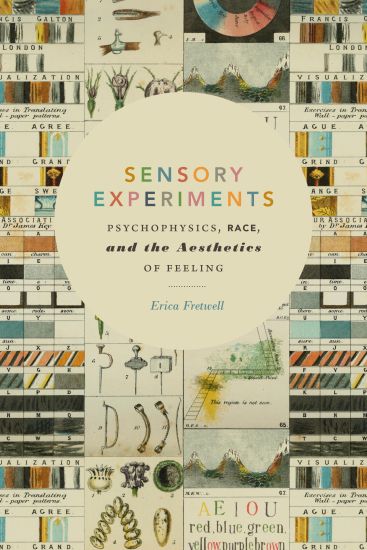
In Sensory Experiments, Erica Fretwell excavates the nineteenth-century science of psychophysics and its theorizations of sensation to examine the cultural and aesthetic landscape of feeling in nineteenth-century America. Fretwell demonstrates how psychophysics-a scientific movement originating in Germany and dedicated to the empirical study of sensory experience-shifted the understandings of feeling from the epistemology of sentiment to the phenomenological terrain of lived experience. Through analyses of medical case studies, spirit photographs, perfumes, music theory, recipes, and the work of canonical figures ranging from Kate Chopin and Pauline Hopkins to James Weldon Johnson and Emily Dickinson, Fretwell outlines how the five senses became important elements in the biopolitical work of constructing human difference along the lines of race, gender, and ability. In its entanglement with social difference, psychophysics contributed to the racialization of aesthetics while sketching out possibilities for alternate modes of being over and against the figure of the bourgeois liberal individual. Although psychophysics has largely been forgotten, Fretwell demonstrates that its importance to shaping social order through scientific notions of sensation is central to contemporary theories of new materialism, posthumanism, aesthetics, and affect theory.
The Small Book of Hip Checks

The Small Book of Hip Checks

Erica Rand

Duke University Press
2021
sidottu
In The Small Book of Hip Checks Erica Rand uses multiple meanings of hip check-including an athlete using their hip to throw an opponent off-balance and the inspection of racialized gender-to consider the workings of queer gender, race, and writing. Explicitly attending to processes of writing and revising, Rand pursues interruption, rethinking, and redirection to challenge standard methods of argumentation and traditional markers of heft and fluff. She writes about topics including a trans shout-out in a Super Bowl ad, the heyday of lavender dildos, ballet dancer Misty Copeland, the criticism received by figure skater Debi Thomas and tennis great Serena Williams for competing in bodysuits while Black, and the gendering involved in identifying the remains of people who die trying to cross into the United States south of Tucson, Arizona. Along the way, Rand encourages making muscle memory of experimentation and developing an openness to being conceptually knocked sideways. In other words, to be hip-checked.
Sensory Experiments

Sensory Experiments

Erica Fretwell

Duke University Press
2020
pokkari
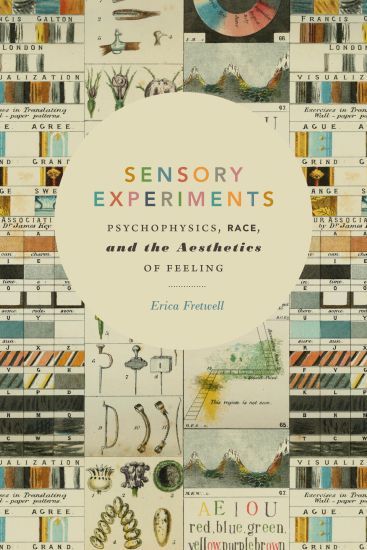
In Sensory Experiments, Erica Fretwell excavates the nineteenth-century science of psychophysics and its theorizations of sensation to examine the cultural and aesthetic landscape of feeling in nineteenth-century America. Fretwell demonstrates how psychophysics-a scientific movement originating in Germany and dedicated to the empirical study of sensory experience-shifted the understandings of feeling from the epistemology of sentiment to the phenomenological terrain of lived experience. Through analyses of medical case studies, spirit photographs, perfumes, music theory, recipes, and the work of canonical figures ranging from Kate Chopin and Pauline Hopkins to James Weldon Johnson and Emily Dickinson, Fretwell outlines how the five senses became important elements in the biopolitical work of constructing human difference along the lines of race, gender, and ability. In its entanglement with social difference, psychophysics contributed to the racialization of aesthetics while sketching out possibilities for alternate modes of being over and against the figure of the bourgeois liberal individual. Although psychophysics has largely been forgotten, Fretwell demonstrates that its importance to shaping social order through scientific notions of sensation is central to contemporary theories of new materialism, posthumanism, aesthetics, and affect theory.
The Small Book of Hip Checks

The Small Book of Hip Checks

Erica Rand

Duke University Press
2021
pokkari
In The Small Book of Hip Checks Erica Rand uses multiple meanings of hip check-including an athlete using their hip to throw an opponent off-balance and the inspection of racialized gender-to consider the workings of queer gender, race, and writing. Explicitly attending to processes of writing and revising, Rand pursues interruption, rethinking, and redirection to challenge standard methods of argumentation and traditional markers of heft and fluff. She writes about topics including a trans shout-out in a Super Bowl ad, the heyday of lavender dildos, ballet dancer Misty Copeland, the criticism received by figure skater Debi Thomas and tennis great Serena Williams for competing in bodysuits while Black, and the gendering involved in identifying the remains of people who die trying to cross into the United States south of Tucson, Arizona. Along the way, Rand encourages making muscle memory of experimentation and developing an openness to being conceptually knocked sideways. In other words, to be hip-checked.
After Caliban: Caribbean Art in a Global Imaginary

After Caliban: Caribbean Art in a Global Imaginary

Erica Moiah James

DUKE UNIVERSITY PRESS
2025
sidottu
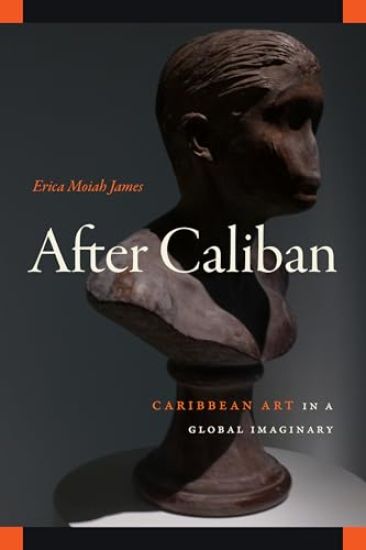
In After Caliban, Erica Moiah James examines the rise of global Caribbean artists in the 1990s and their production of a decolonized art history for the Caribbean. She draws on Aim C saire's rewriting of Shakespeare's The Tempest, in which Caliban becomes the sole author of his own story, dissolving his fixed position as colonized in relation to Prospero as colonizer. James shows how visual artists such as Marc Latamie, Janine Antoni, Belkis Ay n, Edouard Duval-Carri , and Christopher Cozier followed C saire's model by employing a range of practices and methodologies that refused marginalization. Just as C saire decolonized The Tempest, so too did these artists, who crafted a decolonial aesthetic that redefined their own cultural and historical narratives and positioned art as a key pathway toward a postcolonial future. By providing the foundation for a postcolonial, post-Caliban art world, these artists redefined the critical and popular notion of contemporary Caribbean art. At the same time, James argues, they fulfilled C saire's dream for a postcolonial Caribbean while creating a nonhegemonic art historical practice that exists beyond modern binaries and borders.
After Caliban: Caribbean Art in a Global Imaginary

After Caliban: Caribbean Art in a Global Imaginary

Erica Moiah James

DUKE UNIVERSITY PRESS
2025
nidottu
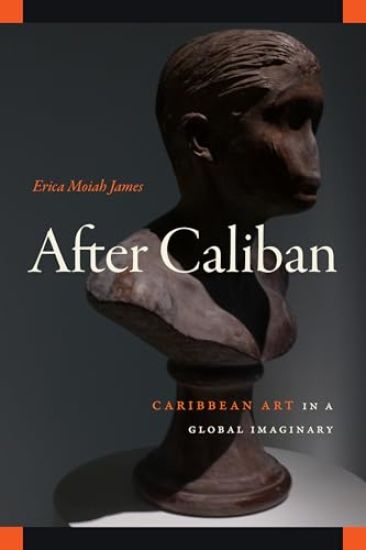
In After Caliban, Erica Moiah James examines the rise of global Caribbean artists in the 1990s and their production of a decolonized art history for the Caribbean. She draws on Aim C saire's rewriting of Shakespeare's The Tempest, in which Caliban becomes the sole author of his own story, dissolving his fixed position as colonized in relation to Prospero as colonizer. James shows how visual artists such as Marc Latamie, Janine Antoni, Belkis Ay n, Edouard Duval-Carri , and Christopher Cozier followed C saire's model by employing a range of practices and methodologies that refused marginalization. Just as C saire decolonized The Tempest, so too did these artists, who crafted a decolonial aesthetic that redefined their own cultural and historical narratives and positioned art as a key pathway toward a postcolonial future. By providing the foundation for a postcolonial, post-Caliban art world, these artists redefined the critical and popular notion of contemporary Caribbean art. At the same time, James argues, they fulfilled C saire's dream for a postcolonial Caribbean while creating a nonhegemonic art historical practice that exists beyond modern binaries and borders.
The Other Side of Terror

The Other Side of Terror

Erica R. Edwards

New York University Press
2021
sidottu
WINNER, 2022 John Hope Franklin Prize, given by the American Studies Association HONORABLE MENTION, 2022 Gloria E. Anzaldúa Book Prize, given by the National Women's Studies Association Reveals the troubling intimacy between Black women and the making of US global power The year 1968 marked both the height of the worldwide Black liberation struggle and a turning point for the global reach of American power, which was built on the counterinsurgency honed on Black and other oppressed populations at home. The next five decades saw the consolidation of the culture of the American empire through what Erica R. Edwards calls the "imperial grammars of blackness." This is a story of state power at its most devious and most absurd, and, at the same time, a literary history of Black feminist radicalism at its most trenchant. Edwards reveals how the long war on terror, beginning with the late–Cold War campaign against organizations like the Black Panther Party for Self-Defense and the Black Liberation Army, has relied on the labor and the fantasies of Black women to justify the imperial spread of capitalism. Black feminist writers not only understood that this would demand a shift in racial gendered power, but crafted ways of surviving it. The Other Side of Terror offers an interdisciplinary Black feminist analysis of militarism, security, policing, diversity, representation, intersectionality, and resistance, while discussing a wide array of literary and cultural texts, from the unpublished work of Black radical feminist June Jordan to the memoirs of Condoleezza Rice to the television series Scandal. With clear, moving prose, Edwards chronicles Black feminist organizing and writing on "the other side of terror", which tracked changes in racial power, transformed African American literature and Black studies, and predicted the crises of our current era with unsettling accuracy.
The Other Side of Terror

The Other Side of Terror

Erica R. Edwards

New York University Press
2021
pokkari
WINNER, 2022 John Hope Franklin Prize, given by the American Studies Association HONORABLE MENTION, 2022 Gloria E. Anzaldúa Book Prize, given by the National Women's Studies Association Reveals the troubling intimacy between Black women and the making of US global power The year 1968 marked both the height of the worldwide Black liberation struggle and a turning point for the global reach of American power, which was built on the counterinsurgency honed on Black and other oppressed populations at home. The next five decades saw the consolidation of the culture of the American empire through what Erica R. Edwards calls the "imperial grammars of blackness." This is a story of state power at its most devious and most absurd, and, at the same time, a literary history of Black feminist radicalism at its most trenchant. Edwards reveals how the long war on terror, beginning with the late–Cold War campaign against organizations like the Black Panther Party for Self-Defense and the Black Liberation Army, has relied on the labor and the fantasies of Black women to justify the imperial spread of capitalism. Black feminist writers not only understood that this would demand a shift in racial gendered power, but crafted ways of surviving it. The Other Side of Terror offers an interdisciplinary Black feminist analysis of militarism, security, policing, diversity, representation, intersectionality, and resistance, while discussing a wide array of literary and cultural texts, from the unpublished work of Black radical feminist June Jordan to the memoirs of Condoleezza Rice to the television series Scandal. With clear, moving prose, Edwards chronicles Black feminist organizing and writing on "the other side of terror", which tracked changes in racial power, transformed African American literature and Black studies, and predicted the crises of our current era with unsettling accuracy.