Featuring Cecelia Eaton Luschnig's annotated verse translations of Euripides' Electra, Iphigenia among the Tauri, and Orestes, this volume offers an ideal avenue for exploring the playwright's innovative treatment of both traditional and non-traditional stories concerning a central, fascinating member of the famous House of Atreus.
Featuring Cecelia Eaton Luschnig's annotated verse translations of Euripides' Electra, Iphigenia among the Tauri, and Orestes, this volume offers an ideal avenue for exploring the playwright's innovative treatment of both traditional and non-traditional stories concerning a central, fascinating member of the famous House of Atreus.
An acclaimed translator of Euripidean tragedy in its earlier and more familiar modes, Diane Arnson Svarlien now turns to three plays that showcase the special qualities of Euripides’ late dramatic art. Like her earlier volumes, Ion, Helen, Orestes offers modern, accurate, accessible, and stageworthy versions that preserve the metrical and musical form of the originals. Matthew Wright’s Introduction and notes offer illuminating guidance to first-time readers of Euripides, while pointing up the appeal of this distinctive grouping of plays.
An acclaimed translator of Euripidean tragedy in its earlier and more familiar modes, Diane Arnson Svarlien now turns to three plays that showcase the special qualities of Euripides' late dramatic art. Like her earlier volumes, Ion, Helen, Orestes offers modern, accurate, accessible, and stageworthy versions that preserve the metrical and musical form of the originals. Matthew Wright's Introduction and notes offer illuminating guidance to first-time readers of Euripides, while pointing up the appeal of this distinctive grouping of plays.
At once a vigorous translation of one of Euripides' most subtle and witty plays, and a wholly fresh interpretation, this version reveals for the first time the extraordinary formal beauty and thematic concentration of the Alcestis. William Arrowsmith, eminent classical scholar, translator, and General Editor of this highly praised series, rejects the standard view of the Alcestis as a psychological study of the egotist Admetos and his naive but devoted wife. His translation, instead, presents the play as a drama of human existence-in keeping with the tradition of Greek tragedy-with recognizably human characters who also represent masked embodiments of human conditions. The Alcestis thus becomes a metaphysical tragicomedy in which Admetos, who has heretofore led a life without limitations, learns to "think mortal thoughts." He acquires the knowledge of limits-the acceptance of death as well as the duty to live-which, according to Euripides, makes people meaningfully human and capable of both courage and compassion. This new interpretation compellingly argues that, for Euripides, suffering humanizes, that exemption makes a man selfish and childish, and that only the courage to accept both life and death leads to the realization of one's humanity, and, in the case of Alcestis, to heroism. We are delighted to publish this classic book as part of our extensive Classic Library collection. Many of the books in our collection have been out of print for decades, and therefore have not been accessible to the general public. The aim of our publishing program is to facilitate rapid access to this vast reservoir of literature, and our view is that this is a significant literary work, which deserves to be brought back into print after many decades. The contents of the vast majority of titles in the Classic Library have been scanned from the original works. To ensure a high quality product, each title has been meticulously hand curated by our staff. Our philosophy has been guided by a desire to provide the reader with a book that is as close as possible to ownership of the original work. We hope that you will enjoy this wonderful classic work, and that for you it becomes an enriching experience.
Based on the conviction that only translators who write poetry themselves can properly re-create the celebrated and timeless tragedies of Aeschylus, Sophocles, and Euripides, the Greek Tragedy in New Translations series offers new translations that go beyond the literal meaning of the Greek in order to evoke the poetry of the originals. Under the general editorship of Peter Burian and Alan Shapiro, each volume includes a critical introduction, commentary on the text, full stage directions, and a glossary of the mythical and geographical references in the play. In Andromache, Euripides challenges our concept of tragic character as he transforms our expectations of tragic structure. Through its subtly varied metrics, the play develops an increasingly complex plot and concludes with a simultaneous realization of realism and supernaturalism. The play takes place in the aftermath of the Trojan War. Andromache has become a concubine to Achilles' son, Neoptolemus, bearing him a child, Molossus. The captive Andromache is haunted by memories of her former life and by her love for Hector and their son Astyanax, both slain by the Greeks who are now her masters. As the play opens, Andromache and Molossus are threatened with death by Neoptolemus' young wife, Hermione, who has been unable to conceive a child and is fiercely jealous. The struggle between the two women is mirrored in the conflict between Peleus, who arrives to defend Andromache, and Menelaus, who arrives to help his daughter Hermione complete her bid for power. We are delighted to publish this classic book as part of our extensive Classic Library collection. Many of the books in our collection have been out of print for decades, and therefore have not been accessible to the general public. The aim of our publishing program is to facilitate rapid access to this vast reservoir of literature, and our view is that this is a significant literary work, which deserves to be brought back into print after many decades. The contents of the vast majority of titles in the Classic Library have been scanned from the original works. To ensure a high quality product, each title has been meticulously hand curated by our staff. Our philosophy has been guided by a desire to provide the reader with a book that is as close as possible to ownership of the original work. We hope that you will enjoy this wonderful classic work, and that for you it becomes an enriching experience.
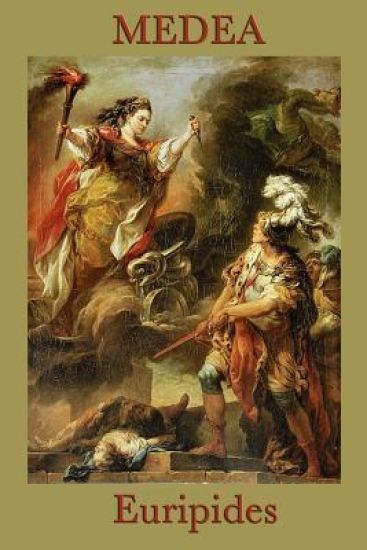
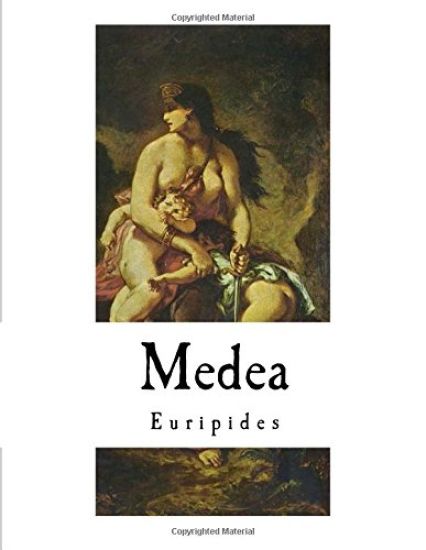
One of the most powerful and enduring of Greek tragedies, Medea centers on the myth of Jason, leader of the Argonauts, who has won the dragon-guarded treasure of the Golden Fleece with the help of the sorceress Medea. Having married Medea and fathered her two children, Jason abandons her for a more favorable match, never suspecting the terrible revenge she will take. Euripides' masterly portrayal of the motives fiercely driving Medea's pursuit of vengeance for her husband's insult and betrayal has held theater audiences spellbound for more than twenty centuries. Rex Warner's authoritative translation brings this great classic of world literature vividly to life. We are delighted to publish this classic book as part of our extensive Classic Library collection. Many of the books in our collection have been out of print for decades, and therefore have not been accessible to the general public. The aim of our publishing program is to facilitate rapid access to this vast reservoir of literature, and our view is that this is a significant literary work, which deserves to be brought back into print after many decades. The contents of the vast majority of titles in the Classic Library have been scanned from the original works. To ensure a high quality product, each title has been meticulously hand curated by our staff. Our philosophy has been guided by a desire to provide the reader with a book that is as close as possible to ownership of the original work. We hope that you will enjoy this wonderful classic work, and that for you it becomes an enriching experience.
The play begins with the introduction of Electra, the daughter of Clytemnestra and the late Agamemnon. Several years after Agamemnon's death suitors began requesting Electra's hand in marriage. Out of fear that Electra's child might seek revenge, Clytemnestra and Aegisthus married her off to a peasant of Mycenae. The peasant is kind to her and has respected her family name and her virginity. In return for his kindness, Electra helps her husband with the household chores. Despite her appreciation for her husband's kindness, Electra resents being cast out of her house and laments to the Chorus about her struggles with her drastic change in social status. Upon Agamemnon's murder Clytemnestra and Aegisthus put Orestes, the other child of Clytemnestra and Agamemnon, under the care of the king of Phocis, where he became friends with the king's son, Pylades. Now grown, Orestes and Pylades travel to Electra and her husband's house. Orestes keeps his identity hidden from Electra, claiming to be messengers of Orestes. He uses his anonymity to determine Electra's loyalty to him and Agamemnon before he reveals his plans for revenge. After some time it is clear that Electra is passionate about avenging the death of their father. At this point the aged servant who brought Orestes to Phocis years before enters the play. He recognizes Orestes because of the scar on his brow and the siblings are reunited. They begin to plot how they will murder both Aegisthus and Clytemnestra. The aged servant explains that Aegisthus is currently in his stables, preparing to sacrifice oxen for a feast. Orestes goes to confront Aegisthus while Electra sends the aged servant to tell Clytemnestra that she had a son ten days ago, knowing this will bring Clytemnestra to her house. A messenger arrives and describes Orestes' successful murder of Aegisthus. Orestes and Pylades return bearing Aegisthus' body. As Clytemnestra approaches, Orestes begins to waver on his decision to murder their mother. Electra convinces Orestes that he must fulfill his duty to Agamemnon and murder their mother. When Clytemnestra arrives, Orestes and Electra lure her into the house, where they thrust a sword into her throat. The two leave the house, filled with grief and guilt. As they lament, Clytemnestra's deified brothers, Castor and Pollux, appear. They tell Electra and Orestes that their mother received just punishment but their matricide was still a shameful act, and they instruct the siblings on what they must do to atone and purge their souls.