

Kirjahaku
Etsi kirjoja tekijän nimen, kirjan nimen tai ISBN:n perusteella.
1000 tulosta hakusanalla Fernando Silva
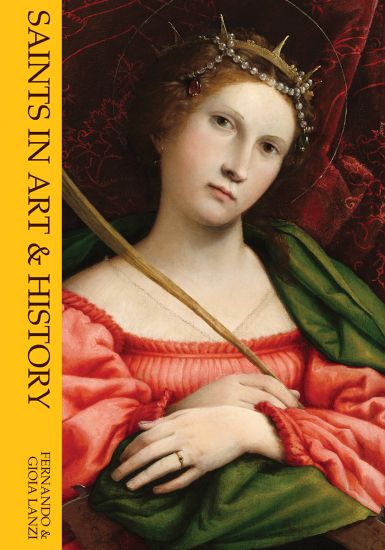
A book of saints at once beautiful and profound. Saints in Art and History presents the lives of some 150 saints in chronological order, from the family of Jesus and the early Christian martyrs, to the founders of the great religious orders, to modern holy figures like Mother Teresa. This arrangement reveals the tremendous impact that the saints have had on the history of the Catholic faith, and on world history. The lives of the saints are illustrated not only with works of great art - by Memling, Raphael, and Bernini, among many others - but also by popular images, such as folk carvings and votive postcards. A thoughtful introduction explores the nature of sainthood, the role of saints in Catholicism, and the significance of their images. Other special features include a visual dictionary of the saints' attributes, and a map showing the patron saints of the nations of the world. This attractive volume is at once a valuable resource for art historians and other scholars, and a splendid gift for Easter or any occasion.
Top-Down Design of High-Performance Sigma-Delta Modulators
Fernando Medeiro; Belén Pérez Verdú; Angel Rodríguez-Vázquez
Springer
1998
sidottu
The interest for :I:~ modulation-based NO converters has significantly increased in the last years. The reason for that is twofold. On the one hand, unlike other converters that need accurate building blocks to obtain high res olution, :I:~ converters show low sensitivity to the imperfections of their building blocks. This is achieved through extensive use of digital signal pro cessing - a desirable feature regarding the implementation of NO interfaces in mainstream CMOS technologies which are better suited for implementing fast, dense, digital circuits than accurate analog circuits. On the other hand, the number of applications with industrial interest has also grown. In fact, starting from the earliest in the audio band, today we can find :I:~ converters in a large variety of NO interfaces, ranging from instrumentation to commu nications. These advances have been supported by a number of research works that have lead to a considerably large amount of published papers and books cov ering different sub-topics: from purely theoretical aspects to architecture and circuit optimization. However, so much material is often difficultly digested by those unexperienced designers who have been committed to developing a :I:~ converter, mainly because there is a lack of methodology. In our view, a clear methodology is necessary in :I:~ modulator design because all related tasks are rather hard.
Reading from This Place, Volume 1
Fernando F. Segovia; Mary Ann Tolbert
Augsburg Fortress
1995
pokkari
Are some readings of the Bible more objective than others? More privileged? More true? How does one's own life situation shape one's reading of the text? What will acknowledgment of the validity of a variety of perspectives mean for historical-critical methods of interpretation? The present dizzying pluralism of locations - not only of ethnicity, class, and gender, but also of social and religious standpoints - presents a daunting challenge to older, mainstream interpretive schemes. In this landmark project, Segovia, Tolbert, and their fifteen other contributors have begun to measure the impact of social location on the theory and practice of biblical interpretation. This volume, and the international one to follow, signals the critical legitimation of reading strategies that supplement or modify or even in some ways dethrone the historical-critical paradigm that has dominated academic biblical studies for 200 years. It will provide immediate and enduring guidance to scholars and students sorting through the complex epistemological, social, historical, and religious questions that issue from this paradigm shift.
Reading from This Place, Volume 2
Fernando F. Segovia; Mary Ann Tolbert
Augsburg Fortress
1995
pokkari
Are some readings of the Bible more objective than others? More privileged? More true? How does one's own life situation shape one's reading of the text? What will acknowledgment of the validity of a variety of perspectives mean for historical-critical methods of interpretation? The present dizzying pluralism of locations - not only of ethnicity, class, and gender, but also of social and religious standpoints - presents a daunting challenge to older, mainstream interpretive schemes. In this landmark project, Segovia, Tolbert, and their fifteen other contributors have begun to measure the impact of social location on the theory and practice of biblical interpretation. This volume, and the international one to follow, signals the critical legitimation of reading strategies that supplement or modify or even in some ways dethrone the historical-critical paradigm that has dominated academic biblical studies for 200 years. It will provide immediate and enduring guidance to scholars and students sorting through the complex epistemological, social, historical, and religious questions that issue from this paradigm shift.
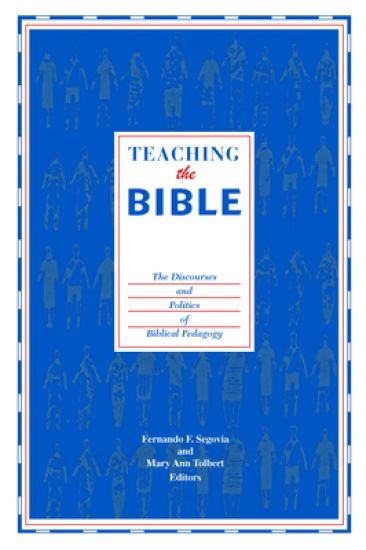
Teaching the Bible Coming to terms with the interpretive revolution- "Although the field of biblical studies is bursting with new methods and fresh interpretations, there has been surprisingly little discussion of what these changes mean for the actual task of teaching the Bible. Happily, this volume takes significant first steps in addressing the shifts in classroom pedagogy that the new day in biblical studies urgently demands." Norman K. Gottwald Author of The Hebrew Bible: A Brief Socio-Literary Introduction "An absolutely indispensable compendium of resources for charting the changes in the discipline of biblical studies, for exposing the operations of power in past and present interpretations and uses of the Bible, and for discovering a variety of postmodernist and postcolonial pedagogies in the reading and teaching of the Bible in a radically pluralistic age." Abraham Smith Perkins School of Theology, S.M.U. "A superb collection of essays on a topic centrally important to theological education and biblical studies. It is an invaluable contribution to the new emancipatory paradigm emerging in biblical studies. Highly accessible, a must reading for anyone in the field." Elisabeth Schussler Fiorenza, Krister Stendahl Professor of Divinity Harvard University Divinity School "Teaching the Bible engages the problem and opportunity of theological education in the twenty-first century head on. In a tightly crafted series of provocative essays, the work clearly defines the postmodern, postcolonial, culturally enriched challenges facing the academy today. For any student or scholar who wants to engage the postmodern challenge as an innovative opportunity rather than a debilitating crisis, Teaching the Bible is required reading." Brian K. Blount President, Union Theological Seminary-PSCE Fernando F. Segovia is Oberlin Graduate Professor of New Testament and Early Christianity at the Vanderbilt University Divinity School. He is author, with Ada Maria Isasi-Diaz, of Hispanic Latino Theology: Challenge and Promise (Fortress Press, 1996). Mary Ann Tolbert is George H. Atkinson Professor of Biblical Studies at the Pacific School of Religion in Berkeley, California. She is author of Sowing the Gospel: Mark's World in Literary-Historical Perspective (Fortress Press, 1996). Biblical Studies / Hermeneutics Fortress Press FortressPress.com
A Stanford University Press classic.
A Stanford University Press classic.

This book offers new topics and new perspectives on the economic history of Argentina before the 1930 Depression. It focuses on the evolution of early industrialization in a country primarily associated with cattle-ranching and agriculture, and single-mindedly characterized as a case of a successful export economy. Taking an original approach, the book cross-examines traditional economic issues such as production and finances, and new cultural patterns, such as consumption, the role of women, paternalism, and ideology. The first years of Argentina's industrialization, from the 1870s to the 1920s, coincided with a time of great innovation, a brisk turn from tradition, and quick modernization. This book shows that industry not only helped Argentina's economy along, but spearheaded its modernization. It challenges the long-lasting "canonical version" that industry was a victim of a capital market and a state extremely hostile to manufacturing. Access to financing for industrial endeavors was much easier than previously thought, while the state supported industry through tariffs.

This text features a study of the history of ""globality"", the emergence of a complex organization of politics, economics, and culture at a planetary level. Using historical research and science studies, it tells the story of the role of technoscientific discourses in the emergence of globality.
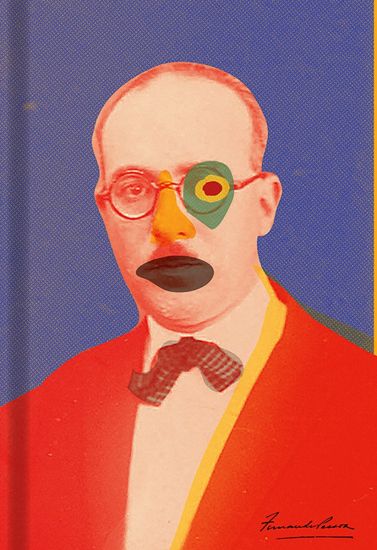
The Book of Disquiet: The Complete Edition
Fernando Pessoa
NEW DIRECTIONS PUBLISHING CORPORATION
2017
sidottu
The Book of Disquiet is the Portuguese modernist master Fernando Pessoa's greatest literary achievement. An "autobiography" or "diary" containing exquisite melancholy observations, aphorisms, and ruminations, this classic work grapples with all the eternal questions. Now, for the first time the texts are presented chronologically, in a complete English edition by master translator Margaret Jull Costa. Most of the texts in The Book of Disquiet are written under the semi-heteronym Bernardo Soares, an assistant bookkeeper. This existential masterpiece was first published in Portuguese in 1982, forty-seven years after Pessoa's death. A monumental literary event, this exciting, new, complete edition spans Fernando Pessoa's entire writing life.
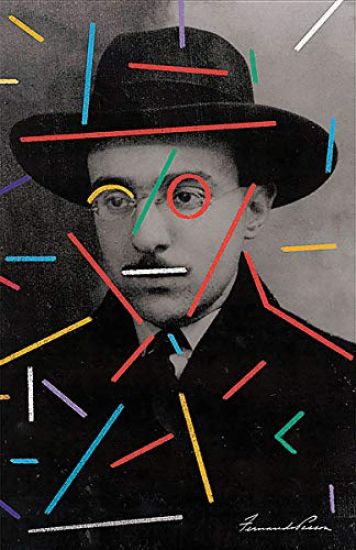
The Complete Works of Alberto Caeiro
Fernando Pessoa
New Directions Publishing Corporation
2020
nidottu
Here, in Margaret Jull Costa and Patricio Ferrari’s splendid new translations, are the complete poems of Alberto Caeiro, the imaginary “heteronym” coterie created by Fernando Pessoa, the Portuguese modernist master. Pessoa conceived Caeiro around 1914 and may have named him loosely after his friend, the poet Mário de Sa-Cárrneiro. What followed was a collection of some of Fernando Pessoa’s greatest poems, grouped under the titles The Keeper of Sheep, The Shepherd in Love, and Uncollected Poems. This imaginary author was a shepherd who spent most of his life in the countryside, had almost no education, and was ignorant of most literature; yet he (Pessoa) wrote some of the most beautiful and profound poems in Portuguese literature. This edition of The Complete Works of Alberto Caeiro is based on the magnificent Portuguese Tinta-da-China edition, published in Lisbon in 2016, and contains an illuminating introduction by the Portuguese editors Jerónimo Pizarro and Patricio Ferrari, some facsimiles of the original Portuguese texts, and prose excerpts about Caeiro and his work written by Fernando Pessoa well as his other heteronyms Álvaro de Campos and Ricardo Reis, and other fictitious authors such as Antonio Mora and I. I. Crosse.
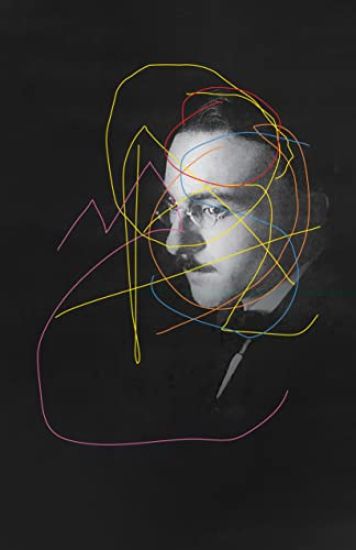
The Complete Works of Álvaro de Campos
Fernando Pessoa
NEW DIRECTIONS PUBLISHING CORPORATION
2023
nidottu
Álvaro de Campos is one of the most influential heteronyms created by Portugal’s great modernist writer Fernando Pessoa. According to Pessoa, Campos was born in Tavira (Algarve) in 1890 and studied mechanical engineering in Glasgow, although he never managed to complete his degree. In his own day, Campos was celebrated—and slandered—for his vociferous poetry imbued with a Whitman-inspired free verse, his praise of the rise of technology and his polemical views that appeared in manifestos, interviews and essays. Here in Margaret Jull Costa and Patricio Ferrari’s translations are the complete poems of Campos. This edition is based on the Portuguese Tinta-da-china edition and includes an illuminating introduction about Campos by the Portuguese editors Jerónimo Pizarro and Antonio Cardiello, facsimiles of original manuscripts and a generous selection of Campos’s prose texts.

The Complete Works of Ricardo Reis
Fernando Pessoa
NEW DIRECTIONS PUBLISHING CORPORATION
2026
nidottu
Here is the fourth in a series of volumes by Fernando Pessoa's celebrated "heteronyms," a coterie of writers that Pessoa created and conceived as distinct personalities, each with a unique literary style. Ricardo Reis was imagined as a melancholic doctor "with a darkish complexion," a self-taught Hellenist who exiled himself in Brazil because he was a monarchist. In a 1914 letter to Pessoa, the writer M rio S -Carneiro described Reis's odes as "admirable," "a marvel of impersonality," praising the way he "achieved a Horatian, classical novelty.'" Based on the definitive Tinta-da-China edition, published in Lisbon in 2016, this bilingual collection includes an illuminating introduction by Pessoa scholar Jer nimo Pizarro, facsimiles of original manuscripts, and prose excerpts written by Ricardo Reis on art, on life, and on the writings of Pessoa's other heteronyms. Magnificently translated by Margaret Jull Costa and Patricio Ferrari, The Complete Works of Ricardo Reis is a must-have collection by one of Pessoa's most refined heteronyms.

LONGLISTED FOR THE 2024 NATIONAL BOOK AWARD FOR TRANSLATED LITERATURE Winner of the R mulo Gallego Prize, The Abyss is a caustic masterwork of incredible power and force, an unforgettable autobiographical work of queer fiction. The novel tells about the demise of a crumbling house in Medell n, Colombia. Fernando, a writer, visits his brother Dar o, who is dying of AIDS. Recounting their wild philandering and trying to come to terms with his beloved brother's inevitable death, Fernando rants against the political forces that cause so much suffering. Vallejo is the heir to C line, Thomas Paine, and Machado de Assis. He hurls vitriolic, savagely funny insults at his country ("I wipe my ass with the new Constitution of Colombia") and at his mother ("the Crazy Bitch") who has given birth to him and his many siblings. Within this firestorm of pain, Fernando manages to get across much beauty and truth: that all love is painful and washed in pure sorrow. He loves his sick brother and the family's Santa Anita farm (the lost paradise of his childhood where azaleas bloomed); and he even loves his country, now torn to shreds. Always, in this savage masterpiece about loss--as if in the eye of Vallejo's hurricane of talent--we are in the curiously comforting workings of memory and of the writing process itself, as, recollecting time, it offers immortality.
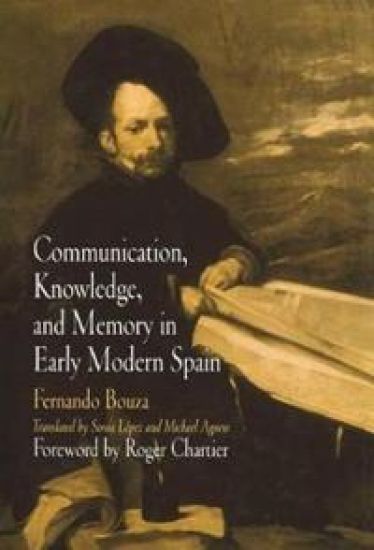
Communication, Knowledge, and Memory in Early Modern Spain
Fernando Bouza
University of Pennsylvania Press
2004
sidottu
In a provocative attempt to outline a history of communication during the Spanish Golden Age, Communication, Knowledge, and Memory in Early Modern Spain examines how speech, visual images, and written texts all interact as manifestations of the human desire to know and remember. Seeking to address the reductive opposition both between written and oral texts and between script and print in the Early Modern period, Fernando Bouza, one of Spain's most influential cultural historians, makes an elegant case for the equality and complementary natures of the various modes of communication. While the advent of printing is commonly thought to have resulted in the demise of the manuscript, Bouza upholds that the progress of textual culture in all its forms did not undermine the importance of other mediums of knowledge. The history of the book and of reading is often considered separately from the history of the uses of writing and speech, but according to Bouza, the boundaries between the spheres are artificial constructions that fail to honor the realities of the transfer of knowledge and information. While recognizing that reading and writing belong to two distinct models of acculturation, Bouza refuses to accept the myth that has identified rationality and modernity with written culture only, while the languages of images and the practices of orality are relegated to the past. Considering the uses of text, image, and speech in social settings ranging from the most humble to the most aristocratic, he argues that orality is as strongly present in the world of the court as in popular milieux, that the image was put to uses both naive and learned, and that writing-far from a privilege of the powerful-touched the lives of even the illiterate. This original and brilliant book is bound to transform current understandings of the intellectual practices of the Golden Age.

Born in Granada, Spain, in 1980, Fernando Valverde is widely considered one of the top young poets writing in Spanish today. Valverde is a leading figure in a movement of contemporary poets known as the Poetry of Uncertainty, and he has received some of the most significant awards for poetry in Spanish. This bilingual edition of his book The Insistence of Harm introduces English-language readers to some of his latest, most exciting work.The Insistence of Harm is a series of poignant lyric poems that takes readers from India to the Balkans to Spain and to Latin America, exploring the nature of "harm" in its various guises—war, disease, heartbreak, suicide. The poems grapple with both the reality of loss and the distance that language imposes on it. The English translations by Allen Josephs and Laura Juliet Wood effectively capture both tone and content while attending to subtle nuances of the original Spanish, bringing a new and important voice to students of Spanish and poetry readers alike.

Why should sovereign states obey international law? In this groundbreaking study Fernando Tesón argues that an overlapping respect for human rights has created a moral common ground among the countries of the world. It is this common set of values rather than self-interest that ultimately provides legitimacy to international law. Using the tools of moral philosophy Tesón analyzes the concepts of sovereignty, intervention, and national interest; the contributions of social contact theory, game theory, and feminist theory; and the puzzles of self-determination and group rights.

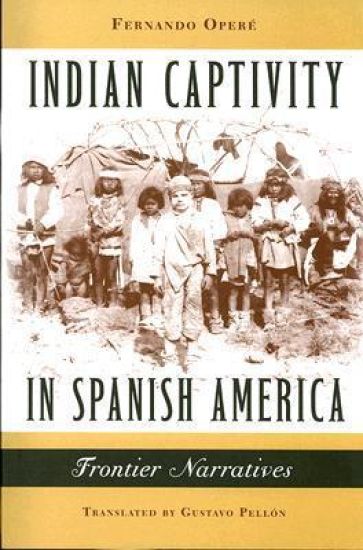
Even before the arrival of Europeans to the Americas, the practice of taking captives was widespread among Native Americans. Indians took captives for many reasons: to replace by adoption tribal members who had been lost in battle, to use as barter for needed material goods, to use as slaves, or to use for reproductive purposes. From the legendary story of John Smith's captivity in the Virginia Colony to the wildly successful narratives of New England colonists taken captive by local Indians, the genre of the captivity narrative is well known among historians and students of early American literature. Not so for Hispanic America. Fernando Opere redresses this oversight, offering the first comprehensive historical and literary account of Indian captivity in Spanish-controlled territory from the sixteenth to the twentieth century. Originally published in Spanish in 2001 as ""Historias de la frontera: El cautiverio en la America hispanica"", this newly translated work reveals key insights into Native American culture in the New World's most remote regions. From the ""happy captivity"" of the Spanish military captain Francisco Nuez de Pineda y Bascunn, who in 1628 spent six congenial months with the Araucanian Indians on the Chilean frontier, to the harrowing nineteenth-century adventures of foreigners taken captive in the Argentine Pampas and Patagonia; from the declaraciones of the many captives rescued in the Rio de la Plata region of Argentina in the seventeenth and eighteenth centuries, to the riveting story of Helena Valero, who spent twenty-four years among the Yanomam - in Venezuela during the mid-twentieth century, Opere's vibrant history spans the entire gamut of Spain's far-flung frontiers. Eventually focusing on the role of captivity in Latin American literature, Opere convincingly shows how the captivity genre evolved over time, first to promote territorial expansion and deny intercultural connections during the colonial era, and later to romanticize the frontier in the service of nationalism after independence. This important book is thus multidisciplinary in its concept, providing ethnographic, historical, and literary insights into the lives and customs of Native Americans and their captives in the New World.
Even before the arrival of Europeans to the Americas, the practice of taking captives was widespread among Native Americans. Indians took captives for many reasons: to replace by adoption tribal members who had been lost in battle, to use as barter for needed material goods, to use as slaves, or to use for reproductive purposes. From the legendary story of John Smith's captivity in the Virginia Colony to the wildly successful narratives of New England colonists taken captive by local Indians, the genre of the captivity narrative is well known among historians and students of early American literature. Not so for Hispanic America. Fernando Opere redresses this oversight, offering the first comprehensive historical and literary account of Indian captivity in Spanish-controlled territory from the sixteenth to the twentieth century. Originally published in Spanish in 2001 as ""Historias de la frontera: El cautiverio en la America hispanica"", this newly translated work reveals key insights into Native American culture in the New World's most remote regions. From the ""happy captivity"" of the Spanish military captain Francisco Nuez de Pineda y Bascunn, who in 1628 spent six congenial months with the Araucanian Indians on the Chilean frontier, to the harrowing nineteenth-century adventures of foreigners taken captive in the Argentine Pampas and Patagonia; from the declaraciones of the many captives rescued in the Rio de la Plata region of Argentina in the seventeenth and eighteenth centuries, to the riveting story of Helena Valero, who spent twenty-four years among the Yanomam - in Venezuela during the mid-twentieth century, Opere's vibrant history spans the entire gamut of Spain's far-flung frontiers. Eventually focusing on the role of captivity in Latin American literature, Opere convincingly shows how the captivity genre evolved over time, first to promote territorial expansion and deny intercultural connections during the colonial era, and later to romanticize the frontier in the service of nationalism after independence. This important book is thus multidisciplinary in its concept, providing ethnographic, historical, and literary insights into the lives and customs of Native Americans and their captives in the New World.