Kirjojen hintavertailu. Mukana 11 244 527 kirjaa ja 12 kauppaa.

Kirjahaku

Etsi kirjoja tekijän nimen, kirjan nimen tai ISBN:n perusteella.

1000 tulosta hakusanalla Forest

Forest Management and Water Resources in the Anthropocene
Decades of research has provided a depth of understanding on the relationships among forests and water, and how these relationships change in response to climate variability, disturbance, and forest management. This understanding has facilitated a strong predictive capacity and the development of best management practices to protect water resources with active management. Despite this understanding, the rapid pace of changes in climate, disturbance regimes, invasive species, human population growth, and land use expected in the 21st century is likely to create substantial challenges for watershed management that may require new approaches, models, and best management practices. These challenges are likely to be complex and large scale, involving a combination of direct effects and indirect biophysical watershed responses, as well as socioeconomic impacts and feedbacks. We explore the complex relationships between forests and water in a rapidly changing environment, examine the trade-offs and conflicts between water and other resources, and examine new management approaches for sustaining water resources in the future.

Forest Pathology and Plant Health
Every year, a number of new forest pathosystems are discovered as the result of introduction of alien pathogens, host shifts and jumps, hybridization and recombination among pathogens, etc. Disease outbreaks may also be favored by climate change and forest management. The mechanisms driving the resurgence of native pathogens and the invasion of alien ones need to be better understood in order to draft sustainable control strategies. For this Special Issue, we welcome population biology studies providing insights on the epidemiology and invasiveness of emergent forest pathogens possibly by contrasting different scenarios varying in pathogen and host populations size, genetics, phenotype and phenology, landscape fragmentation, occurrence of disturbances, management practices, etc. Both experimental and monitoring approaches are welcome. In summary, this special issue focuses on how variability in hosts, pathogens, or ecology may affect the emergence of new threats to plant species.
Forest Soil Respiration under Climate Changing
The respiration of forest soils and the major factors controlling its rate are fairly well understood. The process is of utmost significance because its balance with the fixation of CO2 in the biomass defines whether a particular site is a source or sink of atmospheric CO2. Currently, the measurement of soil respiration in the field requires rather expensive experimental installations. Nevertheless, there are still some caveats in our understanding, such as the separation of autotrophic and heterotrophic soil respiration, the relevance of different groups of soil organisms, the effect of ecosystem disturbances in different types of forests on soil respiration with respect to magnitude and duration, the adaptation of soil respiration to changing site conditions, and the regional prediction of soil respiration, based on proxy data. Technical progress and additional contributions on process understanding will put us in the position of better predictions of the forest soil respiration. We encourage studies from all fields, including experimental studies, monitoring approaches and models, to contribute to this Special Issue in order to promote knowledge and adaptation strategies for the preservation, management, and future development of forest ecosystems.
Forest Operations, Engineering and Management
The book gathers 28 quality papers containing new and important knowledge on forest operations, engineering and management. Active forest management is indeed applied through forest engineering, and careful forest tending is conditional to the implementation of sound operational methods, which may guarantee cost-effective management while protecting environmental functionality and worker health. Efficiently managed forest operations offer the highest benefit and the lowest cost, in all fields: financial, social and environmental. While maintaining a cross-disciplinary character, forest engineering represents a special sector of interest within the field of forestry and aims at increasing the overall efficiency of forest operations. Forest engineering often deals with practical issues that have a strong economic impact, and for this reason the industry has always had a strong interest in forest engineering, which explains the close connection between scientists and economic operators. The central role of forest engineering in modern forestry is demonstrated by the many sessions gathered under this general label at the IUFRO 125th Anniversary Congress, which offered a great opportunity for catching up with the latest results of sector research. Over the years, much progress has been done in the field of forest engineering, which has been supported by the dramatic technology advances of the most recent times. The 28 papers contained in this book come from many different countries and cover a large variety of subjects, from pure productivity, to resource availability, operation planning, environmental impacts and operator safety and health. Energy biomass is also represented, as a witness to the growing role of forestry in the quest for renewable energy sources.
Forest Hydrology and Watershed
Hydrological processes in forested watersheds are influenced by environmental, physiological, and biometric factors such as precipitation, radiation, temperature, species type, leaf area, and extent and structure of forest ecosystems. Over the past two centuries, forest coverage and forest structures have been impacted globally by anthropogenic activities, for example, forest harvesting, and conversion of forested landscapes for plantations and urbanization. In addition, since the industrial revolution, climate change has resulted in profound impacts on forest ecosystems due to higher carbon dioxide (CO2) concentration or CO2 fertilization, warmer temperatures, changes in frequency and intensity of extreme weather events and natural disturbances. As a result, hydrological processes in forested watersheds have been altered by these natural and anthropogenic factors and these changes are expected to accelerate due to future changing climatic conditions. Hence, understanding how various environmental, physiological, and physical drivers interactively influence hydrological and biogeochemical processes in forest ecosystems is critical for sustainable water supply in forested watersheds. About 21% of the global population depends on water sources that originate in forested catchments where forest coverage larger than 30%. Furthermore, there are knowledge gaps in our understanding of the mechanism of hydrological and hydrochemical cycles in forested watersheds. This Special Issue addresses these gaps in our knowledge and includes twelve papers in the following three major research themes in forest watershed areas.
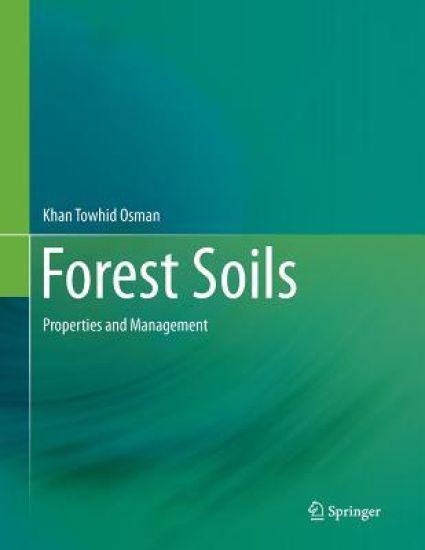
Forest Soils

Forest Soils

Khan Towhid Osman

Springer International Publishing AG
2013
sidottu
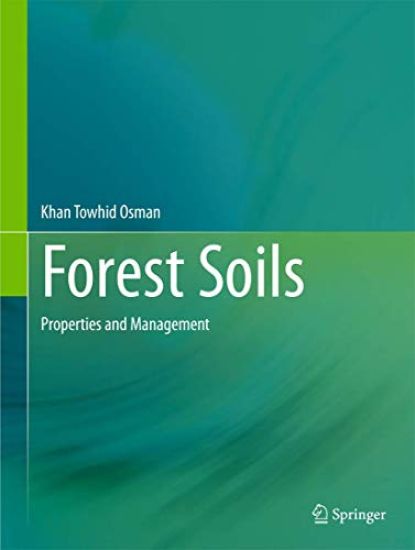
Forest soil characteristics are not only unique but their interpretation also differs from cropland soils. Just as there are diverse forest types, there are many soil variants that need different management. Today, forest plantations are being intensively managed for profitable timber, pulpwood and energy production. Site selection, species selection, site productivity evaluation, silvicultural treatments, and soil amendments need crucial soil information. This book provides a comprehensive overview of the physical, chemical and biological properties of forest soils and their implications on forest vegetation. Topics discussed include: major forest types of the world and their associated soils; forest biomass and nutrient dynamics; organic matter turnover and nutrient recycling; forest soil disturbance; forest soil and climate change; and forest soil management and silvicultural treatments.
Forest conservation in protected areas of Bangladesh

Forest conservation in protected areas of Bangladesh

Springer International Publishing AG
2014
sidottu
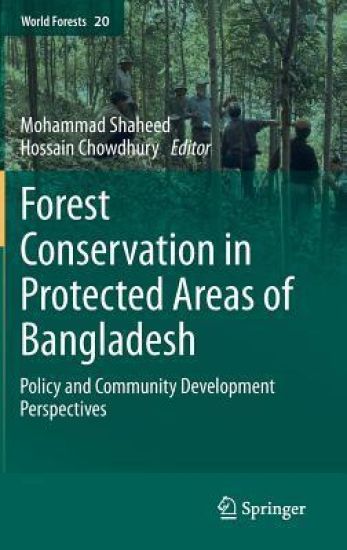
This book dealt with a number of issues under the broad subject matter of protected area focusing on the policy of collaborative management as a means to augment the forest conservation activities and enhance community development in Bangladesh. Studies covered in the book emerged with the success stories of protected area co-management, both in terms of community development and biodiversity conservation. Significant level of development was noticed in the socio-economic conditions of the surrounding communities. Empowerment and improved social dignity of women participants signifies the initiation of co-management approach. The principles of participatory governance were found reasonably well reflected in legal and policy frameworks. Based on the lessons from the studies, a general metaphysical model, namely ‘Spider-web model of protected area co-management’ has been developed that can be potentially applicable in countries where local communities rely heavily on protected areas.
Forest Context and Policies in Portugal

Forest Context and Policies in Portugal

Springer International Publishing AG
2014
sidottu
This book provides an up-to-date analysis of the Portuguese forests and forestry sector, including its history, its total economic value, current threats and opportunities and future challenges, namely the need to incorporate more planning and technology in forest management practices. The methodological approach of analysing the forestry sector in terms of its total economic value, and the use of this new perspective to correctly perceive the forest sector and to base development strategies is unique. Also, the use of new methods and technologies in the Portuguese forestry sector will be an opportunity to share these experiences with a wider international audience. For example, fire incidence during the summer has almost no parallel in the Western World, implying that Portuguese forest landscapes function as a “natural lab of wildfires” from which much can be learned globally. Thus, the outcomes of the fire management policies adopted might represent important lessons for Mediterranean basin countries.
Forest Context and Policies in Portugal

Forest Context and Policies in Portugal

Springer International Publishing AG
2016
nidottu
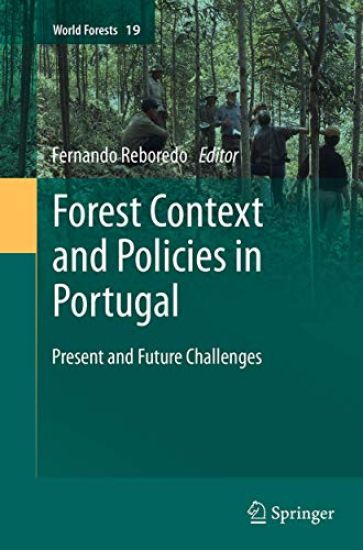
This book provides an up-to-date analysis of the Portuguese forests and forestry sector, including its history, its total economic value, current threats and opportunities and future challenges, namely the need to incorporate more planning and technology in forest management practices. The methodological approach of analysing the forestry sector in terms of its total economic value, and the use of this new perspective to correctly perceive the forest sector and to base development strategies is unique. Also, the use of new methods and technologies in the Portuguese forestry sector will be an opportunity to share these experiences with a wider international audience. For example, fire incidence during the summer has almost no parallel in the Western World, implying that Portuguese forest landscapes function as a “natural lab of wildfires” from which much can be learned globally. Thus, the outcomes of the fire management policies adopted might represent important lessons for Mediterranean basin countries.
Forest Soils

Forest Soils

Khan Towhid Osman

Springer International Publishing AG
2016
nidottu
Forest soil characteristics are not only unique but their interpretation also differs from cropland soils. Just as there are diverse forest types, there are many soil variants that need different management. Today, forest plantations are being intensively managed for profitable timber, pulpwood and energy production. Site selection, species selection, site productivity evaluation, silvicultural treatments, and soil amendments need crucial soil information. This book provides a comprehensive overview of the physical, chemical and biological properties of forest soils and their implications on forest vegetation. Topics discussed include: major forest types of the world and their associated soils; forest biomass and nutrient dynamics; organic matter turnover and nutrient recycling; forest soil disturbance; forest soil and climate change; and forest soil management and silvicultural treatments.
Forest conservation in protected areas of Bangladesh

Forest conservation in protected areas of Bangladesh

Springer International Publishing AG
2016
nidottu
This book dealt with a number of issues under the broad subject matter of protected area focusing on the policy of collaborative management as a means to augment the forest conservation activities and enhance community development in Bangladesh. Studies covered in the book emerged with the success stories of protected area co-management, both in terms of community development and biodiversity conservation. Significant level of development was noticed in the socio-economic conditions of the surrounding communities. Empowerment and improved social dignity of women participants signifies the initiation of co-management approach. The principles of participatory governance were found reasonably well reflected in legal and policy frameworks. Based on the lessons from the studies, a general metaphysical model, namely ‘Spider-web model of protected area co-management’ has been developed that can be potentially applicable in countries where local communities rely heavily on protected areas.
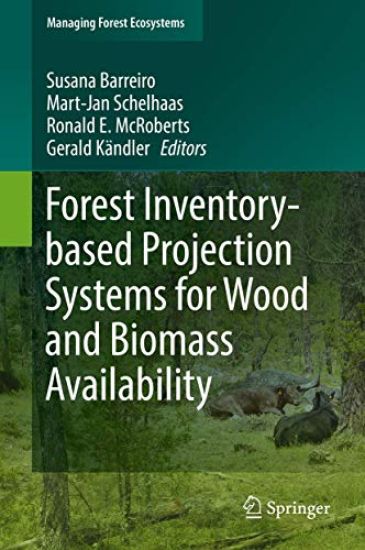
Forest Inventory-based Projection Systems for Wood and Biomass Availability
This book provides detailed descriptions of the forest biomass projection systems used in 22 countries in Europe and North America, as well as four European-wide systems. Separate chapters focus on the concepts of estimation of availability of woody biomass, compare and classify the different projection systems, and discuss the challenges and opportunities for the further development of these systems.
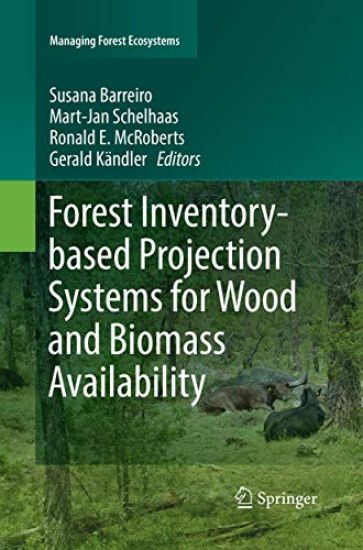
Forest Inventory-based Projection Systems for Wood and Biomass Availability
This book provides detailed descriptions of the forest biomass projection systems used in 22 countries in Europe and North America, as well as four European-wide systems. Separate chapters focus on the concepts of estimation of availability of woody biomass, compare and classify the different projection systems, and discuss the challenges and opportunities for the further development of these systems.