Kirjojen hintavertailu. Mukana 12 083 983 kirjaa ja 12 kauppaa.

Kirjahaku

Etsi kirjoja tekijän nimen, kirjan nimen tai ISBN:n perusteella.

1000 tulosta hakusanalla Francine Pascal

Diplomata et Chartae Merovingicae Aetatis in Archivo Franciae Asservata
This collection of 48 Latin documents dating from the sixth to the ninth centuries was published anonymously in Paris in 1848, when its focus on St Denis, the burial place of the French kings, would have been highly politically sensitive. Many of the charters relate to land, revenues or rights given by Merovingian and Carolingian kings to religious institutions near Paris closely connected to their dynasty. Subjects include Childebert I's foundation of the abbey of St Vincent in 558, donating fields, meadows, forests, fisheries and mills on the River Seine, and grants to St Denis from benefactors including Chlotharus II in 527, Dagobert I in 637, Childebert III in 710 (the taxes on a market) and Chilperichus II in 716–7 (100 cows and a forest). Writings by Pope Nicholas I and a Byzantine emperor also appear. The book provides valuable information about land and power in early medieval France.

Nisoise KuchynE Inspirovaná Trhem Z NejsluneCnEjsího MEsta Francie
Vydejte se na gastronomickou cestu pulzuj c mi trhy a ulicemi Nice zalit mi sluncem s "Nisoise: kuchyně inspirovan trhem z nejslunečnějs ho města francie". Tato kuchařka v s zve k prozkoum n bohat tapis rie chut , kter definuj kulin řskou sc nu Nice - města, kde se spojuj čerstv produkty, středomořsk vlivy a chuť do zivota, aby vytvořily kulin řsk točistě. Se 100 pečlivě vybran mi recepty se k n m přidejte, kdyz oslav me sluncem zalit kouzlo a gastronomick pozitky, d ky nimz je kuchyně Ni oise skutečn m ztělesněn m ducha Francouzsk rivi ry.Představte si rusn trhy pln barevn ch produktů, vůně bylinek a kořen m s c se ve vzduchu a azurov vody Středozemn ho moře slouz c jako kulisa ziv ch venkovn ch kav ren. "Nisoise" nen jen kuchařka; je to da na trhy, moře a provens lsk kouzlo, kter definuje kulin řskou krajinu Nice. Ať uz touz te po eleganci bouillabaisse, jednoduchosti sal tu ni oise nebo sladkosti tarte aux citrons, tyto recepty jsou vytvořeny tak, aby v s přenesly do srdce Francouzsk rivi ry.Od lahůdek z mořsk ch plodů po aromatick bylinky a od čerstv zeleniny na trhu po lahodn dezerty, kazd recept je oslavou chut , kter kvetou pod nejslunnějs m nebem Nice. Ať uz jste ostř len s fkuchař, kter touz znovu si připomenout chutě města, nebo dobrodruzn dom c kuchař hledaj c inspiraci, "Nisoise" je vas m průvodcem, jak přin st teplo a zivost Nice na v s stůl.Připojte se k n m a prozkoumejte pulzuj c kulin řskou sc nu Nice, kde kazd j dlo vypr v př běh o trz ch, moři a radostn m uměn vychutn vat si zivot. Takze si nasb rejte olivov olej, obejměte bylinky a vydejte se na gastronomickou cestu po "Nisoise: kuchyně inspirovan trhem z nejslunečnějs ho města francie".
La royauté au Xe siècle en Francie occidentale

La royauté au Xe siècle en Francie occidentale

Valentin Machut

Editions L'Harmattan
2025
pokkari
Le Xe si cle, marqu par une rupture dynastique, voit les Carolingiens c der la place aux Cap tiens, transition cruciale pour l'histoire des Francs en Francie occidentale. Cette p riode, riche en vicissitudes, offre une perspective id ale pour analyser la distribution du pouvoir entre le roi et l'aristocratie l'aube de l'an mille. Le rex Francorum, r duit un r le symbolique, lutte pour pr server son autorit , tandis que le dux Francorum prend progressivement le contr le. En Germanie, la dynastie ottonienne, issue des Ludolphides saxons, devient la force dominante en Occident. Elle tend son influence, contrastant avec les crises internes des derniers Carolingiens. Ce tournant d cisif de l'histoire europ enne t moigne d'une royaut priv e de son clat d'antan, o le pouvoir royal d pend davantage de la strat gie que de la l gitimit dynastique. Ce livre plonge le lecteur dans ce cr puscule du haut Moyen ge, s'appuyant sur des t moignages cl s: Richer de Saint-R mi de Reims, auteur de l'Historia Francorum, et la Correspondance de Gerbert d'Aurillac, futur pape Sylvestre II, apportent des perspectives sur les r alit s sociales et politiques de l' poque.
Finley Likes Fries. Francie Likes Fruit.
Finley the beaver and Francie the ferret both like different things. See how these two unique friends express their creativity and discover the importance of finding balance in life as they learn to share what they each like most. Young readers will also enjoy several bonus activity pages.
Anno Regni Georgii Regis Magnæ Britanniæ, Franciæ, & Hiberniæ, Undecimo At the Parliament Begun and Holden at Westminster, the Ninth day of October, 1722 And From Thence Continued to the Twelfth day of November, 1724
The 18th century was a wealth of knowledge, exploration and rapidly growing technology and expanding record-keeping made possible by advances in the printing press. In its determination to preserve the century of revolution, Gale initiated a revolution of its own: digitization of epic proportions to preserve these invaluable works in the largest archive of its kind. Now for the first time these high-quality digital copies of original 18th century manuscripts are available in print, making them highly accessible to libraries, undergraduate students, and independent scholars.Delve into what it was like to live during the eighteenth century by reading the first-hand accounts of everyday people, including city dwellers and farmers, businessmen and bankers, artisans and merchants, artists and their patrons, politicians and their constituents. Original texts make the American, French, and Industrial revolutions vividly contemporary.++++The below data was compiled from various identification fields in the bibliographic record of this title. This data is provided as an additional tool in helping to insure edition identification: ++++Huntington LibraryN046044Edinburgh: printed by John Baskett, printer to the King's most Excellent Majesty, 1725. 22p.; 8
A Conference Held at St. George's in the County of York, on the Twentieth Day of September, Anno Regni Regis Georgii Secundi, Magnae Britanniae Franciae Et Hiberniae, Vicesimo Septimo
The 18th century was a wealth of knowledge, exploration and rapidly growing technology and expanding record-keeping made possible by advances in the printing press. In its determination to preserve the century of revolution, Gale initiated a revolution of its own: digitization of epic proportions to preserve these invaluable works in the largest archive of its kind. Now for the first time these high-quality digital copies of original 18th century manuscripts are available in print, making them highly accessible to libraries, undergraduate students, and independent scholars.Delve into what it was like to live during the eighteenth century by reading the first-hand accounts of everyday people, including city dwellers and farmers, businessmen and bankers, artisans and merchants, artists and their patrons, politicians and their constituents. Original texts make the American, French, and Industrial revolutions vividly contemporary.++++The below data was compiled from various identification fields in the bibliographic record of this title. This data is provided as an additional tool in helping to insure edition identification: ++++Library of CongressW030475Includes a report of the conference held by the commissioners with the Norridgewock Indians at Richmond, Sept. 28 and 29.Boston in New-England: Printed by Samuel Kneeland, printer to the Honourable House of Representatives, 1753. 26p.; 4
Trustees of Culture

Trustees of Culture

Francie Ostrower

University of Chicago Press
2003
sidottu
Why do wealthy people choose to serve on the boards of fine art institutions? How do they exercise their influence as trustees, and how does this affect the way arts institutions operate? To find out, Francie Ostrower conducted candid personal interviews with 76 trustees drawn from two opera companies and two art museums in two large cities in the United States. Her new study demonstrates that members of the elite arts boards walk a fine line between maintaining their status and serving the needs of the large-scale organizations they oversee. As class members whose status depends in part on the prestige of the boards on which they serve, trustees seek to perpetuate arts boards as exclusive elite enclaves. But in response to pressure to increase and diversify the audiences for arts institutions, elite board members act in a surprisingly open manner in terms of organizational acessibility and operations. Contributing significantly to our understanding of organizational governance, "Trustees of Culture" should interest anyone concerned with philanthropy and the wider social policies that emphasize private support in the arts.
Trustees of Culture

Trustees of Culture

Francie Ostrower

University of Chicago Press
2004
nidottu
Cultural trusteeship is a subject that fascinates those who wonder about the relationship between power and culture. What compels the wealthy to serve on the boards of fine arts institutions? How do they exercise their influence as trustees, and how does this affect the way arts institutions operate? To find out, Francie Ostrower conducted candid personal interviews with 76 trustees drawn from two opera companies and two art museums in the United States.Her new study demonstrates that members of elite arts boards walk a fine line between maintaining their status and serving the needs of the large-scale organizations they oversee. As class members whose status depends in part on the prestige of the boards on which they serve, trustees seek to perpetuate arts boards as exclusive elite enclaves. But in response to pressures to increase and diversify the audiences for arts institutions, elite board members act in a surprisingly open manner in terms of organizational accessibility and operations.Written with clarity and grace, Trustees of Culture will contribute significantly to our understanding of organizational governance; the politics of fundraising; elite arts participation and philanthropy; as well as the consequences of wider social policies that continue to emphasize private financial support. Ostrower's study will prove to be indispensable reading for not just sociologists of culture, but anyone interested in how the arts are financially and institutionally supported.
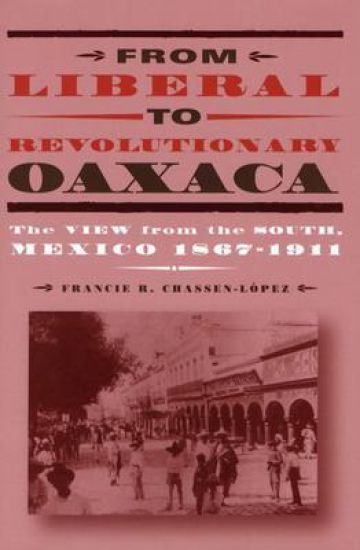
From Liberal to Revolutionary Oaxaca

From Liberal to Revolutionary Oaxaca

Francie R. Chassen-López

Pennsylvania State University Press
2004
sidottu
From Liberal to Revolutionary Oaxaca aims at finally setting Mexican history free of stereotypes about the southern state of Oaxaca, long portrayed as a traditional and backward society resistant to the forces of modernization and marginal to the Revolution. Chassen-López challenges this view of Oaxaca as a negative mirror image of modern Mexico, presenting in its place a much more complex reality. Her analysis of the confrontations between Mexican liberals’ modernizing projects and Oaxacan society, especially indigenous communal villages, reveals not only conflicts but also growing linkages and dependencies. She portrays them as engaging with and transforming each other in an ongoing process of contestation, negotiation, and compromise.
From Liberal to Revolutionary Oaxaca

From Liberal to Revolutionary Oaxaca

Francie R. Chassen-López

Pennsylvania State University Press
2005
pokkari
From Liberal to Revolutionary Oaxaca aims at finally setting Mexican history free of stereotypes about the southern state of Oaxaca, long portrayed as a traditional and backward society resistant to the forces of modernization and marginal to the Revolution. Chassen-López challenges this view of Oaxaca as a negative mirror image of modern Mexico, presenting in its place a much more complex reality. Her analysis of the confrontations between Mexican liberals’ modernizing projects and Oaxacan society, especially indigenous communal villages, reveals not only conflicts but also growing linkages and dependencies. She portrays them as engaging with and transforming each other in an ongoing process of contestation, negotiation, and compromise.