Kirjojen hintavertailu. Mukana 11 244 527 kirjaa ja 12 kauppaa.

Kirjahaku

Etsi kirjoja tekijän nimen, kirjan nimen tai ISBN:n perusteella.

1000 tulosta hakusanalla Frederic Messick

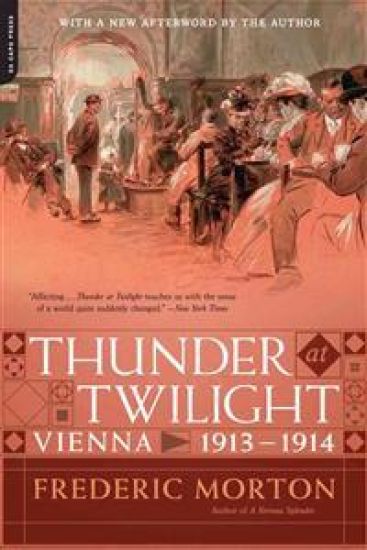
Thunder at Twilight: Vienna 1913/1914

Thunder at Twilight: Vienna 1913/1914

Frederic Morton

Grand Central Publishing
2014
nidottu
Thunder at Twilight is a landmark historical vision, drawing on hitherto untapped sources to illuminate two crucial years in the life of the extraordinary city of Vienna-and in the life of the twentieth century. It was during the carnival of 1913 that a young Stalin arrived in Vienna on a mission that would launch him into the upper echelon of Russian revolutionaries, and it was here that he first collided with Trotsky. It was in Vienna that the failed artist Adolf Hitler kept daubing watercolors and spouting tirades at fellow drifters in a flophouse. Here Archduke Franz Ferdinand had a troubled audience with Emperor Franz Joseph-and soon the bullet that killed the Archduke would set off the Great War that would kill ten million more. With luminous prose that has twice made him a finalist for the National Book Award, Frederic Morton evokes the opulent, elegant, incomparable sunset metropolis-Vienna on the brink of cataclysm.
A Jew Among Romans: The Life and Legacy of Flavius Josephus
From the acclaimed biographer, screenwriter, and novelist Frederic Raphael, here is an audacious history of Josephus (37-c.100), the Jewish general turned Roman historian, whose emblematic betrayal is a touchstone for the Jew alone in the Gentile world. Joseph ben Mattathias's transformation into Titus Flavius Josephus, historian to the Roman emperor Vespasian, is a gripping and dramatic story. His life, in the hands of Frederic Raphael, becomes a point of departure for an appraisal of Diasporan Jews seeking a place in the dominant cultures they inhabit. Raphael brings a scholar's rigor, a historian's perspective, and a novelist's imagination to this project. He goes beyond the fascinating details of Josephus's life and his singular literary achievements to examine how Josephus has been viewed by posterity, finding in him the prototype for the un-Jewish Jew, the assimilated intellectual, and the abiding apostate: the recurrent figures in the long centuries of the Diaspora. Raphael's insightful portraits of Yehuda Halevi, Baruch Spinoza, Karl Kraus, Benjamin Disraeli, Ludwig Wittgenstein, and Hannah Arendt extend and illuminate the Josephean worldview Raphael so eloquently lays out.
Ruth-Esther, Volume 9

Ruth-Esther, Volume 9

Frederic W. Bush

Zondervan
2015
sidottu
The Word Biblical Commentary delivers the best in biblical scholarship, from the leading scholars of our day who share a commitment to Scripture as divine revelation. This series emphasizes a thorough analysis of textual, linguistic, structural, and theological evidence. The result is judicious and balanced insight into the meanings of the text in the framework of biblical theology. These widely acclaimed commentaries serve as exceptional resources for the professional theologian and instructor, the seminary or university student, the working minister, and everyone concerned with building theological understanding from a solid base of biblical scholarship.Overview of Commentary OrganizationIntroduction—covers issues pertaining to the whole book, including context, date, authorship, composition, interpretive issues, purpose, and theology.Each section of the commentary includes:Pericope Bibliography—a helpful resource containing the most important works that pertain to each particular pericope.Translation—the author’s own translation of the biblical text, reflecting the end result of exegesis and attending to Hebrew and Greek idiomatic usage of words, phrases, and tenses, yet in reasonably good English.Notes—the author’s notes to the translation that address any textual variants, grammatical forms, syntactical constructions, basic meanings of words, and problems of translation.Form/Structure/Setting—a discussion of redaction, genre, sources, and tradition as they concern the origin of the pericope, its canonical form, and its relation to the biblical and extra-biblical contexts in order to illuminate the structure and character of the pericope. Rhetorical or compositional features important to understanding the passage are also introduced here.Comment—verse-by-verse interpretation of the text and dialogue with other interpreters, engaging with current opinion and scholarly research.Explanation—brings together all the results of the discussion in previous sections to expose the meaning and intention of the text at several levels: (1) within the context of the book itself; (2) its meaning in the OT or NT; (3) its place in the entire canon; (4) theological relevance to broader OT or NT issues.General Bibliography—occurring at the end of each volume, this extensive bibliographycontains all sources used anywhere in the commentary.
France in the Sixteenth Century

France in the Sixteenth Century

Frederic J. Baumgartner

Palgrave Macmillan
1995
nidottu
Both the golden age of the Renaissance state and the catastrophic era of the Wars of Religion, this fascinating period in French history has been oddly neglected by English-language historians. Professor Baumgartner's book fills a major gap in the textbook market: an accessible, fully current account which covers the principal political, economic and cultural themes from Francois I's successful centralization of the state, through France's near prostration under the Catholic-Huguenot civil war, and ending with the accession of Henri IV.
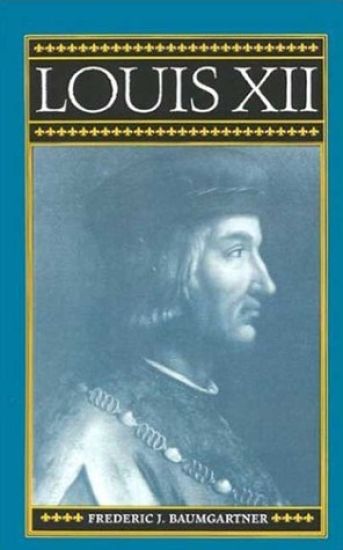
Louis XII

Louis XII

Frederic J. Baumgartner

Palgrave Macmillan
1996
nidottu
The reign of Louis XII (1498-1515) has been much neglected by historians. Falling between the conventional end of the French middle ages and Francis I's notional ushering in of Renaissance France, Louis' rule 'belongs' neither to medievalists nor to historians of the the early modern period. While not in the front rank of French monarchs, Louis XII, 'The Father of the People', remains an interesting and appealing figure, and the events of his reign (the Valois-Habsburg wars in Italy, Louis' bitter disputes with Pope Julius II, the complications of his marriages) had a profound effect on the future of the French state. France's church, legal system, and cultural life (many of the artistic achievements associated with the reign of Francis I in fact occurred under Louis) were all strongly influenced by the king, and this readable and lucid account of his rule offers a wealth of interesting information.
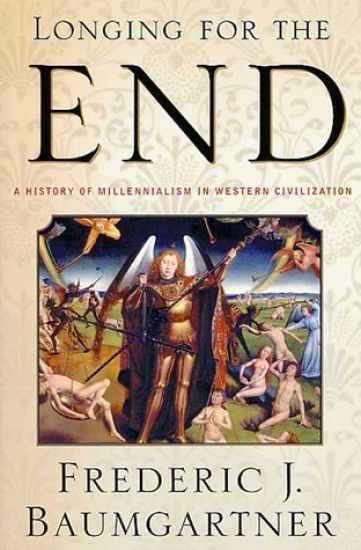
Longing For The End

Longing For The End

Frederic J. Baumgartner

Palgrave Macmillan
2001
nidottu
Jonestown, Waco, and Heaven's Gate resonate in the contemporary mind in the same way that Masada or Mount Tabor resonated in the minds of others long past. The members of these movements believed that the end of the world was at hand and that they had to act through violence or suicide to ensure its occurrence. Frederic Baumgartner explores the long, often violent, history of millennialism as it has affected Western civilization. From ancient Zoroastrians to Concerned Christians of 1998, a belief in the imminent end of the world and the coming of the new age has motivated hundreds of sects and cults, some of which have burned out in an orgy of violence to become a permanent part of Western history.
The Formative Essays of Justice Holmes

The Formative Essays of Justice Holmes

Frederic Kellogg

Praeger Publishers Inc
1984
sidottu
Although The Common Law, the seminal work by Oliver Wendell Holmes, Jr., clearly represents the culmination of an intellectual journey, the development of Holmes' thought has not been easily deciphered. Frederic Rogers Kellogg traces Holmes' intellectual path, and asks: why did Holmes write The Common Law? what did he mean by his message that the law has evolved away from moral and toward external standards of liability? how did he arrive at this conclusion? The answers, Dr. Kellogg maintains, are to be found in a series of nine essays that originally appeared in The American Law Review. They show that Holmes was obsessed with elemental questions of pure legal theory and link him closely to the philosophic method of his friend Charles Sanders Peirce. Taken together with Holmes' later work, and viewed in light of American philosophy, these essays establish Holmes as the founder of a distinct approach to jurisprudence and reveal the implications of that approach for Holmes' later contributions to constitutional law.
Latin American Society and Legal Culture

Latin American Society and Legal Culture

Frederic E. Snyder

Greenwood Press
1985
sidottu
This is the first comprehensive bibliography of the major readings in English, Spanish, and Portuguese relating to the legal systems of Latin America and to the political, economic, and social developments that helped to shape them. Snyder's bibliography is arranged according to a convenient and detailed outline of issues and subject areas. References appear under three principle categories: the influence of history and tradition; the interplay of politics, economics, ideology, and convention in the evolution of legal thought and legal systems; and the legal implications of Latin American responses to colonial dependency and to the challenges of development.
Economic Aid to Underdeveloped Countries

Economic Aid to Underdeveloped Countries

Frederic Benham

Praeger Publishers Inc
1986
sidottu
The main purpose of this book is to discuss a number of questions which arise in connection with economic aid. Chapter II sets out the present situation: how much economic aid is provided, in what forms and through what channels, and who are the chief contributors and recipients. Chapter III discusses the view that underdeveloped countries need trade rather than aid. Chapter IV considers the part played by the flow of private capital. The final chapter considers various arguments for and against providing economic aid and draws some conclusions, suggesting that the amount provided should be substantially increased and made more effective.
Invisible Victims

Invisible Victims

Frederic Lynch

Praeger Publishers Inc
1989
sidottu
Lynch's passionately argued book asks: How did controversial social policy that lacked public support nonetheless become institutionalized? The social policy Lynch examines is affirmative action. . . . Lynch condemns the sloppy, fearful thinking that has converted affirmative action into quotas and that has kept social researchers shying away from this explosive topic. Choice Anyone interested in race relations and sex roles in the United States must read this book. Social ForcesMore and more questions have surfaced in the past decade concerning the wisdom and fairness of affirmative action programs. In this book, Lynch takes a hard look at affirmative action policy development and the social and ethical implications of a system that promotes gender and race as criteria for vocational advancement and educational opportunity. He focuses on the experiences of white males who have been victims of reverse discrimination under such programs and explores the lackluster response from government, the media, and employing institutions. Lynch examines the political taboo that for two decades effectively stifled discussion of the issues that affirmative action raises in both public discourse and scholarly analysis. He reviews the original ideals and purposes of affirmative action and contrasts them with the program as it has actually operated in everyday work settings. In case studies based on interviews and other data, Lynch assesses the reactions of white males to affirmative action barriers, as well as their impact on co-workers, friends, and relatives. He describes the role of the mass media, the social sciences, and ideological elites in creating a conspiracy of silence concerning the hidden and unintended consequences of affirmative action policies. The only study that deals specifically with the impact of affirmative action on white males, this book will appeal to academic and general readers with an interest in public policy, law, political science, sociology, and social psychology.
Informing the Nation

Informing the Nation

Frederic Ohara

Greenwood Press
1990
sidottu
Federal information is used by all sectors of society, from the business and financial communities, to the agricultural industry, to scientists and engineers. It spans a broad spectrum of issues relevant to our lives, including public health, environmental problems, and demographic and employment trends. This handbook is designed to facilitate access to that wealth of material, providing the reader with a core collection of manuals, guides, and introductions to strategic federal and United Nations agencies that disseminate government information. It offers valuable insights into the document programs of the Library of Congress, the National Archives, the Depository Library Program, the National Technical Information Service, and the United Nations.The work is divided into six main parts, covering depository libraries, Congress, the national libraries and information programs, the Bill of Rights, and the United Nations. Complete or partial documents within these sections include the Guide to the Superintendent of Documents Classification Scheme, the Federal Depository Library Manual, the Guide to the National Archives for Researchers, and the Guide to the United Nations Documentation, as well as guides to the Library of Congress, the National Agriculture Library, and the National Library of Medicine. Each document has an editor's introduction and is followed by an annotated bibliography and descriptions of relevant organizations and their publications. In addition, four suggested core collections are provided, listing basic federal documents for public, college, and law libraries, and National Technical Information Service titles for academic libraries. An epilogue discusses electronic dissemination of federal information. This book will be a useful resource for courses in government documents and collection development, as well as for professional librarians and researchers who use depository libraries and federal documents. Public, college, and academic libraries will also find the book to be a valuable addition to their reference collections.
Choosing the Dream

Choosing the Dream

Frederic M. Gedicks; Roger Hendrix

Praeger Publishers Inc
1991
sidottu
Religion has been deeply embedded in the history and culture of the United States since its birth. The last 20 years have seen a revival of religion which some have styled the Fourth Great Awakening. This latest turn to religion has uncovered and sharply defined a cultural paradox that has been evident for some time. Large numbers of Americans are deeply religious in their personal lives, yet American public life is largely empty of religious content and often hostile to religion, resulting in a fascinating and puzzling contradiction. This contradiction between secular public and religious private life is the focus of Choosing the Dream.One consequence of the conflict between public secularism and privatized religion has been deep frustration and alienation of religious people from the institutions and processes of American public life, creating at least the potential for religious revolution. Given the historically pragmatic nature of American democracy, however, the authors argue that it is likely that public life will adjust to the demands of those religious people and institutions who feel excluded, accommodating them to a legitimate role in public life. Gedicks and Hendrix explain why and how this will happen, outlining new understandings of knowledge, truth, history, and religion that will challenge believers and secularists alike. They contend that, in the end, the admission of religion as an equal participant in public life will bring America closer to realizing its full potential as a nation. This thoughtful and sophisticated academic work is written in a language that will be accessible to general audiences as well.
The Supranational Politics of Jean Monnet

The Supranational Politics of Jean Monnet

Frederic J. Fransen

Praeger Publishers Inc
2001
sidottu
Although previous advocates of European Unity proposed the replacement of the balance of power model of international relations, Jean Monnet was the first to try to do so along Franco-German rather than Franco-British lines. He concluded that restrictions on national sovereignty were essential and that there were steps that could be taken prior to full federation. Through his Community method, Monnet hoped to create a French-led, continental federation within a Western association. His United States of Europe was aimed not only back at the Franco-German conflict, but also forward to the problem of Europe's place in the world. This study explores Jean Monnet's European project and the intentions behind it from World War I to the 1960s. Fransen relies on a close and comparative reading of Monnet's notes and documents, placed in their political and historical context. Most work on Monnet's contribution begins with his later presence as an elder statesman of the European movement and reads his later pronouncements back into his earlier work. This book takes the opposite approach and, by concentrating on his earlier work, is able to show a more complicated picture of Monnet's aspirations than has been presented to date.
A&P Applications Manual

A&P Applications Manual

Frederic Martini; Kathleen Welch

Pearson
2014
nidottu
This manual contains extensive discussions on clinical topics and disorders to help students apply the concepts of anatomy and physiology to daily life and their future health professions. Can be packaged for free with the textbook.