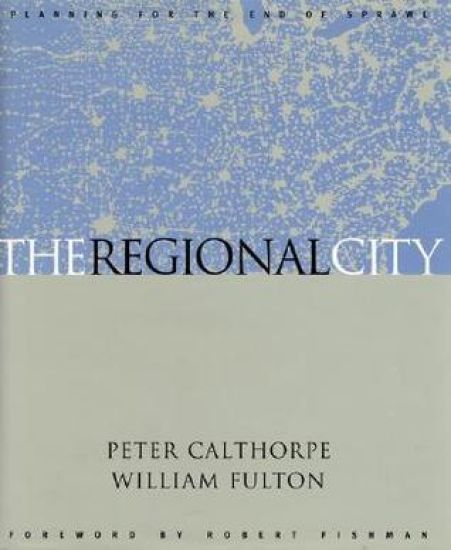
Most Americans today do not live in discrete cities and towns, but rather in an aggregation of cities and suburbs that forms one basic economic, multi-cultural, environmental and civic entity. These "regional cities" have the potential to significantly improve the quality of our lives-to provide interconnected and diverse economic centres, transportation choices, and a variety of human-scale communities. In The Regional City, two of the most innovative thinkers in the field of land use planning and design offer a detailed look at this new metropolitan form and explain how regional-scale planning and design can help direct growth wisely and reverse current trends in land use. The authors: - discuss the nature and underpinnings of this new metropolitan form - present their view of the policies and physical design principles required for metropolitan areas to transform themselves into regional cities - document the combination of physical design and social and economic policies that are being used across the country - consider the main factors that are shaping metropolitan regions today, including the maturation of sprawling suburbs and the renewal of urban neighbourhoods Featuring full-colour graphics and in-depth case studies, The Regional City offers a thorough examination of the concept of regional planning along with examples of successful initiatives from around the country. It will be must reading for planners, architects, landscape architects, local officials, real estate developers, community development professionals, and for students in architecture, urban planning, and policy.
Very few books deal with the unconscious mind—the right side of the brain—and how advertising affects and directs it. This one does exactly that. Psychologist Maddock and his co-author Fulton give the readers a clear understanding of how the mind works, based on up-to-date research, and a new way to understand human motivation and behavior. Drawing unqiuely from medicine, clinical psychology, and the practice of marketing, they combine insights and principles that will provide advertisers with almost a blueprint for executing creative strategies and developing marketing plans with a better chance of success. In so doing the authors make clear that marketing to the mind is a diagnostic technique, a way to quickly and inexpensively analyze consumer resistance. With concepts, theories, and research clearly laid out, the authors show how the technique can be applied to a variety of products and services. A practical and engrossing book for the advertising and marketing community, and for teachers, consultants, and students too.Maddock and Fulton introduce a third dimension to marketing and a completely new marketing theory based totally upon unconscious motivation. Most marketing theory deals with conscious, rational motivators while the unconscious motivators are overlooked or ignored. Marketers often complain that they cannot get beyond consumers' rationalizations. The authors correct this by looking at the right side of the brain—the side of the brain that, according to latest empirical research, has been shown to be heavily involved in the mediation of emotion. Marketing to the Mind introduces a new hierarchy of consumer motives, then shows how they tie into product benefits, how they cause consumers to act, and then how marketers can address them. They validate their approach to the unconscious by offering a unique right brain market research technique, and show how it is applied to various consumer activities, such as casinos, food service, cosmetics, fashions, health care—and even to the question: Why do people still visit Elvis and Graceland? (That chapter alone will provide marketers with unusually useful information). Clearly written, authoritative, and simply fascinating reading, Marketing to the Mind will prove to be of special value to all those involved in the creation, development, and selling of goods and services.
Leadership is motivation and motivation is leadership, say the authors of this important and unique study. The two elements are inseparable, but until now no one has actually conceptualized motivation in a useful way to demonstrate and analyze the connection between it and leadership. The key for leaders is dealing with the emotions that underlie and activate motivation. Maddock and Fulton provide a highly successful, proven, and replicable approach not only to motivate people, but also to train them to lead others. The authors develop an 11 level structure of human motivation that defines and describes motivation in simple, graphic, all-inclusive language. They then show how leaders can use this motivational hierarchy to solve complex problems in the workplace. The result is a blueprint to help executives in all types of organizations manage more effectively, and as they do so, to motivate and truly lead the people who depend on them for guidance and direction.Maddock and Fulton offer several scenarios to show how their ideas work in practice. In the vertical fix they demonstrate how motives that get out of synch with each other can be re-aligned, eliminating the chaos that would otherwise occur. In the lateral fix they show how a person who may be functioning at the extreme edge of motivation can be moved back toward the center, a place where the person's effect on others is most and best felt. Well documented throughout, their book will be important reading for training and development professionals, specialists in organizational behavior, and executives at all levels in public and private sectors.
This book is the first biography of Scottish-born physician John Moore. Here, Henry L. Fulton recounts Moore’s childhood, education, and medical training in Glasgow and abroad; discusses his marriage, family, and friendships (particularly with Tobias Smollett); and depicts his professional practice in the north. The narrative uncovers Moore’s transformative experience accompanying a young nobleman on the Grand Tour through Europe and provides a detailed account of the journey's highlights and difficulties. When Moore returns, he moves his family to London to begin a second career in literature and to acquire patronage for his sons’ professions. In this biography Fulton covers not only Moore’s publications but also discusses his circle of friends among nobility, politicians, artists, and others. Also discussed is Moore’s involvement in the French Revolution, his correspondence with Robert Burns, and his strained family relationships. Additionally presented here is new information regarding Moore’s finances drawn from archival records in Glasgow and Edinburgh and his bank ledgers in London.
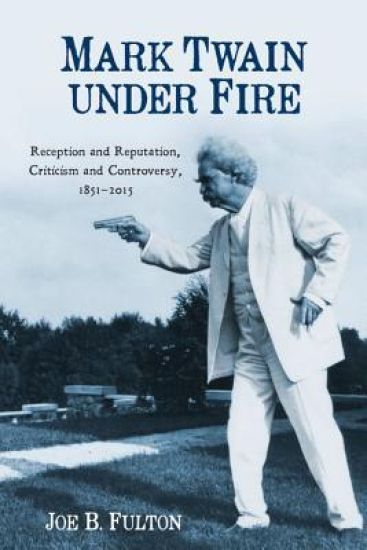
Tracks the genesis and evolution of Twain's reputation as a writer, revealing how and why the writer has been "under fire" since the advent of his career. Threatened by a rival editor brandishing a double-barreled shotgun, young Samuel Clemens had his first taste of literary criticism. Clemens began his long writing career penning satirical articles for his brother's newspaper in Hannibal, Missouri. His humor delighted everyone except his targets, and it would not be the last time his writing provoked threats of "dissection, tomahawking, libel, and getting his head shot off." Clemens adopted the name Mark Twain while living in the Nevada Territory, where his caustic comedy led to angry confrontations, a challenge to a duel, and a subsequent flight. Nursing his wounded ego in California, Twain vowed to develop a reputation that would"stand fire" and in the process became the classic American writer. Mark Twain under Fire tracks the genesis and evolution of Twain's reputation as a writer: his reception as a humorist, his "return fire" on genteel critics, and the development of academic criticism. As a history of Twain criticism, the book draws on English and foreign-language scholarship. Fulton discusses the forces and ideas that have influenced criticism, revealinghow and why Mark Twain has been "under fire" from the advent of his career to the present day, when his masterpiece Huckleberry Finn remains one of America's most frequently banned books. Joe B. Fulton is Professor of English at Baylor University in Waco, Texas. He has published four previous books on Mark Twain.
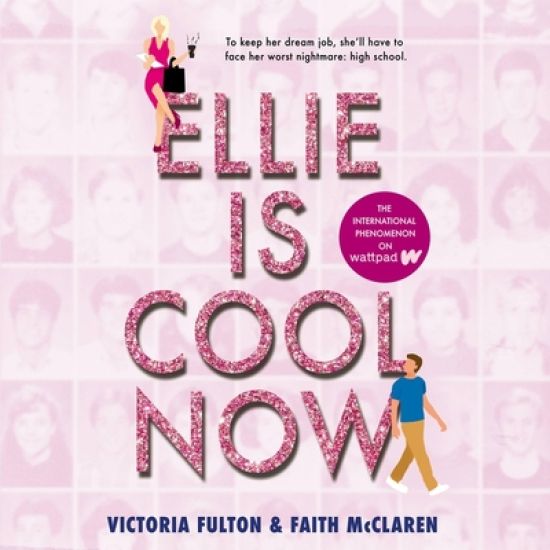
In this laugh-out-loud romantic comedy, one woman finds that to keep her dream job, she'll have to face her worst nightmare: high school.Ellie Jenkins definitely didn't peak in high school. She was an outsider, an invisible girl with a desperate crush on Mark Wright, a guy who hardly knew her name. Ten years later, she's living in Los Angeles, trying to write a hit show about cool high school kids, when an invitation for her high school reunion arrives. She doesn't want to go, but her writing has been suffering and her boss makes her an ultimatum: go to this reunion or lose her big break forever. He even gives her a list of challenges to complete Ellie takes the bait and returns to the school determined to find friends, fun and to prove to Mark Wright, once and for all, that Ellie is cool now.
A college freshman on his way home to see his girlfriend becomes a life long baseball camper via a crazy night at a youth baseball game. 44 years later, hundreds of games, camps, players, countries, and cultures become a part of the journey Coach Frank Fulton shares in the pages of history. Frank took a passion for teaching and doing right by his players into a career of coaching in youth, high school, college, international, and professionally. His time in Europe coupled with his time in the USA is peppered with stories that could only happen in camp and with this crazy blue eyed visionary of finding the best in everyone.
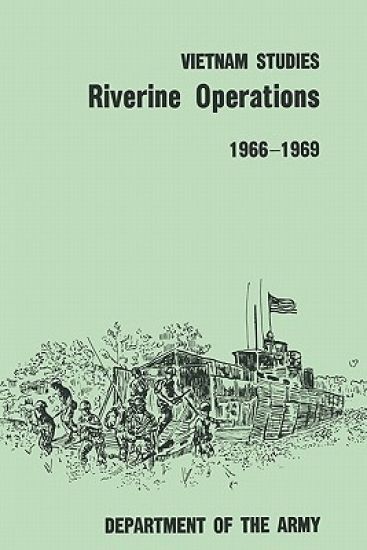
First published in 1973. From the preface: "This monograph describes U.S. Army Riverine planning and operations in the Republic of Vietnam during the years 1966 through 1969. Since the personal experience of the author was with preparations for riverine operations and the initial operations themselves, emphasis has been placed on these activities through early 1968. In summarizing operations conducted in the balance of the three-year period, particular attention has been called to significant trends or changes in riverine operations in Vietnam, a co-operative enterprise of the U.S. Army and the U.S. Navy."
Tomas Tranströmer (1931-2015) was Sweden’s most important poet of the past fifty years. This book contains all the poems he published, including those from the Bloodaxe Collected Poems of 1987, as well as three later collections, For Living and Dead (1989), The Sad Gondola (1996) and The Great Enigma (2004), and a prose memoir. A further revised edition was published in 2011. In Sweden he has been called a 'buzzard poet' because his haunting, visionary poetry shows the world from a height, in a mystic dimension, but brings every detail of the natural world into sharp focus. His poems are often explorations of the borderland between sleep and waking, between the conscious and unconscious states. Tranströomer was born in Stockholm, where he grew up, but spent many long summers on the island of Runmarö in the nearby archipelago, evoking that landscape in his early work, which draws on the aesthetic tradition of Swedish nature poetry. His later poetry is more personal, open and relaxed, often reflecting his broad interests: travel, music, painting, archaeology and natural sciences. Many of his poems use compressed description and concentrate on a single distinct image as a catalyst for psychological insight and metaphysical interpretation. This acts as a meeting-point or threshold between conflicting elements or forces: sea and land, man and nature, freedom and control. Robin Fulton worked with Tomas Tranströmer on each of his collections as they were published over many years, which involved detailed exchanges between translator and poet on the meaning and music of numerous poems. There have been several translations as well as some books of so-called "versions" of Transtromer's poetry published in English, but Fulton's is the most authoritative and comprehensive edition of his poetry published anywhere.
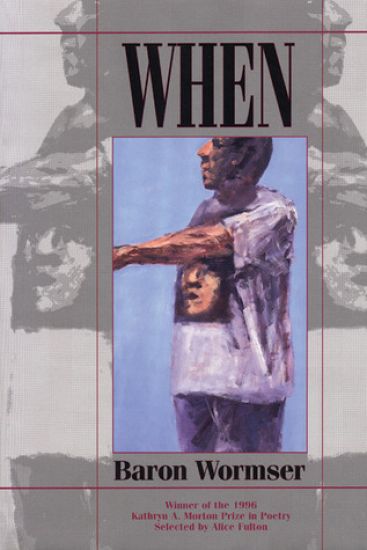
Baron Wormser is the author of three previous collections of poetry: The White Words (Houghton Mifflin, 1983), Good Trembling (Houghton Mifflin, 1985), and Atoms, Soul Music, and Other Poems (Paris Review Editions, 1989). Born and raised in Baltimore, he earned his B.A. from Johns Hopkins University, his M.A. in English from the University of California, and his M.A. in Library Service from the University of Maine. His poems, essays, and reviews have appeared in The Paris Review, The New Yorker, Harper's, The New Republic, and The Georgia Review. Currently, Wormser lives with his wife in Mercer, Maine, in their house which is powered by a two-panel solar unit and is located on forty-five acres of Maine woods. He is a Buddhist affiliated with the Kwan Um Zen school and works as a librarian for a rural school district."When is a mix of autobiography and good old storytelling that never forgets a basic writerly tenet: locality is the only universality. Whether the subject is Beethoven's maid hearing strange sounds, a deli waiter bemoaning his work or Wormser as a boy walking through Pikesville, Md., and imagining it's Baudelaire's Paris, the action in each poem is unique in its specific details. The insights the characters achieve, however, and the emotions they feel are universal. . . . Graced with humor, lust, and bracing narrative momentum, Wormser's poetry presents a menagerie of wonderfully familiar strangers."-Publishers Weekly"A steadfast characteristic of Baron Wormser's poetry is his absolute honesty. In When, . . . he puts aside any expectations of poetic prettiness to take a clear, linguistically fresh look at issues such as AIDS, Vietnam, the ethics of fast-food consumption, and the seduction of Vegas. . . . Wormser's love of the world is evident, despite the searing light that he shines upon it."-Small Press Editor's Recommended Book, Amazon.com"The title When derives from Wormser's obsession with history. . . . This historical sense permeates his poems; it is critical to his approach to poetry. He is, in a manner of speaking, a time traveler. . . . Wormser makes references to people, objects, and events that define the time:
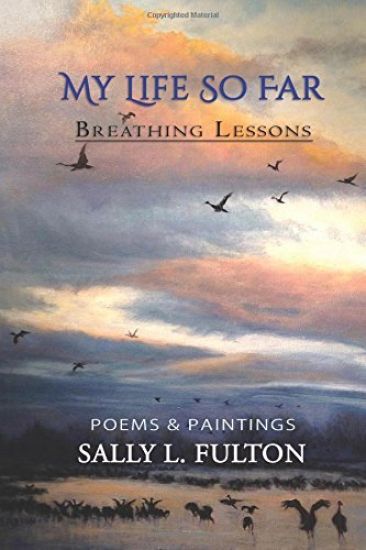
Sally L. Fulton's book of poetry and Paintings was awarded first place in the 2018 EVVY Awards by Colorado Independent Publishers Association. This first book of published poetry, My Life So Far: Breathing Lessons, by Sally L. Fulton invites you to enter intimately into her life and shows the reader, with clear and lyrical imagery, how she finds meaning in each moment. Her life is a microcosm of the suffering and transformation that everyone faces. That transformation, for this writer, is found in nature, and in the Buddhist principal which Thich Nhat Hanh calls "interbeing", the knowledge based on both spiritual and physical understanding that we are all a part of something greater that unifies us. Included in this artistic volume are several images of her paintings, each as rich and diverse as her poems. These paintings reflect the beauty of what the painter sees with her eyes as well as what she encounters in the unexpected nature of the spontaneous. It is through both language as well as through painting that she has come to find potent avenues toward an expression of her own truth.
THE BLUEPRINT: PART 2 - SHEROES & HEROES is the result of several years of faithfully interviewing diverse industry leaders, icons and artists. We believe that we have captured the essence of their journeys. Most of them said they are just getting started. All of them were encouraging and remained convinced that their best is yet to come. The 52 leaders profiled in this book will inspire you to do more. Proximity to power is in proportion to our willingness to let it go. These leaders have let go and they have allowed us to share their stories with the world.
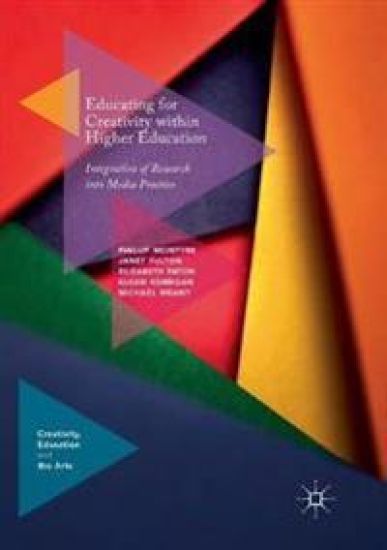
This book provides innovative insights into how creativity can be taught within higher education. Preparing students for employment in a dynamic set of global creative industries requires those students to not only be resilient and entrepreneurial, but also to be locally focused while being globally aware. Therefore it is imperative that they acquire a thorough understanding of creative processes and practice as they try to keep pace with worldwide digital trends. As the creation of media messages is a fundamental aspect of global creative industries, and that numerous concerns practitioners face are based upon a certain understanding of creativity, the authors propose an exploration of what creativity is in terms of research, and then apply it pedagogically. Drawing on extensive empirical research, the authors pose the thought-provoking question of whether creativity can be taught. This volume will be of interest to both students and scholars of creativity and higher education as well as to creatively-based practitioners more widely.